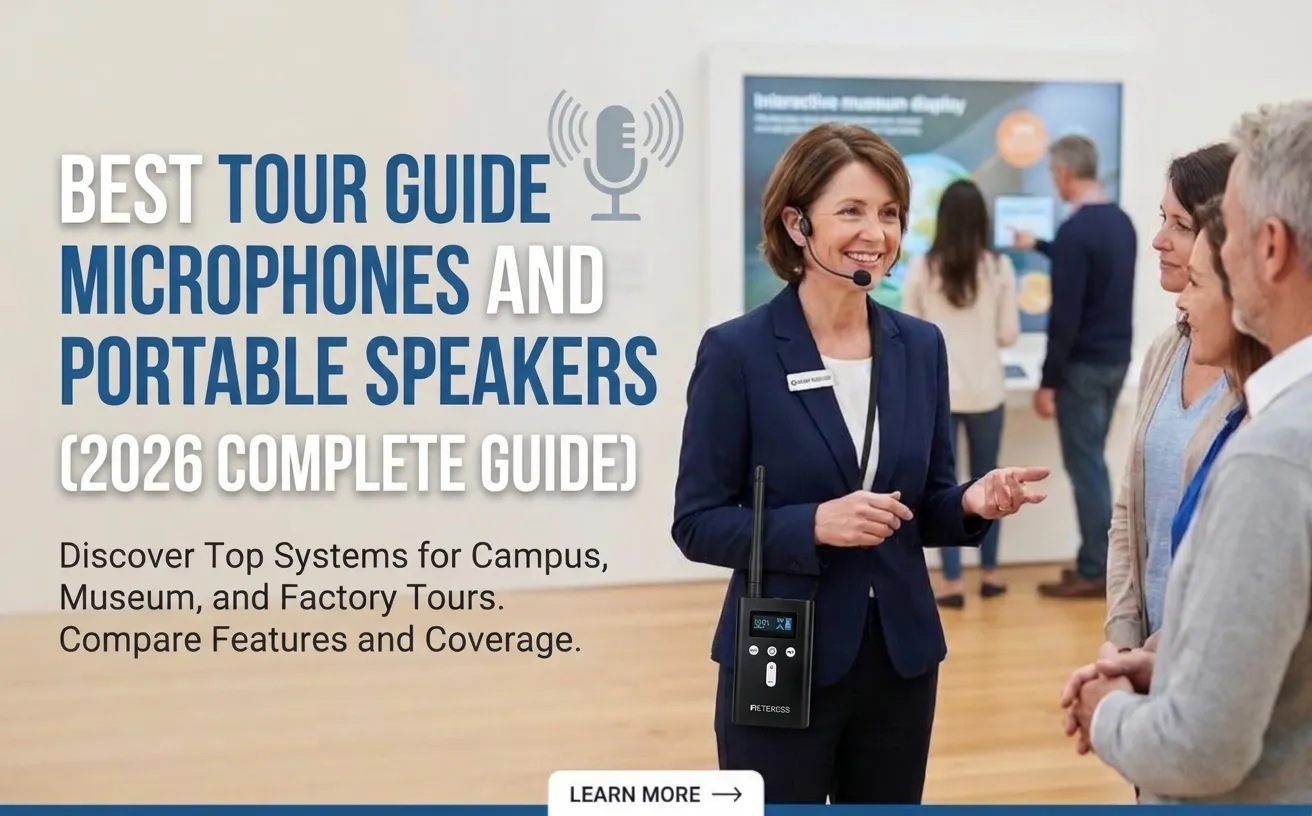
For tour leaders, educators, and event organizers, delivering a clear and engaging message relies heavily on reliable audio gear. Portable tour guide microphones and portable speakers—often referred to broadly in the industry as a tour guide system or voice amplifier—are the cornerstone of effective group communication. They remove vocal strain, keep guests engaged, and ensure your message carries clearly across any venue.
Whether you operate quiet museum walks, active campus tours, or noisy facility walkthroughs, choosing the right tour guide system setup is critical to your operation's success.
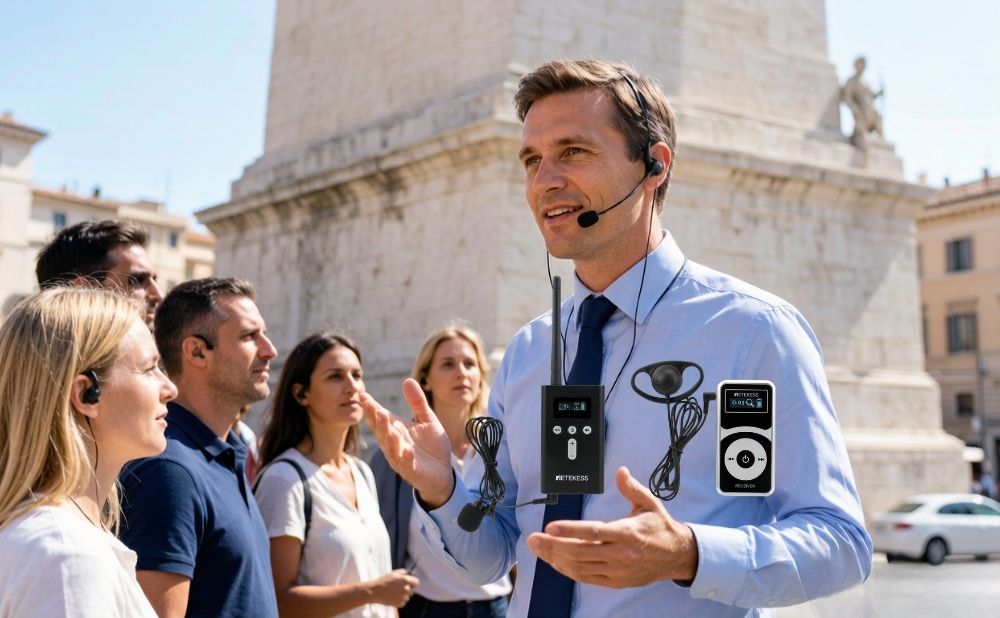
A tour guide system built around a portable microphone and speaker functions as a mobile public address (PA) setup. The guide wears or holds a microphone (headset, lapel, or handheld), which transmits voice signals to a compact, battery-powered speaker worn on a waistband, slung over the shoulder, or set on a central podium.
Museum & Cultural Site Tours: Docents use low-profile tour guide microphones and portable speakers to amplify their voices gently inside quiet galleries without disturbing adjacent groups.
University & Campus Walking Tours: Student ambassadors depend on portable tour guide systems to address prospective students outdoors, across plazas, and through busy hallways.
Corporate & Facility Walkthroughs: Presenters use lightweight tour guide microphones and portable speakers for short product demos, VIP greetings, and factory floor orientations.
Outdoor Excursions & Hospitality: Resort coordinators, nature guides, and city walking tour leaders rely on portable voice amplifiers to overcome open-air wind and traffic noise.
Not every tour guide system is created equal. To select the best system for your specific needs, evaluate these core performance factors:
The ultimate goal of any tour guide system is speech intelligibility. Look for setups with cardioid (directional) microphones that pick up sound directly from your mouth while rejecting surrounding ambient noise. High-quality systems feature built-in feedback suppression to prevent high-pitched squeals when the microphone gets close to the speaker.
Tour schedules can be demanding. A dependable tour guide microphone and portable speaker kit should offer at least 8 to 12 hours of continuous operation on a single charge. USB-C fast charging or swappable lithium-ion battery packs ensure your equipment is always ready for back-to-back tours.
Small Indoor Groups (10–20 people): A compact 10-watt to 15-watt tour guide system is lightweight and ideal for indoor galleries or small meeting rooms.
Large Outdoor Groups (20–50+ people): Outdoor environments cause sound energy to disperse rapidly. Opt for a 20-watt to 30-watt tour guide microphone and portable speaker setup to maintain clear coverage across larger distances.
As a guide, you will be carrying your gear for hours. Choose a hands-free tour guide microphone (such as an ergonomic headset or collar mic) paired with a lightweight, waist-mounted speaker pack under 1.5 lbs to minimize physical fatigue.
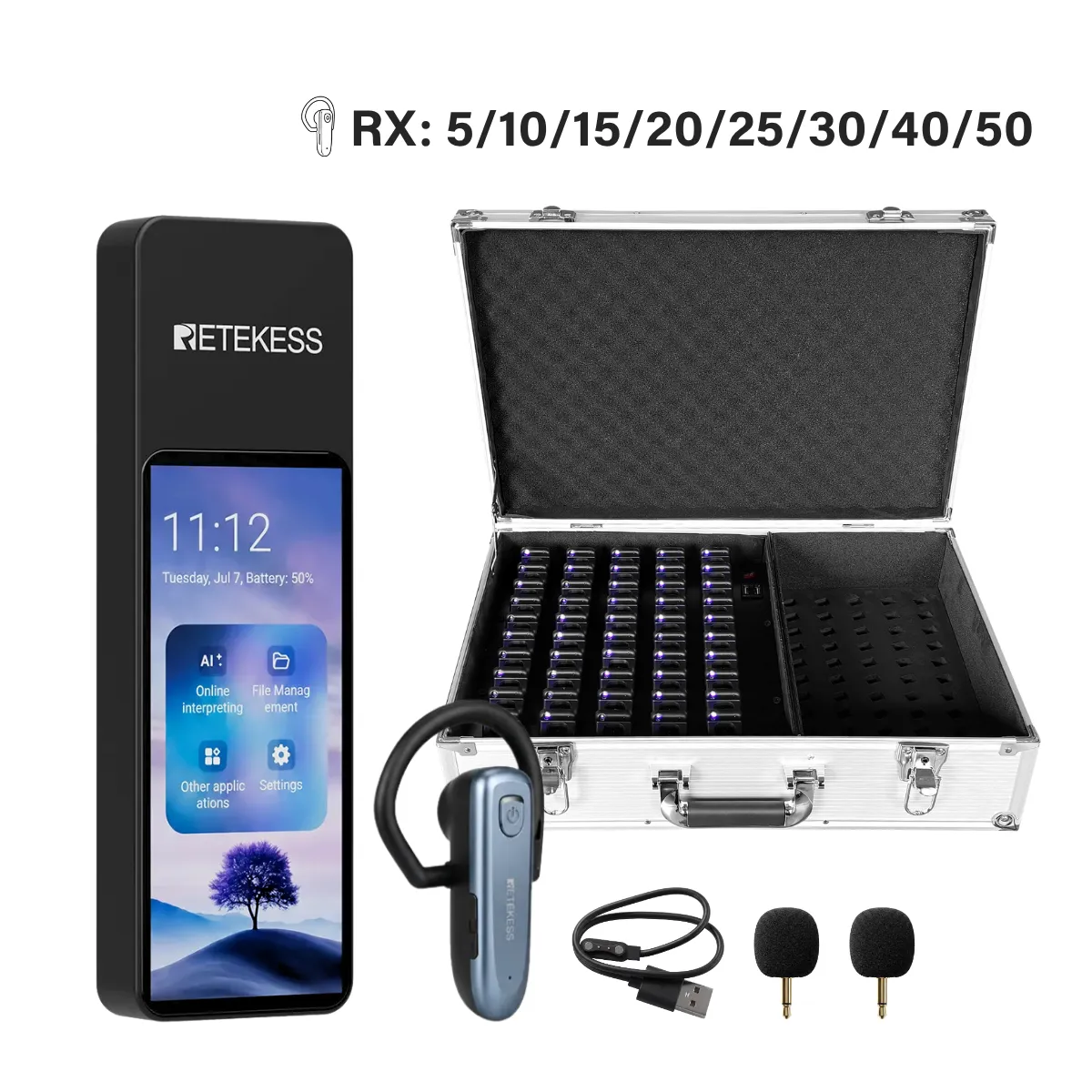
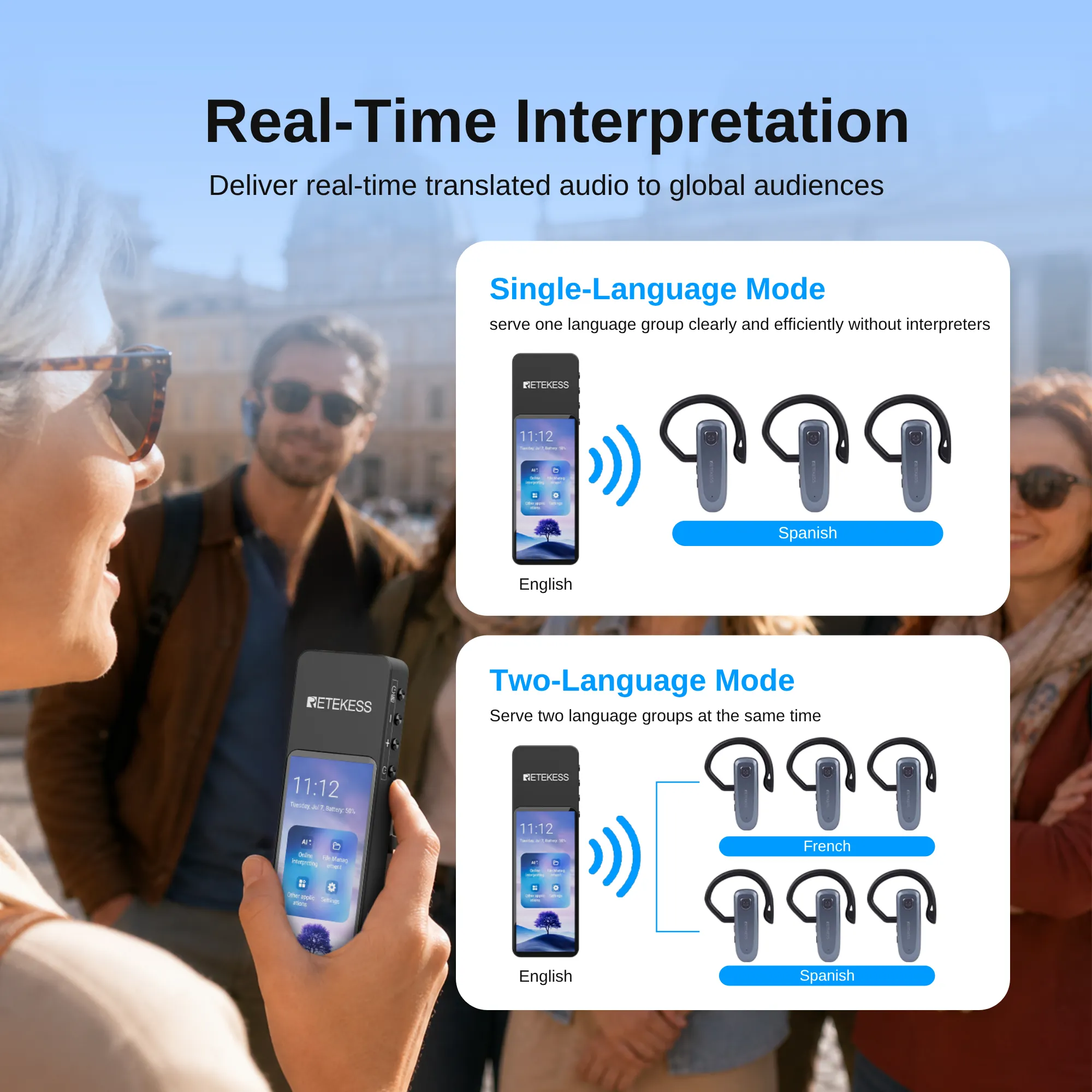
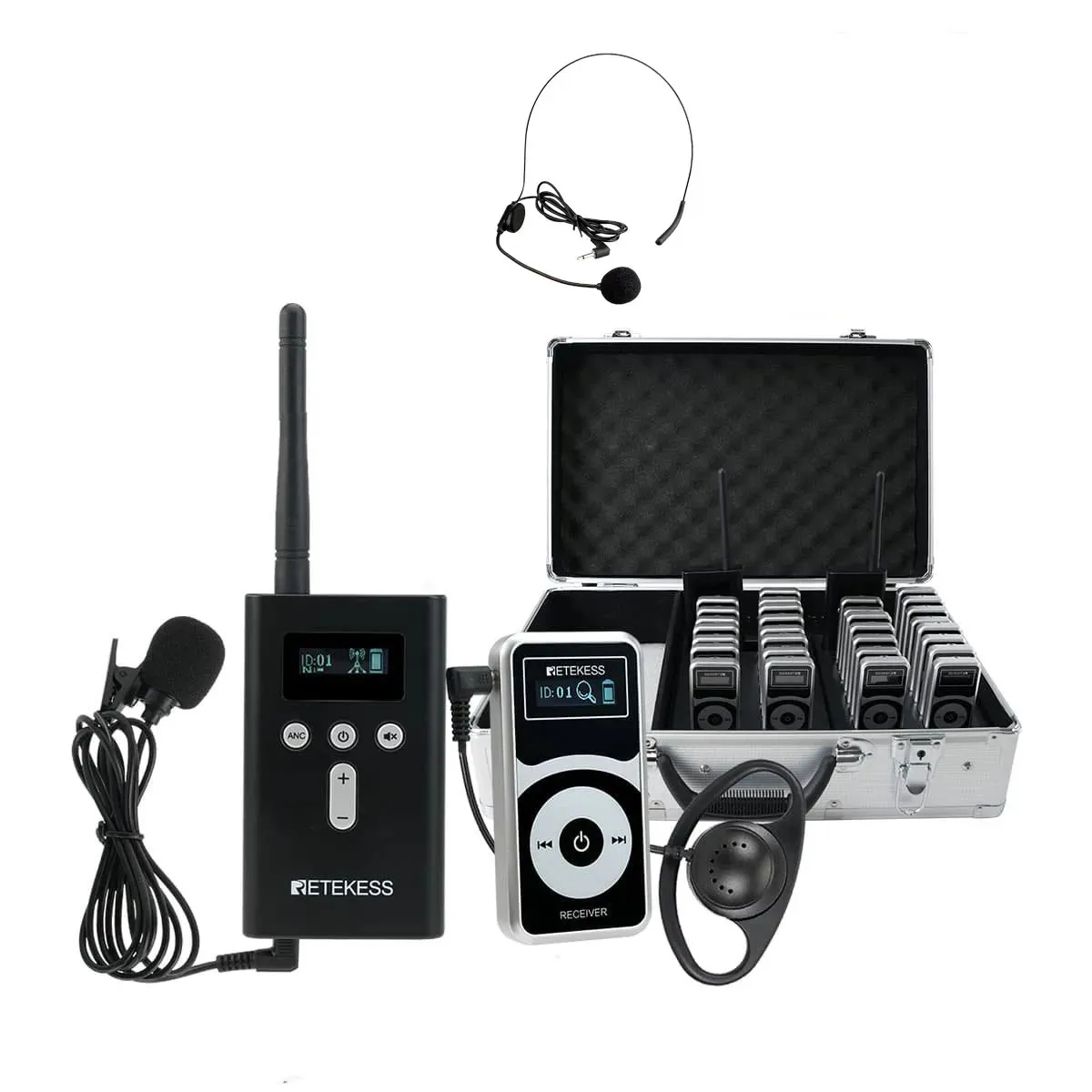
While a traditional tour guide microphone and portable speaker setup works exceptionally well for small to medium groups, high-noise or wide-spread environments may require an advanced wireless headset tour guide system.
| Feature | Tour Guide Microphone & Portable Speaker | Wireless Headset Tour Guide System |
| Audio Delivery | Open-air speaker projection | Direct-to-ear individual wireless earpieces |
| Noise Handling | Amplifies voice into the room (competes with noise) | Isolates voice and blocks ambient noise via headsets |
| Optimal Group Size | Best for 15–30 guests in close proximity | Unlimited group size spread over large distances |
| Interactions | One-way presentation | Supports two-way Q&A and multi-guide setups |
| Best Used For | Campus tours, museums, walking city tours | High-noise factories, trade shows, VIP tours |
To maximize the life and performance of your tour guide microphones and portable speakers, follow these simple field tips:
Maintain Proper Mic Placement: Position your headset microphone approximately 1 to 2 inches from the corner of your mouth rather than directly in front of your lips to avoid popping breath noises.
Perform Pre-Tour Audio Checks: Test volume levels and check battery status before meeting your group.
Keep Spare Charging Gear On-Hand: Always carry a portable power bank or backup batteries in your guide kit.







 Google
 Amazon