
Table of Contents
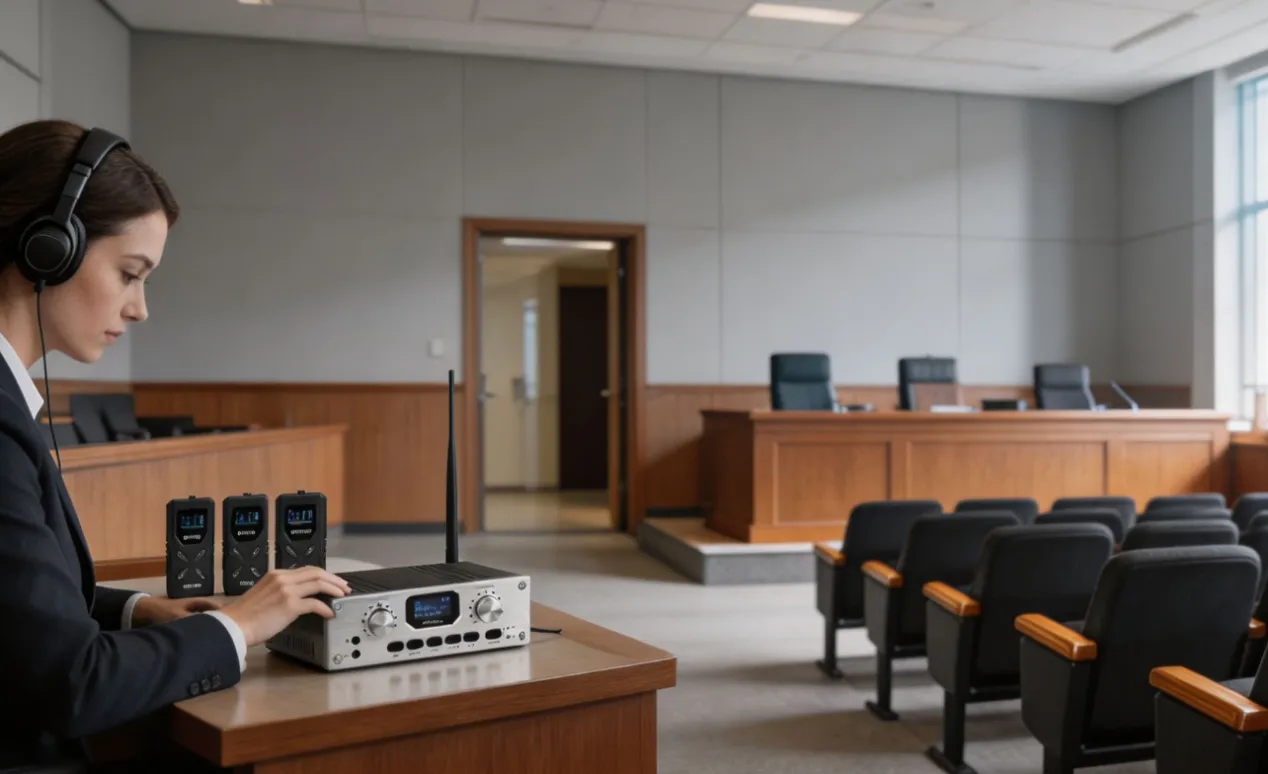
Courtroom Interpretation Systems for Judicial Compliance & Clarity
- Retekess
- Sep 5, 2026
Why Courtroom Interpretation Systems Are Critical for Modern Judicial Compliance
Language barriers pose a fundamental risk to the integrity of legal proceedings. For criminal courts, civil hearings, and especially immigration tribunals, participants who do not speak the local language have a legal right to accurate, real-time interpretation. A single misheard word, delayed translation, or unclear audio can lead to procedural errors, mistrials, or successful appeals — all of which increase costs, delay justice, and put courts at risk of non-compliance with due process standards.
For immigration court managers, the challenge is even more pronounced. High caseloads, diverse language groups, and mixed hearing formats (from large group proceedings to one-on-one interviews) require flexible, reliable audio solutions that can adapt to changing needs without compromising accuracy. This is why investing in a purpose-built courtroom interpretation system has become standard practice for forward-thinking judicial administrations.
The Unique Challenges of Legal Interpretation Environments
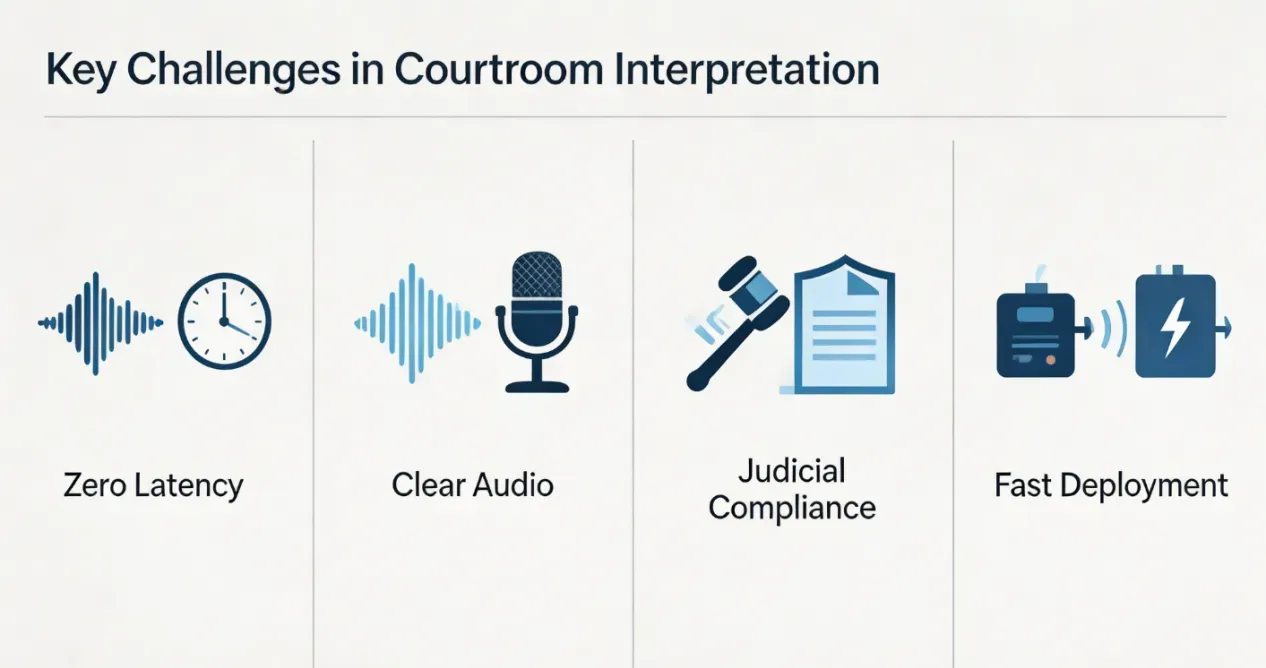
Unlike conference or event interpretation, courtroom settings have non-negotiable requirements that off-the-shelf audio systems cannot meet:
- Zero latency: Every word spoken in court is part of the official record. Even a half-second delay between speech and translation can disrupt proceedings, confuse participants, and create inconsistencies in transcripts.
- Uncompromising audio clarity: Interpreters, judges, jurors, and attendees all need to hear every word without static, echo, or background noise. Poor audio quality directly undermines interpretation accuracy.
- Regulatory and procedural compliance: Systems must support record-keeping, allow for monitoring, and operate without disrupting formal court procedures.
- Fast, flexible deployment: Courts often host ad-hoc hearings, multi-language sessions, or off-site proceedings. Systems need to be set up quickly and scaled to match room size and participant count.
Key Features of a High-Performance Wireless Courtroom Interpretation System
When evaluating solutions for your court or immigration tribunal, focus on features that directly address the unique demands of legal environments. Below are the most critical capabilities, paired with purpose-built options from Retekess designed for judicial use cases.
Long-Range, Zero-Latency Transmission for Uninterrupted Proceedings
Distance and signal dropouts have no place in a courtroom. A strong, consistent signal ensures every participant, whether at the front of the courtroom or in the back of an immigration hearing center, receives clear, synchronized audio.
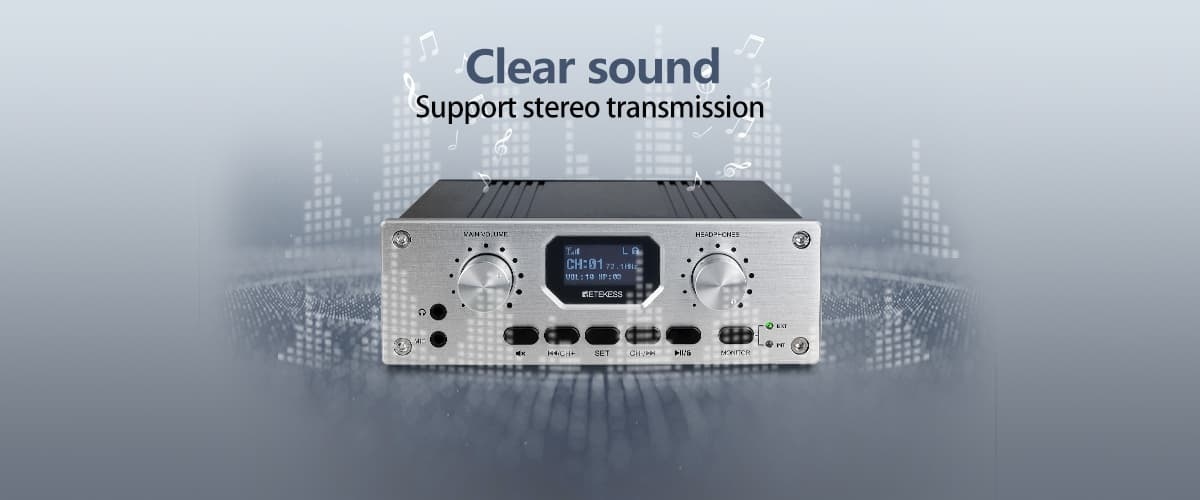
The Retekess TT119 Simultaneous Interpretation System is built for exactly this kind of environment. With an ultra-long working range of up to 100 meters (328 feet), it eliminates distance limitations entirely, making it suitable for large courtrooms, multi-room tribunal facilities, and even outdoor proceedings. The system delivers seamless, near-zero-latency audio transmission, so translations align perfectly with the speaker’s words — no delay, no lag, no disruption to the official record.
Adjustable Clarity & Noise Reduction for Accurate Interpretation
Courtrooms and immigration offices are not silent environments. Background noise from HVAC systems, hallway traffic, or document handling can interfere with interpretation accuracy. A system that delivers consistent, clear sound — even in less-than-ideal acoustic spaces — is essential.
The TT119 defaults to crisp mono audio optimized for speech intelligibility, and can be switched to stereo in settings for a more immersive listening experience. The transmitter also features two dedicated volume control knobs, with a wide range suitable for both quiet courtrooms and larger, more open hearing spaces, so staff can fine-tune audio levels without disrupting proceedings.
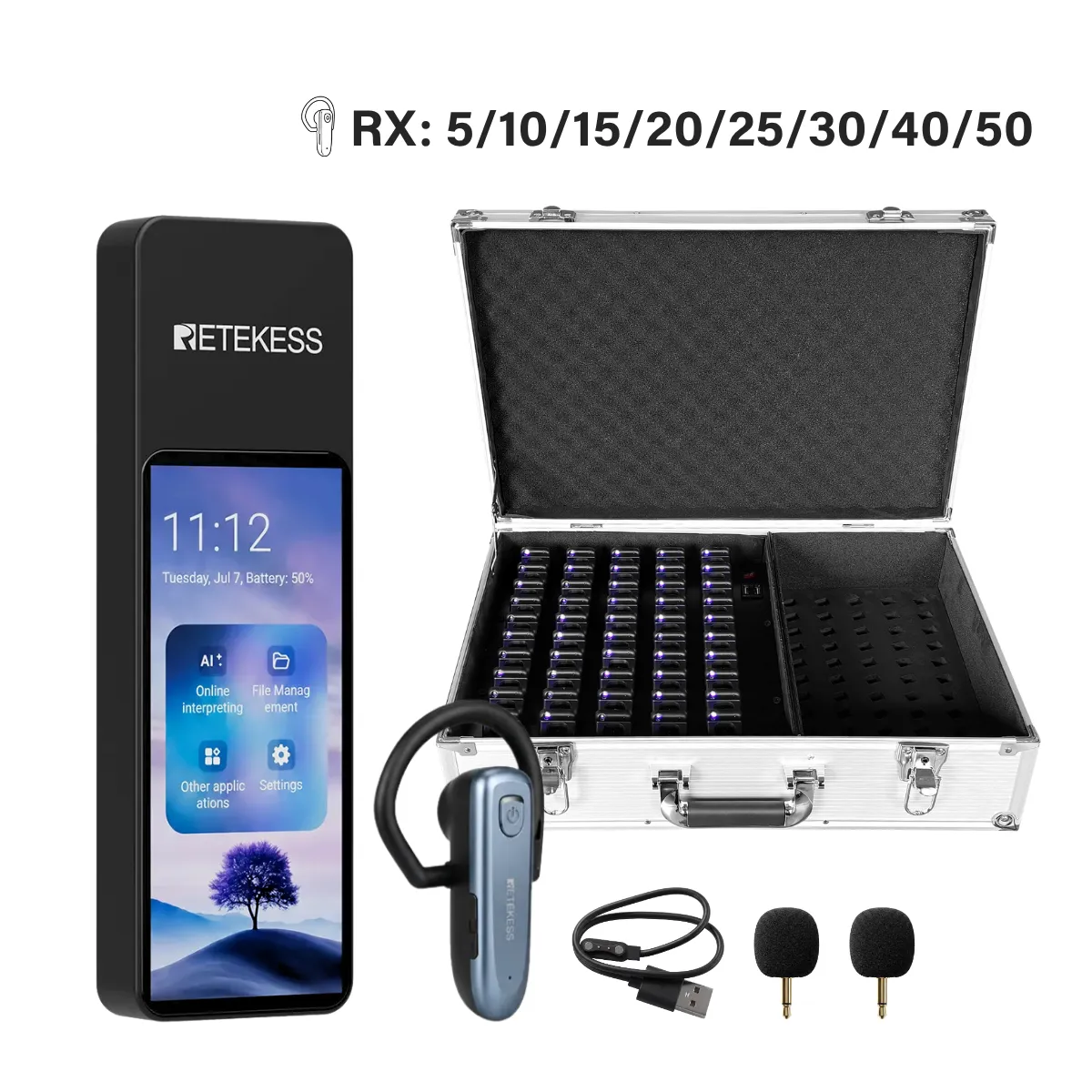
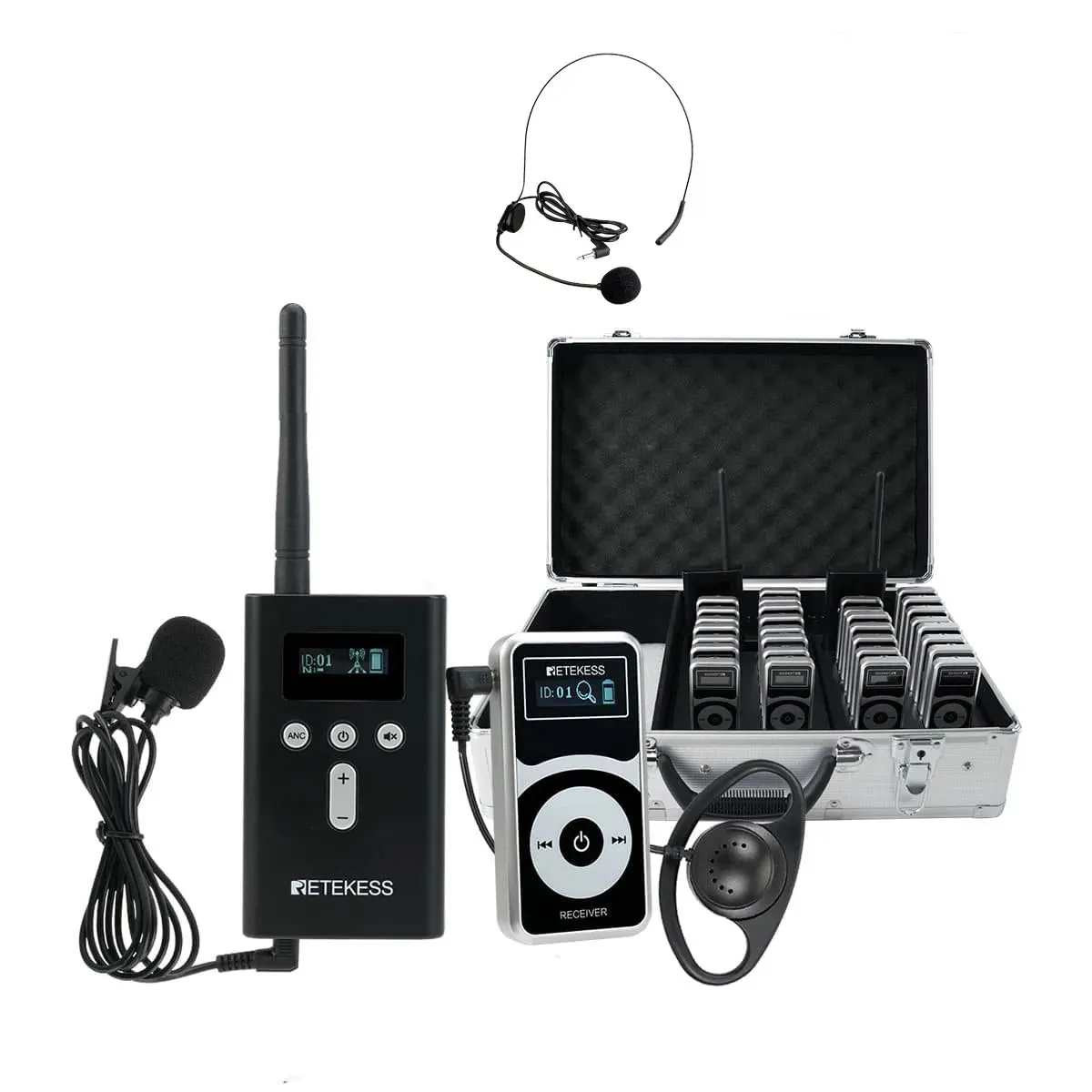
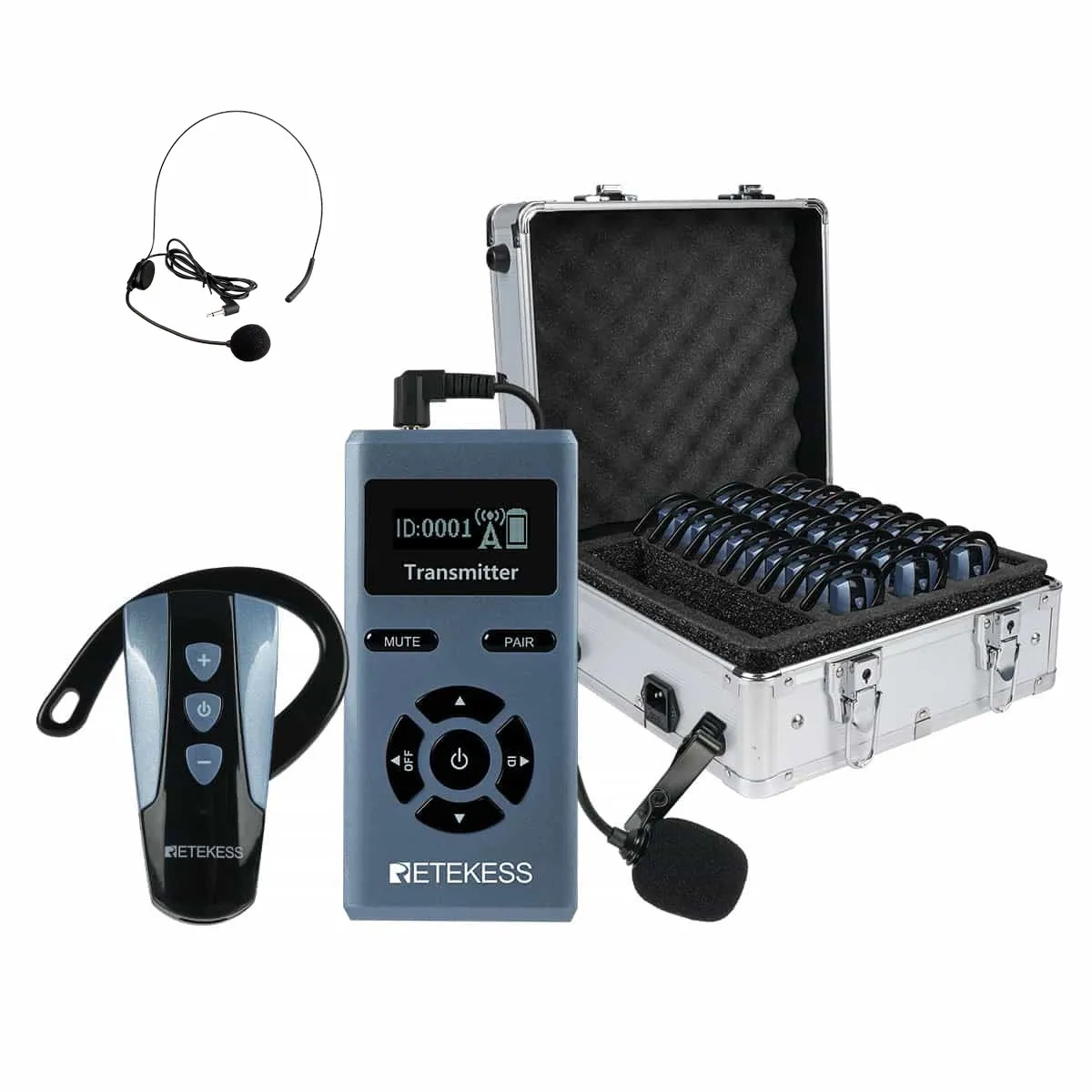
For environments with higher ambient noise, the Retekess T130P Tour Guide System (with a 160-meter / 524-foot working range) offers adjustable noise reduction with 1–4 levels, allowing staff to tailor audio quality to the specific space. It also includes a wireless headset microphone for interpreters, eliminating cable clutter and reducing handling noise that can distract from proceedings.
Intuitive Operation & Fast Deployment for Busy Court Teams
Court administrative teams are not audio engineers. Interpretation equipment needs to be easy to set up, simple to operate, and reliable enough to run without technical support during hearings.
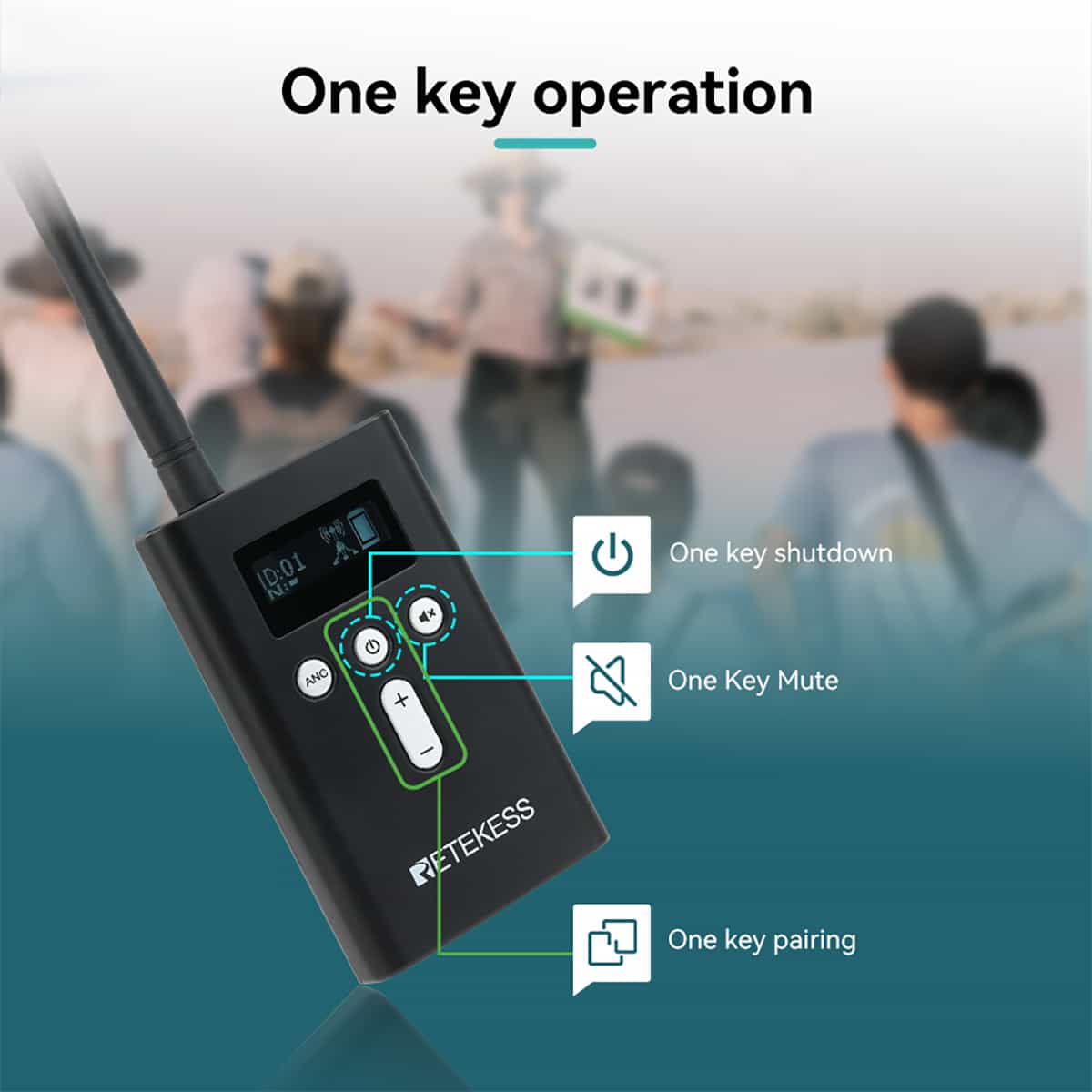
Both Retekess systems are designed for plug-and-play deployment with minimal training. The TT119 features one-click controls for mute, accidental touch lock, and seamless switching between original language and translated audio — perfect for judges or clerks who need to make quick adjustments during proceedings. Its integrated receive-and-transmit design means no extra receivers are required for monitoring, reducing equipment clutter.
The T130P supports one-key frequency pairing, one-key receiver shutdown, and one-key mute, allowing staff to configure dozens of receivers in minutes. This is especially valuable for high-volume immigration courts that rotate multiple hearing rooms and language pairs throughout the day.
Scalable Multi-Language Support & All-Day Battery Life
Many immigration courts and multi-jurisdictional courts need to support multiple languages in a single proceeding, or run concurrent hearings across different rooms. Scalability and long battery life are critical for non-stop operation.
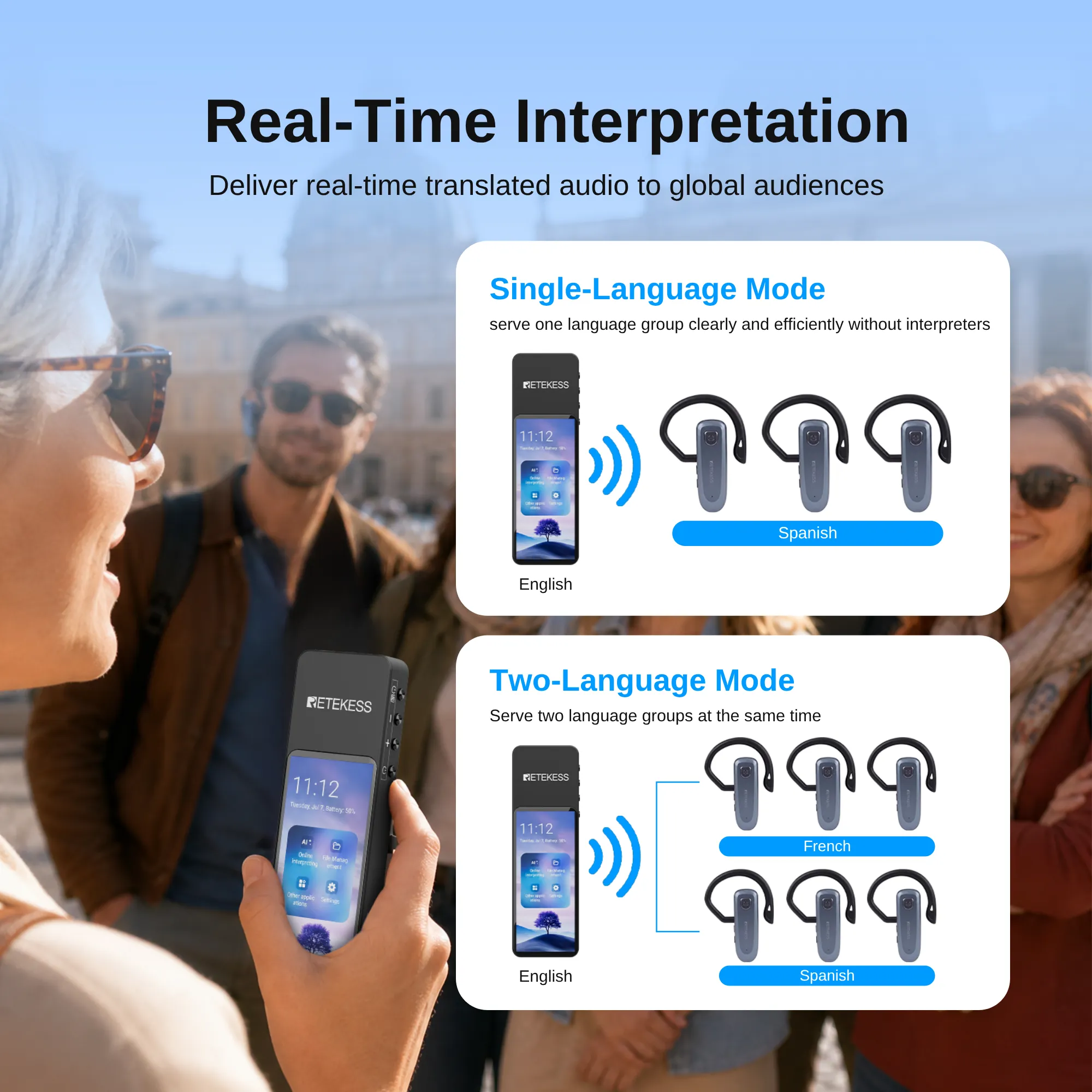
The TT119 system offers 17 dedicated channels, allowing up to 6 different languages to be broadcast simultaneously in the same space. A single transmitter can connect to an unlimited number of receivers, so you can easily scale up for large hearings or multi-lingual jury trials.
For longer proceedings and off-site hearings, battery life is a make-or-break feature. The T130P transmitter delivers 16 hours of continuous use, while receivers last up to 40 hours on a single charge — enough for multiple full hearing days without recharging. It supports two charging methods: durable contact charging and universal Type-C, reducing compatibility issues and simplifying equipment management.
Compliance-Focused Tools for Record-Keeping & Monitoring
Judicial compliance requires accurate record-keeping and oversight of interpretation quality. Systems that support monitoring and audio recording help courts meet procedural requirements and resolve any disputes about what was said during a hearing.
The TT119 includes a dedicated interpreter monitoring function, allowing interpreters to receive the speaker’s voice directly through headphones for maximum accuracy. It also supports external audio recording devices, so courts can capture both original speech and translated audio for the official record. The T130P adds dual 3.5mm jacks for AUX and MIC input, making it easy to integrate with existing courtroom audio systems and recording equipment.
Matching the Right System to Your Court’s Needs
Choosing the right courtroom interpretation system depends on your primary use case:
- Full courtroom simultaneous interpretation, multi-language trials, or large venues: The Retekess TT119 is the ideal choice, with long range, multi-channel support, and integrated monitoring features built for formal judicial proceedings.
- Immigration interviews, small hearings, or flexible, high-volume setups: The Retekess T130P excels with strong noise reduction, long battery life, and fast pairing capabilities that keep daily operations running smoothly.
Both systems are designed to meet the core demands of legal environments: zero compromise on audio clarity, simple deployment, and reliable performance that supports — rather than disrupts — procedural compliance.
Conclusion
Fair and equal access to justice depends on every participant being able to understand and participate in proceedings, regardless of language. A high-quality courtroom interpretation system is more than just audio equipment — it is a tool that upholds due process, reduces administrative burden, and protects courts from compliance risk. By prioritizing zero latency, clear sound, and intuitive operation, judicial administrators can create more efficient, equitable, and compliant legal environments for everyone involved.





![[18th Anniversary] 18 Years of Echoing Excellence: Making Communication Easier, Connecting Trust Beyond Borders](https://res.retekess.com/z_file/20260716/retekess-brand-story-making-communication-easier_20260716151044_7682.jpg)
![[18 Years in Wireless Communication] Silent Disco Systems Anniversary Celebration: Top-Selling Headphones & Event Mechanics Revealed!](https://res.retekess.com/z_file/20260713/18-years-in-wireless-communication-silent-disco-systems-anniversary-celebration_20260713175011_5749.webp)
![[Anniversary Carnival] Ding-dong! 18th Anniversary Mega Sale on Guest Paging & Calling Systems: Full Reveal of 12+ Products & Promo Rules!](https://res.retekess.com/z_file/20260713/18th-anniversary-mega-sale-on-guest-paging-calling-systems_20260713175257_0295.webp)
![[Retekess 18th Anniversary Teaser] Tour Guide System Exclusive Perks: Sneak Peek at Event Dates & Mechanics!](https://res.retekess.com/z_file/20260713/retekess-18th-anniversary-tour-guide-system-exclusive-perks--2-_20260713180135_6435.webp)

Follow Us
Pay With


 Google
 Amazon
Comments (0)