
Table of Contents

Small Business Meeting Translation Made Easier with AI Simultaneous Interpretation
- Retekess
- Sep 3, 2026
Small and medium business meetings often look simple on the surface. A sales team meets a client. A supplier joins a project call. A small group sits down to discuss pricing, timelines, or product details. But once more than one language is involved, the meeting can become much harder to manage.
That is where small business meeting translation becomes important. The challenge is not just translating words. It is keeping the meeting clear, efficient, and professional without making the process too heavy for a smaller business.
This is why lightweight AI simultaneous interpretation is starting to attract more attention. It offers a more practical middle ground for meetings that need translation support without the complexity of a large interpretation setup.
Why Small Business Meeting Translation Is So Challenging
Small and medium business meetings often need translation support, but they do not always need a full-scale interpretation system. In many cases, the meeting size is modest, the schedule is tight, and the budget is limited. That means the translation solution has to be practical, not just professional.
The main challenge is that small business meetings often still cover important business details. A short discussion may involve product specifications, pricing, contract terms, delivery timing, technical questions, or partnership issues. These are not casual topics, so the translation has to be clear and fast enough to keep the meeting moving.
That is why small business meeting translation is such a specific problem. It is not about whether translation is needed. It is about how to make multilingual communication work without creating extra friction.
Two Common Translation Options In Real Meetings
In small and medium business meetings, translation support usually comes in two forms: on-site interpreters or professional simultaneous interpretation equipment. Both can work well, but each has different strengths and limits.
Option 1: On-Site Interpreters
|
Strengths |
Limitations |
|
Easier to arrange for small meetings |
Meeting pace depends on the interpreter |
|
More flexible for changing discussion flow |
Back-and-forth translation can slow the meeting down |
|
Lower setup effort than a full interpretation system |
Q&A sessions may take longer than planned |
|
A practical choice for many small businesses |
Some details may not be delivered with the same completeness every time |
Option 2: Professional Simultaneous Interpretation Equipment
|
Strengths |
Limitations |
|
More formal and structured meeting experience |
Usually requires more planning |
|
Good for high-spec or high-stakes meetings |
Setup can be more complex |
|
Helps create a polished communication environment |
Cost is often higher |
|
Works well in larger or more controlled events |
May feel too heavy for small or frequent meetings |
This makes the tradeoff clear: on-site interpreters are flexible and realistic, while professional equipment is more formal and controlled. For many small and medium businesses, neither option is always ideal, which is why lighter AI interpretation solutions are gaining attention.
Why A Lightweight AI Solution Makes Sense
When you look at both common options, the need for a lighter solution becomes clear. Small and medium businesses usually want something that helps the meeting move forward without adding a lot of extra work.
That is where AI simultaneous interpretation can be useful. It is not meant to replace every human interpreter or every professional system. Instead, it can offer a more practical option for meetings where speed, clarity, and ease of use matter most.
A lightweight AI solution is attractive because it can help businesses start multilingual meetings more easily, reduce delays during discussion, support real-time understanding, avoid the overhead of a larger interpretation setup, and keep the meeting flow more predictable.
In other words, it gives small businesses a way to handle translation without turning every meeting into a production.
What A Practical AI Simultaneous Interpretation Solution Should Deliver
For small and medium business meetings, a good AI interpretation solution should do more than simply translate speech. It should support the meeting in a way that feels useful from start to finish.
1. Keep The Meeting Flow Moving
One of the biggest problems with on-site interpreting is timing. A practical AI solution should reduce the need for long pauses and help the conversation keep moving.
2. Support Multilingual Participation
The system should make it easier for people speaking different languages to follow the same meeting without creating confusion or forcing the organizer to build a full interpretation setup.
3. Stay Lightweight And Easy To Deploy
Small businesses need tools that work in normal meeting rooms and do not require a large technical team or a long setup process.
4. Improve Communication Consistency
A strong AI solution can help create a more stable translation experience across the meeting. That is important when the goal is to keep everyone on the same page.
5. Fit Real Business Use Cases
The best solution should work well in sales meetings, supplier conversations, partner discussions, product briefings, and internal briefings where clear multilingual communication is needed.
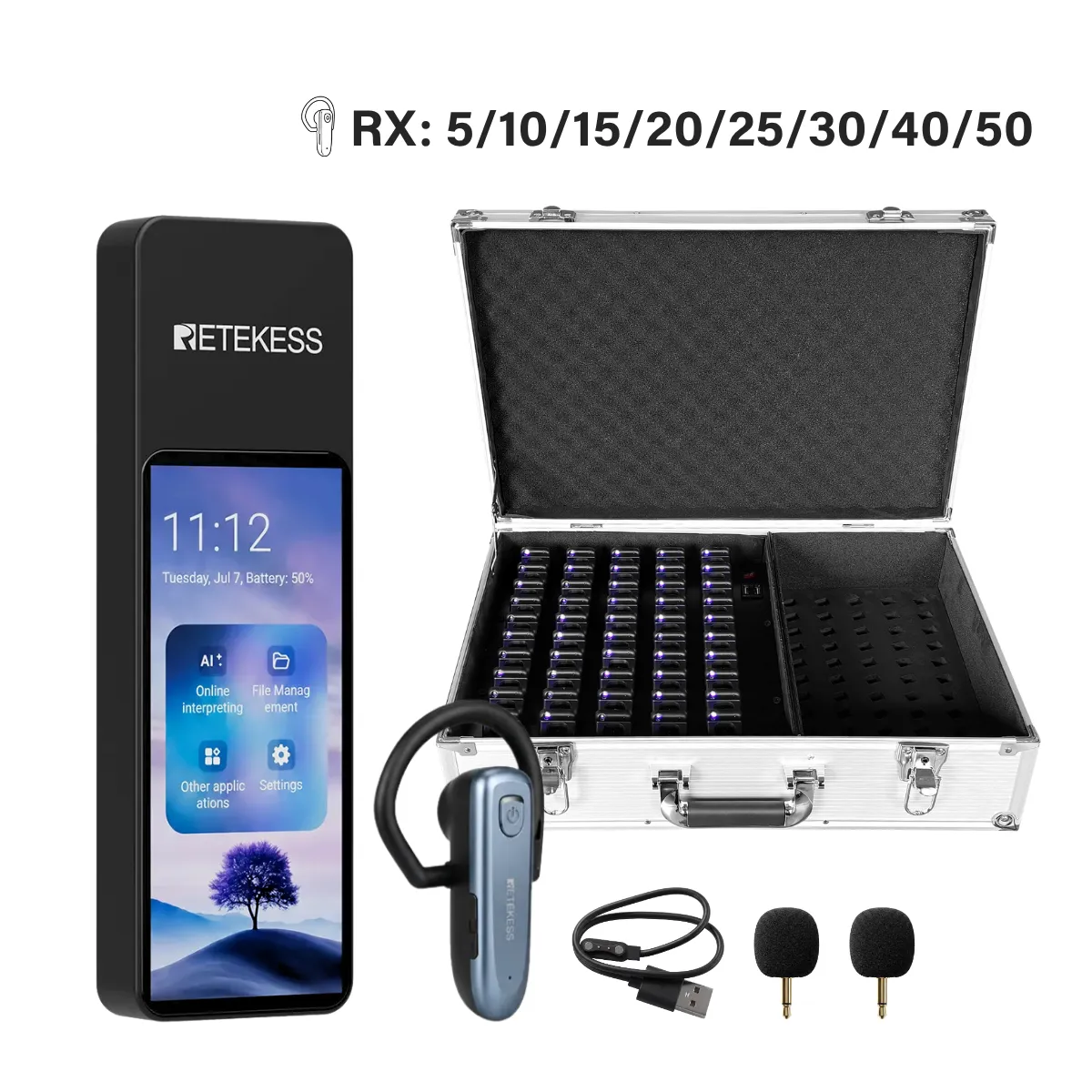
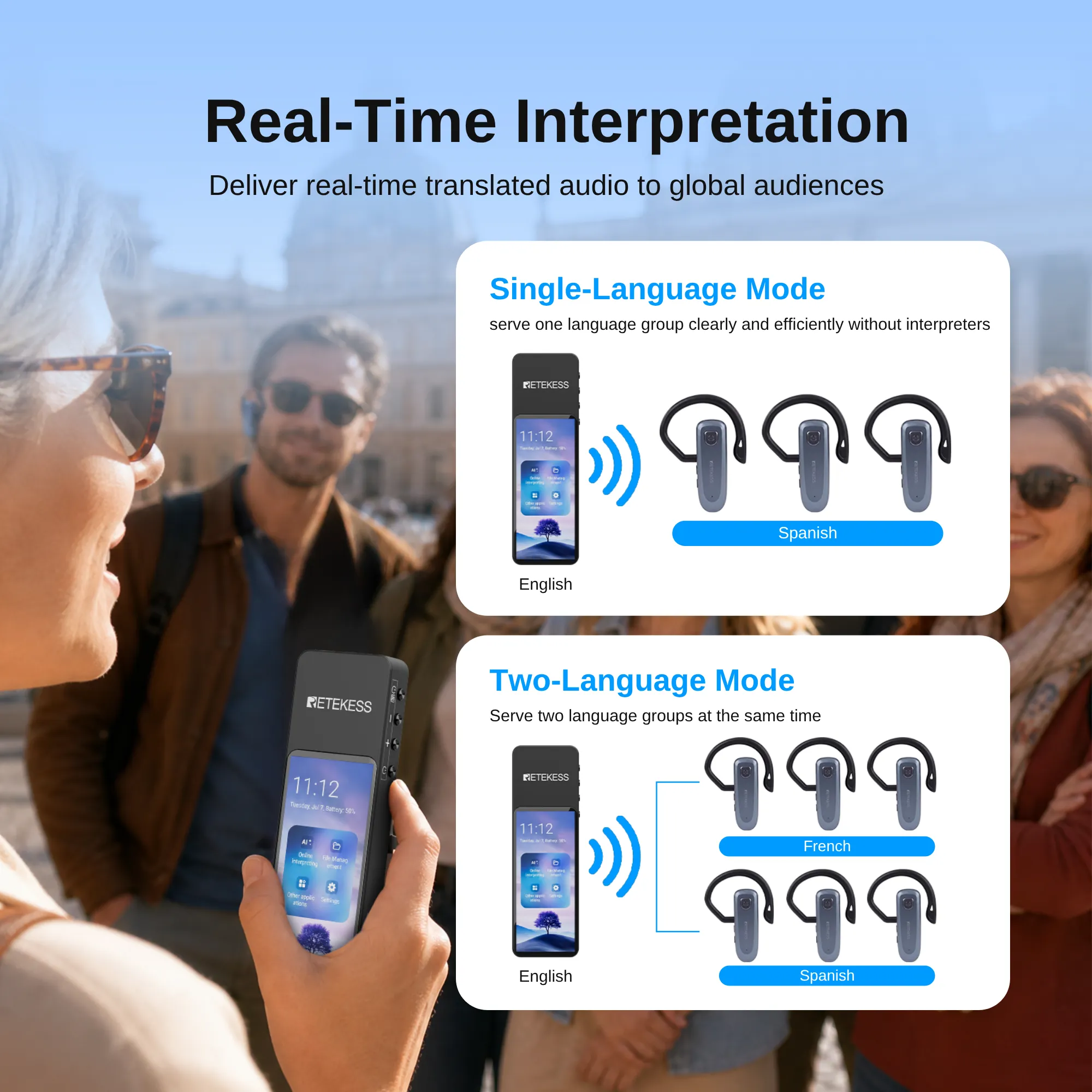
This is the kind of environment where Retekess TT136 fits well. It is designed as a practical AI simultaneous interpretation option for meetings that need multilingual support without unnecessary complexity.
Where TT136 Fits Best
TT136 is best understood as a practical tool for small and medium business meetings, not as a replacement for every interpretation scenario.
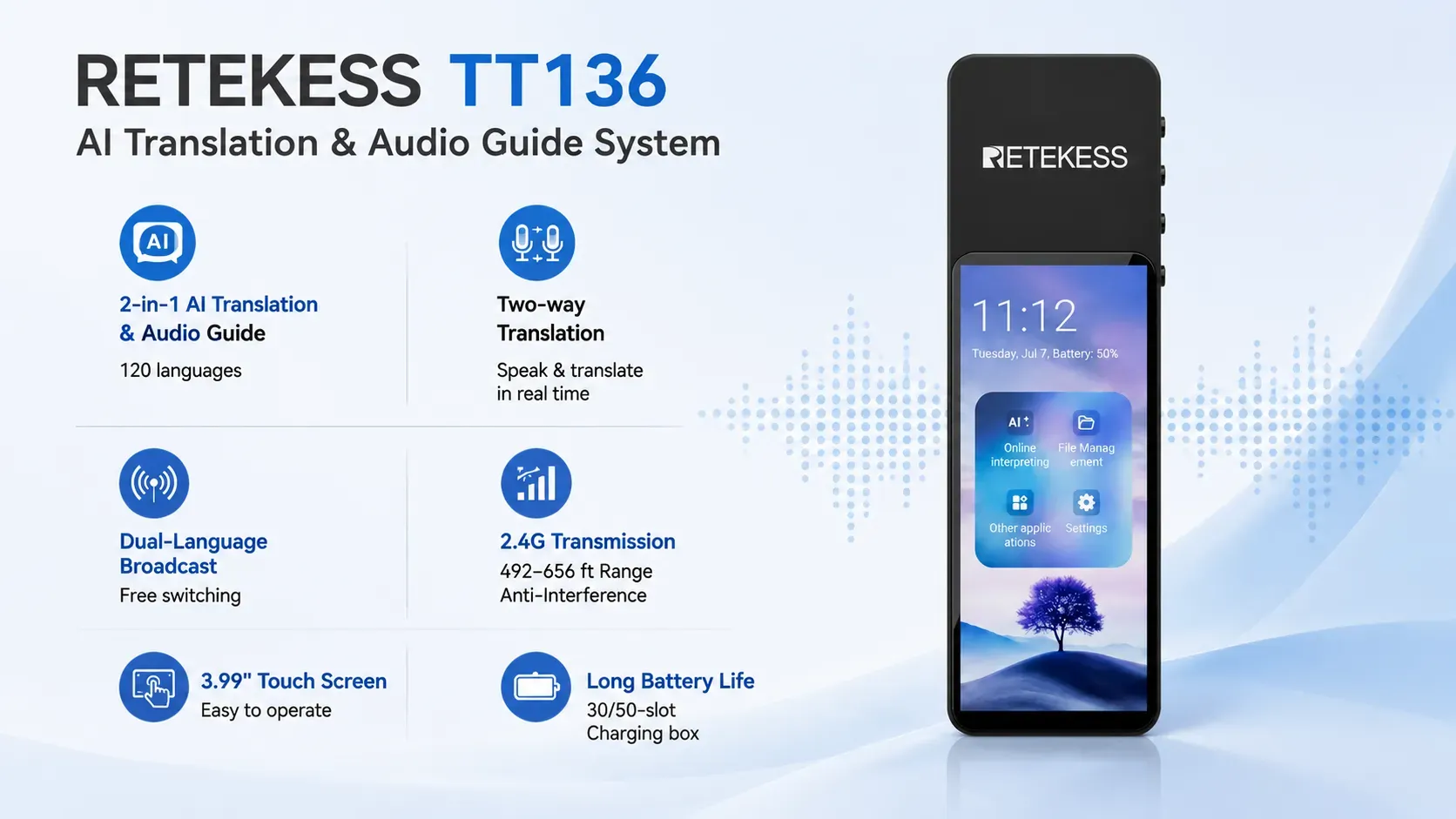 It is a good fit for small client meetings, cross-border sales discussions, supplier and partner calls, internal multilingual briefings, and product demos with overseas participants.
In these settings, the value of TT136 is not just that it supports translation. It helps make the meeting easier to manage. The organizer does not need to build a large interpretation workflow around the event. Participants can focus on the discussion instead of the language gap. And the meeting can keep its pace without constant interruption.
For many businesses, that practical value matters more than anything else.
The Boundary: What AI Interpretation Is Best For
It is also important to be realistic about where AI interpretation fits.
For very large conferences, legal meetings, or events where precision and formal interpretation standards are critical, professional human interpreters and full interpretation systems may still be the better choice. AI is not meant to replace every high-stakes communication need.
But for small and medium business meetings, that is not always necessary. In many cases, what businesses need most is a way to communicate clearly, keep the meeting moving, and avoid unnecessary complexity. That is where lightweight AI interpretation can be a strong fit.
Understanding that boundary helps businesses choose the right solution for the right kind of meeting.
Why This Matters For Growing Businesses
As more companies work across borders, multilingual meetings are becoming normal. Even a small business may now speak with clients, suppliers, or partners in several countries. That means translation is no longer a rare problem. It is part of everyday business communication.
The businesses that adapt early often gain an advantage. They can move faster, communicate more clearly, and make meetings easier for everyone involved. That is especially valuable when the goal is to build trust with international partners.
A practical AI solution supports that goal by making small business meeting translation simpler, more flexible, and more usable in real business settings.
Conclusion: A Practical Middle Ground For Multilingual Meetings
Small and medium business meetings do not need a heavy interpretation setup every time multiple languages appear. In real life, businesses usually choose between interpreters and professional simultaneous interpretation equipment, and both have strengths. But both also have limits.
That is why lightweight AI simultaneous interpretation is gaining interest. It offers a practical middle ground for meetings that need clear communication without the cost, delay, or complexity of a larger system.
TT136 fits this need by helping businesses support multilingual meetings in a simpler way. For small and medium teams, that can mean better meeting flow, easier participation, and less friction in day-to-day cross-border communication.
In the end, the goal is straightforward: make business meetings easier to follow, easier to manage, and easier to finish on time. That is what good small business meeting translation should do.
Frequently Asked Questions About Small Business Meeting Translation
Q: When should a small business use AI interpretation instead of on-site interpreters?
A: AI interpretation is a good choice when the meeting needs to stay fast, flexible, and easy to manage. It can work well for small meetings where the goal is clear communication without adding too much extra coordination.
Q: Is AI interpretation suitable for formal business meetings?
A: It can be useful in many business settings, but very formal or high-stakes meetings may still be better suited to professional human interpreters or full interpretation systems. The best choice depends on the meeting type and level of precision needed.
Q: What kind of meetings is TT136 best for?
A: TT136 works well in small client meetings, supplier calls, partner discussions, internal multilingual briefings, and product demos with overseas participants. These are the kinds of situations where a lightweight solution can make communication easier.
Q: What is the main advantage of lightweight AI simultaneous interpretation?
A: The biggest advantage is flexibility. It helps businesses support multilingual meetings without the cost, delay, and complexity of a heavier setup. That makes it a practical option for many small and medium teams.



![[18th Anniversary] 18 Years of Echoing Excellence: Making Communication Easier, Connecting Trust Beyond Borders](https://res.retekess.com/z_file/20260716/retekess-brand-story-making-communication-easier_20260716151044_7682.jpg)
![[18 Years in Wireless Communication] Silent Disco Systems Anniversary Celebration: Top-Selling Headphones & Event Mechanics Revealed!](https://res.retekess.com/z_file/20260713/18-years-in-wireless-communication-silent-disco-systems-anniversary-celebration_20260713175011_5749.webp)
![[Anniversary Carnival] Ding-dong! 18th Anniversary Mega Sale on Guest Paging & Calling Systems: Full Reveal of 12+ Products & Promo Rules!](https://res.retekess.com/z_file/20260713/18th-anniversary-mega-sale-on-guest-paging-calling-systems_20260713175257_0295.webp)
![[Retekess 18th Anniversary Teaser] Tour Guide System Exclusive Perks: Sneak Peek at Event Dates & Mechanics!](https://res.retekess.com/z_file/20260713/retekess-18th-anniversary-tour-guide-system-exclusive-perks--2-_20260713180135_6435.webp)

Follow Us
Pay With


 Google
 Amazon
Comments (0)