
Table of Contents

2026 European Tour Guide Headset Buying Guide: Match Every Scenario & Group Size
- Retekess
- Sep 29, 2026
Introduction
European tour operations cover wildly different environments, from narrow historic city streets to sprawling museum halls, sunlit vineyards, and cross-country coach routes. Each setting places unique demands on your audio equipment, and many teams end up buying multiple systems just to cover all use cases. This approach wastes budget, creates training overhead, and leaves staff juggling incompatible devices across bookings.
This tour guide headset buying guide cuts through the confusion with scenario-specific recommendations for 2026. We match top systems to the most common European tour types, group sizes, and budget levels, so you can standardize your equipment and reduce total cost of ownership.
Core Challenges to Address in Your Tour Guide Headset Buying Guide
First, scenario diversity creates performance gaps. Outdoor walking tours need long range and wind resistance, while museums require strong noise cancellation and discreet design. Wineries and open-air sites sit somewhere in between, with mixed indoor-outdoor layouts.
Second, group sizes vary drastically. You may run private 6-person luxury tours one day and 40-person coach groups the next. A system built for small groups will fail large ones, while high-capacity gear is overkill for intimate bookings.
Third, operational efficiency suffers with mixed fleets. Different charging methods, pairing processes, and maintenance routines slow down pre-tour setup. For rental companies, this also means longer turnaround times between bookings.
Scenario-Based Picks From This Tour Guide Headset Buying Guide
We tested four leading Retekess systems against real European tour conditions. Below are our top recommendations for each core use case.
City Walking Tours & Small Day Groups

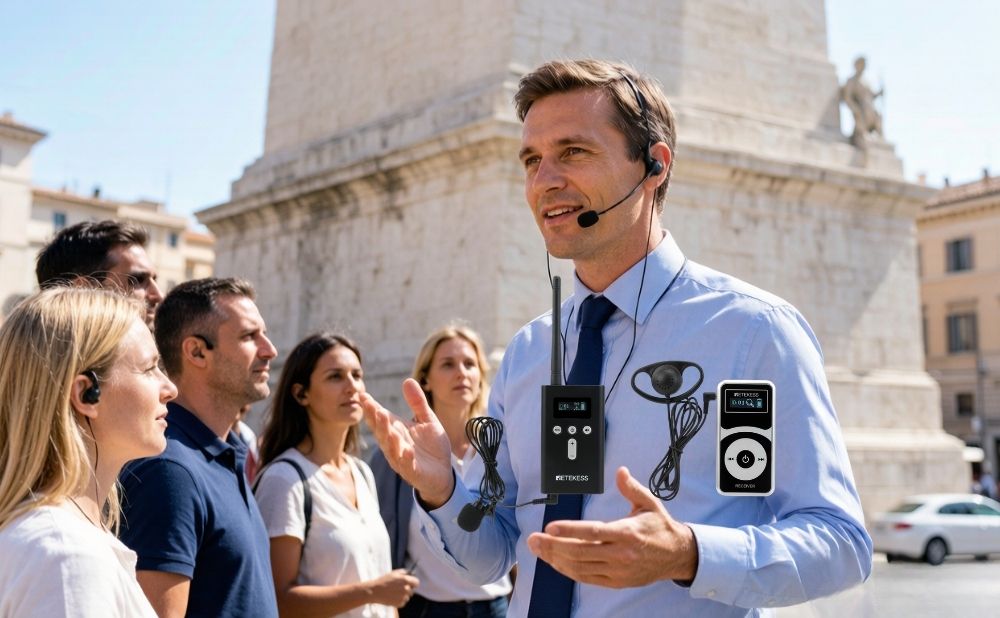
City walking tours require lightweight gear, reliable street-level range, and all-day battery life. Guides need simple controls that work without distraction, and rental teams need equipment that holds up to daily use.
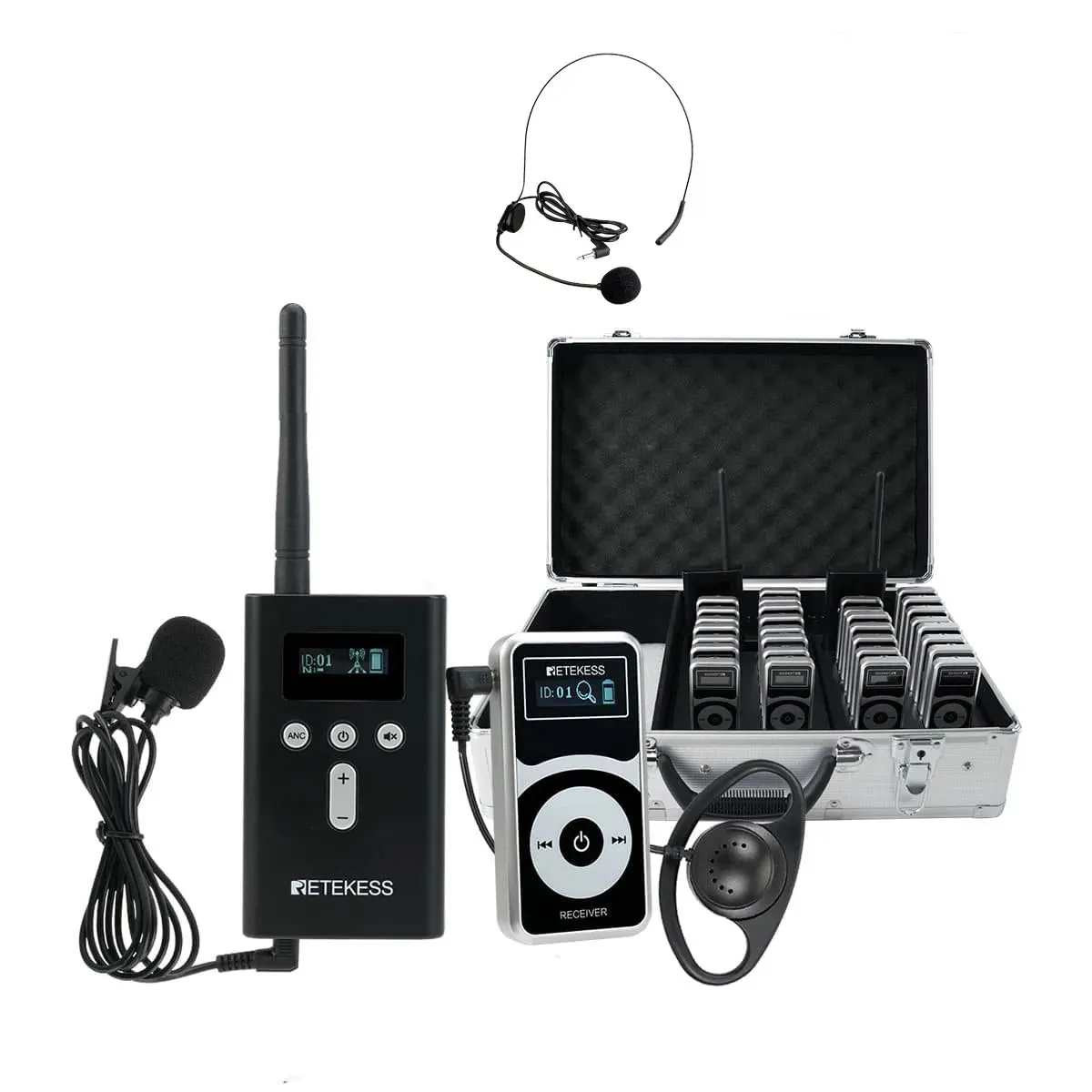
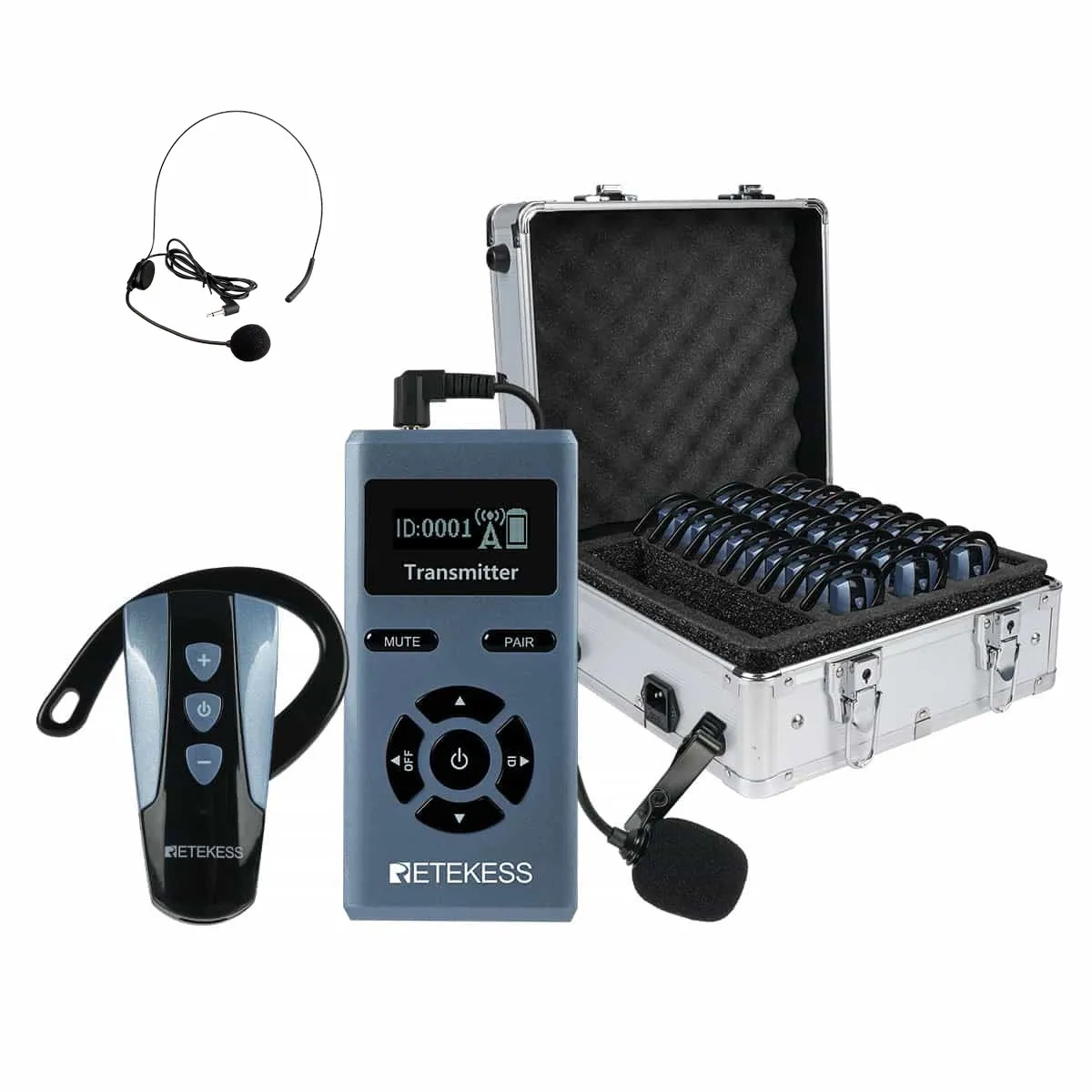
The Retekess TT106S ear-hook system fits this use case perfectly. Its 200-meter open-air range covers typical walking tour routes, even with crowds and building interference. The receiver delivers 50 hours of runtime on a 3-hour charge, so you can run multiple tours per day without mid-day charging.
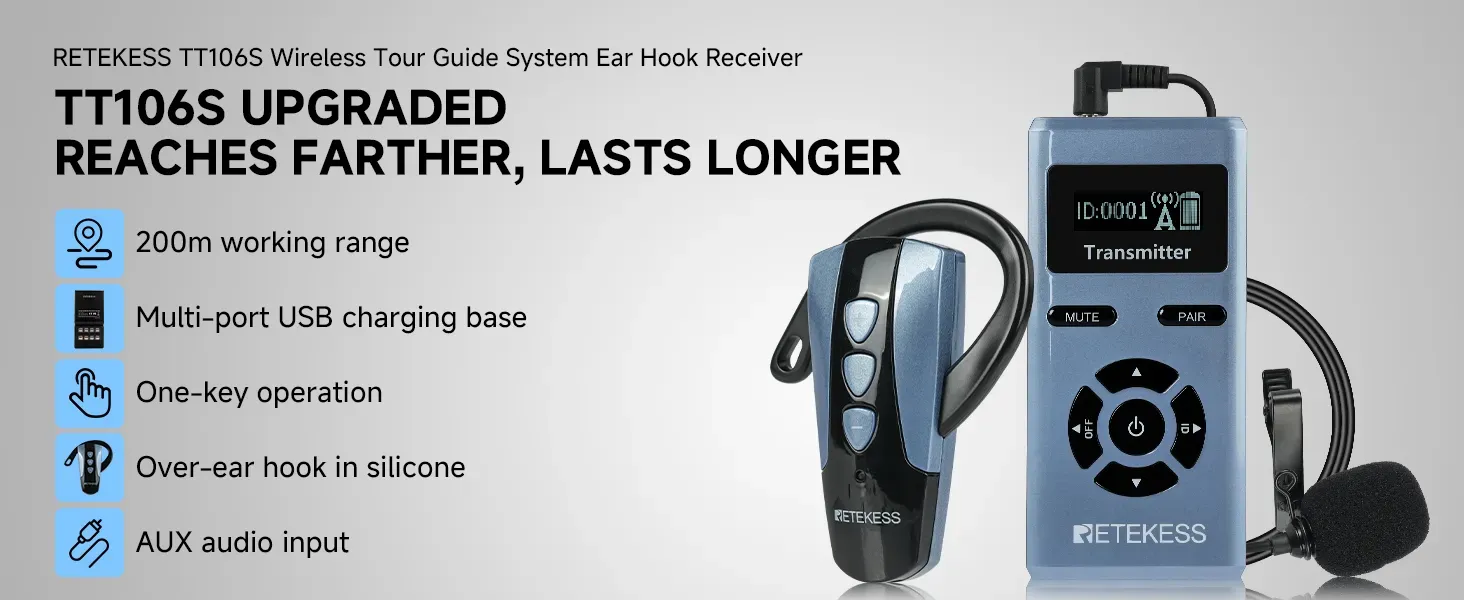
Key benefits for city tours:
- 9999 selectable channels prevent crosstalk in busy tourist areas
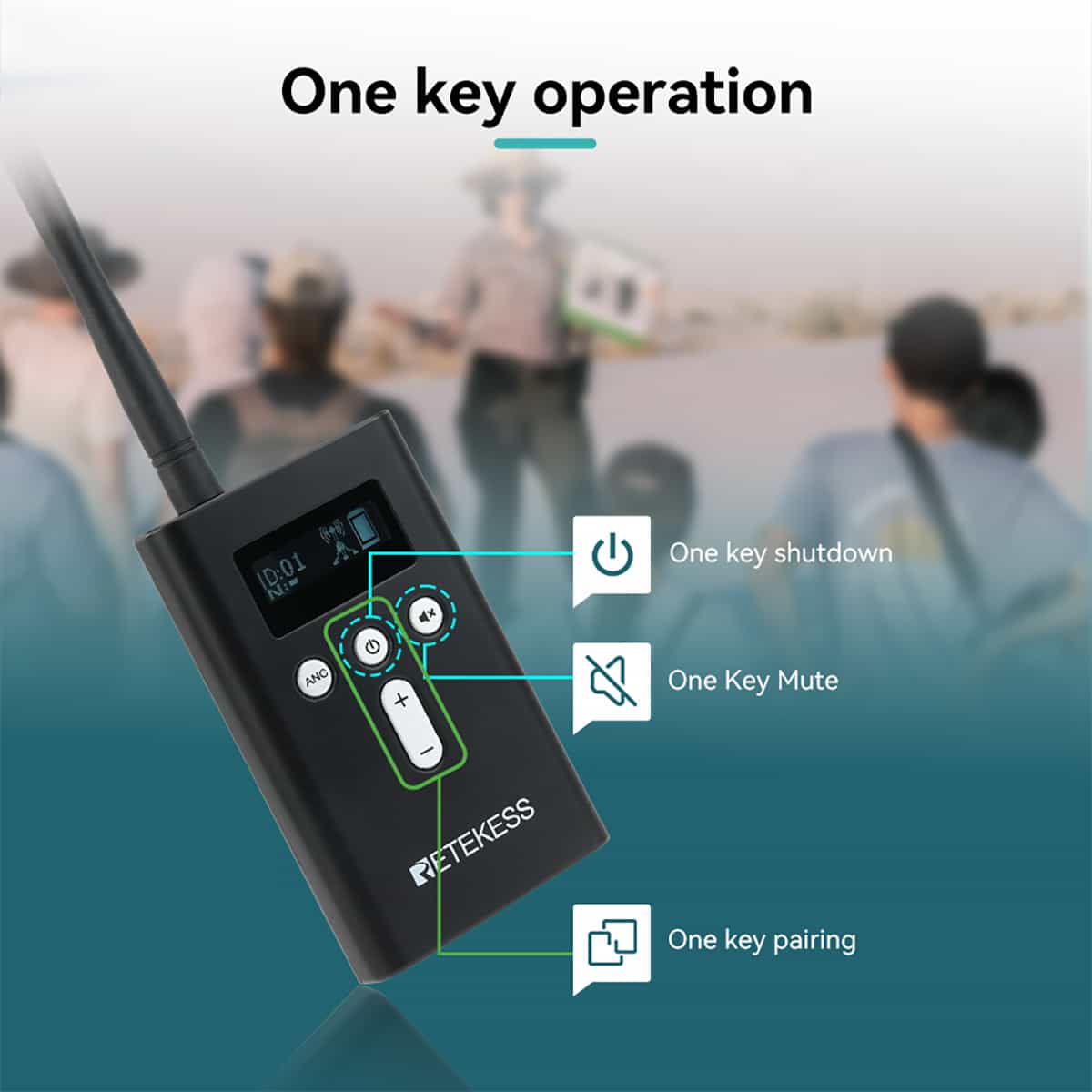
- One-touch pairing and mute controls let guides focus on guests
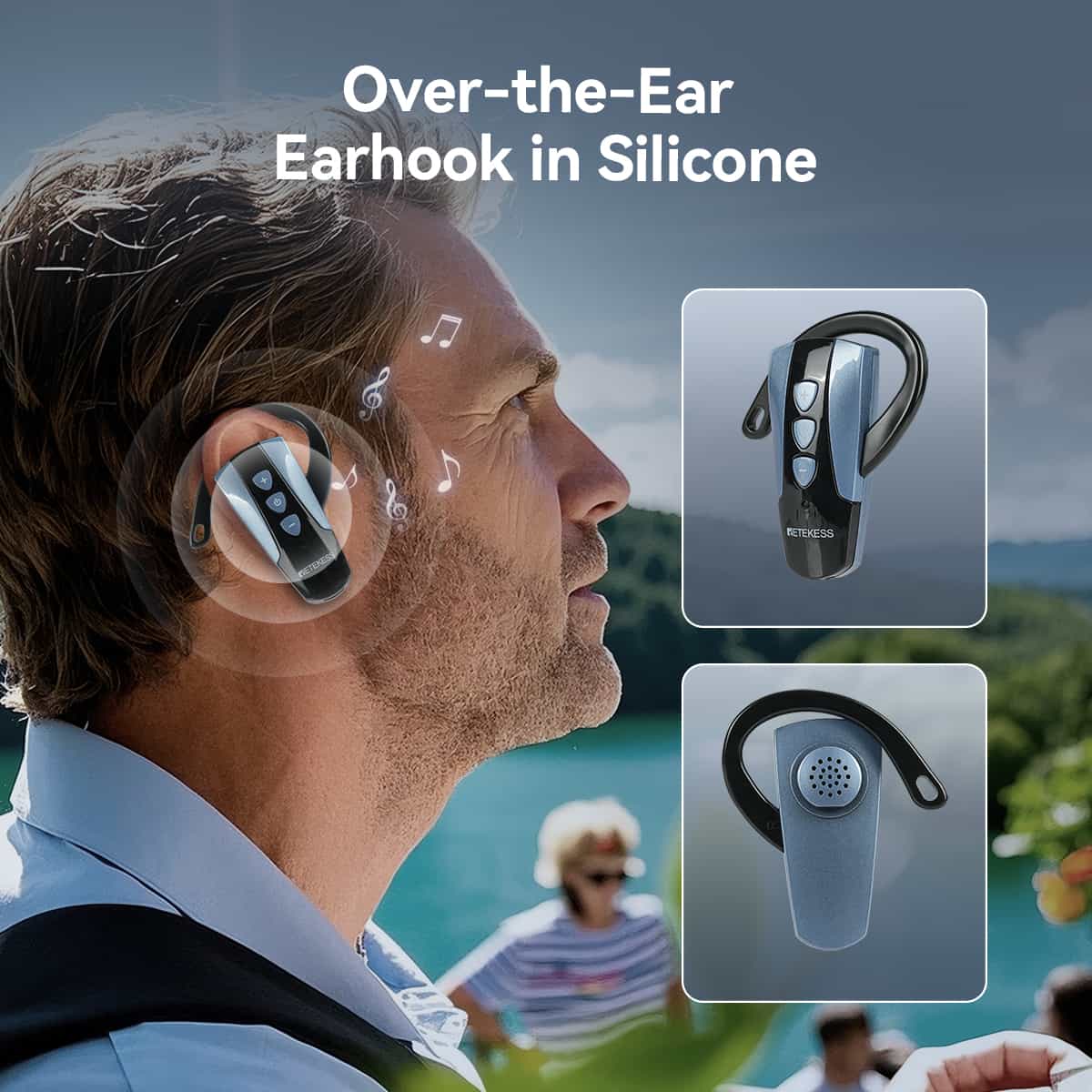
- Soft silicone earhooks stay secure during walking and standing
- Supports both Type-C and contact charging for flexible fleet management
Museums & Indoor Heritage Sites
Museum environments demand clear audio without disturbing other visitors. Ambient noise from crowds and HVAC systems can muffle speech, and large multi-room sites require consistent coverage.
The Retekess T130P addresses these needs with built-in DSP noise cancellation. It offers 4 adjustable noise reduction levels to filter out background sound, delivering crisp voice quality even in busy exhibition halls. The 160-meter range covers most museum layouts, from single galleries to multi-floor historic buildings.
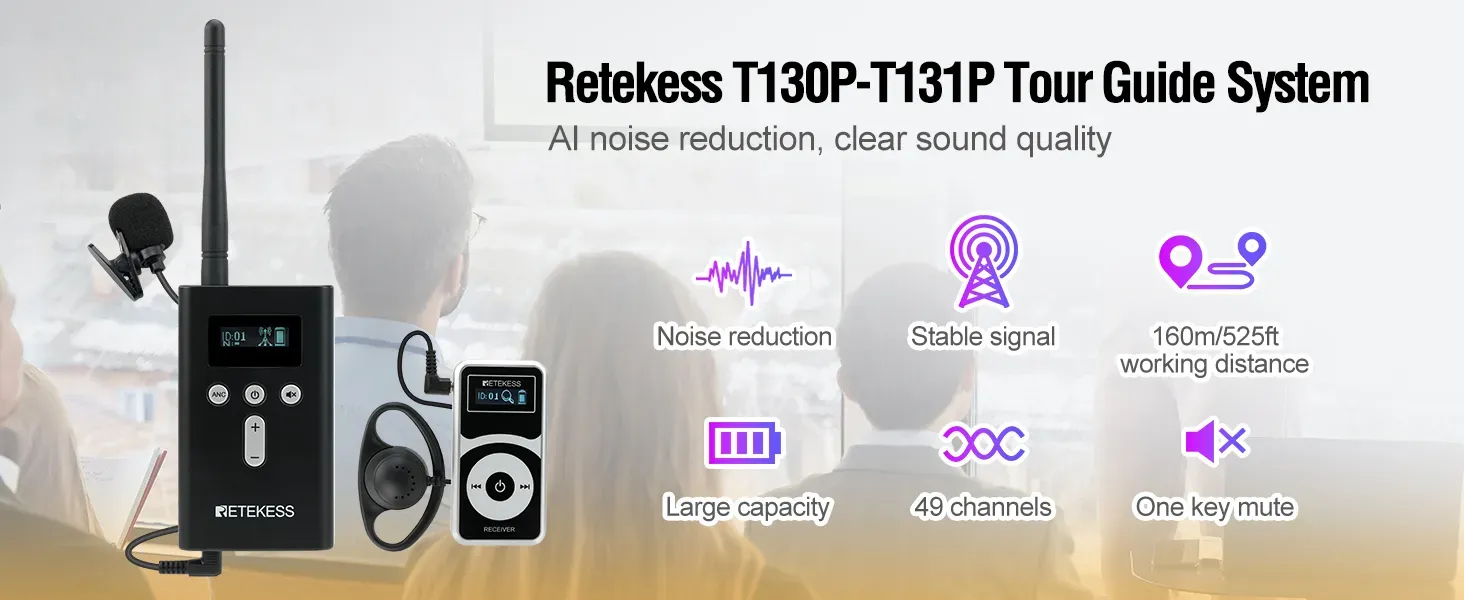
Key benefits for museum tours:
- D-shaped earhooks work on either ear for quick, hygienic handoff
- 49 channels support multiple tour groups in the same venue
- 36-hour receiver runtime handles full operating days
- Contact charging bases simplify bulk charging for large fleets
Winery Tours & Premium Experience Groups
Winery tours combine indoor tasting rooms, outdoor vineyard walks, and coordination between guides and site staff. Two-way communication improves flow, and professional audio elevates the premium guest experience.
The Retekess TT126 two-way tour guide system supports seamless back-and-forth between a main transmitter and vice transmitters. Guides can speak with tasting room staff or assistant guides without leaving the group, keeping tours on schedule. Its 280-meter range covers sprawling vineyard properties with ease.
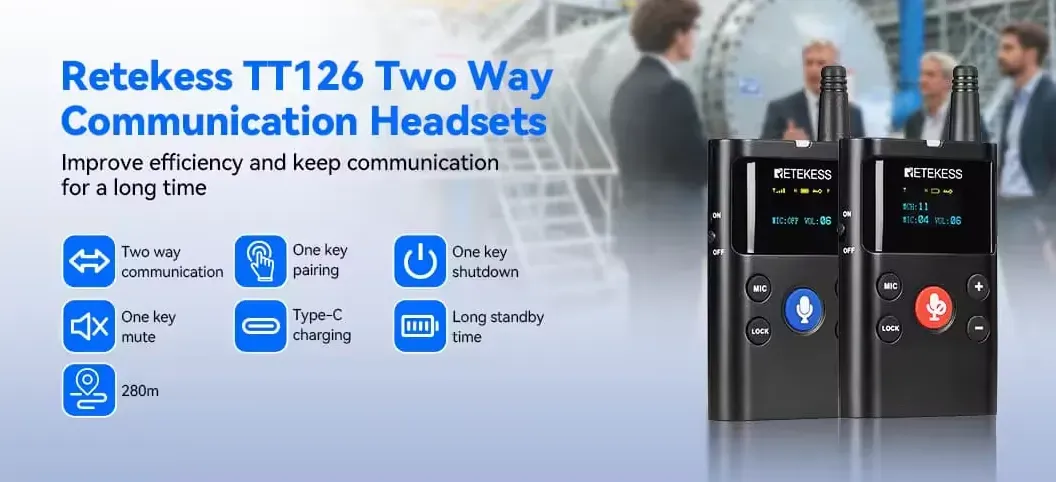
Key benefits for winery tours:
- Automatic frequency pairing cuts pre-tour setup time
- LINE-IN and LINE-OUT ports support pre-recorded audio and external speakers
- Lanyard and back clip options let staff work hands-free
- Automatic power saving shuts down receivers without signal to preserve battery
Long-Haul Multi-Day & Multilingual Coach Tours
Long-haul European tours cross borders and serve multilingual guests. Teams need systems that work without internet, support real-time translation, and stay comfortable for hours of daily use.
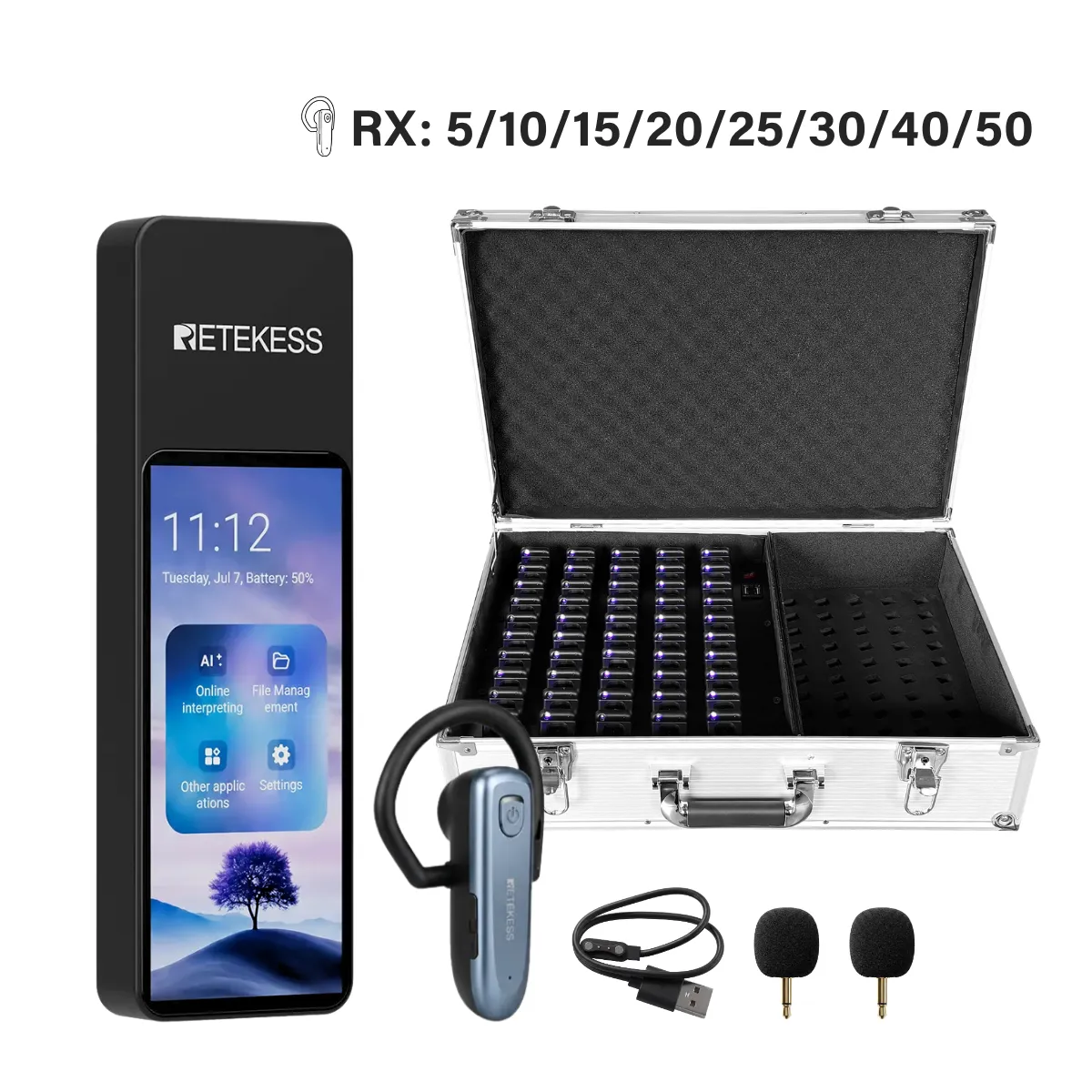
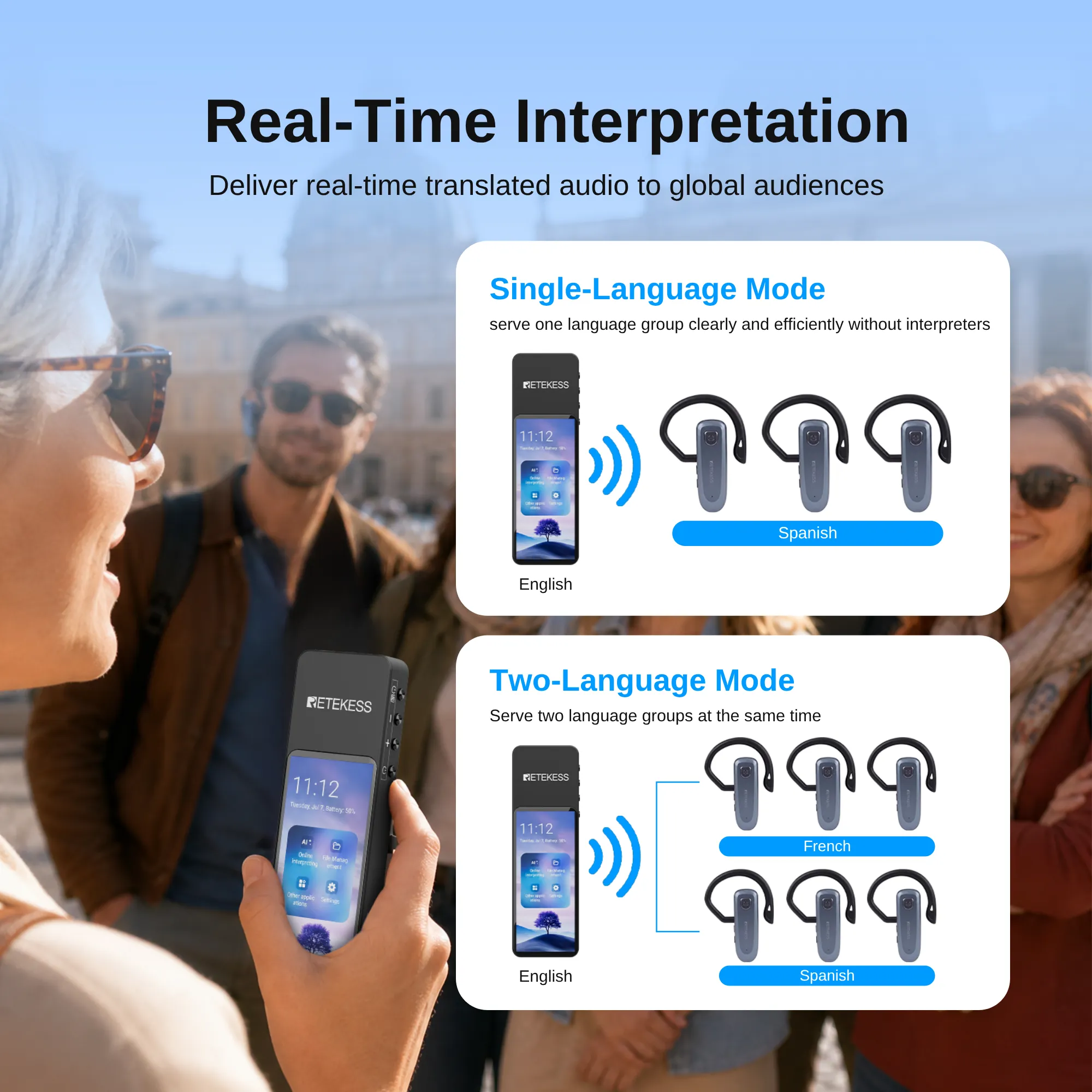
The Retekess TT136 wireless interpretation system handles this complex use case. It supports real-time simultaneous translation for up to 10 spoken languages, with dual broadcast channels for two target languages at once. Groups can follow the same tour in their native language, without hiring extra on-site interpreters.
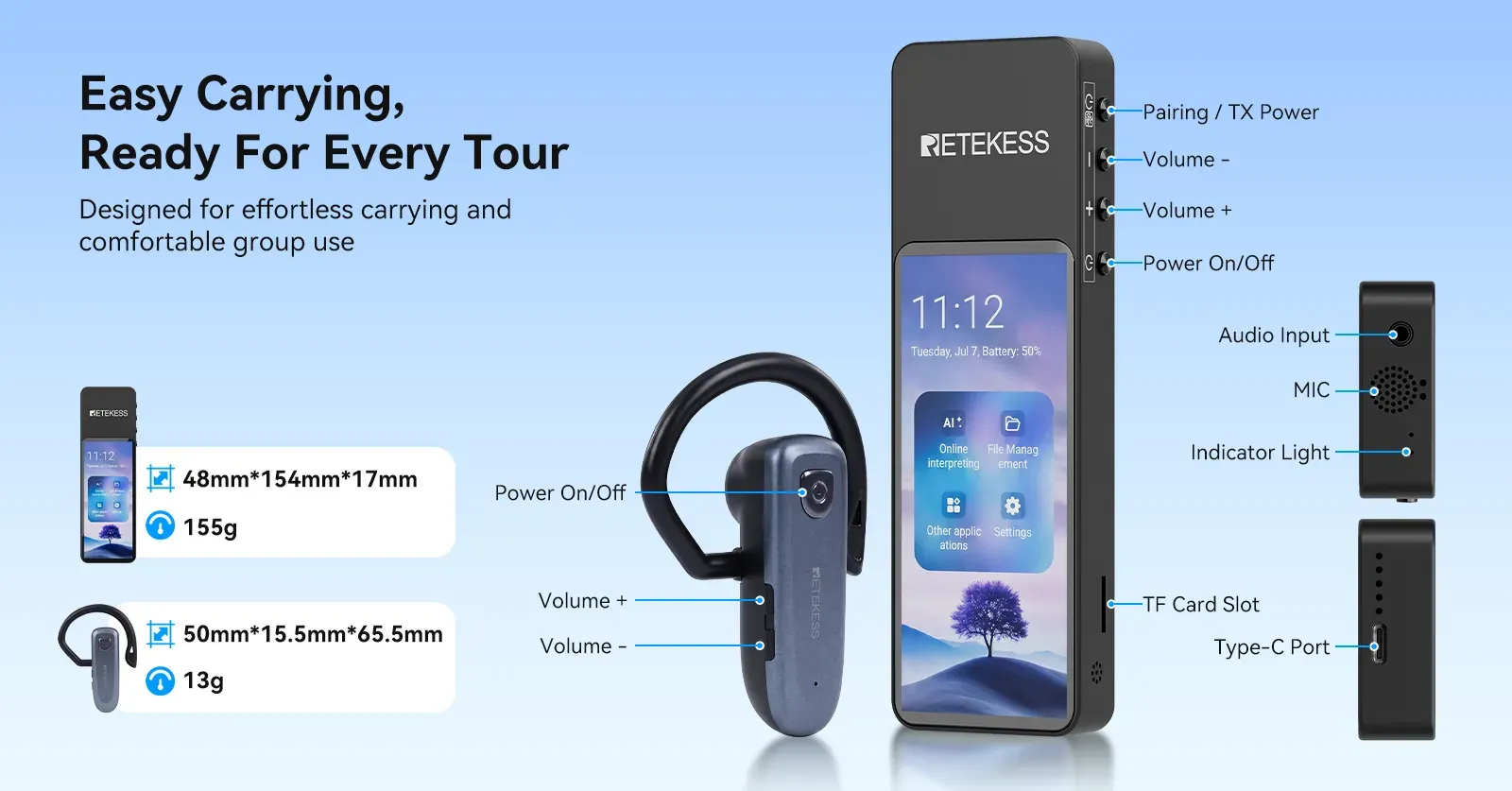
Key benefits for long-haul tours:
- Works fully offline, with no reliance on Wi-Fi or cellular data
- Two-way group translation supports Q&A sessions across language groups
- AI recording and summary function lets guests revisit key information
- Lightweight open-ear receivers stay comfortable for 8+ hour tour days
Budget & Operational Selection Framework
Choosing the right system depends on your core use cases, group size mix, and total budget. This section of the tour guide headset buying guide gives you a simple framework to narrow down options.
- Entry-level budget (high volume, standard walking tours):Choose the TT106S for maximum battery life and lowest per-unit cost. It works for most general day tours and rental fleets.
- Mid-tier functionality (mixed indoor-outdoor, premium service):Pick the T130P for museum and heritage work, or the TT126 for tours that need two-way staff communication.
- Premium multilingual capability (international groups, cross-border tours):Invest in the TT136 to eliminate interpreter costs and deliver seamless multilingual experiences.
For rental companies and large DMCs, a mixed fleet works best. Start with a core set of entry-level systems for standard bookings, and add premium units for high-end or multilingual requests. This approach maximizes utilization without overbuying specialized equipment.
Conclusion & Next Steps
The right tour guide headset system standardizes your operations, reduces waste, and improves every guest interaction. This tour guide headset buying guide gives you a clear starting point to match equipment to real European tour scenarios, instead of forcing you to compromise on performance or budget.
If you need help building a custom equipment plan for your specific tour portfolio, our team can help. We offer 1:1 consultation to assess your scenarios, group sizes, and fleet needs, and provide tailored recommendations with pricing and deployment support. Book your free consultation today to build a tour audio system that grows with your business.

![[18th Anniversary] 18 Years of Echoing Excellence: Making Communication Easier, Connecting Trust Beyond Borders](https://res.retekess.com/z_file/20260716/retekess-brand-story-making-communication-easier_20260716151044_7682.jpg)
![[18 Years in Wireless Communication] Silent Disco Systems Anniversary Celebration: Top-Selling Headphones & Event Mechanics Revealed!](https://res.retekess.com/z_file/20260713/18-years-in-wireless-communication-silent-disco-systems-anniversary-celebration_20260713175011_5749.webp)
![[Anniversary Carnival] Ding-dong! 18th Anniversary Mega Sale on Guest Paging & Calling Systems: Full Reveal of 12+ Products & Promo Rules!](https://res.retekess.com/z_file/20260713/18th-anniversary-mega-sale-on-guest-paging-calling-systems_20260713175257_0295.webp)
![[Retekess 18th Anniversary Teaser] Tour Guide System Exclusive Perks: Sneak Peek at Event Dates & Mechanics!](https://res.retekess.com/z_file/20260713/retekess-18th-anniversary-tour-guide-system-exclusive-perks--2-_20260713180135_6435.webp)
Follow Us
Pay With


 Google
 Amazon
Comments (0)