
Table of Contents
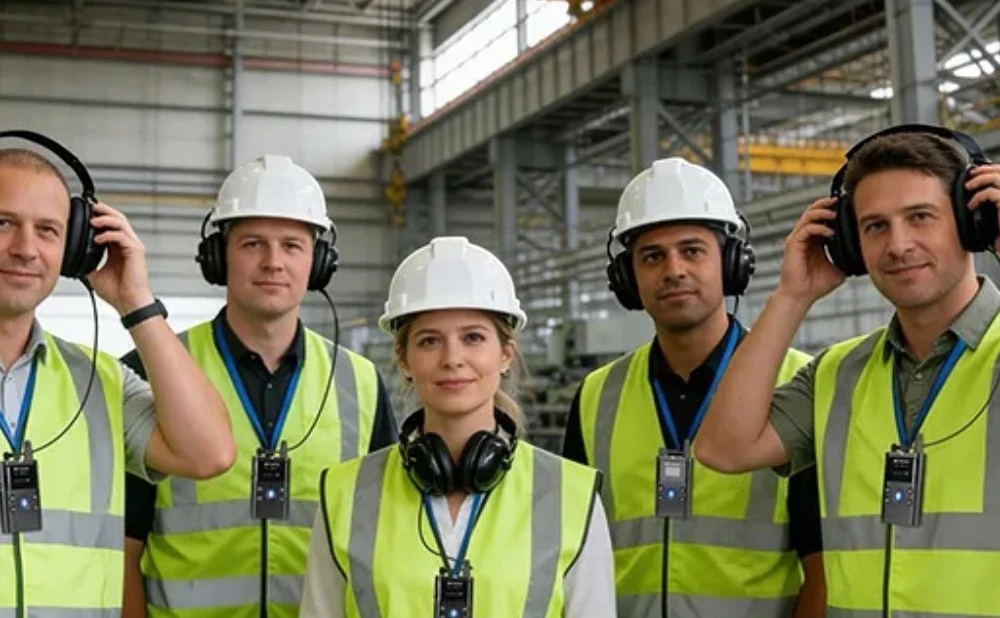
Real Factory Tour Cases: How Manufacturers Solve Different Visitor Reception Challenges
- Retekess
- Sep 29, 2026
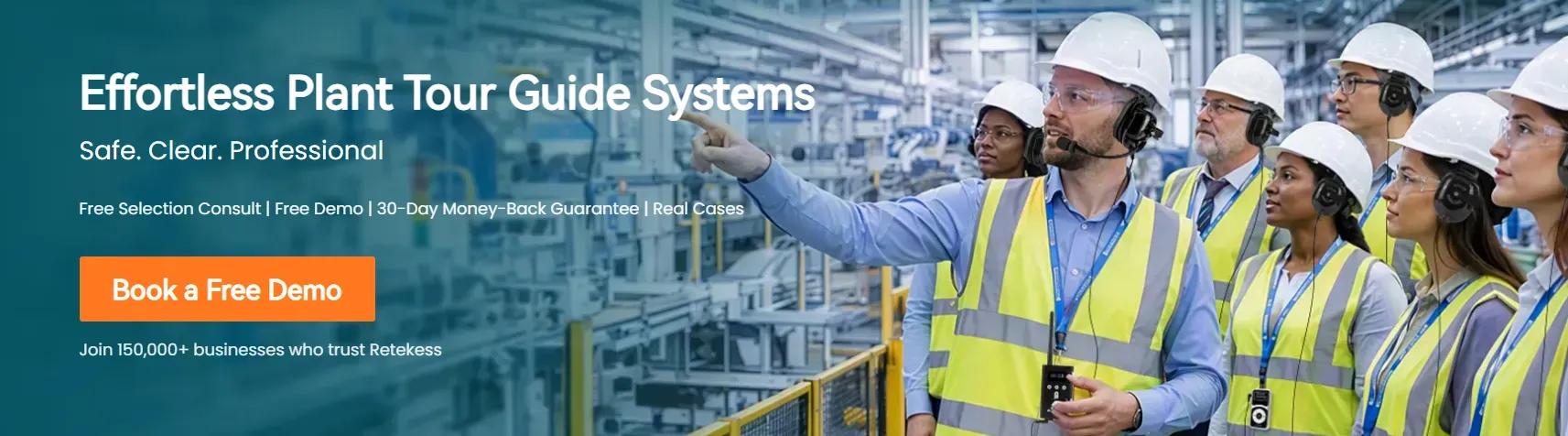
A factory tour is more than a walk through a production line. For manufacturers, it can be an opportunity to welcome customers, introduce capabilities, build trust, or give students and community groups a closer look at modern manufacturing.
But factory reception needs vary widely. A system that works well for a school visit may not be the right choice for a customer tour or a VIP reception.
This creates a common challenge for factory managers: How do you know which audio guide system will actually work in your environment?
Real-world factory tour cases provide a useful reference. By looking at who the visitors are, what communication challenges they face, and how the system is configured, manufacturers can make a more informed choice before investing in equipment.
Different Factory Tours, Different Communication Needs
There is no single factory tour setup that fits every manufacturing environment.
The right configuration depends on several factors: visitor type, group size, noise level, tour distance, communication method, and how equipment will be managed between tours.
|
Reception Type |
Common Challenge |
What to Consider |
|
Student & School Visits |
Large groups, high noise, younger visitors |
Clear audio, noise reduction, easy communication |
|
Customer Visits |
Noisy production areas, important conversations |
Stable transmission, clear voice, professional experience |
|
VIP & Official Visits |
Smooth reception and visitor experience |
Reliable communication, comfortable equipment, simple operation |
|
Regular Factory Tours |
Different routes and visitor profiles |
Flexible configurations and easy equipment management |
Looking at actual factory experiences makes these differences easier to understand.
Case 1: Student Visits in a Large, Noisy Manufacturing Plant
Merrillsteel, a structural steel manufacturer in Wisconsin, regularly welcomes high-school students to its nearly million-square-foot facility.
The challenge was obvious: dozens of students had to follow explanations inside a large plant with high ceilings and loud machinery. Traditional face-to-face communication made it difficult for students to hear and retain information, while important instructions were also harder to communicate in a noisy environment.
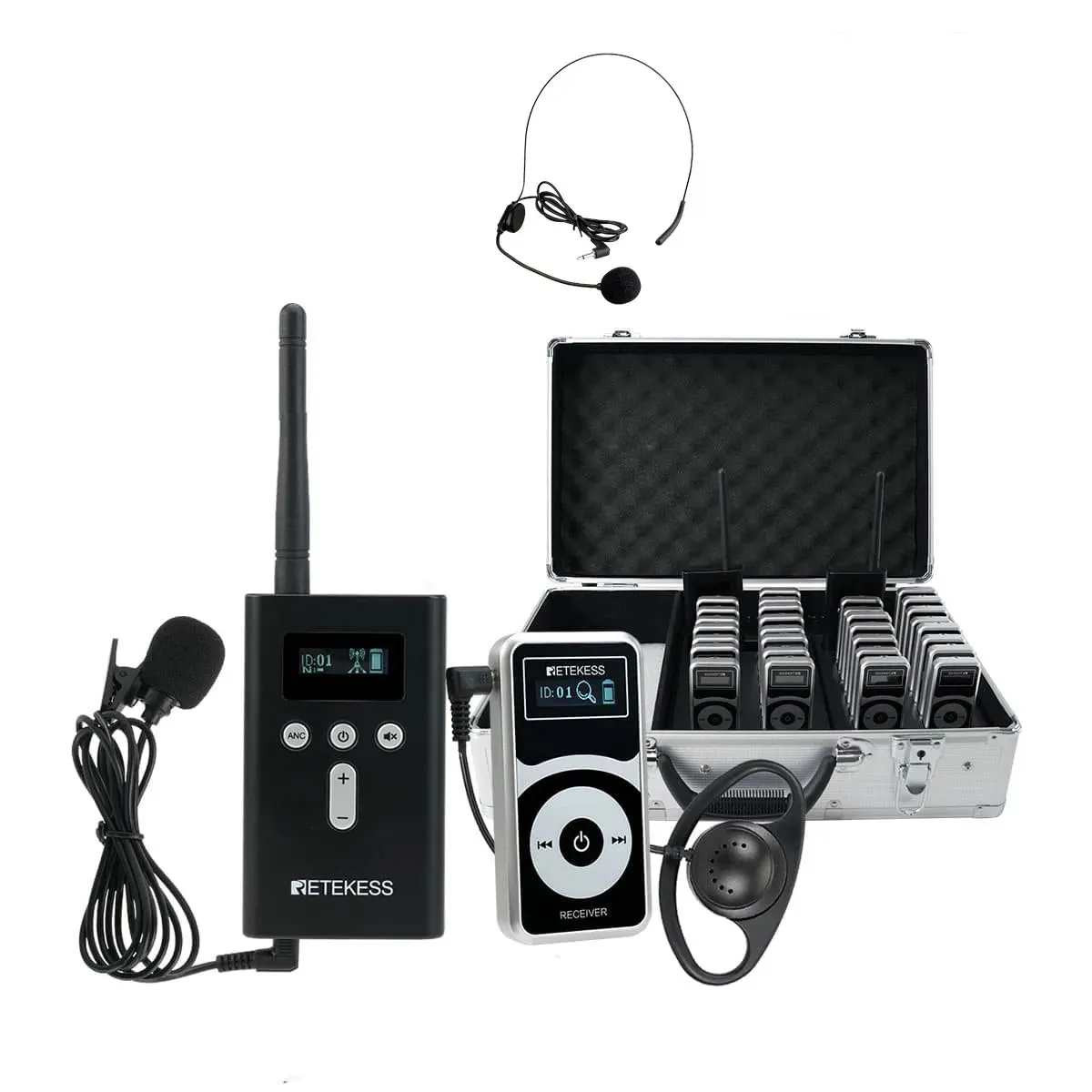
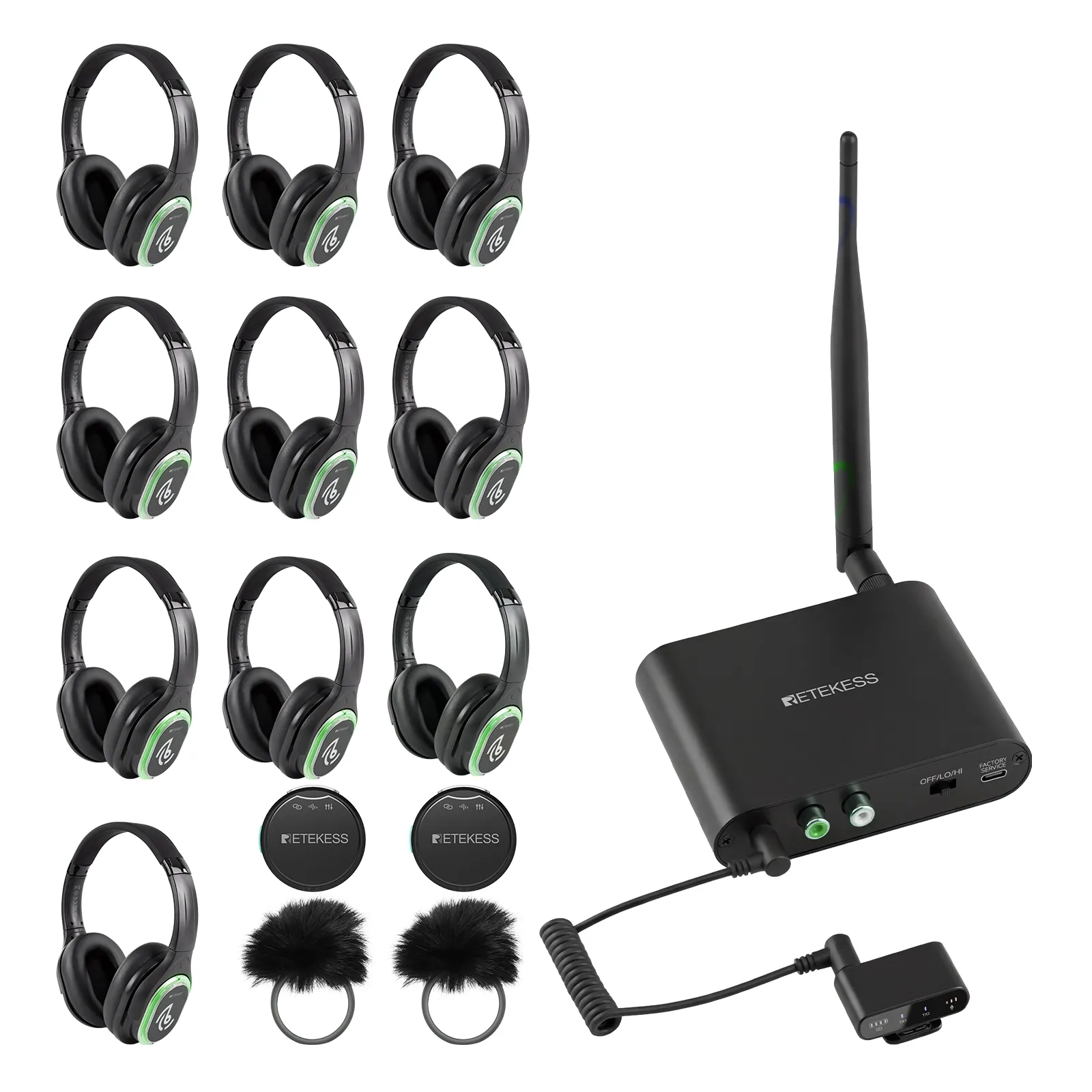
The factory combined a two-way tour guide system with noise-canceling headphones. This configuration allowed the guide to communicate with the group while reducing the impact of surrounding machinery noise.
The lesson is important for factories receiving students or other large groups:
If visitors are young, the group is large, and the production environment is noisy, audio clarity should be treated as a core requirement—not an optional feature.
A two-way system can also be useful when visitors need to ask questions during the tour rather than simply listen to a guide.
Case 2: Customer Visits in a Noisy Workshop
For customer visits, the goal is often different.
SJMAQUINSA, a precision machining and industrial coatings company in Mexico, receives customers at its production facility. Its team needed to overcome communication difficulties caused by a noisy workshop while maintaining a professional experience for important visitors.
The company used a tour guide system with noise reduction and UHF transmission. The system provided an operating range of up to 200 meters, while rechargeable equipment supported extended tours without frequent battery changes.
For customer-facing factory tours, the communication system therefore needs to do more than simply transmit sound.
It should help the guide speak naturally without repeatedly raising their voice, allow visitors to hear explanations clearly while moving through the facility, and avoid turning equipment operation into another task for the host.
The priority is not simply “Can visitors hear?” but “Can the tour feel clear and well organized from beginning to end?”
Case 3: When the Visitor Experience Matters as Much as the Tour
High-profile visits create another set of requirements.
Retekess has also supported factory reception scenarios involving important guests, including a presidential reception at Finnish dairy manufacturer Juustoportti.
In this type of situation, the communication system becomes part of the overall visitor experience. Equipment needs to support the tour without becoming a distraction, while the host should be able to focus on the visitors, the facility, and the story behind the business.
This is especially relevant for manufacturers that regularly receive executives, partners, government representatives, or other VIP guests.
For these tours, consider:
- How discreet and comfortable is the equipment?
- Can the guide operate it without complicated setup?
- Can visitors hear clearly while moving between areas?
- Can the equipment support a smooth and professional reception?
The more important the visit, the less room there is for communication problems.
What These Cases Tell Us About Factory Tour System Selection
These cases show why choosing an audio guide system based only on transmission range or battery life can be misleading.
Instead, start with the actual reception scenario.
1. Who Are You Receiving?
A school group, customer delegation, and VIP visitor may need completely different communication experiences.
Younger visitors may benefit from stronger noise reduction and two-way communication. Customer tours may prioritize clear explanations and a professional experience. VIP visits may place greater emphasis on comfort and simple operation.
2. How Noisy Is Your Production Environment?
Walk through your actual tour route before choosing equipment.
A quiet showroom and a metalworking workshop have completely different audio requirements. If visitors will enter areas with machinery, compressed air, vehicles, or other continuous noise, consider whether standard receivers are sufficient or whether noise-canceling equipment is more appropriate.
3. How Does Your Group Communicate?
Not every factory tour needs the same communication model.
For presentation-focused tours, one-way communication may be enough. If visitors frequently ask questions or interact with the guide, a two-way system can make the tour more conversational.
4. How Will You Manage the Equipment?
Large visitor groups also create a management challenge.
Think beyond the tour itself: How will receivers be distributed, collected, charged, stored, and prepared for the next group?
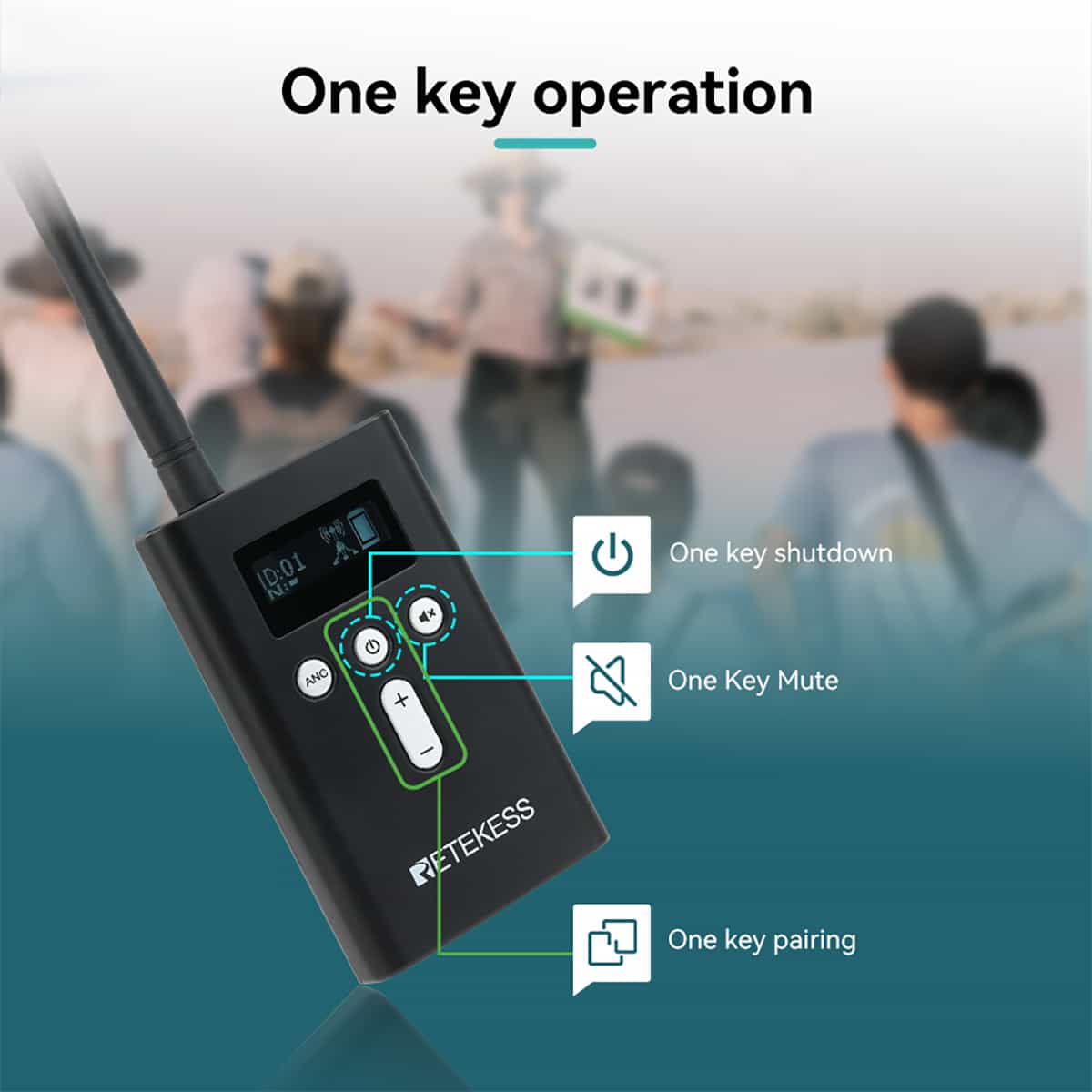
Charging cases, long battery life, simple pairing, and straightforward operation can make a noticeable difference when tours happen regularly.
Still Not Sure Which Configuration Fits Your Factory?
Your factory, visitors, and tour route are unique. That is why real cases can be more useful than choosing a system from specifications alone.
Start by identifying your visitor type, group size, noise level, communication needs, and tour route. Then match those requirements with a configuration that has already been tested in a similar environment.
If you are still unsure, you do not have to make the decision based on specifications alone.
Reply for a Custom Solution & Quote to discuss your factory environment, visitor type, and tour requirements.
Or Book a Free Demo to see how an audio guide setup can work in your own reception scenario.
The right factory tour system is not necessarily the one with the most features. It is the one that fits the way your factory actually receives visitors.
![[18th Anniversary] 18 Years of Echoing Excellence: Making Communication Easier, Connecting Trust Beyond Borders](https://res.retekess.com/z_file/20260716/retekess-brand-story-making-communication-easier_20260716151044_7682.jpg)
![[18 Years in Wireless Communication] Silent Disco Systems Anniversary Celebration: Top-Selling Headphones & Event Mechanics Revealed!](https://res.retekess.com/z_file/20260713/18-years-in-wireless-communication-silent-disco-systems-anniversary-celebration_20260713175011_5749.webp)
![[Anniversary Carnival] Ding-dong! 18th Anniversary Mega Sale on Guest Paging & Calling Systems: Full Reveal of 12+ Products & Promo Rules!](https://res.retekess.com/z_file/20260713/18th-anniversary-mega-sale-on-guest-paging-calling-systems_20260713175257_0295.webp)
![[Retekess 18th Anniversary Teaser] Tour Guide System Exclusive Perks: Sneak Peek at Event Dates & Mechanics!](https://res.retekess.com/z_file/20260713/retekess-18th-anniversary-tour-guide-system-exclusive-perks--2-_20260713180135_6435.webp)
Follow Us
Pay With


 Google
 Amazon
Comments (0)