
Table of Contents
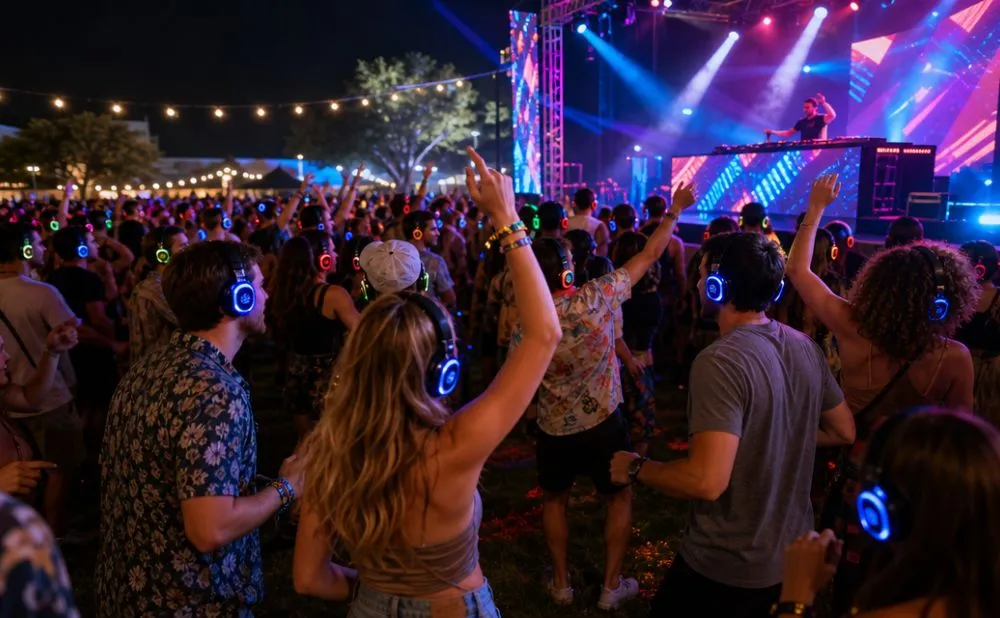
Silent Disco for Outdoor Festivals: Solve Noise Complaints & Extend Hours
- Retekess
- Sep 4, 2026
The Noise Problem That Won't Go Away
Why Traditional Sound Systems Fail at the Boundary
Most outdoor music festivals run line array systems that push 105–115 dB at the front-of-house position. Even 100 meters from the stage, sound levels often hover around 85 dB — well above the 55–60 dB nighttime residential limits in most North American cities.
The math doesn't work. A festival wants 100 dB for the crowd. The city allows 55 dB at the boundary. That 45 dB gap is the source of every noise complaint, every curfew fine, every denied permit.
Common fixes treat symptoms, not the cause. Turning down the volume ruins the experience. Sound barriers cost $20,000+ per installation and don't stop low-frequency bass from traveling through the ground. Moving stages inward eats up valuable venue space. None of these approaches solve the core problem: sound escaping the venue.
The Financial Toll of Noise Non-Compliance
Industry data shows roughly 30% of small and mid-sized outdoor events incur noise-related penalties each year. Fines range from $500 to $5,000 per 15-minute interval in many jurisdictions. A single two-hour overrun can cost $4,000–$40,000 depending on the city.
But fines are the visible tip. The real costs run deeper:
- Permit delays: A history of noise complaints can add 3–6 months to permit approval timelines
- Venue loss: Repeat violations result in permanent bans from specific sites
- Insurance hikes: Noise-related claims push event liability premiums up 15–25%
- Community opposition: Organized resident groups can block future events entirely
Noise ordinance compliance isn't a box to check — it's a survival requirement for outdoor event businesses.
What Is Silent Disco and How Does It Fix This?
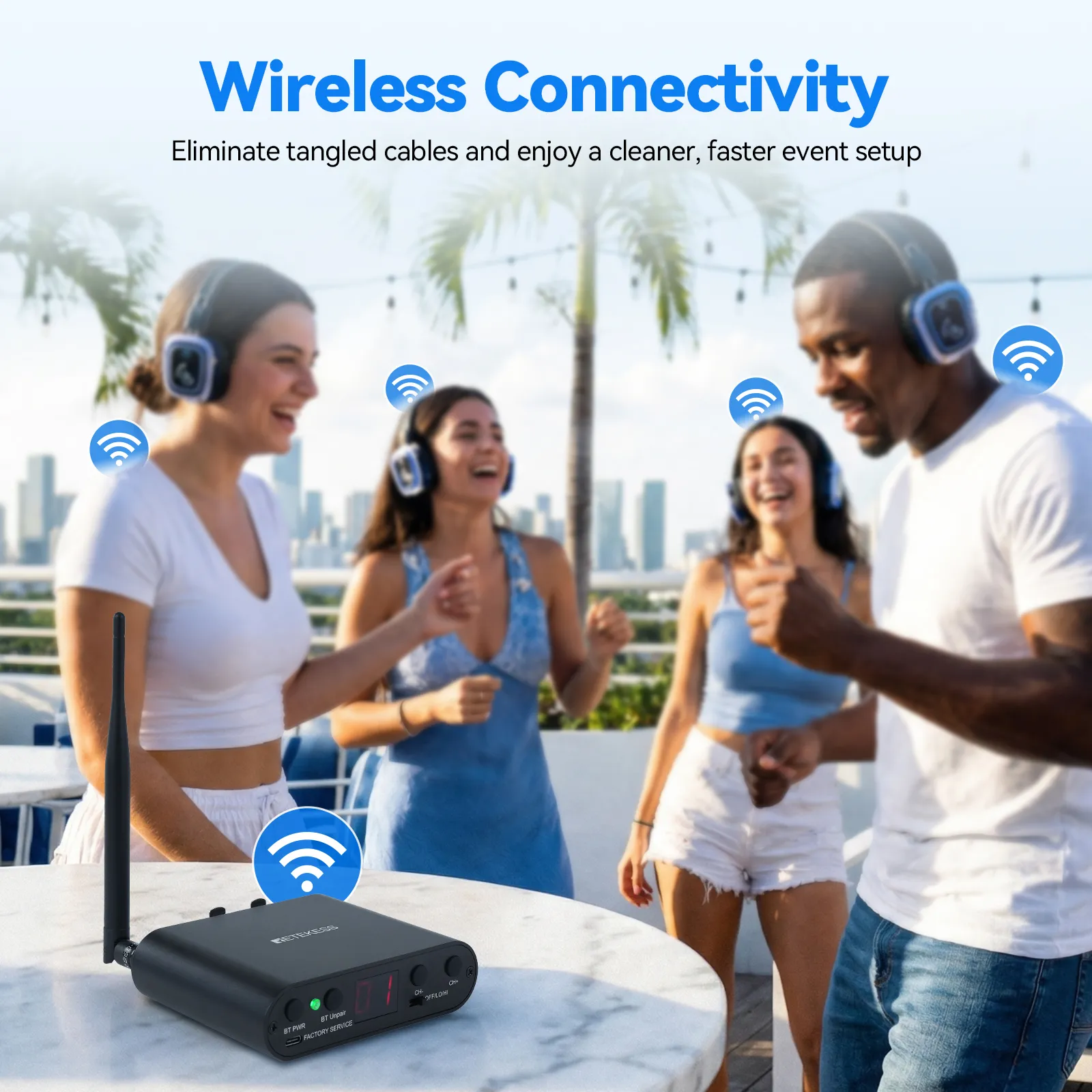
If you're asking what is silent disco, the concept is straightforward: instead of pumping audio through speakers, the DJ or audio source feeds into a wireless transmitter. Attendees wear headphones that receive the signal directly. No speakers, no sound leakage, no boundary noise.
The technology has come a long way from its early 2000s novelty days. Modern systems use FM transmission with stable 300-meter range, multi-channel switching, and 12+ hour battery life. What was once a gimmick for warehouse parties is now a legitimate noise control for outdoor events strategy.
Zero Sound Leakage = Full Compliance
With silent disco, the only sound leaving the venue is the natural murmur of people talking — roughly 40–50 dB. That's below every standard nighttime noise ordinance in North America. Decibel limits for outdoor events stop being a constraint because you're not even close to the threshold.
This changes everything about venue selection. Urban parks, downtown wineries, waterfront lots, campgrounds — locations that were previously off-limits due to sound restrictions become viable. You're no longer forced to book remote industrial sites just to stay compliant.
Silent Disco Curfew: Operating When Others Must Shut Down
Curfew laws exist to stop noise from bothering residents overnight. When there's no external noise, there's nothing to regulate. Silent disco curfew operations can run past mandated end times because the legal trigger — disruptive sound — simply isn't present.
This means:
- After-parties that run until 2 AM or later
- Sunrise sets starting at 5 AM
- Extended programming that adds 4–6 hours of event time
- No risk of per-interval curfew fines
For a festival with 5,000 attendees, extending operations by four hours translates directly to additional beverage, food, and merchandise sales — typically $15–$40 per head in incremental revenue.
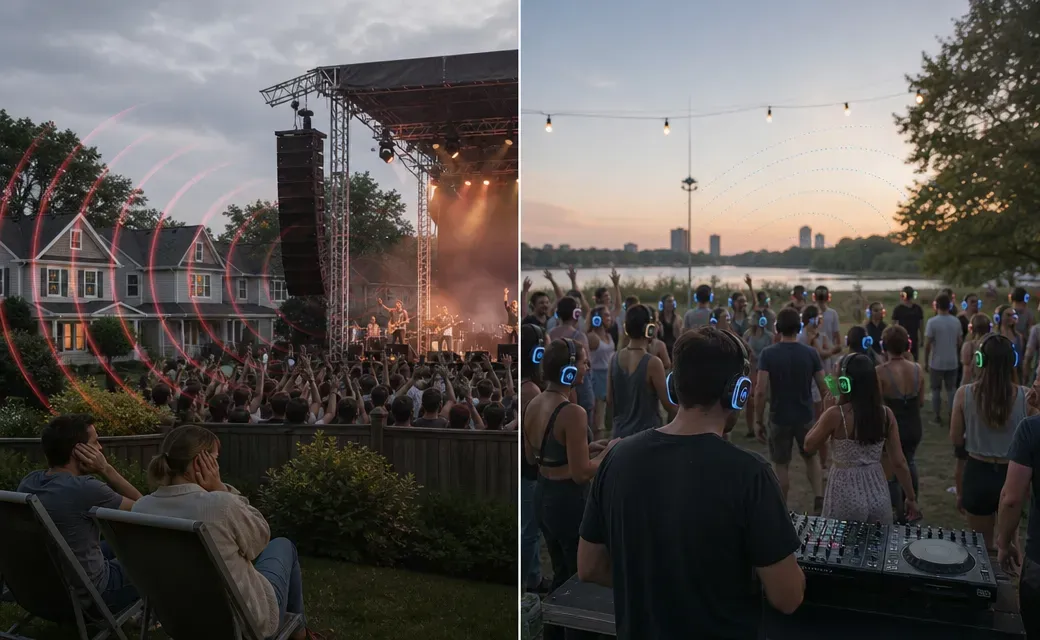
Beyond Noise: The Hidden Advantages of Silent Festival Design
Noise compliance is the headline benefit, but it's far from the only one. Silent disco outdoor music festivals gain operational advantages that traditional setups can't match.
Multi-Stage Without Sound Bleed
At traditional festivals, stages must be spaced 200+ meters apart to prevent audio interference. That means larger footprints, longer walks between sets, and more venue space wasted on buffer zones.
With silent disco, each stage maps to a separate headphone channel. Attendees switch channels with one button. Stages can be placed 30 meters apart with zero bleed. You can fit 4–5 stages in the space a traditional festival uses for two.
Personal Volume Control
At a traditional festival, you get whatever volume the sound engineer decides — too loud for some, too quiet for others. With silent disco, every attendee controls their own volume. Sensitive ears turn it down. Hardcore fans crank it up. No one leaves with ringing ears or a complaint about sound quality.
This is particularly relevant for sports and events noise control — the same principle applies to fitness classes, sports viewing parties, and outdoor workouts where participants want different intensity levels.
The Viral Visual Factor
A field of 2,000 people dancing in silence to three different channels of music is inherently shareable. Attendees post videos. Local media covers it. The visual novelty drives organic social reach that no paid ad campaign can replicate.
Silent disco festivals consistently see 2–3x the social media engagement per attendee compared to traditional events. That's free marketing with a measurable impact on next year's ticket sales.
The Revenue Math: Why Silent Disco Pays for Itself
Let's run the numbers for a mid-sized festival (5,000 attendees, 2-day event):
Cost savings:
- Venue: Accessible urban site vs. remote sound-approved site → $15,000–$30,000 savings on site rental and shuttle services
- Sound barriers: Eliminated → $20,000+ savings
- Fines: Zero risk of curfew penalties → $5,000–$40,000 avoided
Revenue gains:
- Extended hours: +4 hours/day × 2 days → $60,000–$160,000 in incremental F&B and merchandise
- Premium pricing: Unique format supports $10–$25 higher ticket prices → $50,000–$125,000
- Additional events per year: Faster permit approval means 2–3 events instead of 1 → doubled annual revenue
The festival noise complaints solution isn't just about avoiding costs — it's about unlocking a fundamentally more profitable event model.
What to Look for in a Festival-Grade Silent Disco System
Not all silent disco equipment is built for outdoor festival use. Consumer-grade systems fail in three predictable ways: signal dropouts at range, batteries dying mid-event, and headphones breaking after a few uses.
A festival-ready system needs:
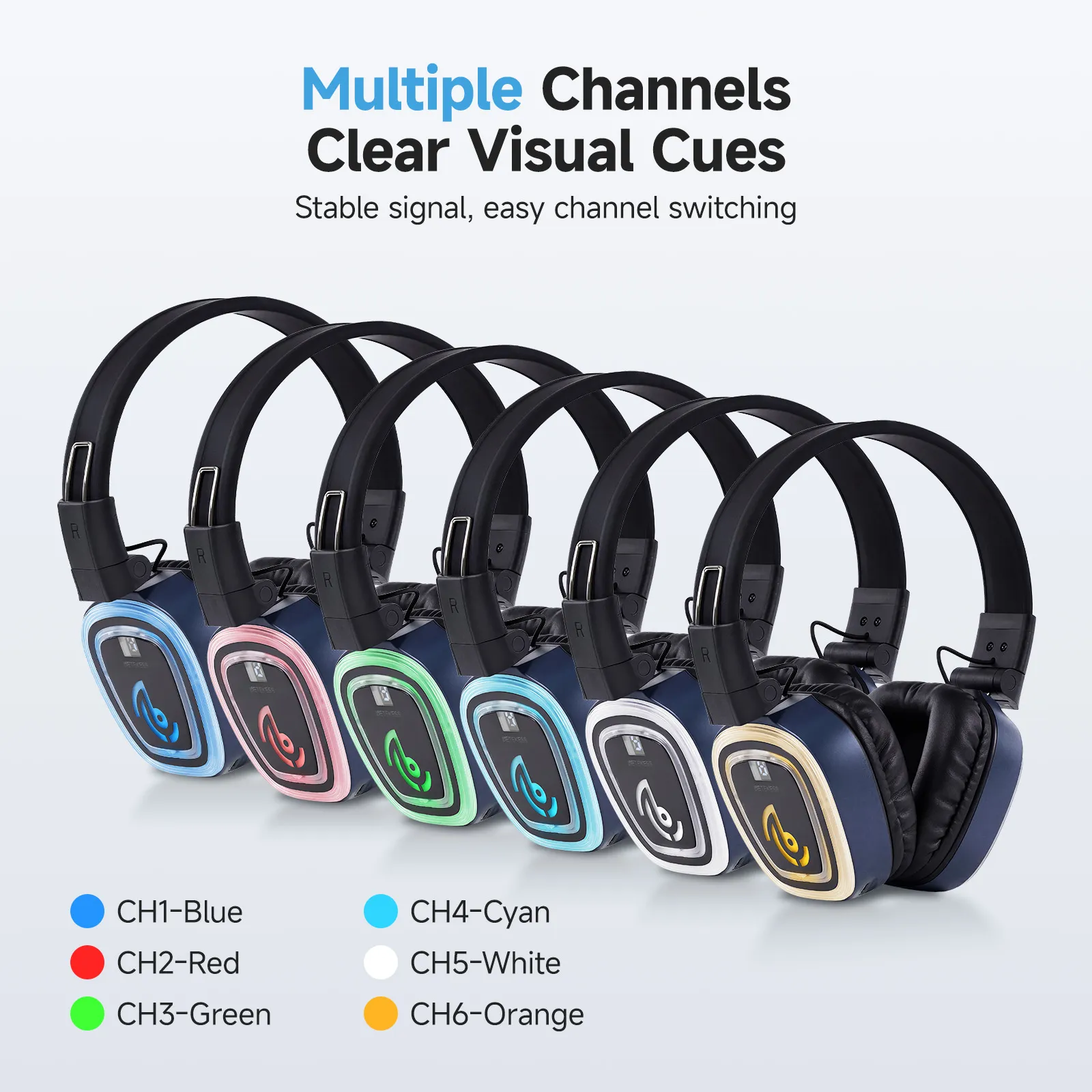
- Multi-channel support: 6independent channels for multiple stages or simultaneous programming.
- Long-range transmission: 300+ meters of stable range to cover a full festival footprint. Handheld transmitters with 300–400 meter range are ideal for mobile stages or roving DJ sets.
- All-day battery life: Headphones need 10+ hours on a single charge to cover a full festival day. Transmitters should last 10–12 hours at high power, with low-power modes extending to 20 hours for multi-day use.
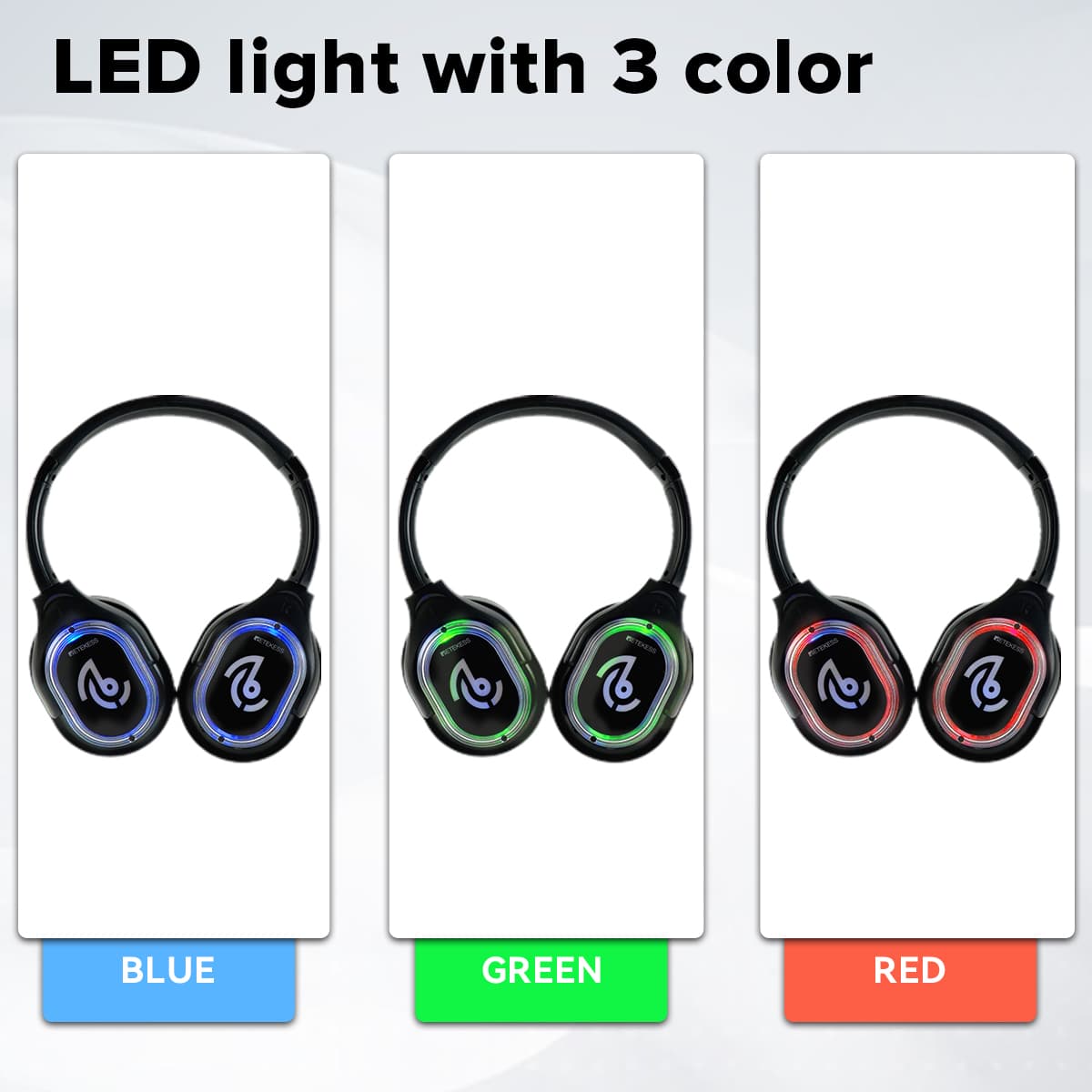
- Durable, comfortable design: Foldable headphones with adjustable headbands survive transport and repeated use. Dual digital displays showing battery level and channel help staff manage inventory quickly.
- Easy fleet management: Type-C charging, bulk charging cases, and one-touch channel setup reduce the technical crew needed on-site.
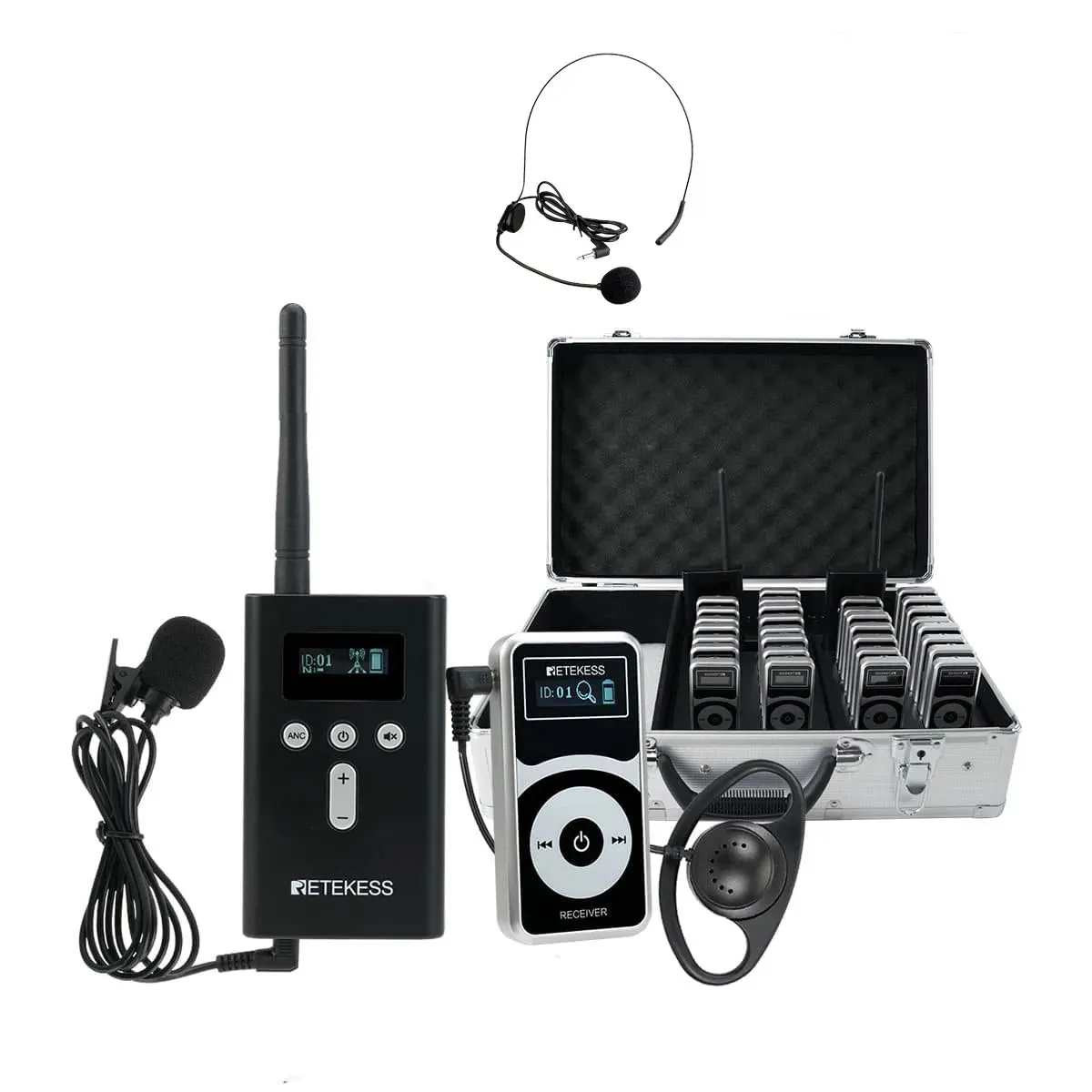
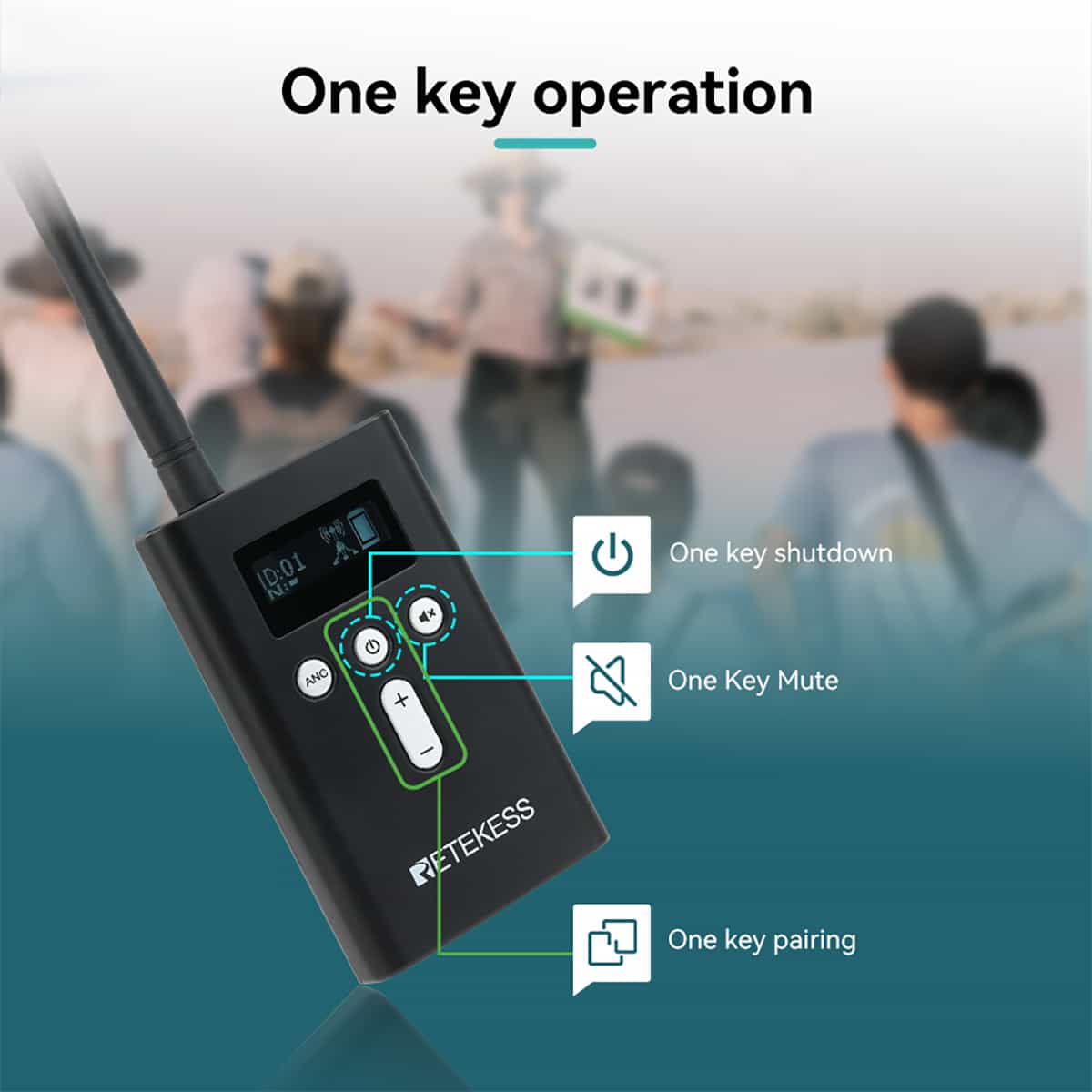
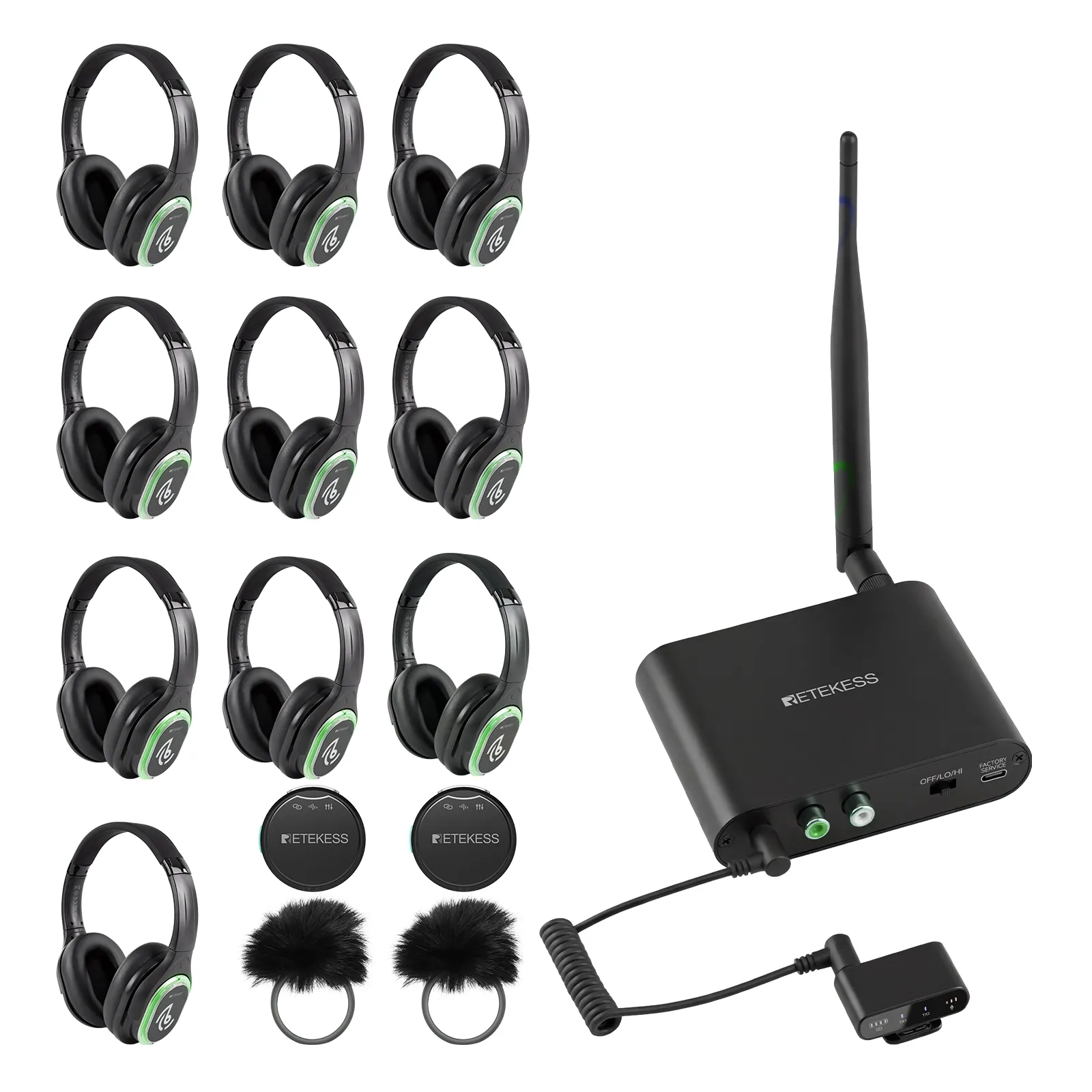
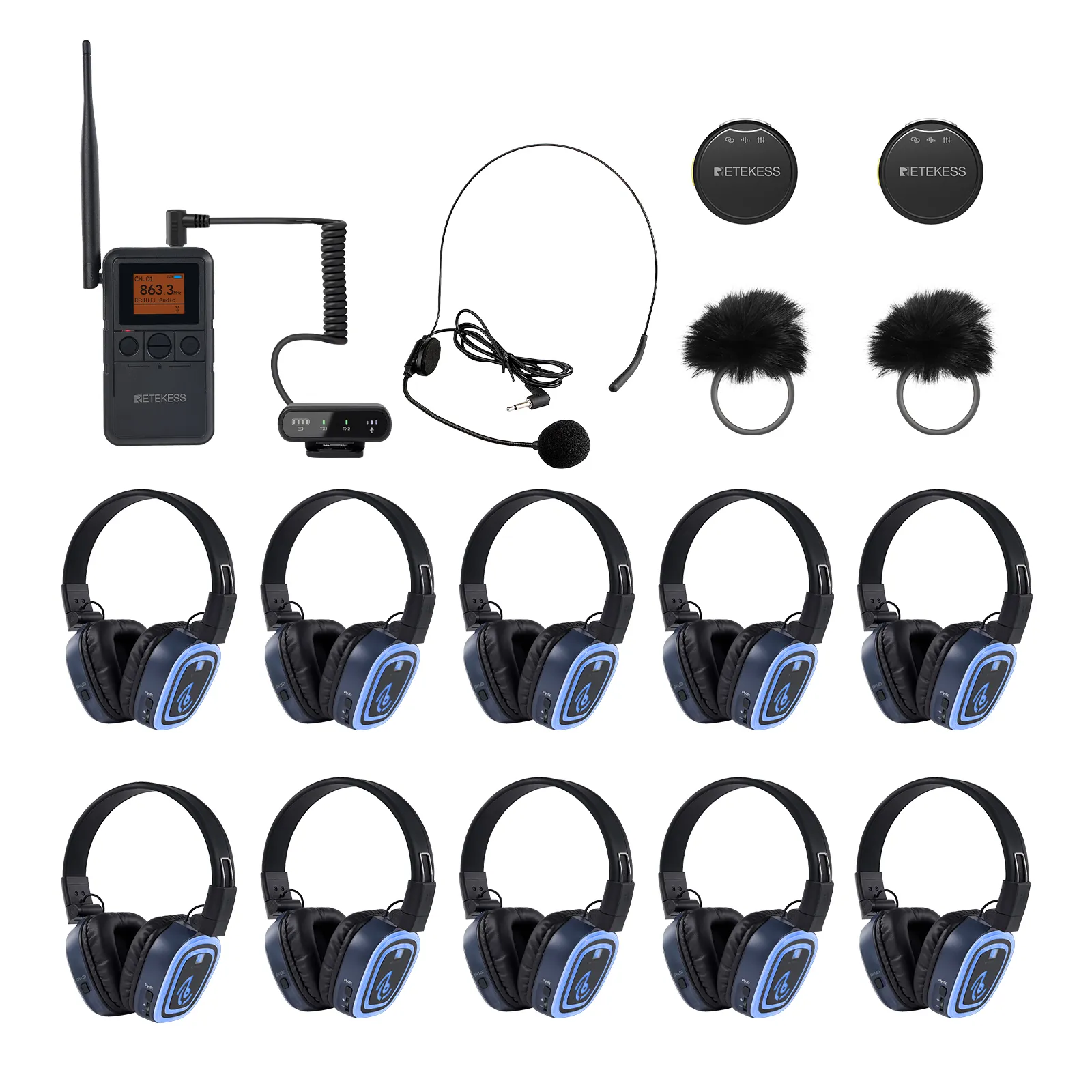
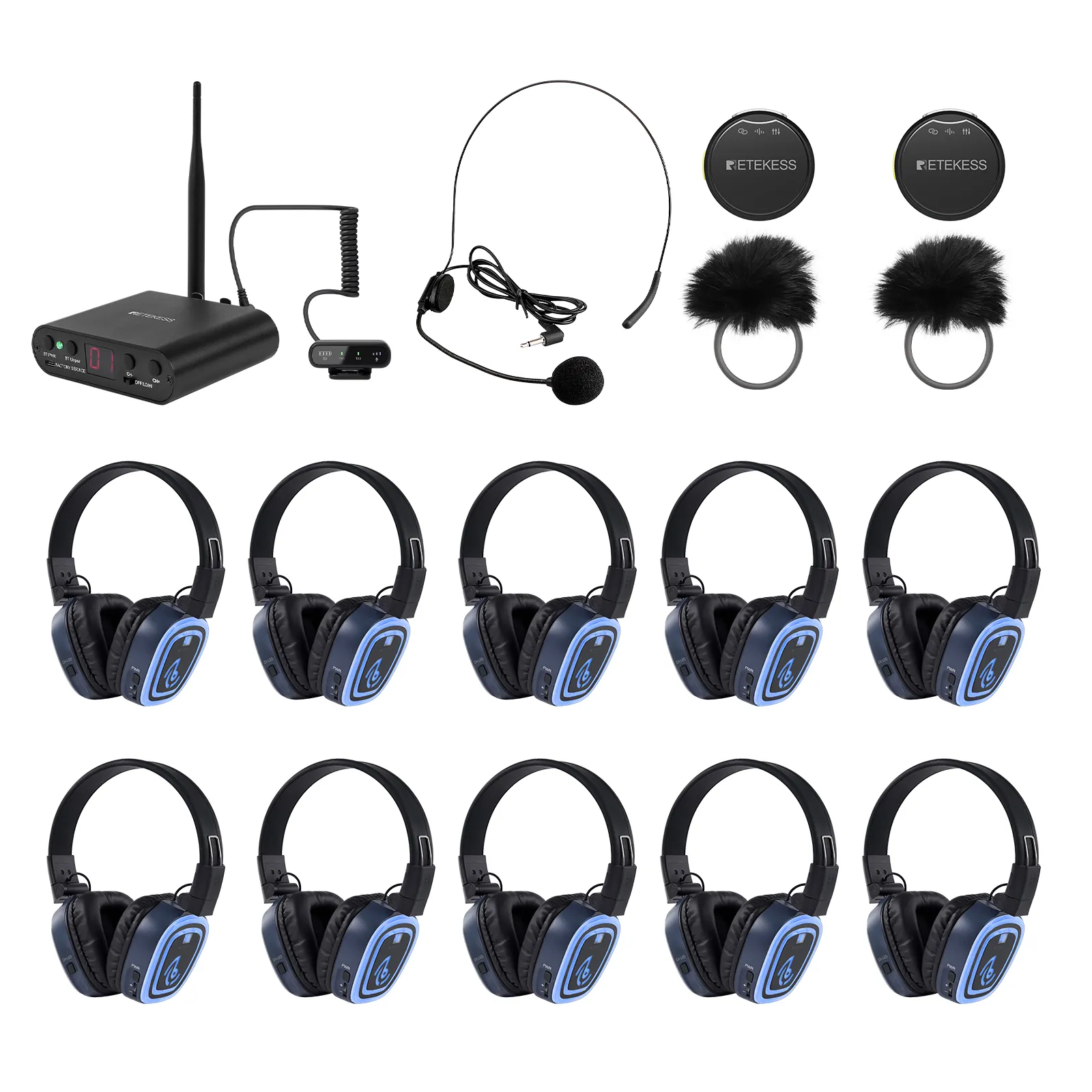
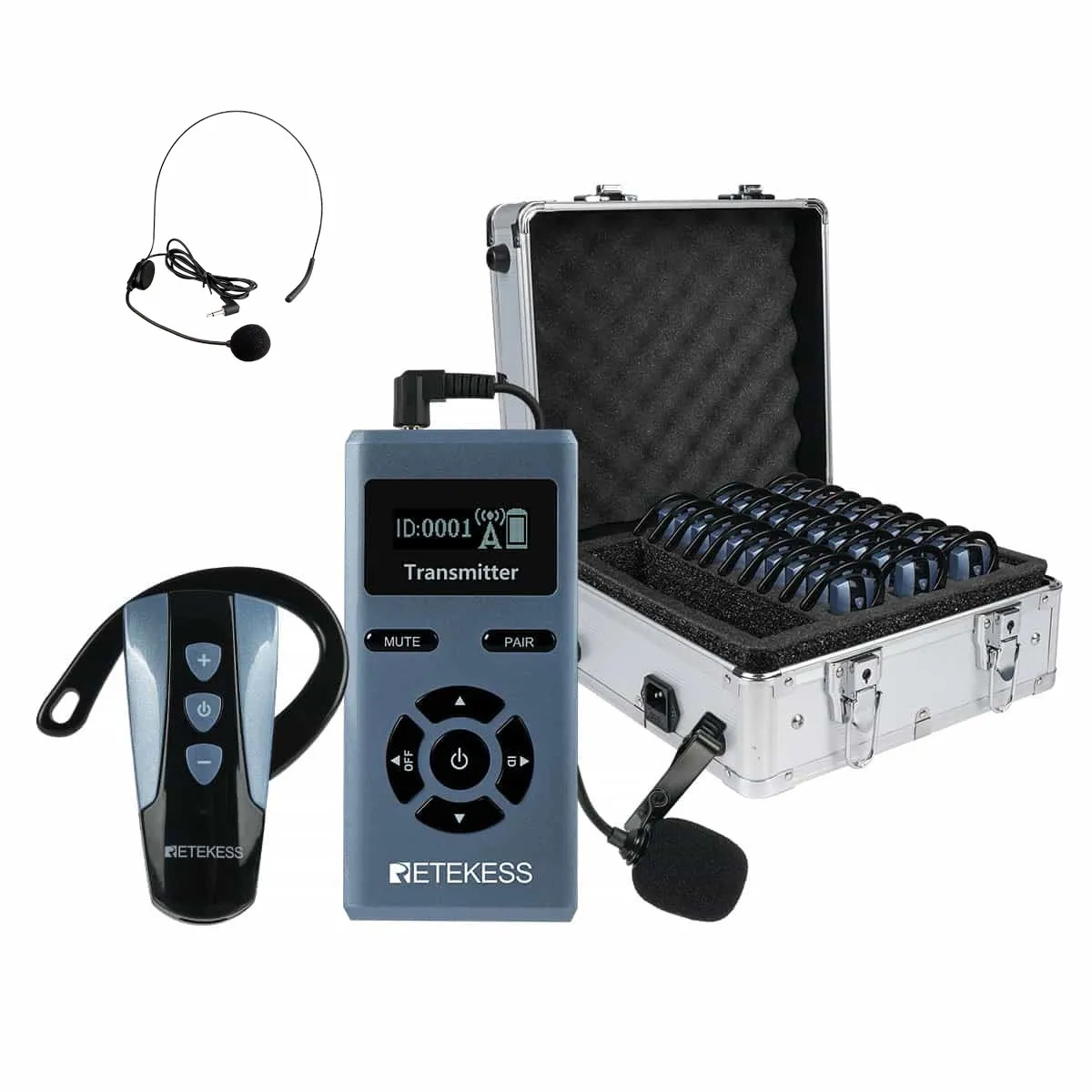
The Retekess TA004S headphones paired with TA003P or TA003S transmitters meet these specifications. The TA004S delivers 12 hours of continuous playback, 300-meter reception range, 6-channel switching, and a foldable design with dual digital displays — all at 243 grams per unit. The TA003P handheld transmitter offers 12 hours of high-power operation and 300–400 meter range with a back-clip design for mobile use. The TA003S desktop transmitter runs 10 hours at high power (20 hours at low power) with 2000mAh capacity for fixed-stage installations. Both transmitters use Type-C charging and feature digital displays for battery and channel monitoring.
Frequently Asked Questions
Q: Can silent disco handle a full festival, not just a small side stage?
A: Yes. Professional FM-based systems support unlimited simultaneous listeners per channel. A single transmitter can serve thousands of headphones. Full-format silent disco festivals with 5,000+ attendees already operate across North America and Europe, covering main stages, secondary stages, and specialty programming across the entire site.
Q: Do attendees actually want to wear headphones all day?
A: Modern silent disco headphones weigh 240–250 grams with padded ear cups — comparable to many consumer over-ear headphones. Attendees can remove them anytime to talk, eat, or take a break. Personal volume control consistently rates higher in attendee satisfaction surveys compared to the variable sound quality and constant noise of traditional festivals.
Q: Is silent disco equipment expensive compared to traditional sound?
A: A professional line array system for a mid-sized festival costs $50,000–$150,000 to purchase or $10,000–$30,000 per event to rent. Silent disco systems for 5,000 headphones typically cost $30,000–$80,000 to purchase — and they're reusable across unlimited events. Factor in eliminated sound barrier costs, zero fine risk, and extended revenue hours, and the ROI typically clears within 2–3 events.
Q: What about headphone hygiene and distribution?
A: Most operators use disposable earpad covers or sanitizing stations between uses. Distribution works like coat check — attendees pick up headphones at entry and return them at exit, with deposits or ID holds to prevent loss. Modern systems with channel and battery displays make inventory tracking straightforward.
Q: Can silent disco support an entire music festival, not just small after parties?
A: Yes. Professional-grade silent disco systems support thousands of simultaneous listeners and multiple independent channels, covering main stages, secondary stages, and specialty programming across a full festival site. Full-format silent disco festivals already operate across North America.
Q: Do attendees resist wearing headphones for an entire festival?
A: Lightweight, well-designed silent disco headphones create minimal physical burden. Attendees can remove them at any time, and personal volume control leads to higher overall satisfaction compared to the variable sound quality and constant noise of traditional amplified events.
Q: Is silent disco equipment a high-cost investment?
A: Compared to the cost of professional line array systems, sound barriers, and potential curfew fines, silent disco equipment represents a lower upfront investment with strong return potential. Equipment is reusable across multiple events, and expanded programming and venue flexibility create additional revenue streams to offset costs.
Conclusion
Noise complaints and curfew restrictions are not temporary annoyances — they're structural barriers limiting where, when, and how outdoor music festivals can operate. Every traditional workaround — volume limits, barriers, stage repositioning, community outreach — reduces the problem without eliminating it.
Silent disco eliminates the problem at its source. No sound leaves the venue. Noise ordinance compliance becomes automatic. Silent disco curfew operations unlock late-night revenue. Venue options expand. Attendee experience improves through personal volume control and zero sound bleed between stages.
For organizers evaluating noise control for outdoor events, the question is no longer whether silent disco works for festivals — it's how quickly you can integrate it into your next event's design.
Leave a Reply

![[18th Anniversary] 18 Years of Echoing Excellence: Making Communication Easier, Connecting Trust Beyond Borders](https://res.retekess.com/z_file/20260716/retekess-brand-story-making-communication-easier_20260716151044_7682.jpg)
![[18 Years in Wireless Communication] Silent Disco Systems Anniversary Celebration: Top-Selling Headphones & Event Mechanics Revealed!](https://res.retekess.com/z_file/20260713/18-years-in-wireless-communication-silent-disco-systems-anniversary-celebration_20260713175011_5749.webp)
![[Anniversary Carnival] Ding-dong! 18th Anniversary Mega Sale on Guest Paging & Calling Systems: Full Reveal of 12+ Products & Promo Rules!](https://res.retekess.com/z_file/20260713/18th-anniversary-mega-sale-on-guest-paging-calling-systems_20260713175257_0295.webp)
![[Retekess 18th Anniversary Teaser] Tour Guide System Exclusive Perks: Sneak Peek at Event Dates & Mechanics!](https://res.retekess.com/z_file/20260713/retekess-18th-anniversary-tour-guide-system-exclusive-perks--2-_20260713180135_6435.webp)
Follow Us
Pay With


 Google
 Amazon
Comments (0)