
Table of Contents
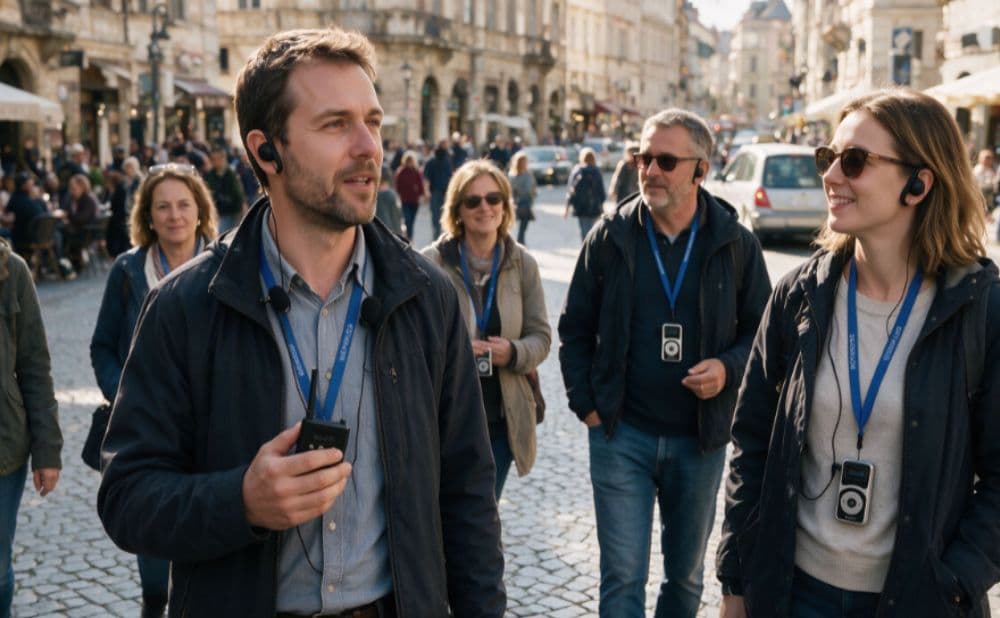
Noisy Guided Tours? How a Tour Guide Communication System Fixes Audio
- Retekess
- Sep 4, 2026
What Are the 3 Hidden Pain Points Costing European Tour Operators Customers?
Unlike closed scenic spots or indoor exhibition halls, European city tours operate in open, high-noise urban environments. Traffic noise, crowd chatter, wind noise, and overlapping voices from competing tour teams easily drown out traditional guide narration. Below are the three most destructive issues hurting tour experience and reputation:
1. Why Does Urban Noise Overwhelm Traditional Tour Audio?
Traditional tour solutions rely on human voice amplification or simple megaphones, which are completely ineffective in complex European urban scenarios. On busy urban avenues, historic pedestrian streets, and open landmark squares, continuous traffic flow and dense tourist crowds create persistent background noise. Megaphones produce sound distortion and cannot resist wind noise in open areas, while guides are forced to speak louder repeatedly, leading to hoarseness and fatigue throughout the day.
Worse still, multiple tour teams operating in the same popular scenic area will cause voice overlap and signal confusion. Tourists can barely capture effective narration, miss core historical and cultural introductions, and eventually lose interest in the tour. What should have been an immersive urban cultural sightseeing turns into a blind walk, directly triggering low-star reviews and customer loss. This is why dedicated tourguide systems for noisy environments have become a must-have for professional operators.
2. Why Does Crowd Dependency Cause Disordered Team Management?
Under the traditional tour mode, tourists have to crowd closely around the guide to hear the explanation clearly. This rigid gathering mode severely restricts team flexibility. In crowded European historic districts with narrow streets and dense crowds, clustered tourists are prone to scattering, falling behind, or blocking pedestrian traffic, resulting in messy team order.
Guides have to spend extra time counting team members, waiting for lagging tourists, and repeating explanations, which greatly compresses effective tour time and reduces the number of receivable groups per day. For travel operators, this means low team management efficiency, increased labor costs, and limited business scalability—becoming a major obstacle to large-scale group tour operations.
3. How Does Unclear Audio Create Severe Language Barriers?
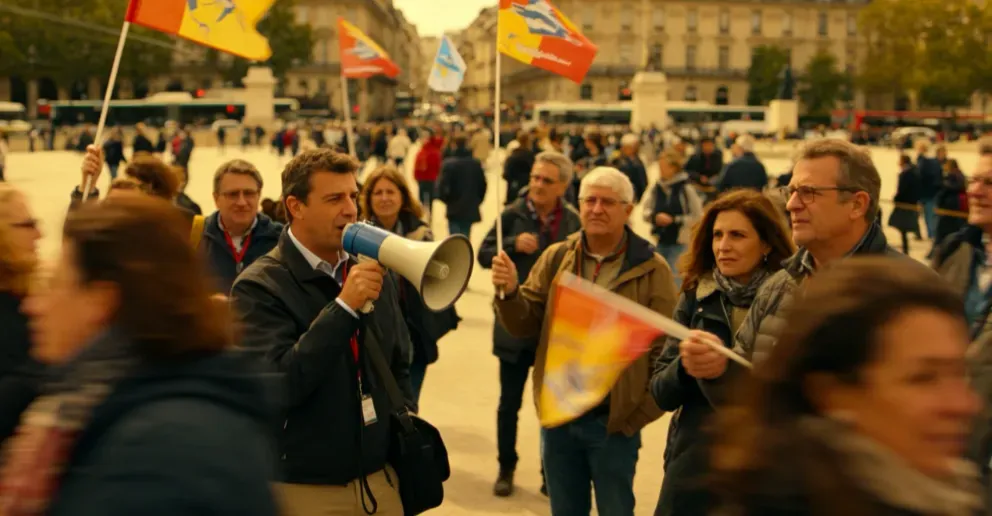
European urban sightseeing features typical multilingual and cross-border tourist groups. Visitors from different regions speak diverse languages and rely entirely on clear, accurate tour commentary to understand local history, architecture, and culture. However, noisy environments make original voice and simple amplified sound blurred and indistinct.
Even if guides provide professional multilingual explanations, tourists cannot capture accurate information, resulting in serious language communication barriers. Many international tourists cannot fully perceive the charm of European urban culture, and travel agencies fail to deliver high-value differentiated services, losing competitiveness in the cross-border tourism market.
Why Do Old-Fashioned Tour Guide Microphone Systems Fail in City Tours?
Most European small and mid-sized travel agencies still rely on outdated tour guide microphone systems and basic wireless transmission tools. These entry-level devices can only handle simple voice amplification and cannot adapt to complex urban sightseeing scenarios. Key limitations include:
- Poor noise suppression: Unable to filter traffic noise, wind noise, and crowd chatter in open city environments, lacking the core capability of noise reduction systems for guided tours.
- Unstable urban transmission: Limited signal range and easy disconnection among dense buildings and crowded streets.
- Severe channel interference: Few available channels cause cross-talk when multiple tour teams work nearby.
How Does the Retekess T130P Solve City Tour Communication Problems?
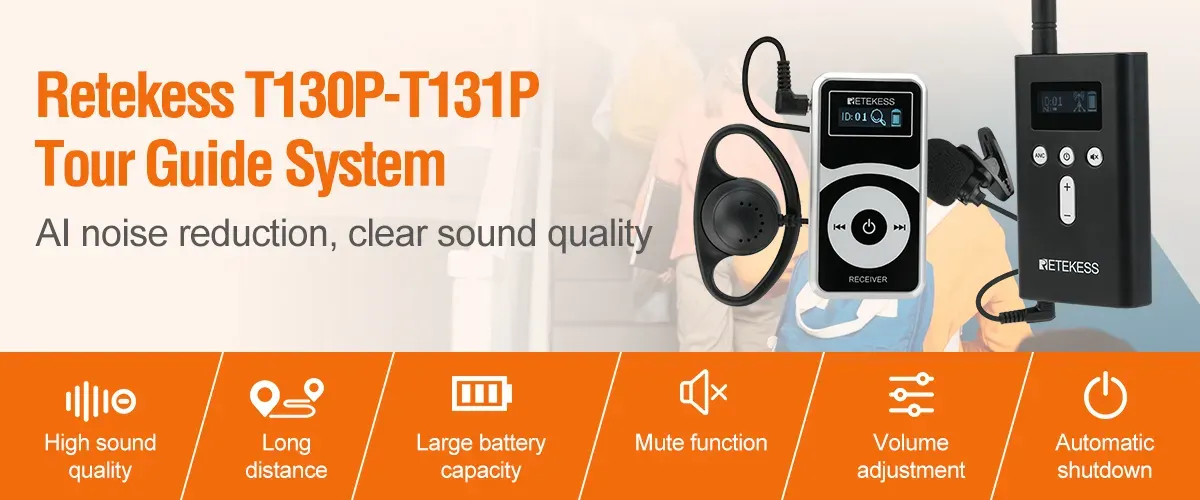
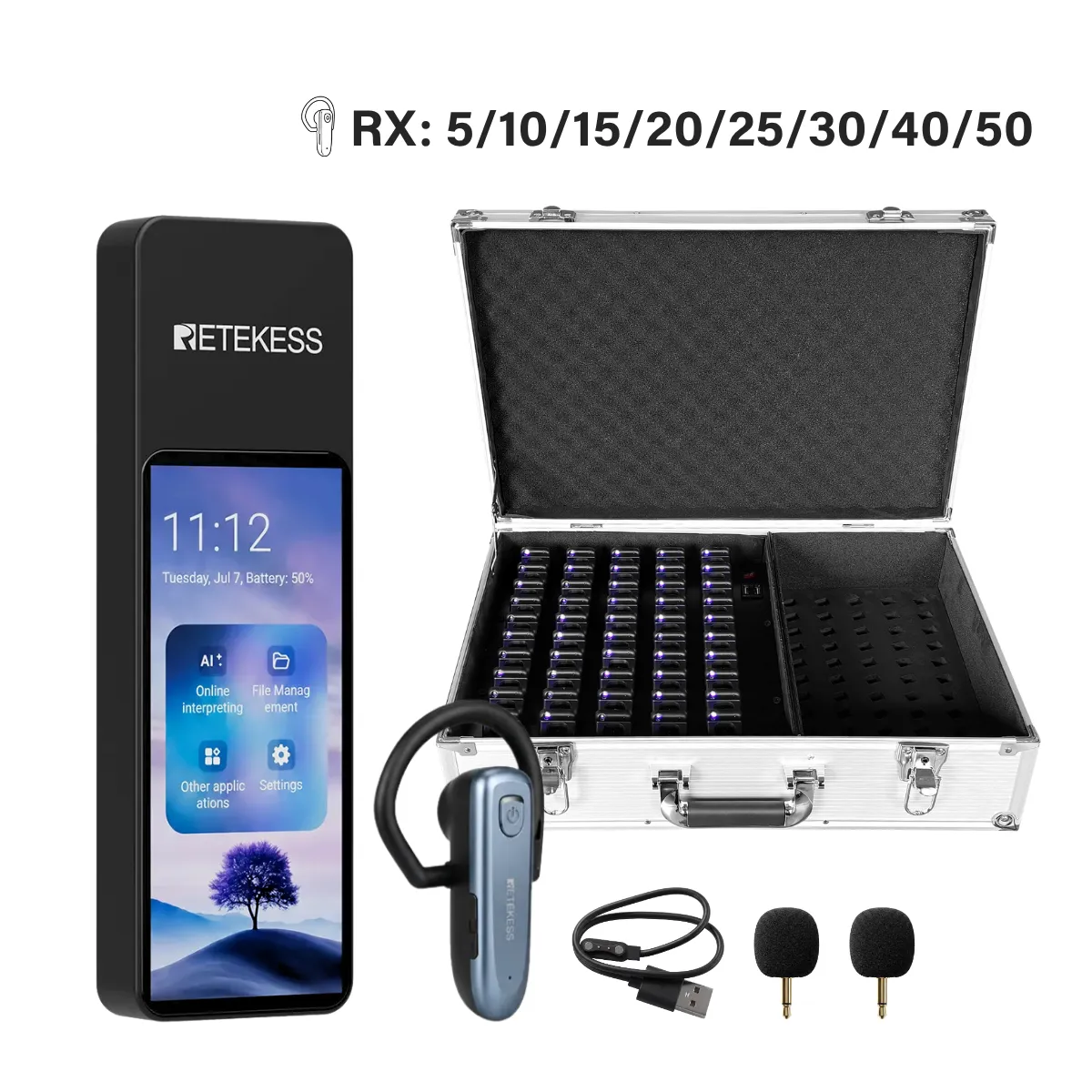
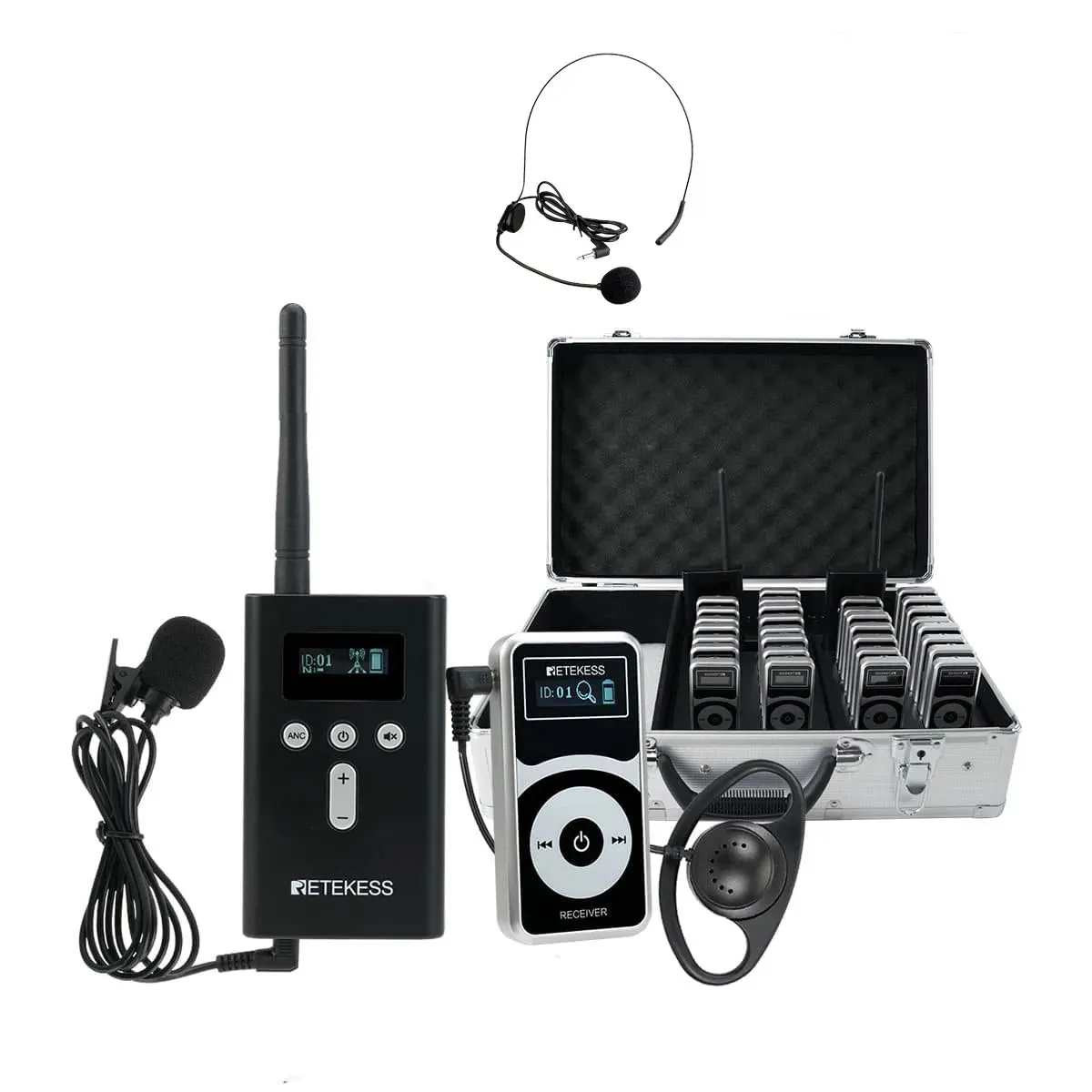
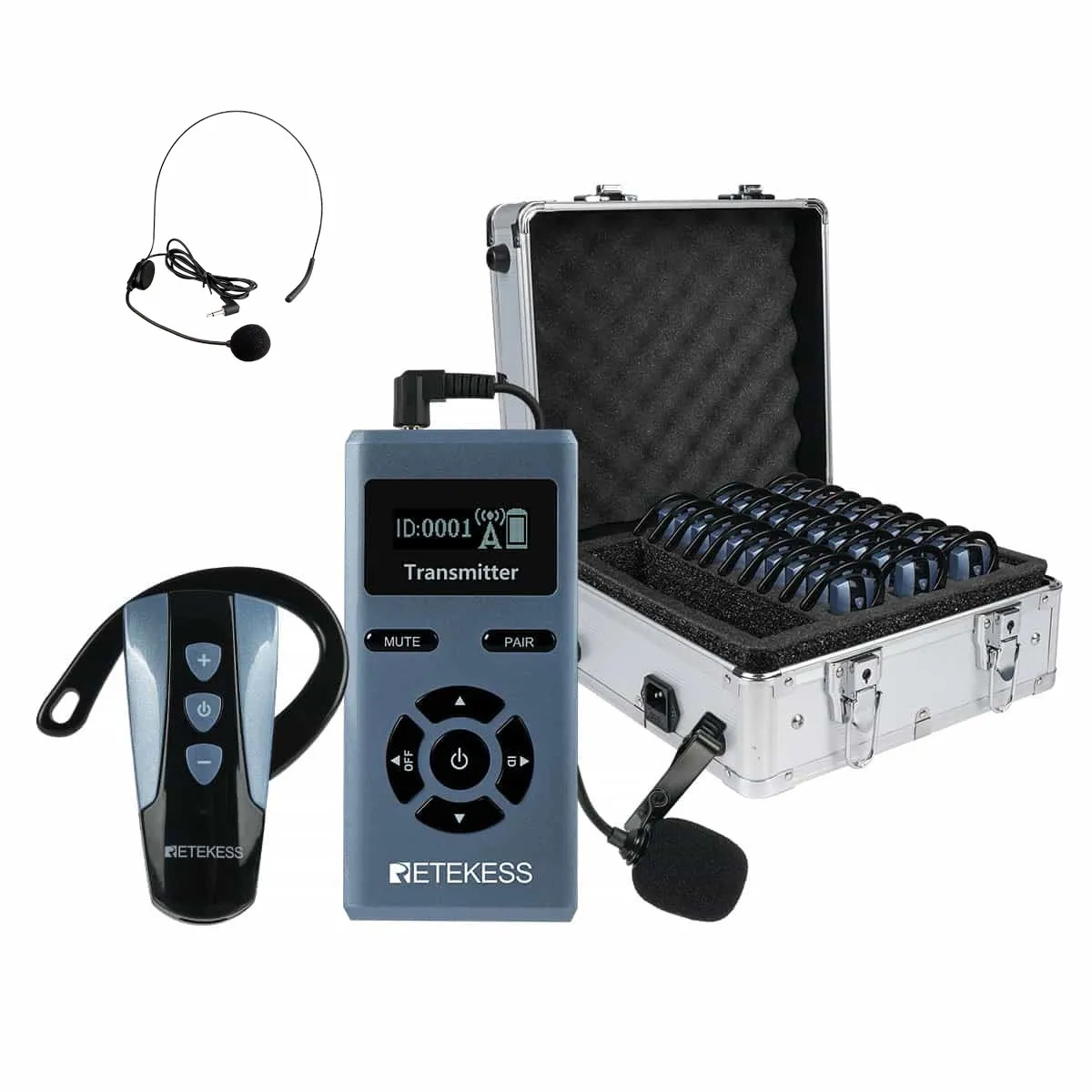
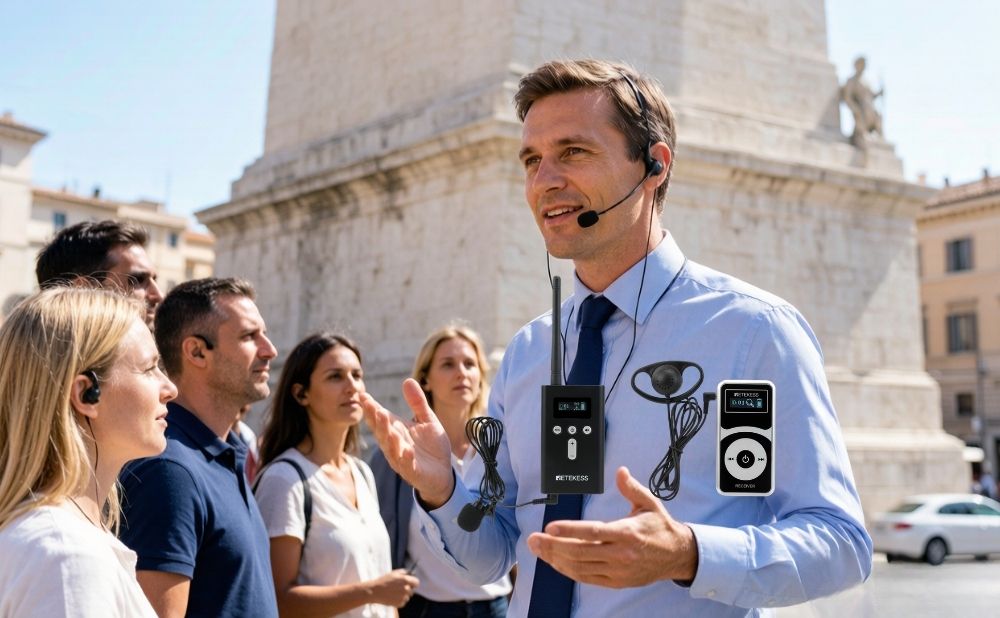
Built specifically to resolve urban noise, team management chaos, and multilingual communication obstacles, the Retekess T130P 3rd Gen flagship upgrades traditional tour guide communication system for city use. As a high-performance wireless tour guide system and reliable transmission system for urban sightseeing, it delivers four core advantages for European tour operators:
How Does It Deliver Clear Audio in Noisy Environments?
The T130P features a professional DSP noise reduction system with 4 adjustable noise reduction levels, intelligently reducing environmental interference while preserving the guide’s voice details. With an 80dB high signal-to-noise ratio and less than 0.3% distortion, the system delivers clean and natural audio even in noisy streets, open squares, and crowded attractions.
Tourists no longer need to struggle to hear historical explanations or cultural stories — every word reaches them clearly, making guided tours more immersive and enjoyable.
How Does It Improve Team Management Efficiency?
Unlike traditional tours where visitors must stay tightly grouped around the guide, the T130P provides up to 160 meters of stable wireless transmission, allowing tourists to walk freely, take photos, and explore at their own pace while staying connected to the guide’s voice.
For tour operators managing multiple groups, the system offers 49 independent channels with strong anti-interference capability, allowing several tour teams to operate simultaneously in the same attraction without signal conflicts. From busy city centers to large historical sites, the T130P helps guides maintain better team control while improving overall tour efficiency.
How Does It Support Multilingual City Tours?
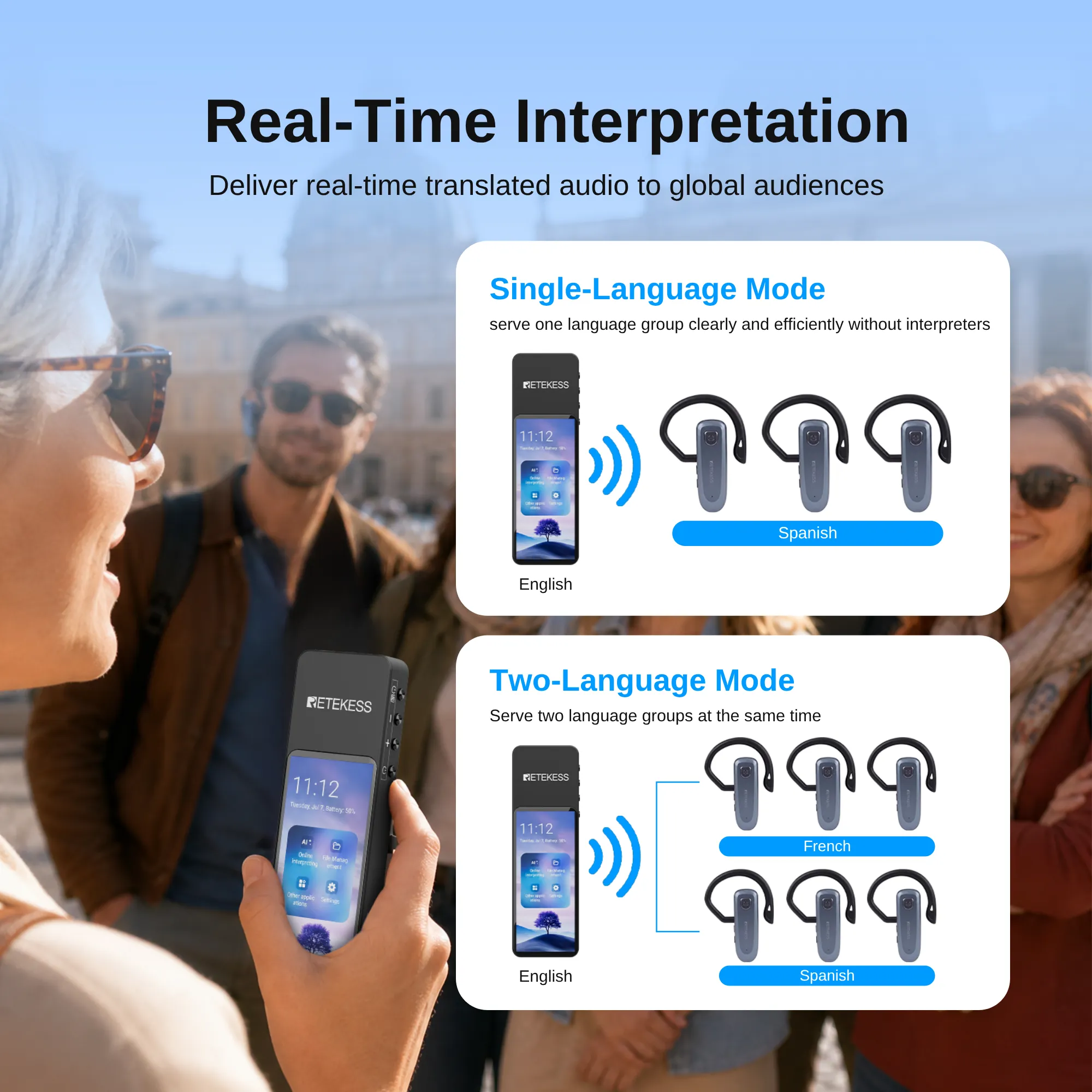
International tours often include visitors speaking different languages, making clear audio transmission essential. With a professional 50Hz–18kHz wide frequency response, the T130P accurately reproduces speech details and pronunciation characteristics across languages including English, French, Spanish, and Italian.
By reducing sound distortion and improving voice clarity, the system helps international visitors better understand historical stories, cultural backgrounds, and landmark information — creating a more engaging cross-border travel experience.
Is It Suitable for Full-Day Professional Tours?
Tour operators need equipment that can work reliably throughout a full day of sightseeing. The T130P transmitter features a 4200mAh high-capacity battery, providing up to 20 hours of continuous operation, while receivers deliver up to 36 hours of battery life on a single charge.
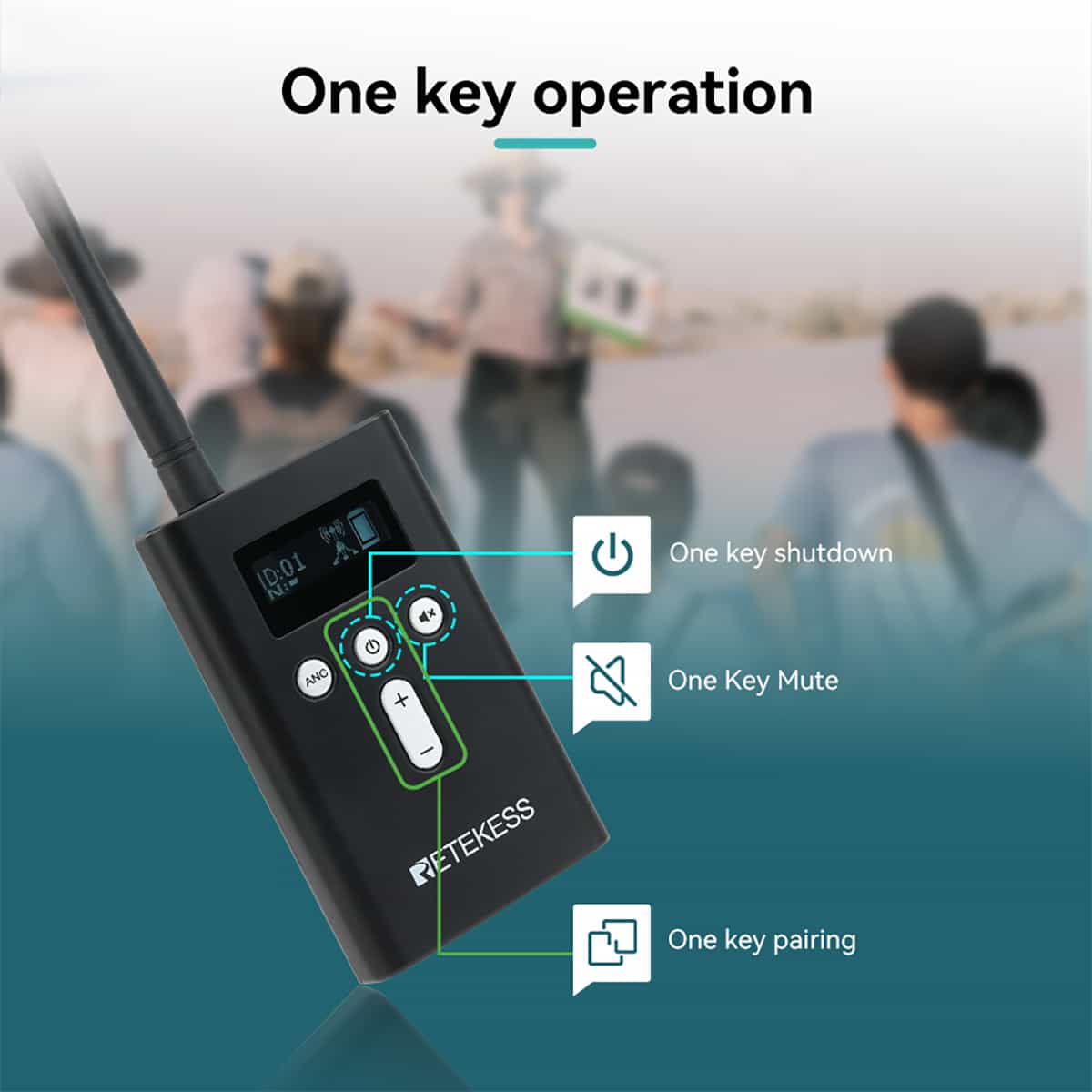
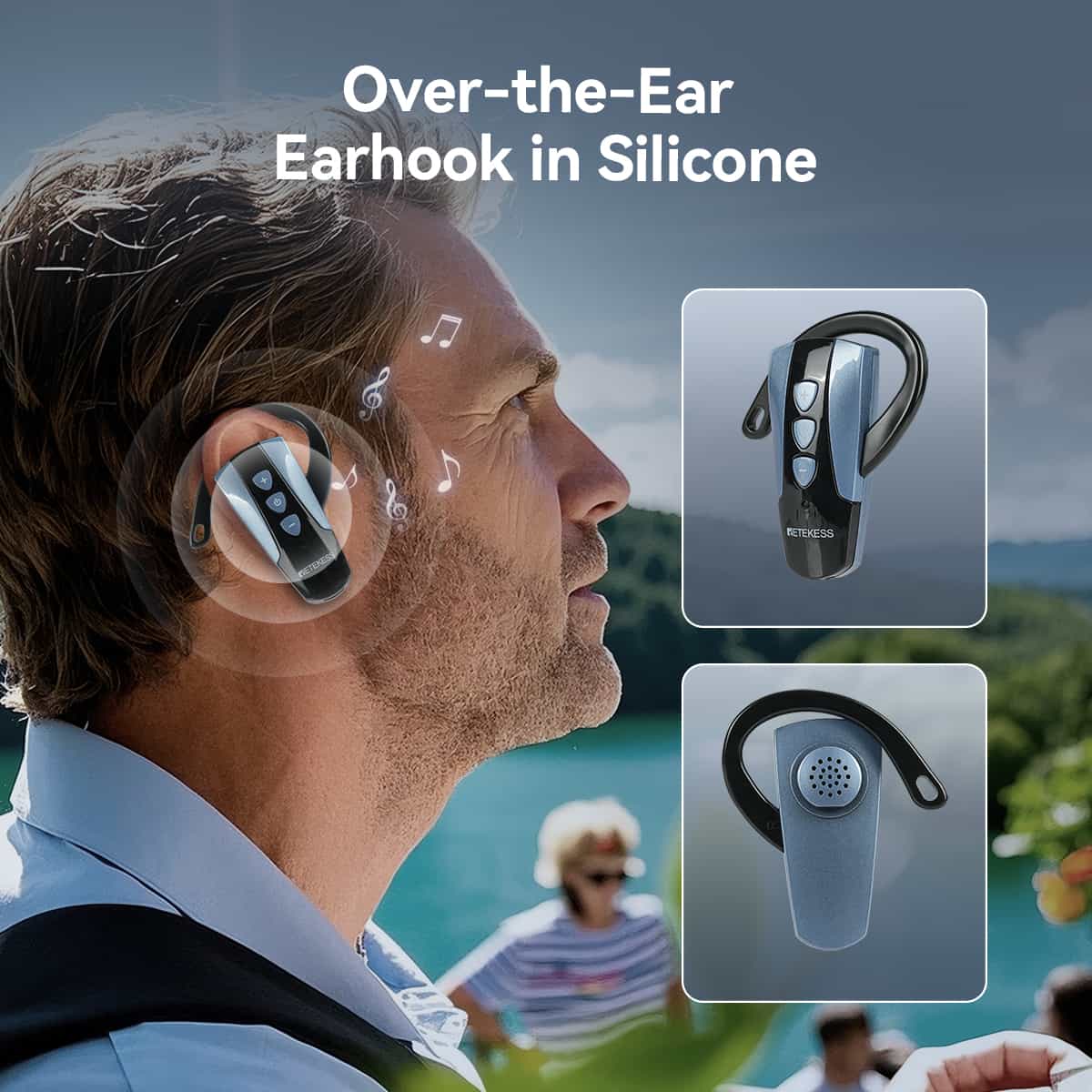
The lightweight receiver weighs only 49g, ensuring comfortable long-term wearing during extended city tours. With one-button pairing, one-button mute, and automatic channel memory, the system simplifies daily operation and allows guides to start tours quickly without complicated setup or technical training.
Final Takeaway: Why Upgrade Your Tour Communication System?
In the fiercely competitive European urban sightseeing tourism market, scenic spots, routes, and prices tend to be homogeneous. High-quality audible tour experience and standardized team service have become the core differentiated competitiveness of travel agencies.
The seemingly trivial “inaudible guide” problem is the root of customer churn and negative reviews. Upgrading your traditional tour guide system to the Retekess T130P wireless tour guide system is not only a simple equipment upgrade, but also a fundamental optimization of your tour communication and transmission system. It helps European tour operators completely solve noise interference, chaotic team management, and language barrier pain points, improve tourist satisfaction and word-of-mouth reputation, and effectively lock in more repeat customers and market orders.
Frequently Asked Questions
1. How do tour guides communicate in noisy cities?
In noisy urban environments, professional tour guides rely on a wireless tour guide communication system with built-in noise reduction technology. The guide speaks into a transmitter microphone, and the voice is transmitted directly to each tourist’s lightweight headset, bypassing background traffic and crowd noise. This is also the core working principle of a standard whisper tour system.
2. What is a whisper tour system?
A whisper tour system is a type of wireless audio transmission equipment that allows guides to speak in a normal or even soft voice while tourists hear clear narration through individual headsets. It is widely used in museums, historic sites and city walking tours, and is one of the most popular forms of city tour audio equipment for small and large groups alike.
3. What features should I look for in city tour audio equipment?
For European city tours, priority features include: multi-level DSP noise reduction for urban traffic and crowd noise, stable long-range transmission for spread-out groups, multiple independent channels to avoid cross-team interference, long battery life for full-day tours, and lightweight tour guide headset for walking tours.
4. Can one tour guide communication system for city support multiple tour groups?
Yes, high-quality tour guide communication system for city use support multiple independent channels. For example, the Retekess T130P offers 49 separate channels, allowing dozens of tour teams to operate in the same landmark area without signal interference or crosstalk.
Leave a Reply




![[18th Anniversary] 18 Years of Echoing Excellence: Making Communication Easier, Connecting Trust Beyond Borders](https://res.retekess.com/z_file/20260716/retekess-brand-story-making-communication-easier_20260716151044_7682.jpg)
![[18 Years in Wireless Communication] Silent Disco Systems Anniversary Celebration: Top-Selling Headphones & Event Mechanics Revealed!](https://res.retekess.com/z_file/20260713/18-years-in-wireless-communication-silent-disco-systems-anniversary-celebration_20260713175011_5749.webp)
![[Anniversary Carnival] Ding-dong! 18th Anniversary Mega Sale on Guest Paging & Calling Systems: Full Reveal of 12+ Products & Promo Rules!](https://res.retekess.com/z_file/20260713/18th-anniversary-mega-sale-on-guest-paging-calling-systems_20260713175257_0295.webp)
![[Retekess 18th Anniversary Teaser] Tour Guide System Exclusive Perks: Sneak Peek at Event Dates & Mechanics!](https://res.retekess.com/z_file/20260713/retekess-18th-anniversary-tour-guide-system-exclusive-perks--2-_20260713180135_6435.webp)
Follow Us
Pay With


 Google
 Amazon
Comments (0)