
Table of Contents
How to Master Hybrid Meeting Translation: Sync Audio for In-Person and Remote Teams
- Retekess
- Sep 18, 2026
Hybrid work has gone from a temporary perk to a permanent operating model for global companies, but hybrid meeting translation remains one of the most persistent pain points for IT and meeting technology teams. When part of your audience sits in a conference room and the other joins from across the world, delivering clear, synced translated audio to both groups often requires complex wiring, specialized AV equipment, and constant troubleshooting. For organizations that run regular cross-language meetings, a disjointed translation experience doesn’t just cause frustration—it erodes participation and slows decision-making.
The Core Technical Hurdles of Hybrid Meeting Translation
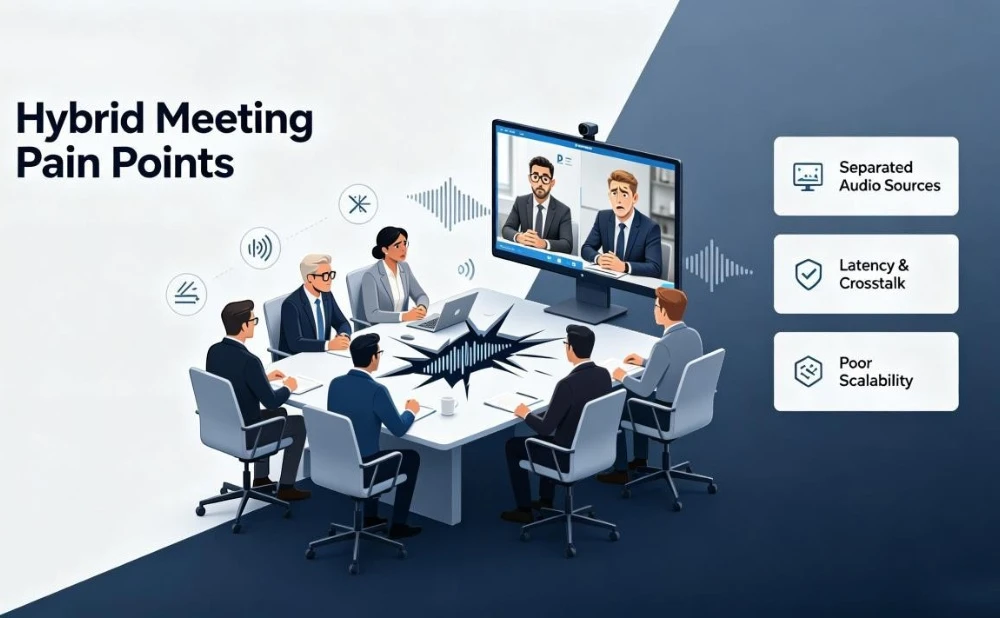
Before diving into solutions, it’s important to understand why hybrid meeting translation is so much harder than fully in-person or fully remote interpretation. Three core challenges trip up most teams tasked with delivering consistent cross-language experiences.
Split Audio Sources Between Physical and Virtual Spaces
Traditional in-person interpretation systems are built only for on-site listeners, with no native way to feed translated audio into online meeting platforms. Many IT teams resort to patching room audio into meeting software via auxiliary cables, which often creates echo, distorted sound, or separate volume levels for in-person and remote attendees. This split means remote participants get a lower-quality translation experience, or miss content entirely if the feed drops. This is the most common root cause of failed hybrid meeting translation deployments.
Latency and Channel Crosstalk Across Feeds
When translation systems are retrofitted to work with online meetings, latency is almost always a problem. Latency is the silent killer of hybrid meeting translation. Remote attendees may hear translated speech two to three seconds after in-person listeners, which makes following slides or interactive discussions nearly impossible. For multi-language meetings, cheap systems also suffer from channel crosstalk, where audio from one language bleeds into another, creating confusion for all attendees.
Scalability Across Meeting Sizes and Formats
Not all hybrid meetings look the same: a small bilingual board meeting has very different needs than a 200-person all-hands with four language channels. Many off-the-shelf translation systems only work for one use case, forcing teams to rent or buy new equipment every time their meeting format changes. This creates unnecessary cost and operational complexity for admin and IT teams tasked with delivering consistent hybrid meeting translation. This fragmentation is why hybrid meeting translation projects often go over budget.
A Wireless Framework for Seamless Hybrid Meeting Translation
The most reliable way to solve hybrid meeting translation challenges is to use a centralized wireless interpretation system that serves both in-person and remote attendees from a single control point. This setup eliminates split audio sources, reduces latency, and scales easily across different meeting sizes. Here’s how it works:
Central Desktop Transmitter as the Control Hub
At the center of any strong hybrid meeting translation setup is a desktop transmitter that manages all audio inputs and outputs. The Retekess TT119 simultaneous interpretation system is designed specifically for this use case: it integrates both receiving and transmitting functions in one compact device, so you don’t need separate hardware to pick up speaker audio and send out translated signals. This integrated design saves valuable desk space in control rooms and is easy to move between meeting spaces.
The TT119 supports 17 independent channels, each dedicated to a single language with zero crosstalk between channels. A one-touch original language button lets you switch back to the source audio instantly when translation isn’t needed, no complex menu navigation required. For interpreter privacy, a one-click mute function keeps internal interpreter discussions private, so confidential meeting content stays secure.
With a 100-meter (328-foot) transmission range and clear stereo sound, the TT119 covers most standard conference rooms and meeting spaces. For teams implementing hybrid meeting translation for the first time, it connects directly to your meeting room’s audio interface, so translated audio feeds simultaneously to in-room wireless receivers and your online meeting platform (Zoom, Microsoft Teams, Google Meet) with minimal latency. This creates an equal listening experience for both in-person and remote attendees, and this single hub approach is the foundation of reliable, cost-effective hybrid meeting translation.
In-Room Receivers Built for Every Meeting Type
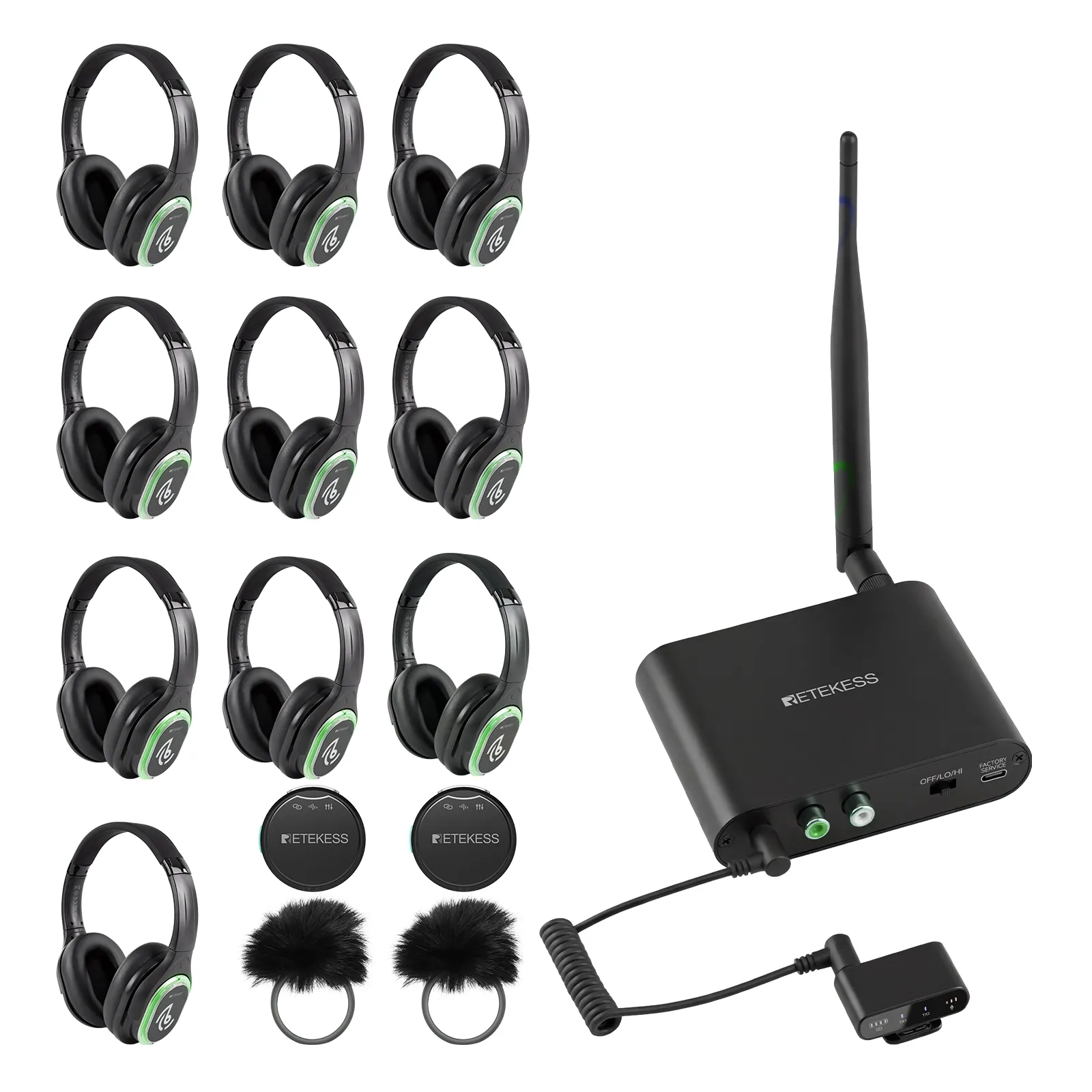
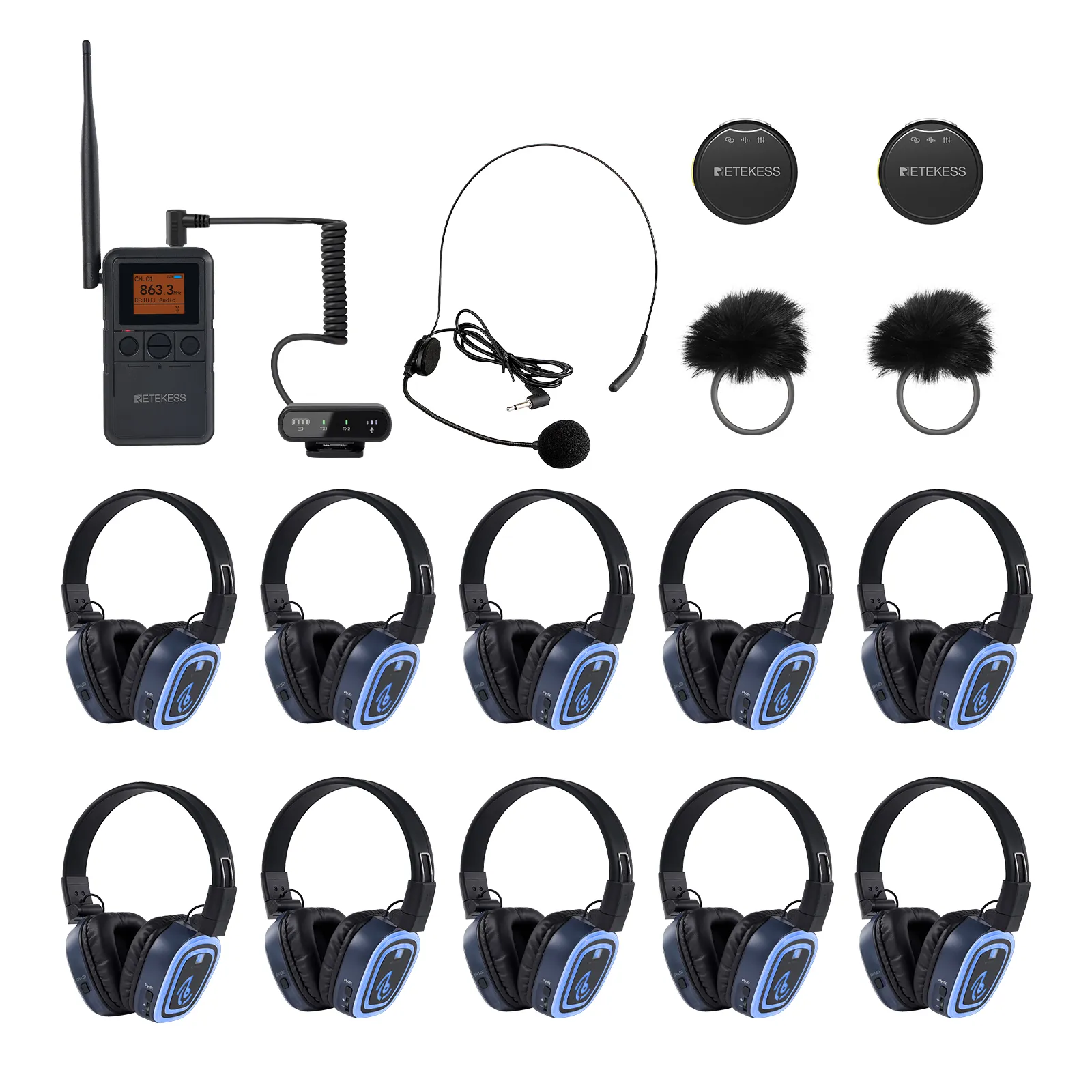
For in-person attendees, the right receivers make all the difference in comfort and audio quality, and the best hybrid meeting translation systems offer options to match your meeting size and interaction level.
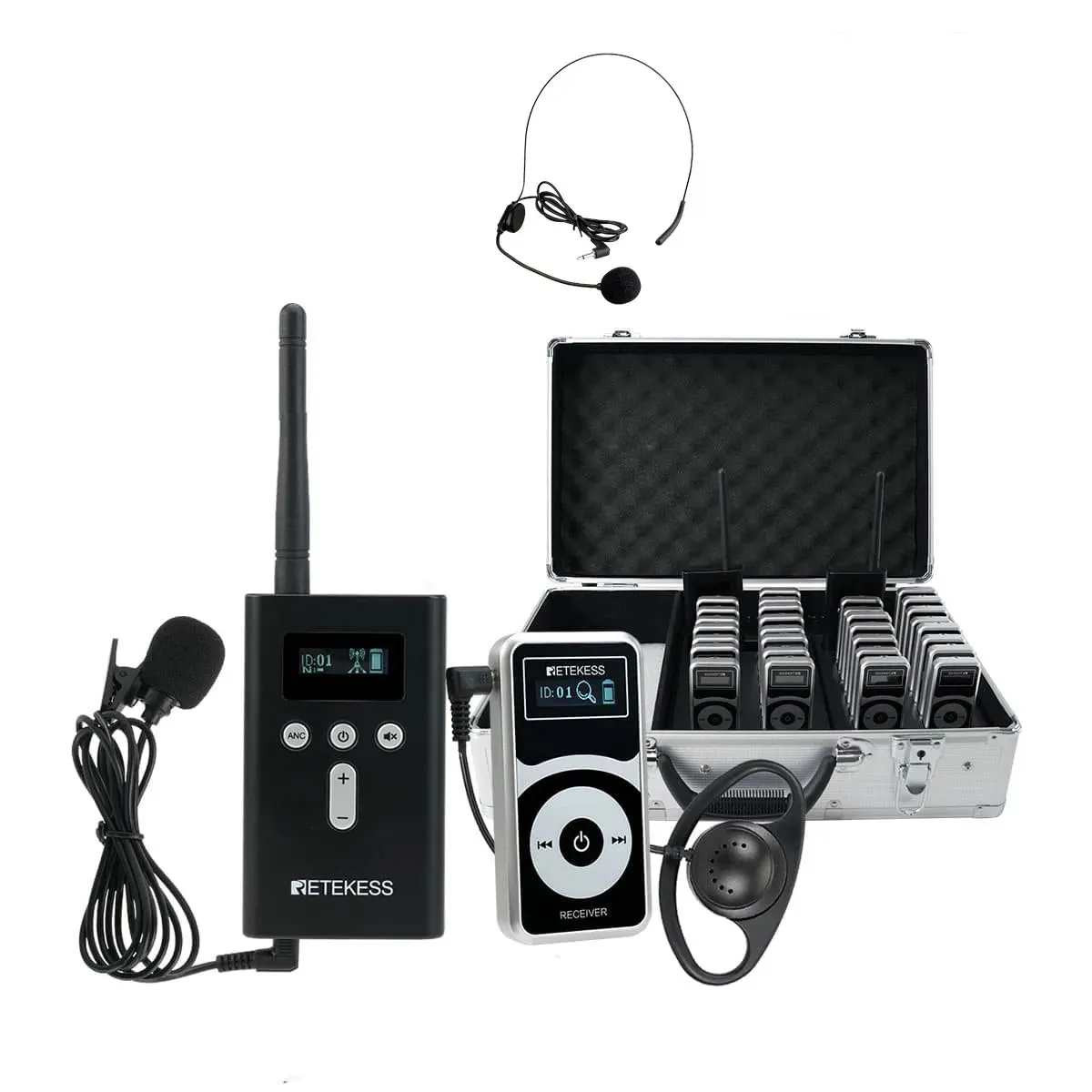
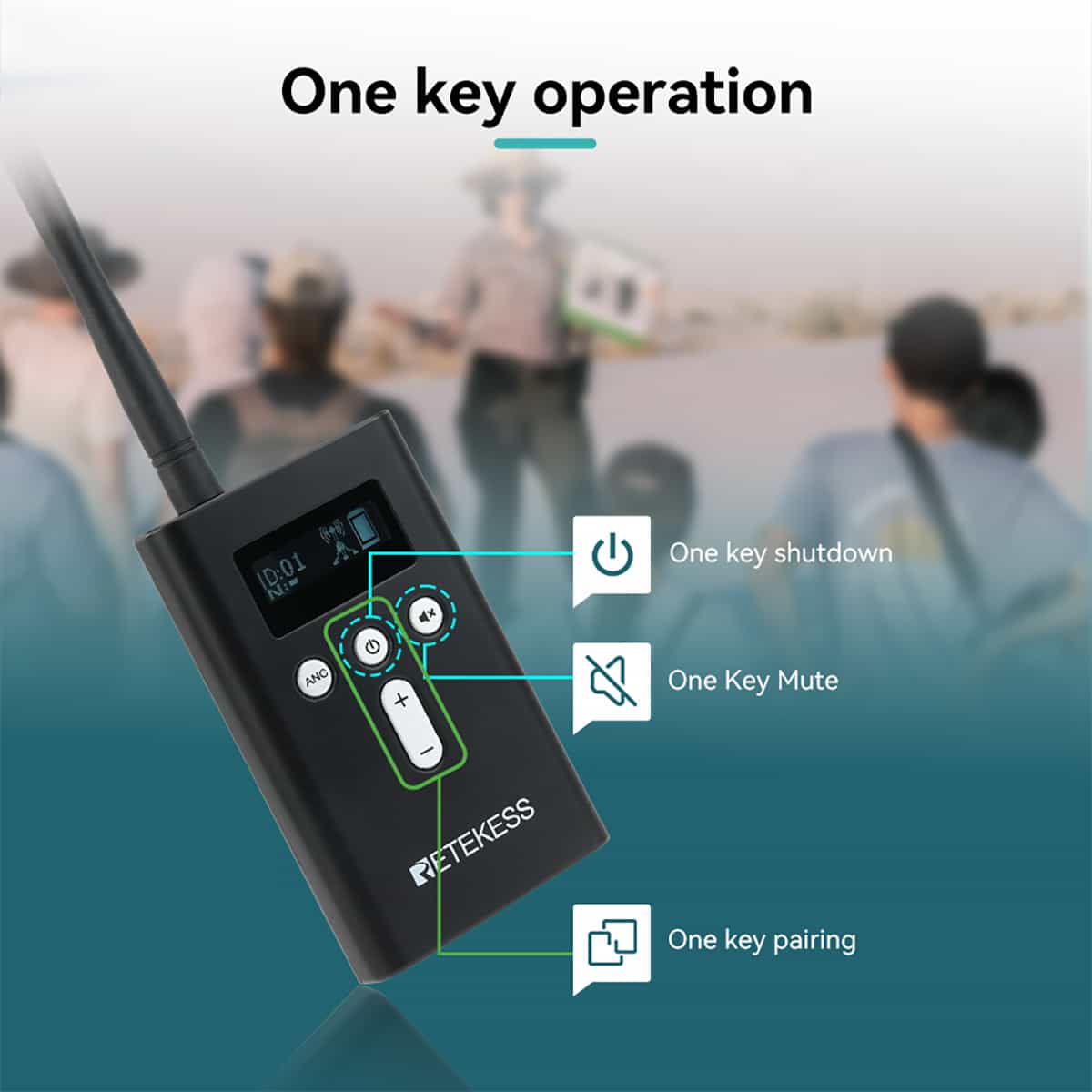
Large conferences require a different receiver profile than boardrooms, but they must still integrate into the same hybrid meeting translation workflow. For large hybrid conferences, town halls, or multi-day events with high in-person attendance, the Retekess T130P-T131P tour guide system is an ideal match. The lightweight D-shaped ear hooks fit comfortably on either ear for hours of use, and one-key operation for pairing, mute, and shutdown means attendees don’t need technical training to use them. With 49 selectable channels, multiple meeting groups can operate in the same building without frequency interference.
The T130P-T131P delivers a 160-meter open-range transmission distance, making it suitable for large conference halls or even outdoor meeting spaces. A built-in DSP noise-canceling chip with 4 adjustable reduction levels filters out background room noise, so attendees hear clear translation even in crowded spaces. With 20 hours of transmitter battery life and 36 hours for receivers, the system runs all-day events without recharging. It supports both Type-C direct charging and contact charging bases for flexible power options, and an automatic shut-off feature powers down devices after 20 minutes of no signal to preserve battery life.
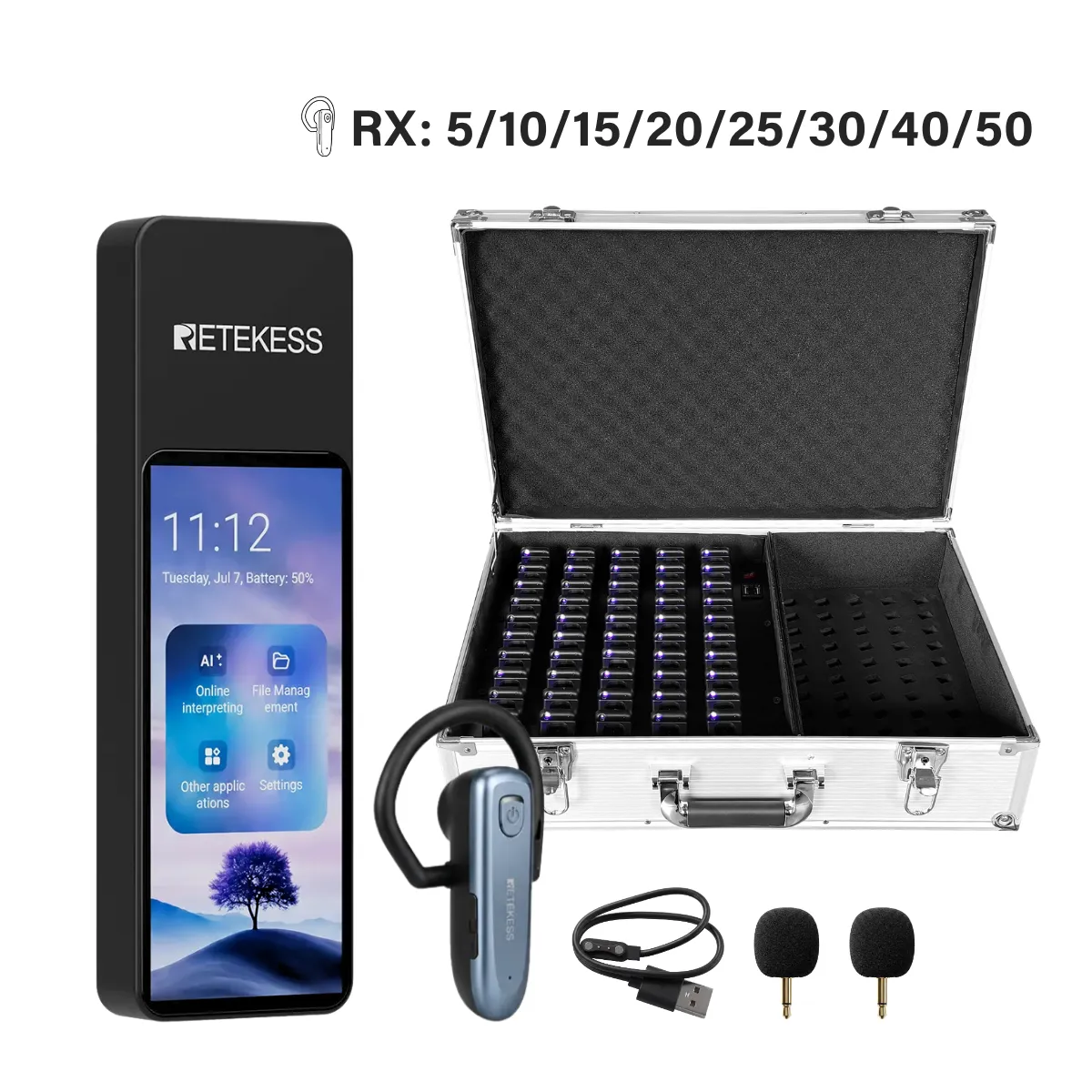
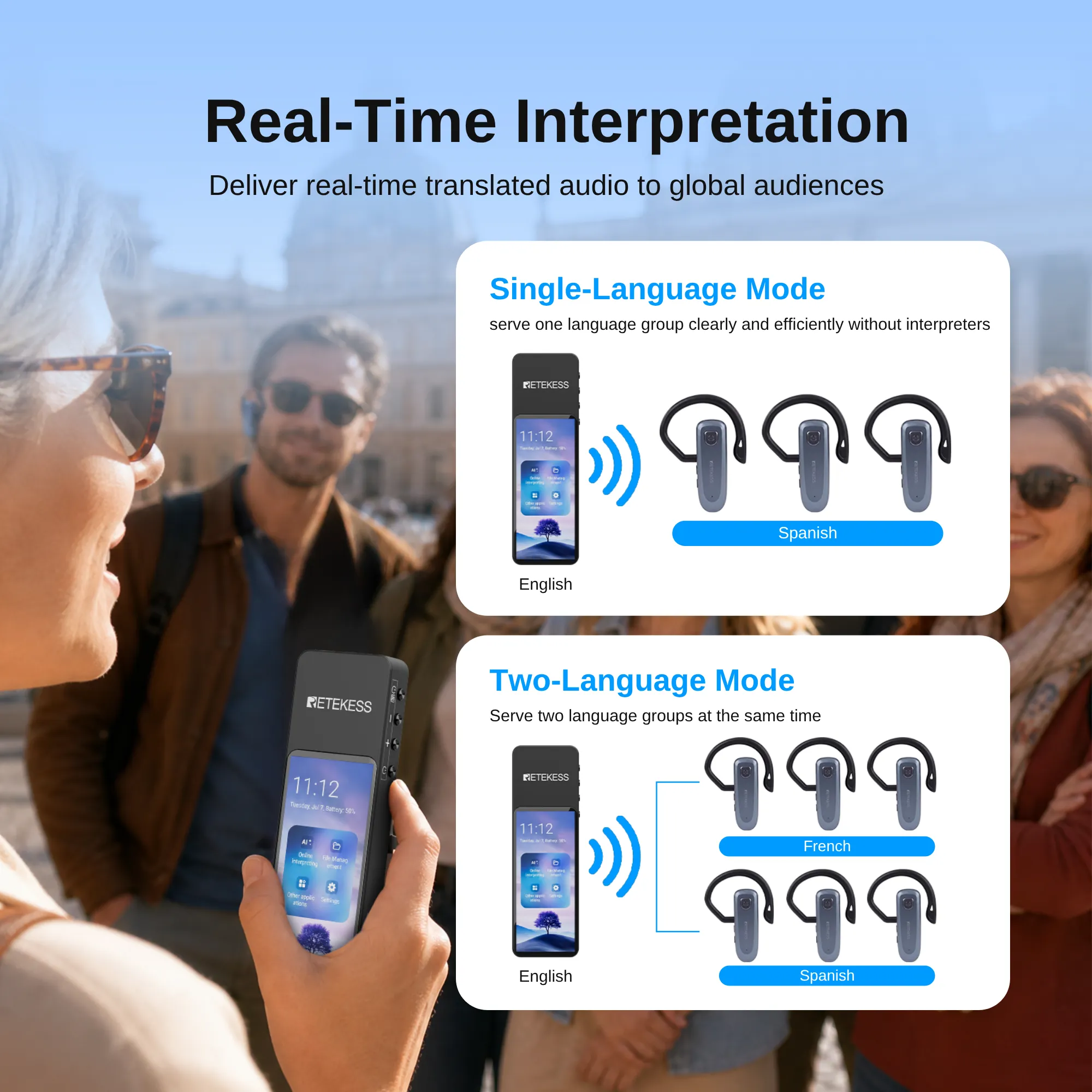
When your hybrid meeting translation needs extend beyond one-way listening, the Retekess TT136 wireless interpretation system offers advanced two-way functionality for more interactive scenarios. It supports single or dual broadcast simultaneous interpretation, so a single speaker’s speech can be translated into one or two target languages in real time with low delay. Smart language recognition technology handles up to 10 spoken languages in a single session, automatically routing speech to the correct translation channel.
The TT136 also supports two-way group translation, perfect for mixed discussions where attendees speak different languages. When translation isn’t needed, it works as a standard one-to-many audio system even without internet access. A built-in AI summary and recording function captures full meeting audio and translations, which can be stored locally and replayed later for post-meeting review, training reuse, or compliance documentation. The open-ear ergonomic receivers are hygienic for shared use and comfortable for long sessions.
Simple Sync for In-Person and Remote Feeds
The biggest advantage of this wireless framework is how easily it syncs audio across both groups. The central TT119 transmitter takes the original speaker audio (from in-room mics or the online meeting feed), sends it to interpreters, then routes the translated audio to two places at once: wireless receivers for everyone in the room, and the online meeting platform’s audio input for remote attendees. This single-source setup eliminates lag between in-person and remote translation, and removes the need for complex mixing boards or custom AV integrations. This level of seamless sync is what sets purpose-built hybrid meeting translation systems apart from retrofitted consumer audio gear.
Quick Tips for Reliable Hybrid Meeting Translation
A great system works even better with simple operational habits:
- Test audio sync and channel clarity 15 minutes before every meeting to catch issues early
- Use the transmitter’s mute function during interpreter huddles to keep private discussions confidential—a must for secure hybrid meeting translation
- Keep a backup charging base on hand for back-to-back meetings or all-day events
- Provide brief one-sentence instructions for attendees on how to select their language channel
These small steps will help you get the most value out of your hybrid meeting translation system.
Conclusion
Hybrid meeting translation doesn’t have to require expensive custom AV installations or constant IT support. With a centralized wireless interpretation system built for hybrid use, you can deliver clear, synced translated audio to both in-person and remote attendees with minimal setup and maintenance.
Whether you're running a monthly cross-functional sync or an annual global summit, consistent hybrid meeting translation depends on hardware that works as hard as your team does. Retekess offers a full range of scalable simultaneous interpretation solutions designed for hybrid meeting environments, from small team check-ins to large international conferences. Investing in purpose-built hybrid meeting translation hardware is a small change that delivers big improvements in meeting inclusivity and efficiency, creating equal participation for every attendee no matter where they join from.
Frequently Asked Questions About Hybrid Meeting Translation
Can wireless simultaneous interpretation systems integrate with mainstream online meeting platforms?
Yes. The Retekess TT119 connects directly to your meeting room’s audio interface, feeding translated audio into Zoom, Microsoft Teams, Google Meet and other platforms in real time. This single-source setup eliminates latency gaps between on-site and remote attendees for reliable hybrid meeting translation, with one-button switching between original and translated audio.
How many language channels can I support in one hybrid meeting?
It depends on your hardware setup. The TT119 desktop transmitter offers 17 independent, crosstalk-free channels for most multinational corporate needs. Pair it with T130P-T131P receivers to unlock 49 selectable channels, supporting multiple language tracks or separate meeting groups in the same venue.
Can the equipment be used for regular audio when translation is not required?
Absolutely. All Retekess systems double as standard one-to-many audio systems to maximize your investment. The TT119 has a one-touch original language button for instant switching; the TT136 also works fully offline as a broadcast system, suitable for training, factory tours and hybrid meeting translation alike.
What venue sizes are these systems compatible with?
The TT119 covers up to 100 meters (328 feet), ideal for standard conference rooms and mid-sized halls. For larger auditoriums or multi-space venues, the T130P-T131P extends coverage to 160 meters. Both deliver stable signal and clear sound across their full range to scale your hybrid meeting translation setup.



![[18th Anniversary] 18 Years of Echoing Excellence: Making Communication Easier, Connecting Trust Beyond Borders](https://res.retekess.com/z_file/20260716/retekess-brand-story-making-communication-easier_20260716151044_7682.jpg)
![[18 Years in Wireless Communication] Silent Disco Systems Anniversary Celebration: Top-Selling Headphones & Event Mechanics Revealed!](https://res.retekess.com/z_file/20260713/18-years-in-wireless-communication-silent-disco-systems-anniversary-celebration_20260713175011_5749.webp)
![[Anniversary Carnival] Ding-dong! 18th Anniversary Mega Sale on Guest Paging & Calling Systems: Full Reveal of 12+ Products & Promo Rules!](https://res.retekess.com/z_file/20260713/18th-anniversary-mega-sale-on-guest-paging-calling-systems_20260713175257_0295.webp)
![[Retekess 18th Anniversary Teaser] Tour Guide System Exclusive Perks: Sneak Peek at Event Dates & Mechanics!](https://res.retekess.com/z_file/20260713/retekess-18th-anniversary-tour-guide-system-exclusive-perks--2-_20260713180135_6435.webp)
Follow Us
Pay With


 Google
 Amazon
Comments (0)