
Table of Contents
How to Choose a Wireless Church Translation System for Multilingual Worship
- Retekess
- Sep 18, 2026
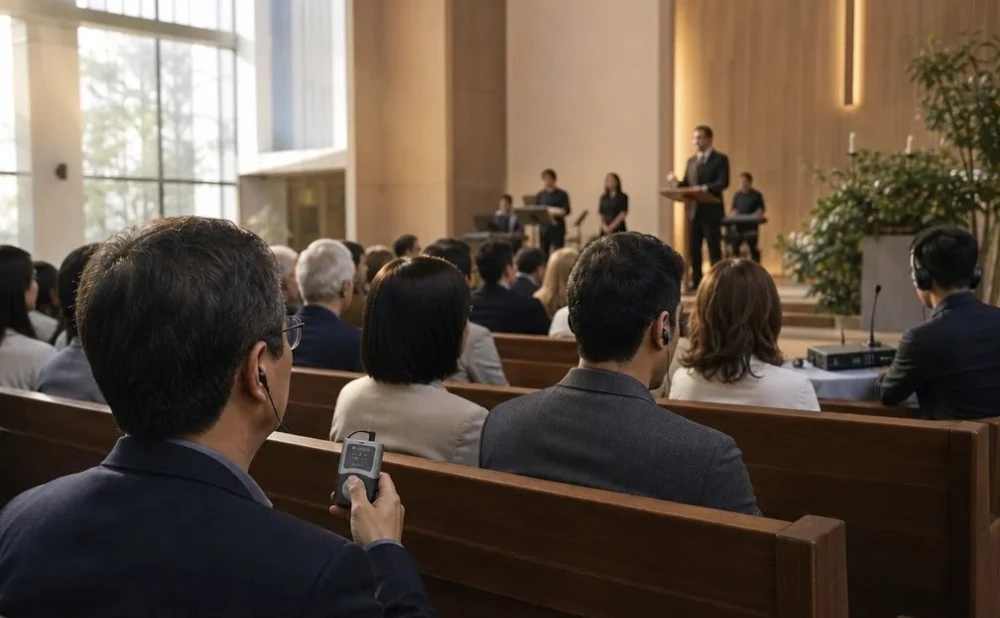
Multilingual worship brings people together across languages, but it also creates a practical communication challenge. A sermon, Bible study, or special service may need to be understood by people speaking different languages at the same time.
For churches, the challenge is not simply finding a way to translate speech. The system also needs to fit the worship environment. Historic buildings may have limited options for permanent wiring, volunteers may have only a short time to prepare before a service, and audio sources can include microphones, mixers, computers, music, and recorded content.
A church translation system can address these challenges by distributing interpreted audio wirelessly to multiple listeners. When designed around the actual worship environment, it can make multilingual services easier to organize without adding unnecessary complexity.
The Real Challenge in Multilingual Worship Spaces
Multilingual Congregations Need Flexible Communication
A church may have members who speak different languages, particularly in multicultural communities. During a multilingual worship service, some listeners may need interpretation while others can follow the original language.
The requirements can also change from one event to another. A regular Sunday service may use one interpretation channel, while a special conference or international gathering may require several language groups.
This means a translation system should be flexible enough to support different group sizes, languages, and worship formats.
Limited Installation Options
Many churches operate in buildings where permanent modifications are undesirable or impractical. Historic churches, chapels, and rented worship spaces may have restrictions on drilling, cabling, or installing additional equipment.
A wireless system reduces the need for long audio cables between different areas of the venue. Instead of building a permanent infrastructure, staff can deploy the equipment when it is needed and store it afterward.
This makes wireless transmission particularly useful for churches that host multilingual services only occasionally.
Short Setup Time
Church services often depend on volunteers or a small technical team. There may be only a limited window between equipment arrival, rehearsal, and the beginning of worship.
A complicated system with numerous cables and manually configured receivers can add unnecessary preparation work. A more practical approach is to simplify the connection process so that the team can focus on the service rather than troubleshooting equipment.
Complex Worship Audio
A worship service rarely consists of speech alone. The audio environment may include a desktop microphone, mixing console, computer, conference system, music, or recorded material.
Therefore, choosing a translation system based only on wireless range is not enough. Audio input compatibility and system integration are equally important.
Comparing Different Interpretation Approaches
Different interpretation methods can be suitable for different environments. The important consideration is how each approach fits the venue, audience size, and frequency of use.
Wired Interpretation Requires More Installation
A wired interpretation setup is a stable physical connection using familiar infrastructure. For permanent installations, wired systems can be a practical choice.
However, they can also require more cables and fixed connection points. Equipment placement may be less flexible, and temporary events can require additional setup and cable management.
Individual Translation Devices Do Not Always Scale
Individual translation devices can be useful when only a small number of people need assistance. Each listener can use a separate device according to their requirements.
As the audience grows, however, device management becomes more involved. Equipment needs to be charged, distributed, collected, and checked. Differences between devices can also affect the consistency of the listening experience.
A centralized wireless transmission system takes a different approach: one audio source can distribute the same translated channel to multiple receivers. This can simplify management when many listeners need the same language.
Manual Frequency Setup Can Add Unnecessary Work
Channel configuration is another practical consideration when many receivers are used. If each receiver needs to be manually tuned, preparation time can increase as the number of listeners grows.
More listeners can mean more preparation.
A system that allows compatible receivers to automatically find the transmitter's operating channel can reduce this repetitive work and make large-scale setup more straightforward.
How a UHF Wireless Church Translation System Works
Basic Workflow
The basic workflow of a wireless interpretation system is straightforward:
Interpreter / Audio Source → Wireless Transmitter → Receivers → Listeners
The interpreter speaks into the system, and the translated audio is transmitted wirelessly. Listeners use individual receivers to hear the selected language without disturbing people following the original service.
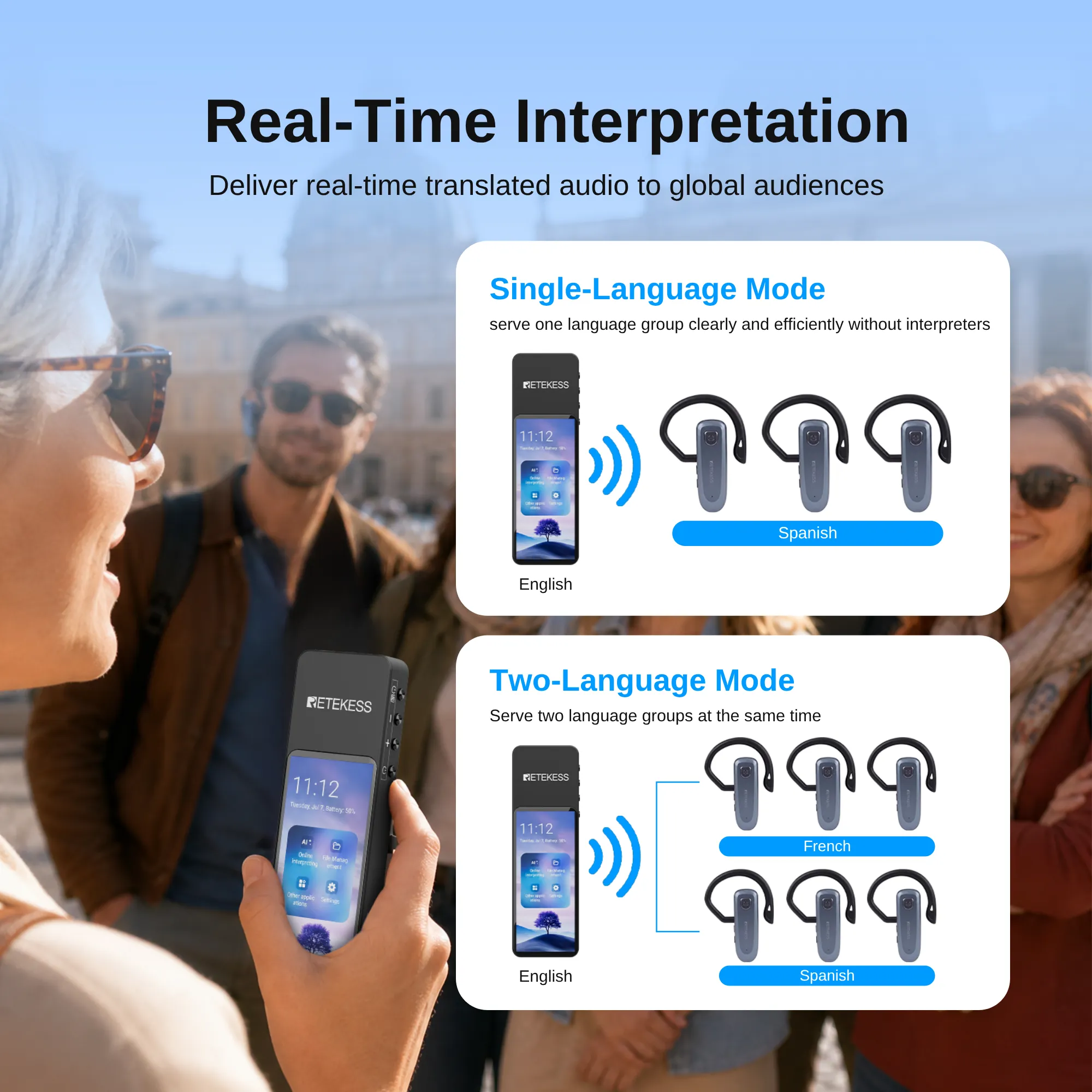
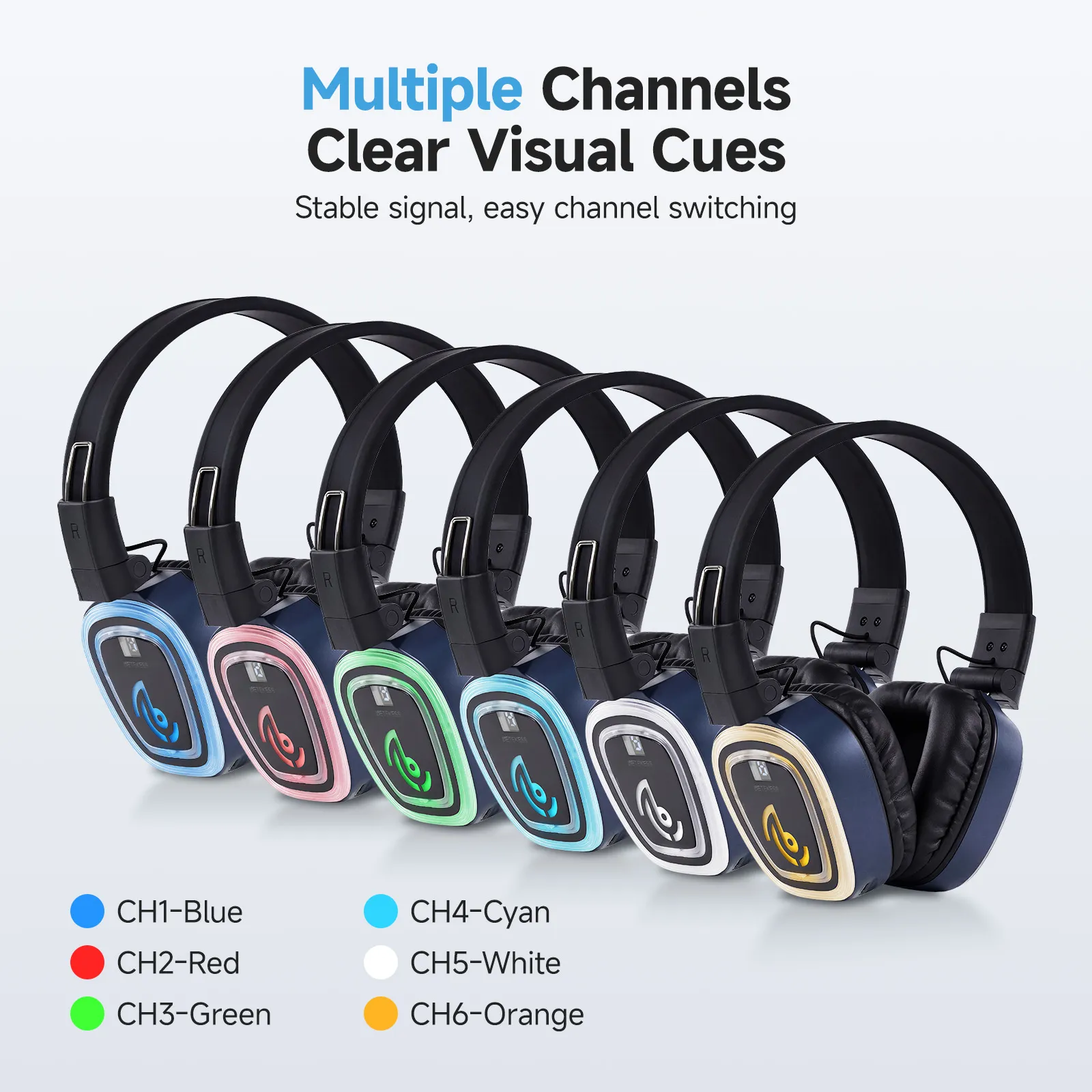
For larger multilingual events, different channels can be assigned to different languages. This allows each listener to select the language they need.
Why UHF Wireless Transmission Matters
UHF technology is commonly used for wireless audio distribution because it can provide stable transmission across indoor spaces without requiring an audio cable between the transmitting and receiving points.
However, wireless performance is influenced by the actual environment. Walls, building structure, interference, venue layout, and the position of the transmitter and receivers can all affect usable coverage.
For this reason, churches should evaluate wireless performance based on their actual worship space rather than relying only on a theoretical distance listed in a specification.
Multiple Languages, Multiple Channels
A multilingual worship service may involve English, Spanish, Chinese, Korean, or other language groups. A channel-based wireless system allows different groups to receive different interpretation streams.
The same principle can also be applied to Bible studies, church conferences, guest-speaker events, and international gatherings.
Practical Deployment: Integrated Desktop Translation Systems
Why Use an Integrated Desktop System?
For many churches, the interpretation area is located at a podium, table, or dedicated interpretation desk. An integrated desktop system can simplify this area by combining key transmission and receiving functions in a single tabletop unit.
Compared with a setup that requires several separate devices, an integrated design can reduce equipment connections and make the system easier to organize.
This approach is particularly suitable when the church needs a flexible system that can be set up for individual events rather than permanently installed.
A Desktop Interpretation Example
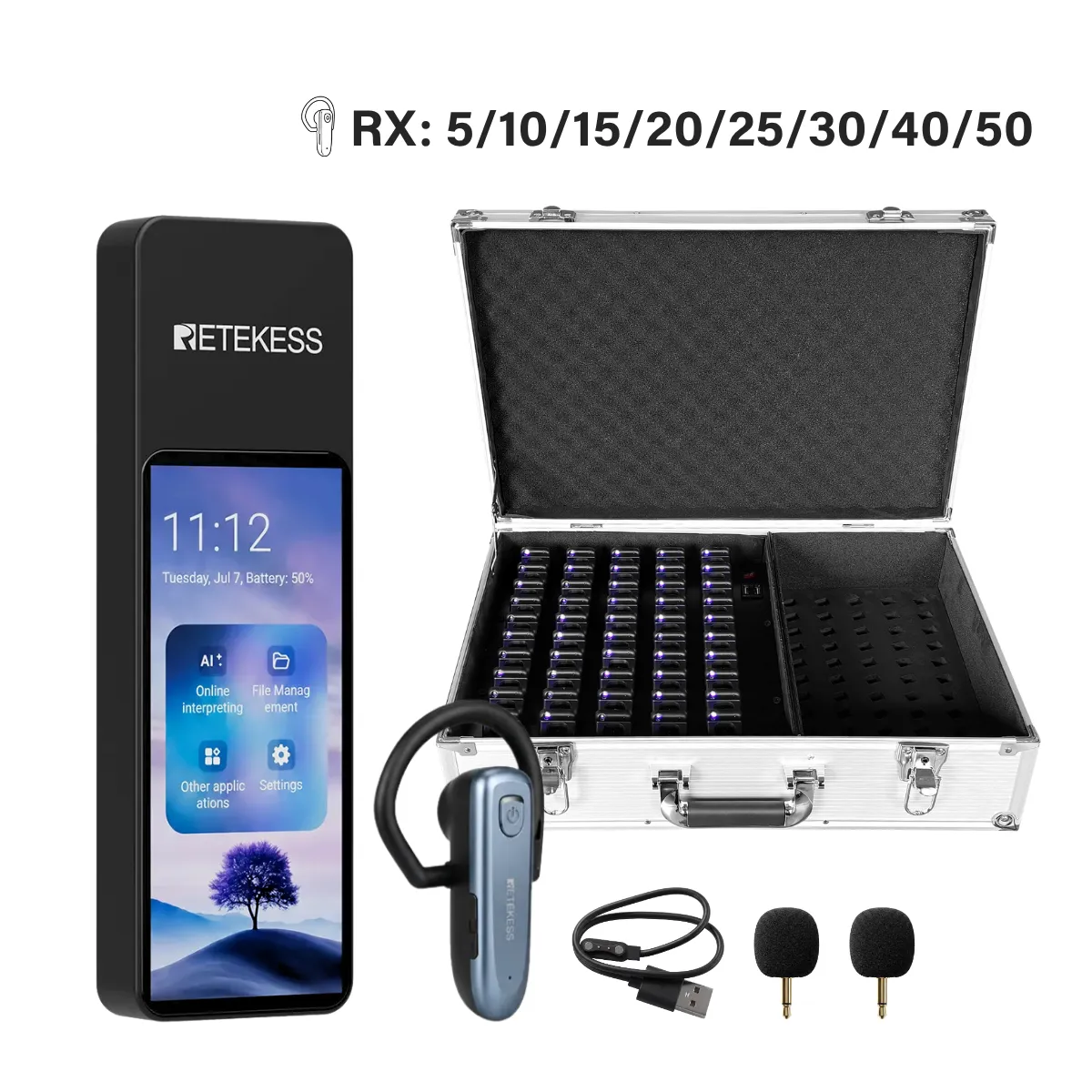
The Retekess TT119 represents this integrated desktop approach. Instead of treating interpretation equipment as a collection of separate components, it provides a centralized desktop unit for handling interpretation communication.
For churches, the value of this design is mainly operational: the interpretation position can remain organized and compact, while listeners receive translated audio through wireless receivers.
This type of setup can work well for regular services as well as meetings and other multilingual events.
A UHF Approach to Simpler Deployment
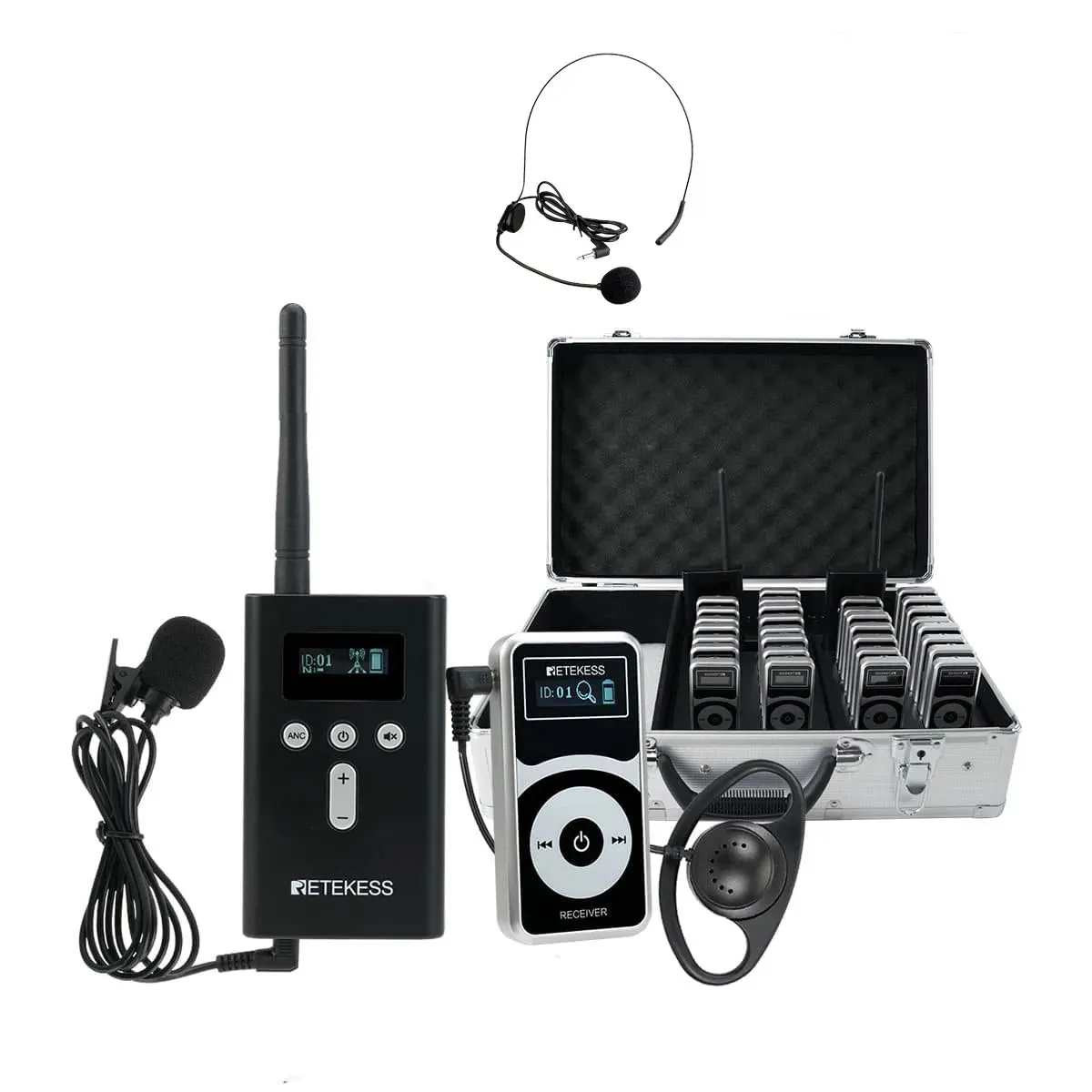
The upgraded Retekess T130T follows a similar integrated desktop concept while using UHF wireless transmission. Its transmission side requires only one power cable, helping reduce complicated wiring around the interpretation or speaking area.
It also supports MIC and LINE IN connections, allowing churches to connect a desktop microphone, mixer, computer, or conference system. Bluetooth, USB, and TF card playback further expand its use for audio playback and sound reinforcement when required.
The T130T can also work with T130-series interpretation receivers, making it easier to build a receiver-based listening system around an existing compatible setup.
Simplifying Receiver Setup
Receiver configuration can become a time-consuming part of multilingual event preparation, particularly when many units need to be configured individually.
The T130T addresses this with automatic channel searching. Compatible receivers can search for the transmitter's operating channel instead of requiring every receiver to be manually configured one by one.
For church staff and volunteers, this can shorten setup and reduce the amount of onsite debugging needed before a service begins.
What to Compare Before Buying a Church Translation System
Choosing a church translation system should start with the actual workflow rather than the product specification sheet.
|
Factor |
What to Consider |
|
Wireless Transmission |
Transmission technology, actual indoor coverage, walls, layout, and possible interference |
|
Audio Connectivity |
MIC/LINE IN, mixer, computer, conference system, and other audio sources |
|
Receiver Management |
Number of listeners, language channels, channel selection, and expansion options |
|
Setup & Operation |
Cable requirements, configuration process, charging, and receiver distribution |
|
Comfort & Battery Life |
Receiver weight, wearing comfort, operating time, and charging method |
For a small congregation, a compact system with simple operation may be sufficient. A larger multilingual service may require more receivers and multiple language channels. The right configuration therefore depends on both audience size and the way the church organizes its services.
Matching the System to the Worship Scenario
Different worship environments create different priorities.
|
Worship Scenario |
Key Requirements |
|
Weekly Multilingual Worship |
Stable transmission, comfortable receivers, simple daily operation |
|
Historic Church |
Minimal cabling and flexible temporary deployment |
|
Small Congregation |
Compact equipment and straightforward setup |
|
Large Multilingual Service |
Multiple channels and sufficient receiver capacity |
|
Church Conference |
Flexible audio inputs and easy receiver management |
|
Temporary Event |
Fast setup, simple configuration, and easy storage |
The goal is not necessarily to choose the system with the most features. It is to match the equipment to how the church actually operates.
Conclusion
A practical church translation system needs to solve more than the language barrier. It should also make installation, audio connection, receiver management, and daily operation easier for the people running the service.
For churches with limited installation options or changing multilingual requirements, wireless transmission provides greater flexibility than a permanently wired approach. Integrated desktop systems such as the TT119 and U-band T130T can further simplify the interpretation area by bringing key functions into a compact tabletop setup.
Ultimately, the right solution depends on the worship space, number of listeners, languages required, audio sources, and frequency of use. By evaluating these factors first, churches can build a translation setup that supports multilingual worship without making the service itself more complicated.


![[18th Anniversary] 18 Years of Echoing Excellence: Making Communication Easier, Connecting Trust Beyond Borders](https://res.retekess.com/z_file/20260716/retekess-brand-story-making-communication-easier_20260716151044_7682.jpg)
![[18 Years in Wireless Communication] Silent Disco Systems Anniversary Celebration: Top-Selling Headphones & Event Mechanics Revealed!](https://res.retekess.com/z_file/20260713/18-years-in-wireless-communication-silent-disco-systems-anniversary-celebration_20260713175011_5749.webp)
![[Anniversary Carnival] Ding-dong! 18th Anniversary Mega Sale on Guest Paging & Calling Systems: Full Reveal of 12+ Products & Promo Rules!](https://res.retekess.com/z_file/20260713/18th-anniversary-mega-sale-on-guest-paging-calling-systems_20260713175257_0295.webp)
![[Retekess 18th Anniversary Teaser] Tour Guide System Exclusive Perks: Sneak Peek at Event Dates & Mechanics!](https://res.retekess.com/z_file/20260713/retekess-18th-anniversary-tour-guide-system-exclusive-perks--2-_20260713180135_6435.webp)
Follow Us
Pay With


 Google
 Amazon
Comments (0)