
Table of Contents
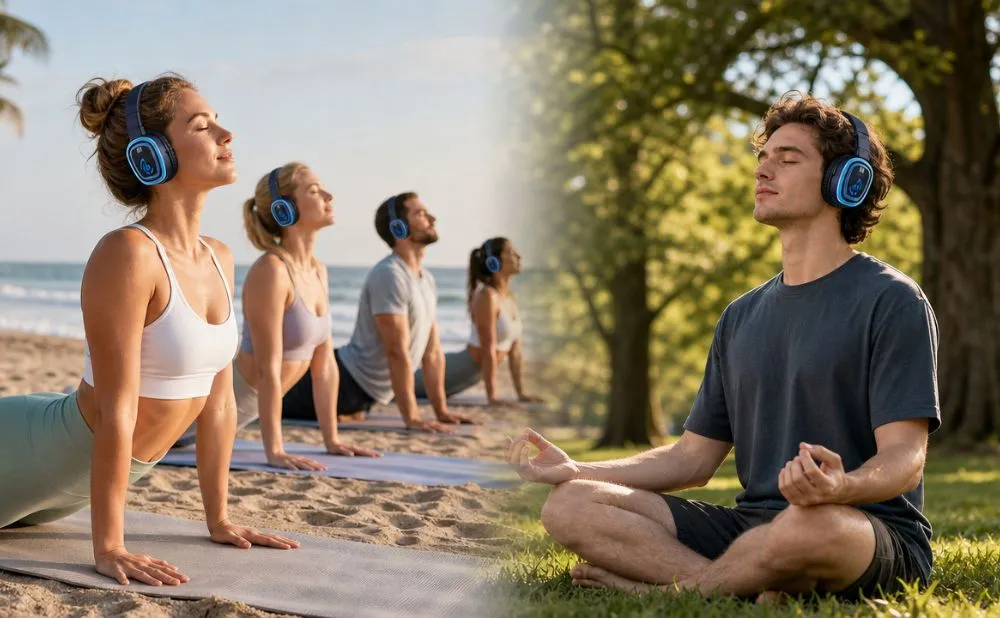
How to Set Up an Outdoor Silent Yoga Session with Portable Silent Disco Systems
- Retekess
- Jul 20, 2026
[18 Years in Wireless Communication] Silent Disco Systems Anniversary Celebration: Top-Selling Headphones & Event Mechanics Revealed!
Summer is peak season for outdoor wellness. From sunrise beach flows to twilight park meditations, instructors are taking their classes outside in record numbers. But there is one problem that every outdoor yoga teacher knows too well: noise.
Ocean waves crash at 60–70 dB. Wind gusts through trees at 50–65 dB. A nearby volleyball game or barking dog can shatter the calm you are trying to create. Traditional portable speakers fail here. They scatter sound in every direction, require AC power or heavy battery packs, and often annoy everyone within a hundred meters who is not in your class.
The solution that experienced instructors are turning to is a portable wireless headphone system—sometimes called a silent yoga or silent disco setup. It delivers your voice and music directly into each student's ears, blocks external noise, and runs entirely on battery power. No outlets. No speaker towers. No angry neighbors.
This guide will walk you through everything you need to choose, set up, and run a professional outdoor silent yoga class.
Why Traditional Outdoor Audio Fails for Yoga
The Noise Battle: Beaches and Parks Are Loud
Outdoor environments are hostile to audio clarity. Here is what you are competing against:
|
Sound Source |
Typical dB Level |
Impact on Class |
|
Ocean waves |
60–70 dB |
Drowns out soft-spoken guidance |
|
Wind through trees |
50–65 dB |
Creates constant background hiss |
|
Crowd chatter |
55–70 dB |
Breaks focus during meditation |
|
Traffic (nearby roads) |
60–80 dB |
Destroys the "escape" feeling |
A standard Bluetooth speaker at 80 dB might seem loud enough, but sound dissipates quickly in open air. By the time it reaches students 10 meters away, effective volume drops significantly. Turn it up louder, and you become the noise polluter you are trying to escape.
The Silent Disco Headphone Advantage
A wireless RF headphone system solves every outdoor audio problem at once:
●Noise isolation: Over-ear designs physically block wind and ambient sound. Students hear only your voice and music.
●Zero noise pollution: Sound is contained inside the headphones. The beach remains peaceful for everyone else.
●No power cords: Both transmitters and headphones run on rechargeable batteries.
●Freedom of movement: Instructors can walk, demonstrate poses, or adjust students while teaching—without being tethered to a speaker.
Your Silent Yoga Equipment Checklist
1. Wireless RF Transmitter (The Brain)
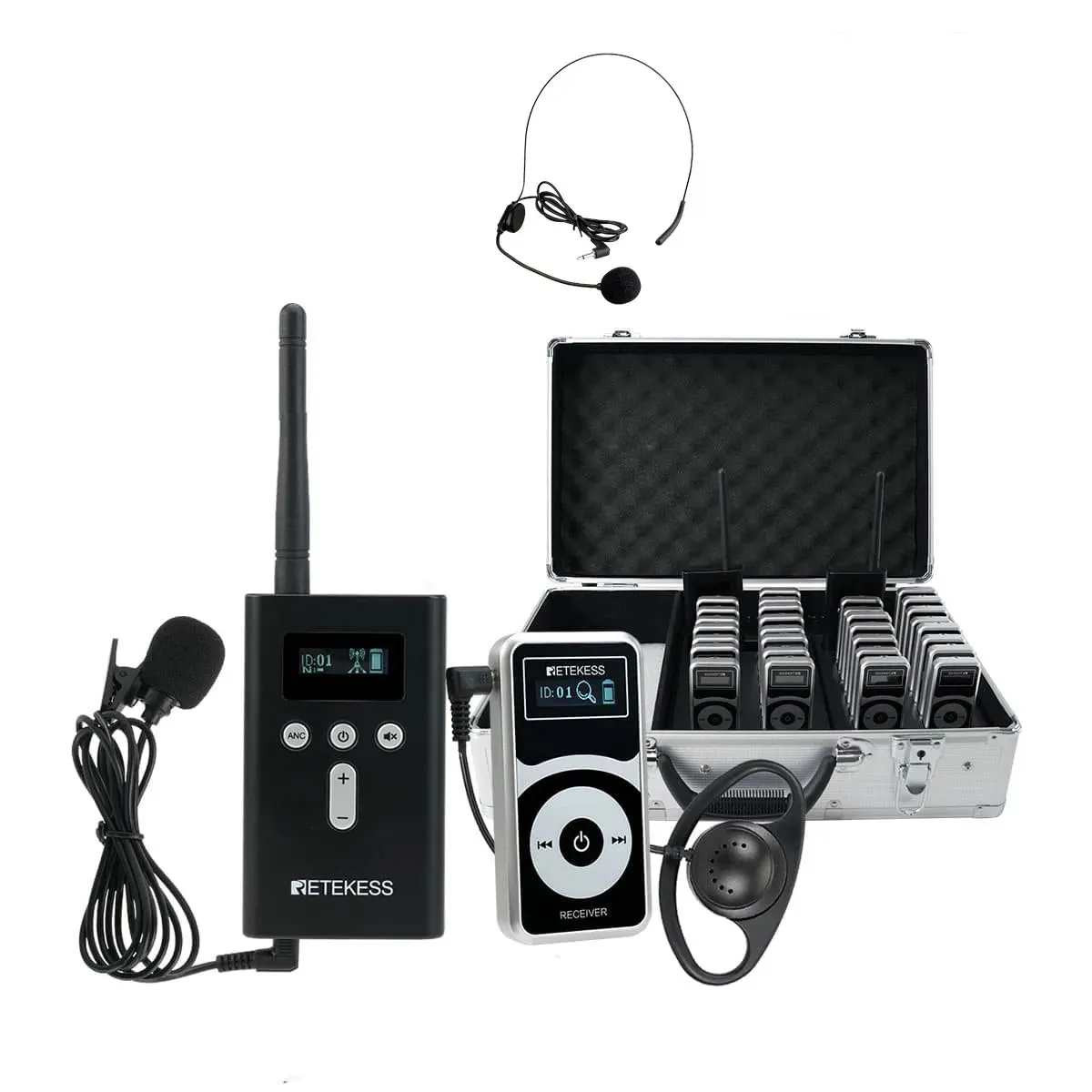
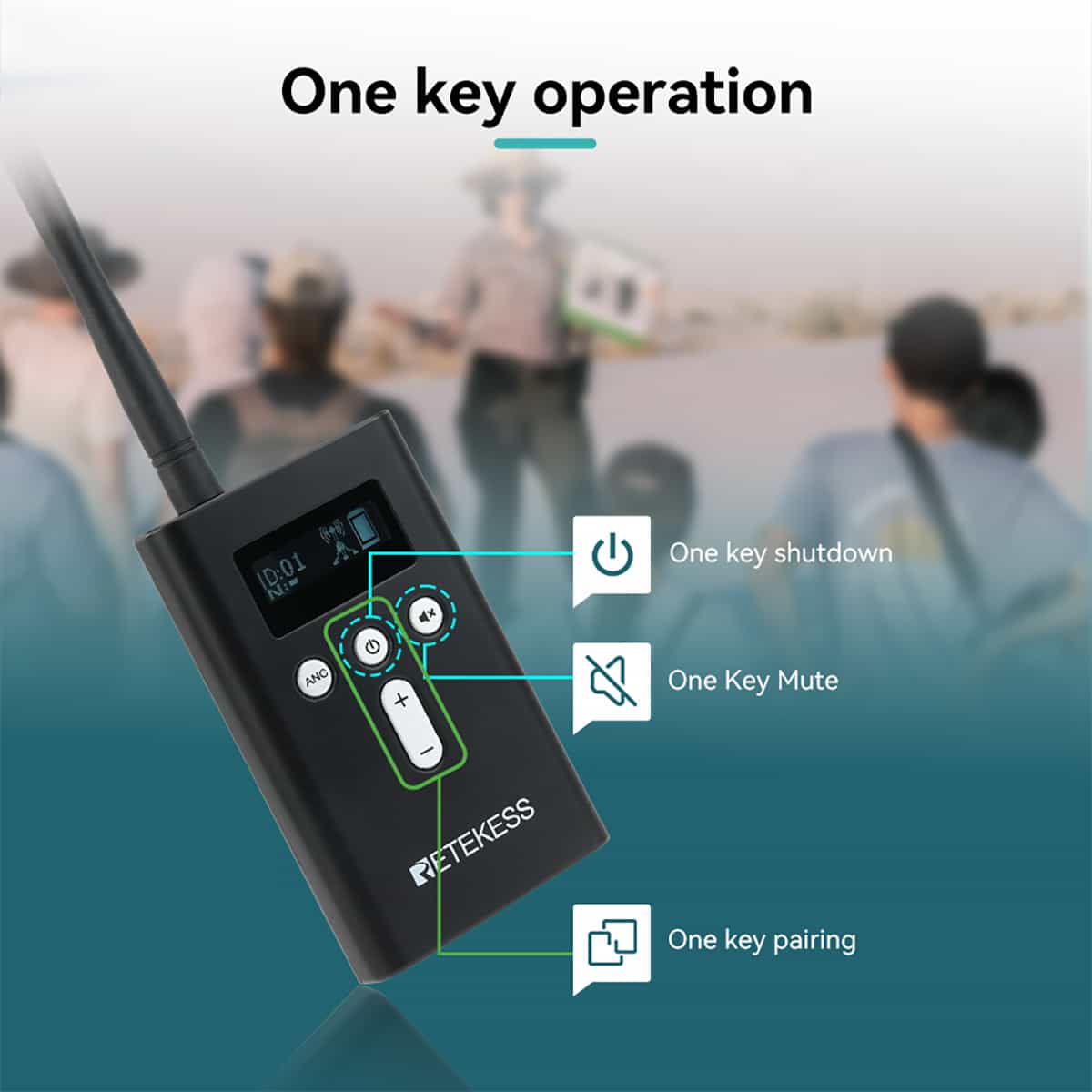
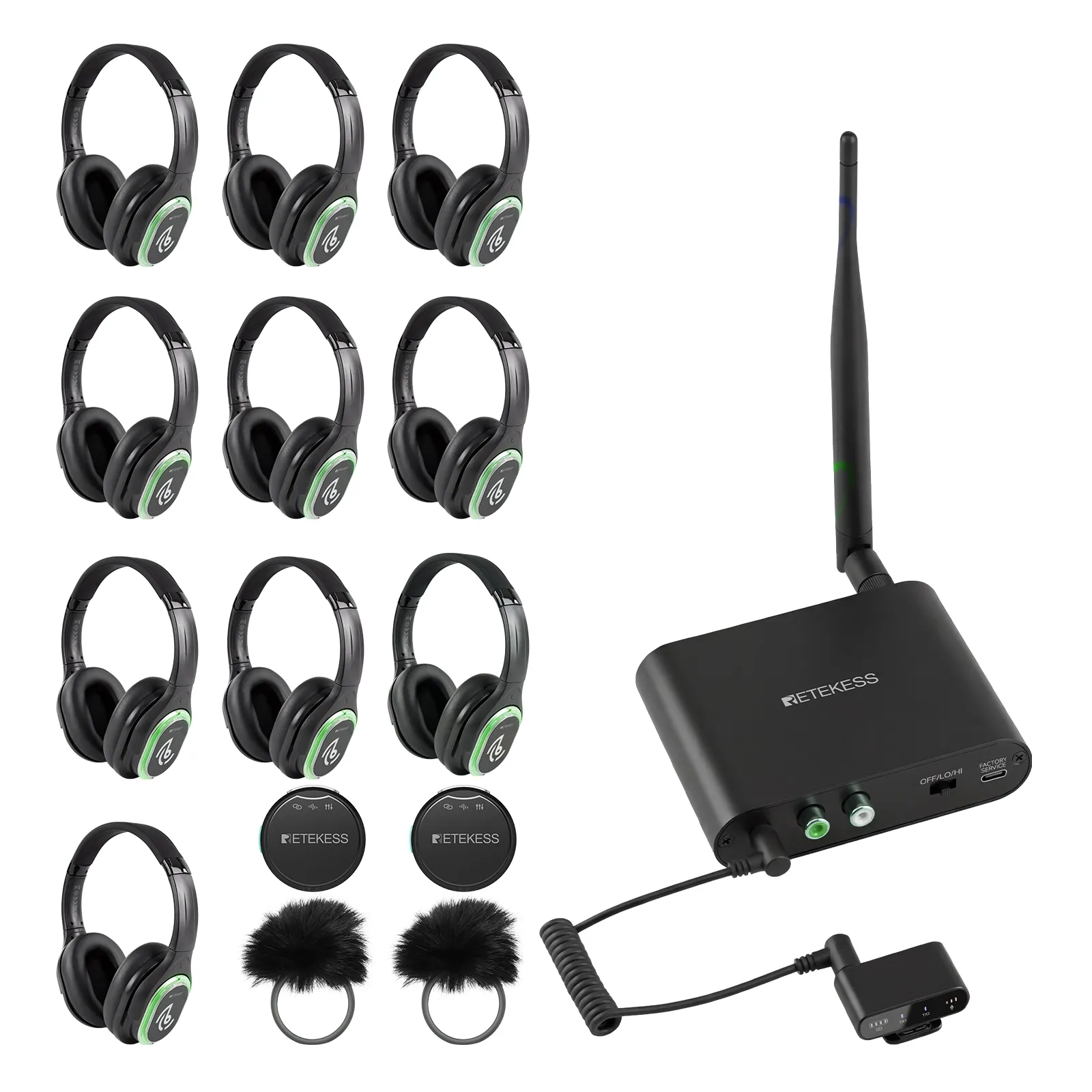
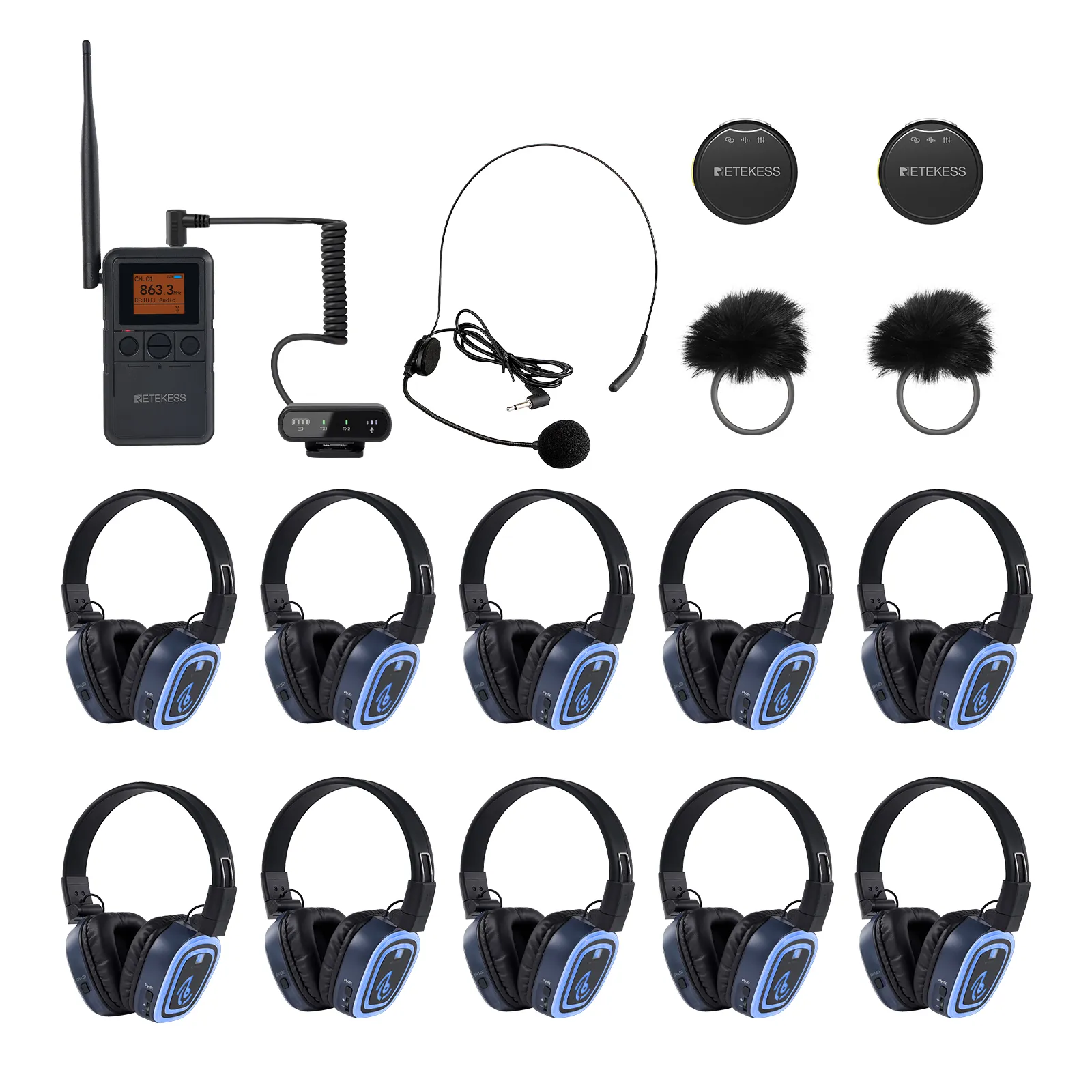
The transmitter is the hub of your system. It takes your microphone voice and music input, mixes them, and broadcasts wirelessly to every headphone in range.
What to look for:
●Battery-powered operation: You need a transmitter with a built-in rechargeable battery that lasts at least one full class (8–10 hours minimum). Look for USB-C charging for compatibility with standard power banks.
●Long transmission range: In open beach or park environments, you want 300+ meters of reliable range so you can move freely without signal dropout.
●Multiple audio inputs: At minimum, you need one microphone input and one 3.5 mm audio input for music. Advanced systems offer multiple mic and music channels simultaneously.
●Multi-channel support: This allows you to broadcast different content on different frequencies—useful if you want to run both an active flow and a meditation session in the same area.
2. Wireless Headphones for Participants
Each student wears a pair of wireless headphones that receive the broadcast from your transmitter.
What to look for:
●All-day battery life: 10+ hours is the minimum for retreat-style events. Students should never worry about their headphones dying mid-class.
●Comfortable over-ear design: Padded ear cups that seal around the ear provide passive noise isolation and stay comfortable for 60–90 minute sessions.
●Individual volume control: Every student has different hearing sensitivity. Let them adjust their own level.
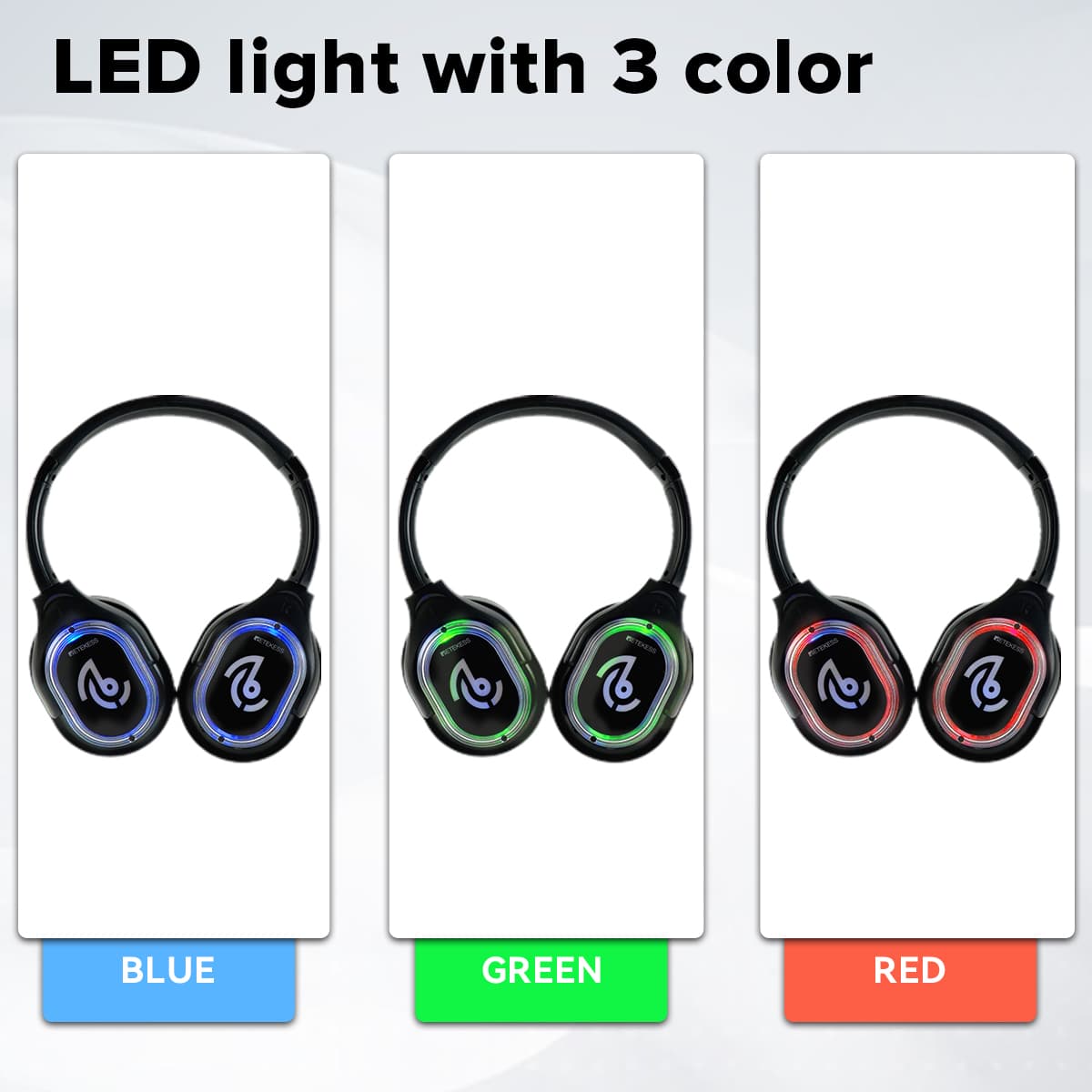
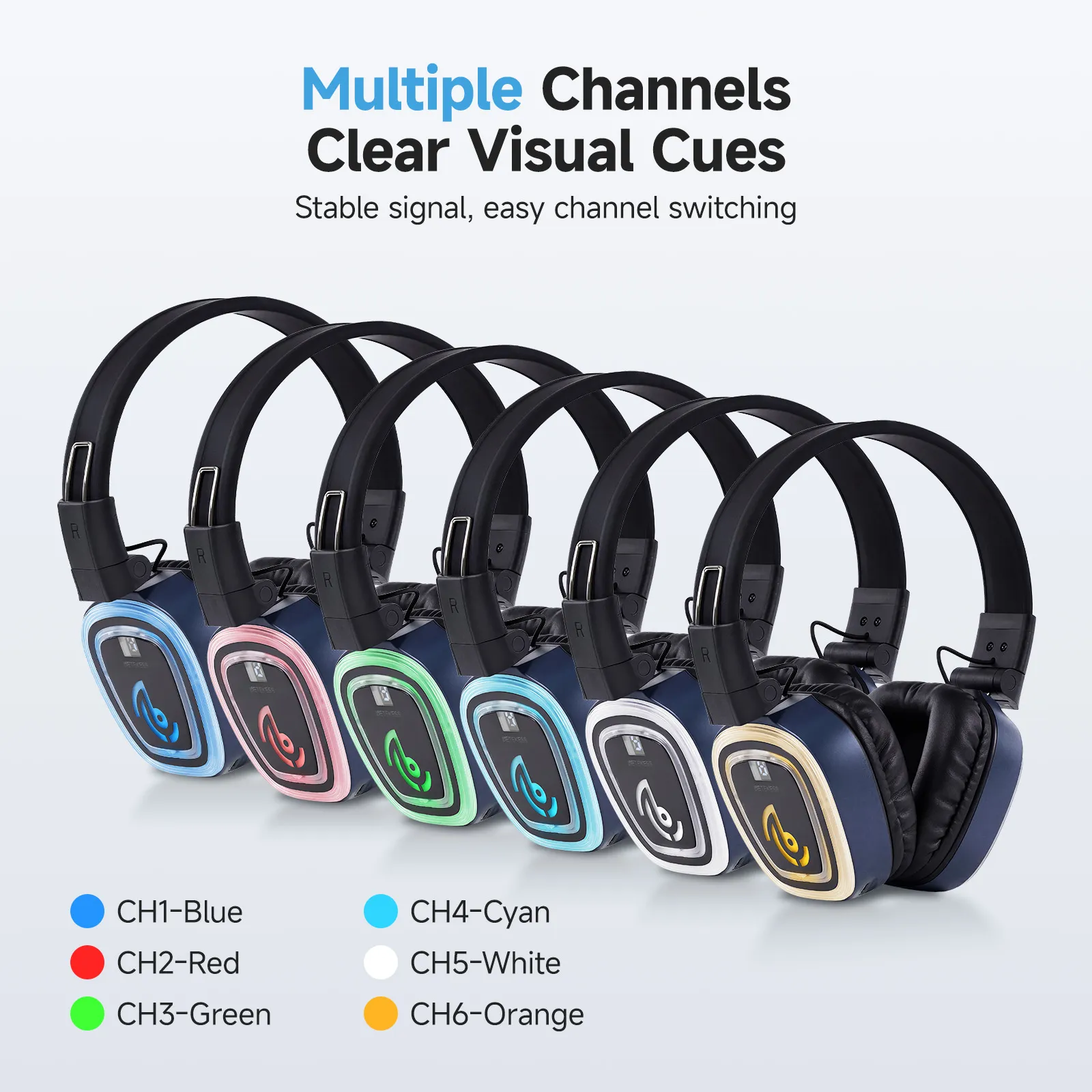
●Channel selection with visual indicators: LED lights (typically red, green, blue) that show which channel the headphone is tuned to prevent confusion.
Look for headphones with an auto-shutoff feature. If a student forgets to power down after class, the headphones turn themselves off after a period of inactivity—saving battery for the next session.
3. Audio Source (Music)
Most instructors play background music from a smartphone or tablet. Connect this to your transmitter's 3.5 mm audio input using a standard aux cable or Bluetooth (if supported).
Pro tip: Download your playlist for offline playback. Beach and park Wi-Fi is unreliable, and you do not want a streaming buffer interrupting savasana.
4. Portability Accessories
●Carrying case: A hard-shell, weather-resistant case protects headphones from sand, salt, and moisture during transport.
●Sanitizing wipes: Clean ear cushions between classes.
●Backup power bank: A 20,000 mAh USB-C power bank can recharge your transmitter between sessions if you are teaching multiple classes in one day.
Buying vs. Renting: What Is Right for You?
Renting
Best for: First-time instructors, one-off events, or large festivals where you need 100+ headphones..
●Lower upfront cost
●Professional setup and support included
●No storage or maintenance responsibility
●Higher per-class cost over time
Buying
Best for: Instructors who teach outdoor classes weekly or run regular retreats.
●Lower cost per class after initial investment
●Full control over equipment hygiene and condition
●No rental coordination or pickup logistics
●Requires storage space and maintenance routine
If you teach just twice a month, a purchased system typically pays for itself within 3–4 months compared to rental rates.
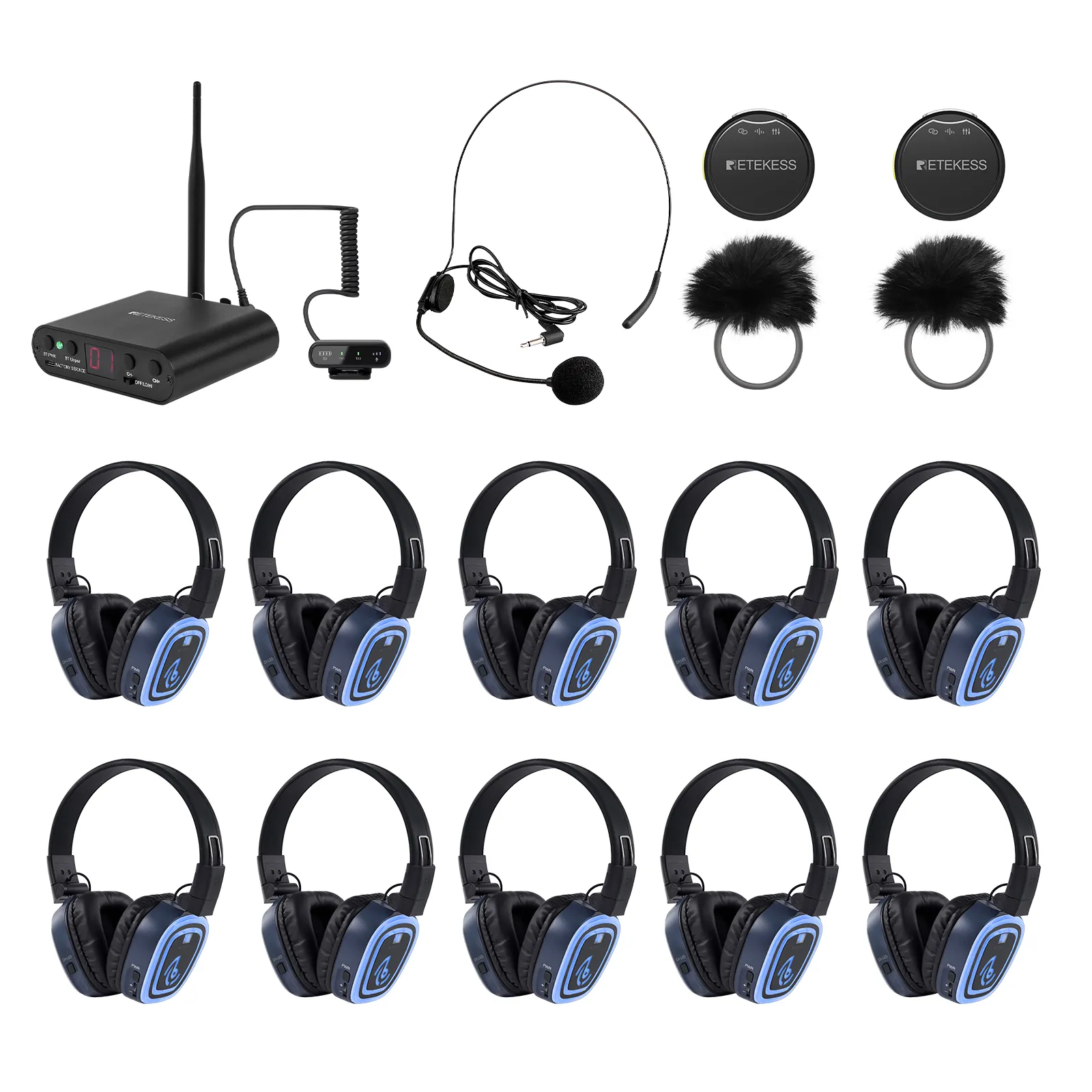
For instructors ready to buy, entry-level professional bundles offer strong value. The Retekess TA003P Silent Disco System is one option that has gained traction among outdoor fitness instructors: it covers the full 400-meter range needed for beach and park setups, offers 12-hour headphone battery life, and includes 6-channel flexibility at a price point well below legacy event-audio brands.
Pro Tips for a Flawless Silent Yoga Experience
Audio Mixing: Voice vs. Music
Your voice should always sit above the music. A good rule of thumb: if you can clearly hear and understand every word you speak while music is playing, your students can too. If your transmitter has independent input level controls, set microphone gain higher than music input.
Safety Reminders for Students
Because over-ear headphones block significant external noise, remind students to stay aware of their surroundings. If your class is near water, on uneven ground, or in a public park with cyclists, a brief safety note at the start prevents accidents.
Multi-Channel Advanced Use
If your system supports multiple channels, use them strategically:
●Channel 1 (Red): Dynamic Vinyasa Flow with upbeat music
●Channel 2 (Green): Slow Yin Yoga with ambient soundscapes
●Channel 3 (Blue): Guided meditation with no music, only voice
●Channel 4, Channel 5, Channel 6......
This lets you serve different student preferences simultaneously—or run three mini-classes in one location without audio interference.
Troubleshooting About Your Silent Yoga Class
|
Problem |
Likely Cause |
Solution |
|
Headphones suddenly cut out |
Moved beyond transmission range or large obstacle blocked signal |
Return to line-of-sight with transmitter; verify range specs before class |
|
Two channels bleeding together |
Multiple transmitters on overlapping frequencies |
Ensure each transmitter uses a distinct channel group |
|
Uneven headphone battery levels |
Some units used more frequently than others |
Rotate headphone usage; keep 10% extra units charged as backup |
|
Microphone picks up wind noise |
Gain too high or foam windscreen missing |
Lower input gain; always use windscreen outdoors |
|
Sand or moisture in equipment |
Beach environment exposure |
Use hard-shell case; wipe down immediately after class |
The Future of Silent Outdoor Wellness
Silent yoga is moving from novelty to norm. As more instructors discover the freedom of wireless headphone systems, the technology is evolving to match: lighter headphones, longer battery life, and smartphone apps that let instructors monitor every connected headphone's battery and volume in real time.
What will not change is the core value: your voice, your music, and your guidance—delivered directly to each student, undiluted by wind or waves, undisturbed by the world around you.
Conclusion
Setting up an outdoor silent yoga session is simpler than it looks. You need four things: a battery-powered transmitter, comfortable wireless headphones, a microphone, and a music source. With those in place, you can teach anywhere—on the sand, in the grass, or on a rooftop—without fighting ambient noise or disturbing anyone nearby.
The technology has matured to the point where setup takes three minutes, battery life covers a full day of classes, and audio quality rivals studio conditions. For instructors ready to take their practice outside, there has never been a better time to go silent.
Retekess is celebrating its 18th Anniversary in 2026! Don’t miss our exclusive anniversary offers — this is your best chance to grab cost-effective equipment and stand out from competitors.
Leave a Reply

![[18th Anniversary] 18 Years of Echoing Excellence: Making Communication Easier, Connecting Trust Beyond Borders](https://res.retekess.com/z_file/20260716/retekess-brand-story-making-communication-easier_20260716151044_7682.jpg)
![[18 Years in Wireless Communication] Silent Disco Systems Anniversary Celebration: Top-Selling Headphones & Event Mechanics Revealed!](https://res.retekess.com/z_file/20260713/18-years-in-wireless-communication-silent-disco-systems-anniversary-celebration_20260713175011_5749.webp)
![[Anniversary Carnival] Ding-dong! 18th Anniversary Mega Sale on Guest Paging & Calling Systems: Full Reveal of 12+ Products & Promo Rules!](https://res.retekess.com/z_file/20260713/18th-anniversary-mega-sale-on-guest-paging-calling-systems_20260713175257_0295.webp)
![[Retekess 18th Anniversary Teaser] Tour Guide System Exclusive Perks: Sneak Peek at Event Dates & Mechanics!](https://res.retekess.com/z_file/20260713/retekess-18th-anniversary-tour-guide-system-exclusive-perks--2-_20260713180135_6435.webp)
Follow Us
Pay With


 Google
 Amazon
Comments (0)