
Table of Contents
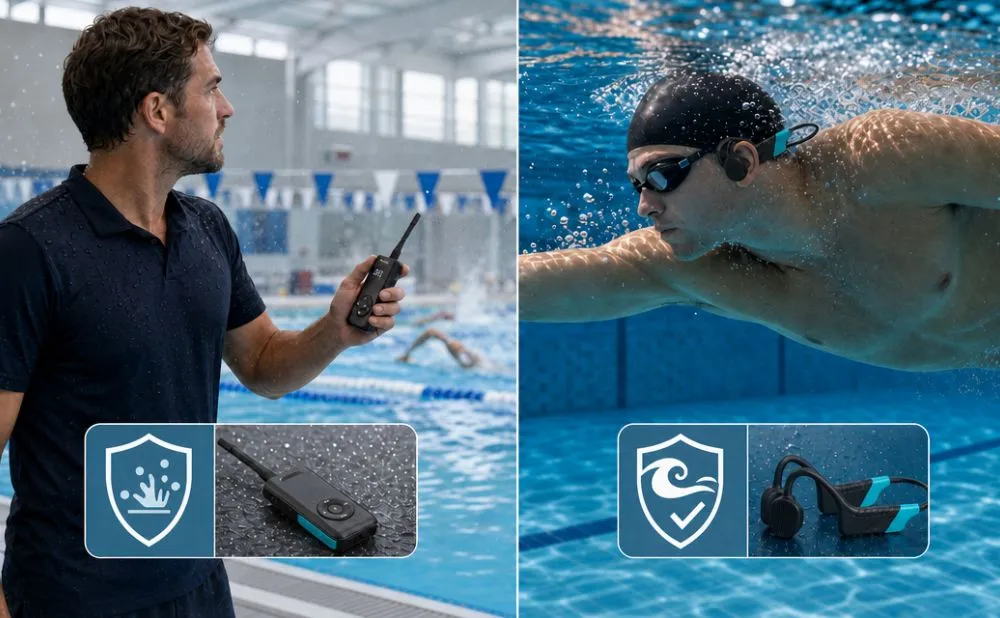
Waterproof Ratings Explained: Understanding IP68 Receivers and IP54 Transmitters for Aquatic Sports
- Retekess
- Jul 20, 2026
Many people purchase audio equipment marked IP68, assuming it delivers full water safety across all aquatic environments. After one or two months of use in pools or seawater, audio cuts out or buttons stop working.
This is rarely a product defect. Most people misunderstand what IP waterproof ratings actually cover. All standard IP tests are conducted in clean, room-temperature fresh water. Chlorine in pools and salt in seawater are not included in those lab test conditions.
This article breaks down the real difference between IP54 and IP68, explains how pool and seawater affect equipment, and outlines simple cleaning steps to extend equipment lifespan.
1. What Do IP54 and IP68 Actually Mean?
IP ratings consist of two numbers. The first indicates dust resistance, and the second indicates water resistance. Higher numbers mean stronger protection.
IP54 Transmitter
Dust does not interfere with normal daily function
Resists splashing water, humid air, and light rain
Wipes dry and resumes normal operation immediately
IP68 Receiver
Fully sealed against fine dust
Withstands full submersion in water; swimming or accidental falls will not cause immediate damage
All protection ratings are tested in clean fresh water. The effects of pool chlorine and ocean salt water are detailed in the following section.
2. Why Use Two Different Waterproof Ratings in One System?
A common question is why a single system includes two different waterproof grades. This design is not a cost-cutting measure — it aligns with real-world usage patterns.
The transmitter is used above water. It requires regular button operation, screen viewing, and cable charging. Full IP68 sealing would make buttons stiff, add extra sealing steps for charging ports, and trap internal heat. IP54 provides sufficient protection for above-water splashes and humidity, while maintaining smooth daily operation.
The receiver is worn in the water. It requires full submersion protection for reliable use during water activities, so it is built to IP68 standards.
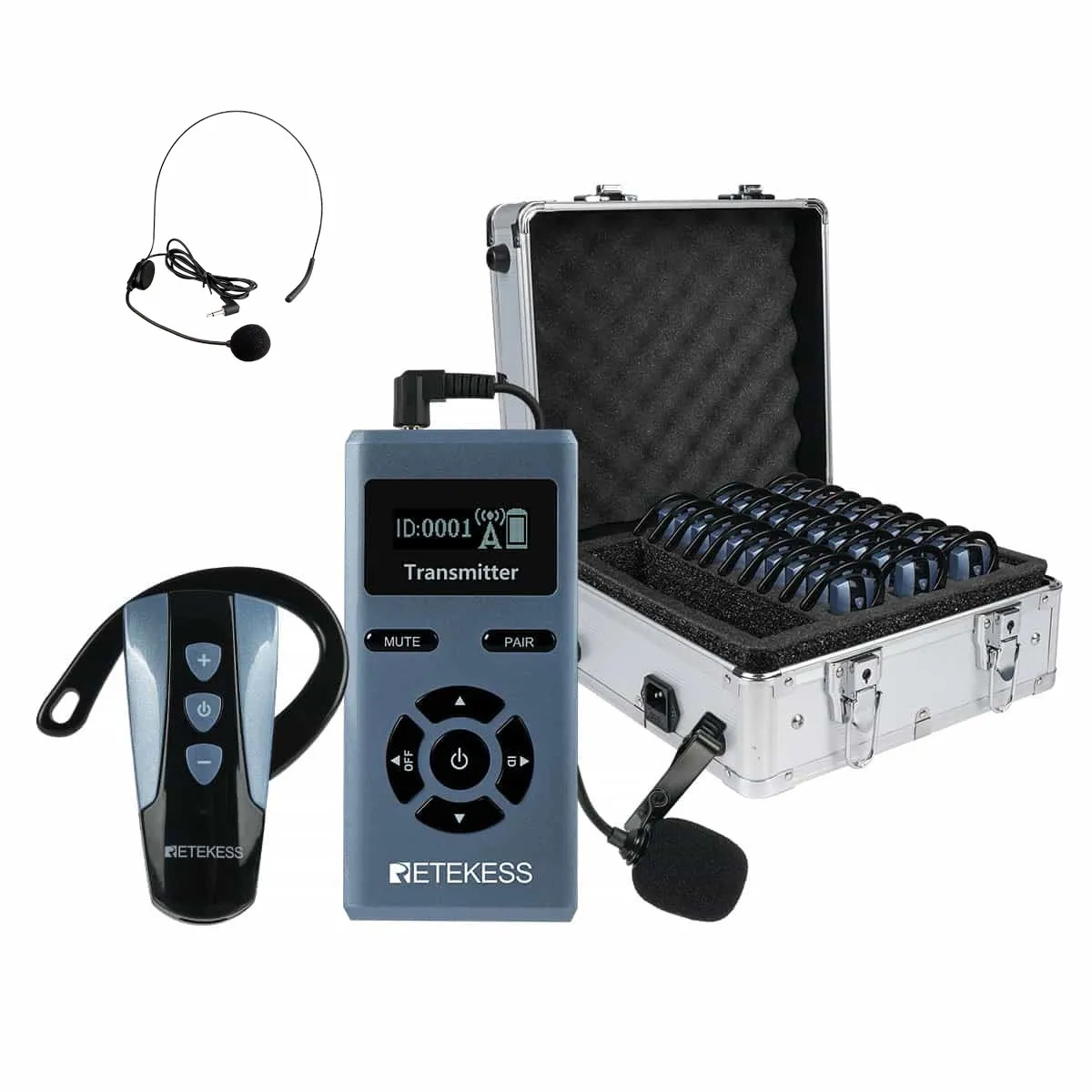
The Retekess TT120 Aquatic Training Audio System follows this exact design logic. Land-based transmitters use IP54 protection for easy operation, while wearable ear receivers feature full IP68 waterproofing for consistent underwater audio delivery.
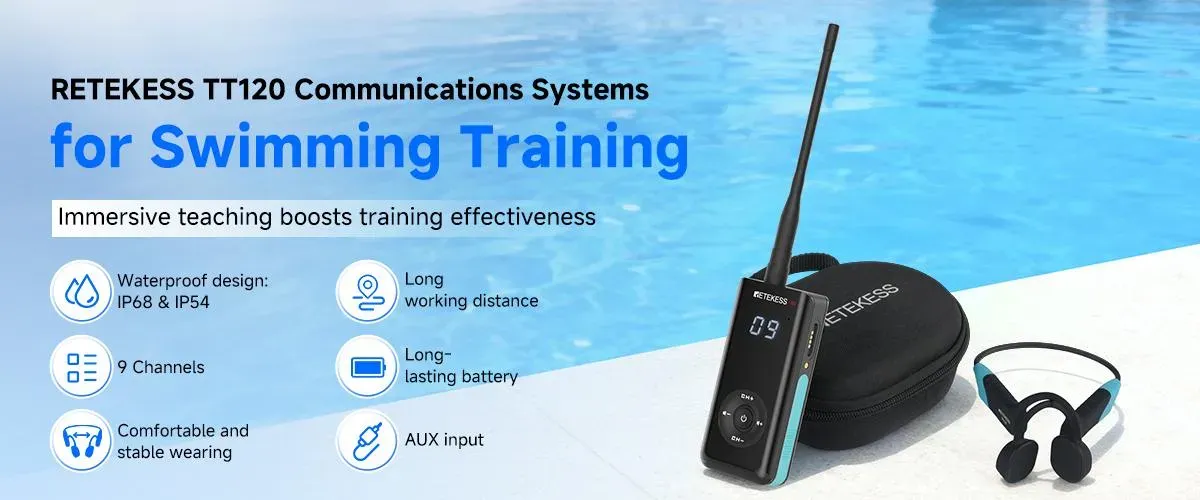
3. How Pool Chlorine and Seawater Affect Equipment
Chlorine and salt do not cause immediate equipment failure, but they gradually reduce lifespan over time.
Chlorinated pool water
Disinfectant chemicals in swimming pools gradually harden the soft waterproof seals inside devices. They also tarnish metal charging contacts over time. After weeks or months of exposure, seals lose flexibility, contacts develop poor connections, and waterproof performance declines.
Salty seawater
Ocean salt causes more severe damage than pool chlorine. When salt water dries on equipment, tiny salt crystals become trapped in cracks, button gaps, and charging ports. These crystals scratch waterproof seals with each use. Salt also corrodes internal metal components, the leading cause of faster equipment failure in coastal environments.
Repeated wetting and drying cycles cause more damage than continuous submersion. Trapped chlorine and salt residue continue to corrode components even after equipment feels dry.
4. Maintenance Steps to Extend Equipment Lifespan
Care routines are divided into universal ground rules, pool-specific steps, saltwater-specific steps, and long-term storage tips. All steps are quick to perform.
Universal Ground Rules
1.Never submerge an IP54 transmitter, and avoid spraying water directly into its charging port.
2.Do not use IP68 receivers in hot tubs or hot springs; high heat damages internal waterproof seals. Do not exceed the labeled submersion depth and time limits.
After Use in Chlorinated Pool Water
1.Rinse receivers with room-temperature fresh water to remove residual chlorine. Wipe transmitters with a damp, wrung-out cloth. Do not rinse transmitters under running water.
2.Dry all surfaces with a soft cloth. Pay close attention to metal charging contacts and gaps around buttons.
3.Place all units in a cool, well-ventilated area to air-dry completely. Keep away from direct sunlight and hot hair dryers.
After Use in Salt Water
1.Soak receivers in room-temperature fresh water for 5–10 minutes to dissolve trapped salt crystals. Wipe transmitters twice with a damp cloth to remove all salt residue.
2.Dry all surfaces thoroughly. Use dry cotton swabs to absorb water inside charging ports and small gaps.
3.Air-dry equipment fully in cool shade before storage. Confirm no salt crystals remain on any surface.
Long-Term Storage Tips
Store all equipment in cool, dry spaces. Avoid sealing inside airtight cases for extended periods.
Perform a quick monthly check: Wipe off discolored charging contacts immediately. Replace worn seals before waterproof performance is compromised.
5. Suitable Aquatic Scenarios
This IP54 transmitter + IP68 receiver configuration fits a wide range of water activities:
1.Daily swim training: Clear instructions are delivered from above water, while swimmers receive audio underwater without repeated trips to the pool edge.
2.Snorkel and shallow dive lessons: Technique and safety guidance is shared from the surface, and participants hear every word clearly underwater.
3.Paddleboard and surf group coaching: Audio guidance remains uninterrupted even if participants fall into the water.
4.Water park and small aquatic event management: On-site scheduling and guidance works reliably through light splashes and sudden rain.
The Retekess TT120 is purpose-built for these aquatic scenarios. Beyond its two-tier waterproof design, the lightweight receivers stay secure during active movement, and the easy-to-use transmitters deliver steady audio to large groups.
Frequently Asked Questions
Q: Can IP68 receivers stay submerged all day?
A: They operate safely within the labeled depth and time limits in fresh water. Continuous full-day submersion is not recommended. Always clean and air-dry equipment after each session.
Q: What if an IP54 transmitter accidentally falls into water?
A: Remove it from water immediately, power it off, wipe fully dry, and air-dry completely before restarting. Brief accidental drops rarely cause permanent damage. Intentional submersion is not permitted.
Q: Is alcohol safe for disinfecting equipment?
A: Frequent alcohol cleaning is not recommended. Alcohol accelerates aging of internal waterproof seals. A damp cloth with fresh water works best for daily cleaning.
Q: Will coastal salt fog damage equipment that never touches seawater?
A: Yes, light salt mist builds up residue over time. Wipe the transmitter and receiver casing with a damp cloth after each coastal session to reduce corrosion.
Leave a Reply

![[18th Anniversary] 18 Years of Echoing Excellence: Making Communication Easier, Connecting Trust Beyond Borders](https://res.retekess.com/z_file/20260716/retekess-brand-story-making-communication-easier_20260716151044_7682.jpg)
![[18 Years in Wireless Communication] Silent Disco Systems Anniversary Celebration: Top-Selling Headphones & Event Mechanics Revealed!](https://res.retekess.com/z_file/20260713/18-years-in-wireless-communication-silent-disco-systems-anniversary-celebration_20260713175011_5749.webp)
![[Anniversary Carnival] Ding-dong! 18th Anniversary Mega Sale on Guest Paging & Calling Systems: Full Reveal of 12+ Products & Promo Rules!](https://res.retekess.com/z_file/20260713/18th-anniversary-mega-sale-on-guest-paging-calling-systems_20260713175257_0295.webp)
![[Retekess 18th Anniversary Teaser] Tour Guide System Exclusive Perks: Sneak Peek at Event Dates & Mechanics!](https://res.retekess.com/z_file/20260713/retekess-18th-anniversary-tour-guide-system-exclusive-perks--2-_20260713180135_6435.webp)
Follow Us
Pay With


 Google
 Amazon
Comments (0)