
Table of Contents

Infrared vs FM Interpretation System: Which Is Better?
- Retekess
- Sep 11, 2026
If you've been comparing interpretation systems for a church, conference, or meeting venue, you've probably hit the same fork in the road: FM (radio frequency) or infrared (IR)? They both do the same basic job — get translated audio from the interpreter to the audience — but they do it in fundamentally different ways, and the trade-offs matter.
Here's the plain-English comparison, without the engineering jargon.
The Short Answer
- Choose FM if your event is mobile, outdoors, in a multi-room venue, or if budget is the deciding factor. FM is what most churches, tour groups, and small conferences use.
- Choose infrared if your event is in a single secure room and you need zero risk of eavesdropping — courtrooms, parliamentary chambers, high-stakes corporate board meetings.
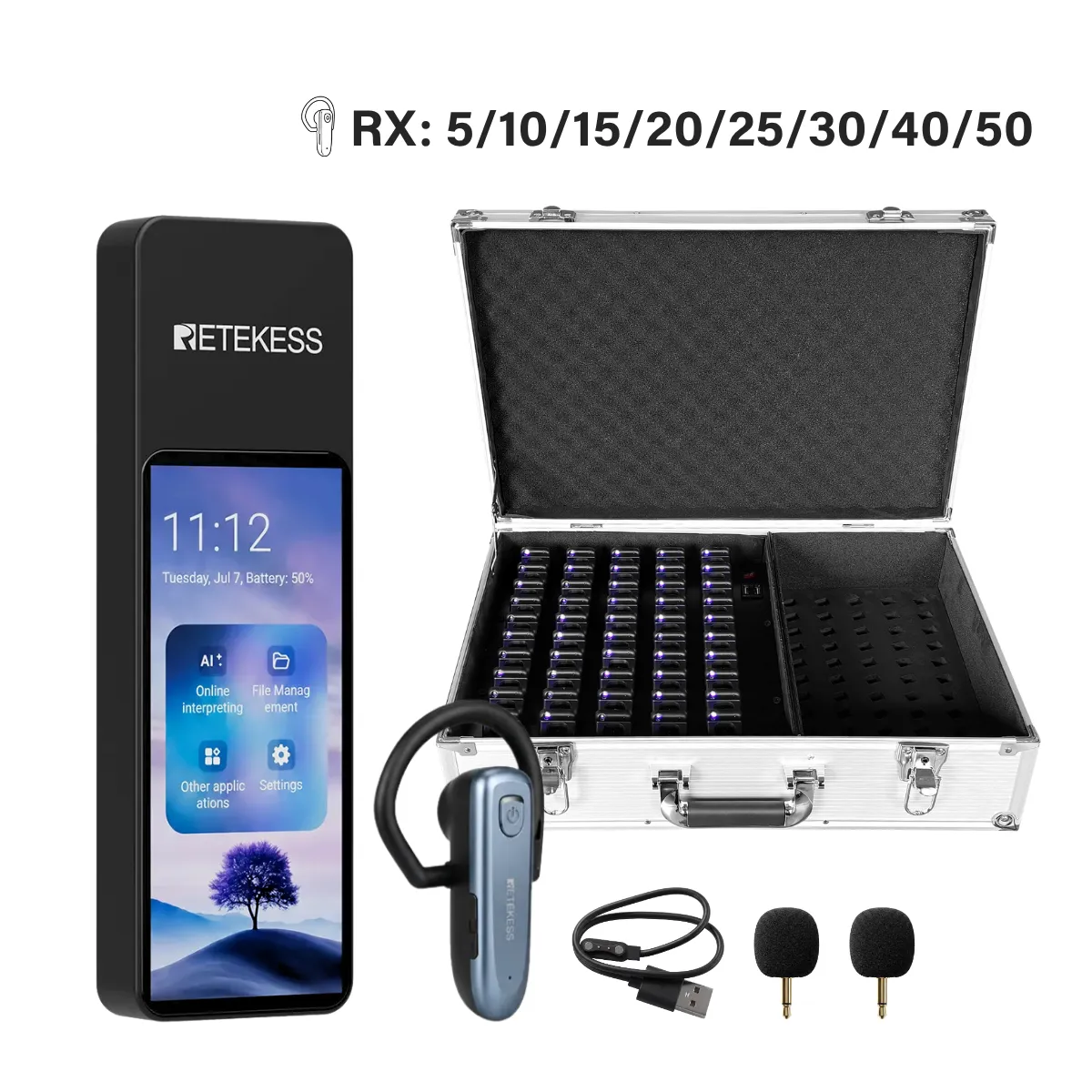
If neither fits cleanly, a third option is increasingly popular: digital 2.4 GHz systems (like the Retekess TT106S) or AI translation devices (like the Retekess TT136) — we'll get to those at the end.
How FM Interpretation Systems Work
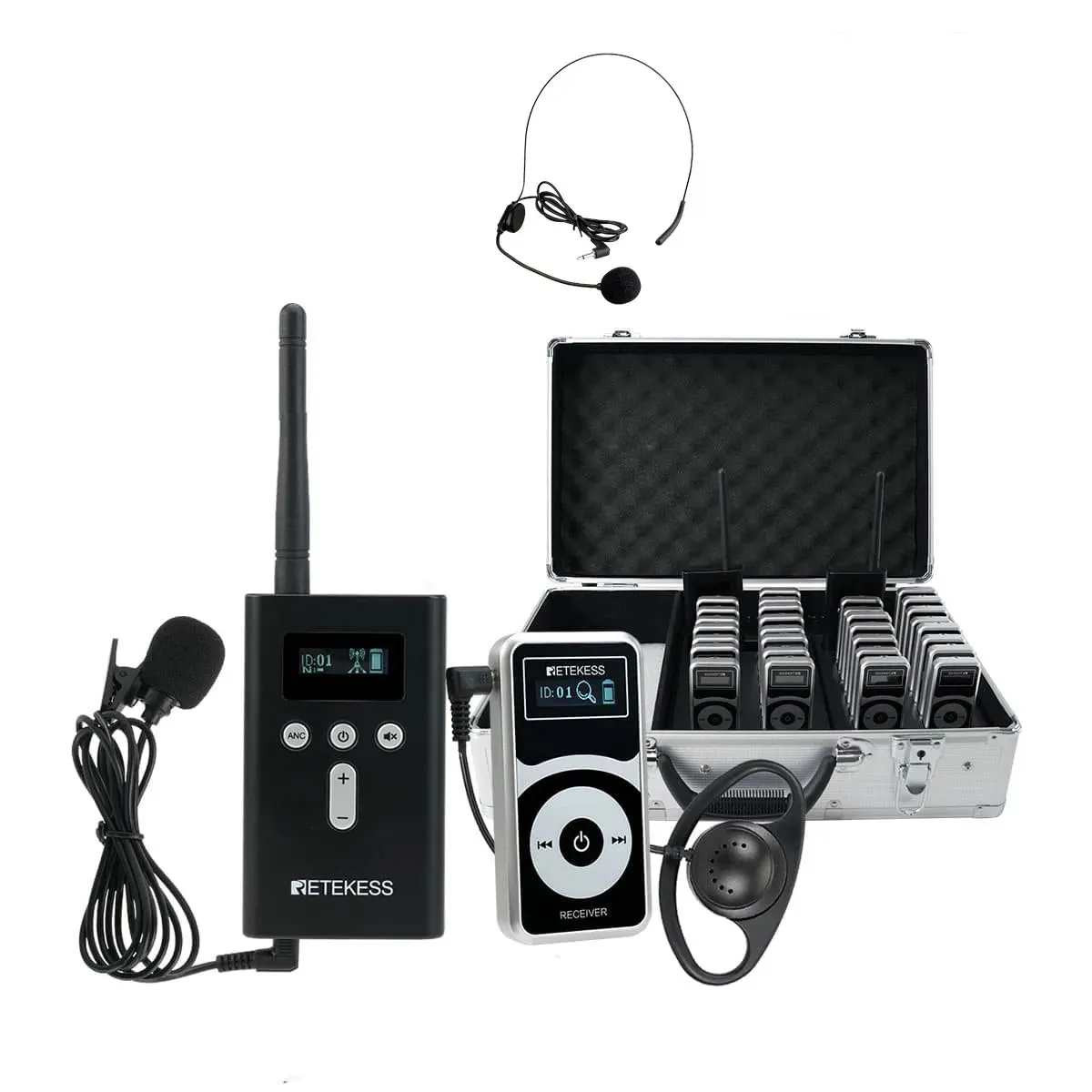
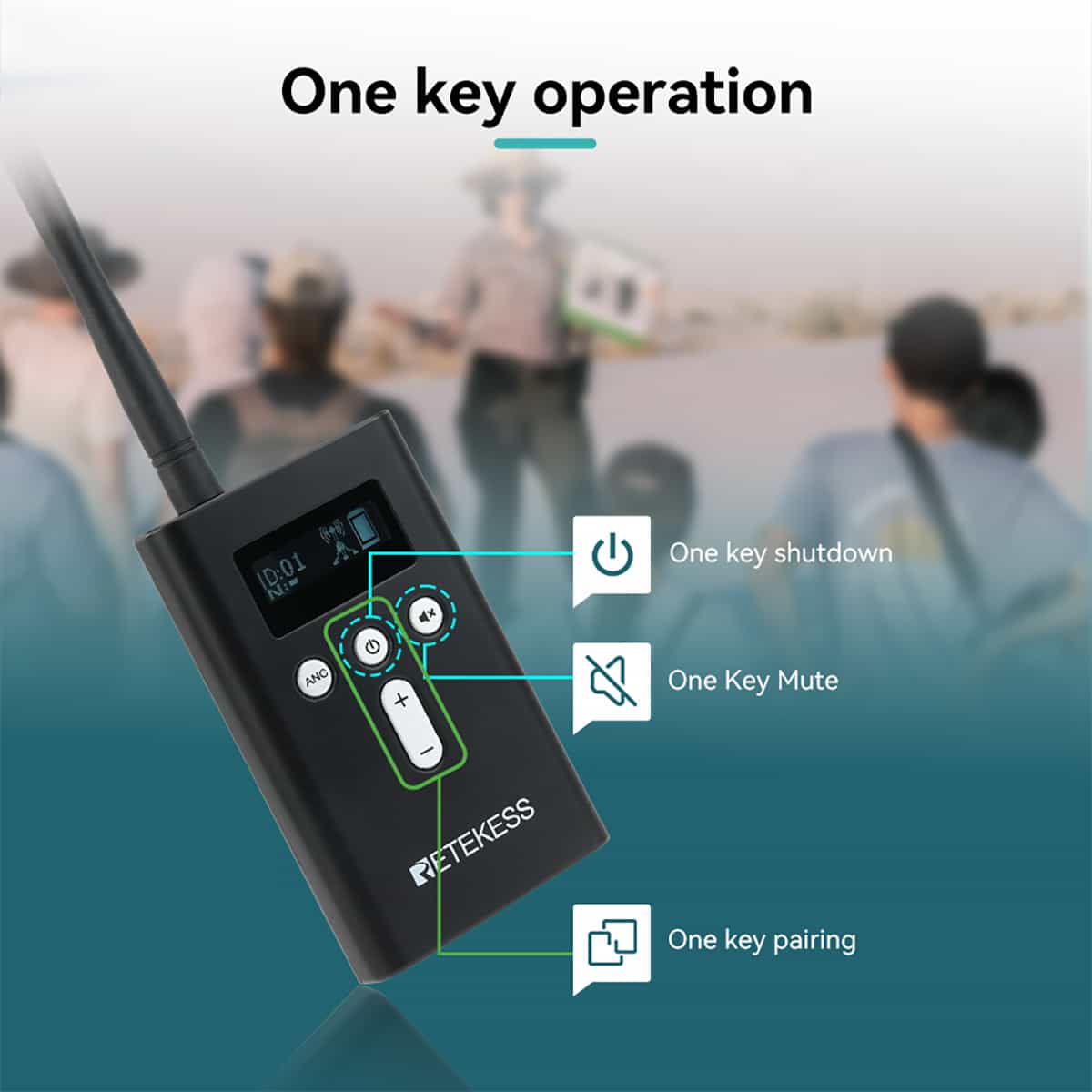
FM interpretation systems broadcast the interpreter's voice on a radio frequency. The interpreter's console feeds a transmitter; receivers tuned to the same frequency play the audio.
FM signals behave like FM radio:
- They pass through walls and floors (with some attenuation)
- Range is typically 50–300 feet depending on power
- They can pick up interference from other radio sources
- Anyone within range with a compatible receiver could theoretically listen
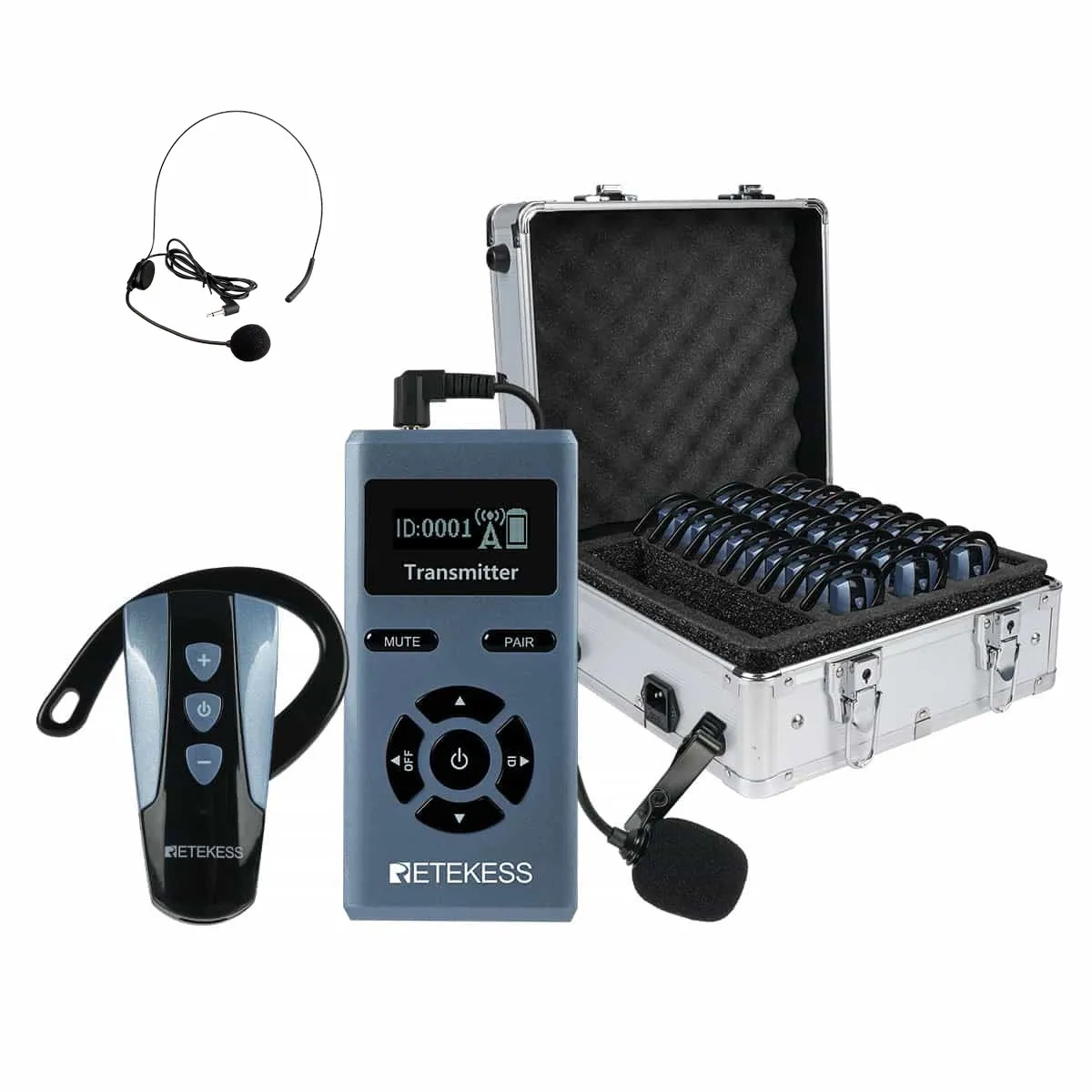
For most public events, none of these are deal-breakers. FM is the workhorse technology powering Retekess TT117 and TT118 translation devices, as well as the bulk of mid-range interpretation kits from brands like Sennheiser, Williams AV, and Enersound.
How Infrared Interpretation Systems Work
Infrared interpretation systems broadcast on light waves in the infrared spectrum. Wall- or ceiling-mounted emitters flood the room with IR; receivers pick up the light through photodiodes and convert it to audio.
IR signals behave like light:
- They cannot pass through walls or solid objects
- They require line-of-sight to the emitter
- They are immune to RF interference
- They cannot be intercepted outside the room (this is the security argument)
Infrared is the technology behind ISO 20109:2025-compliant systems from Bosch, Televic, and the high-end of the ABBN catalogue. It's also the most expensive interpretation technology per square foot of venue.
Side-by-Side Comparison
| Feature | FM Interpretation | Infrared Interpretation |
|---|---|---|
| Signal type | Radio waves | Infrared light |
| Passes through walls | Yes | No |
| Range (typical) | 50–300 ft | 100–200 ft line-of-sight |
| Eavesdropping risk | Low (compatible receiver needed) | Zero (signal stays in room) |
| Outdoor use | Excellent | Poor (sunlight, fog, distance) |
| Multi-room venue | Excellent (signal passes through) | Poor (each room needs own emitter) |
| Susceptible to RF interference | Sometimes (rare in modern systems) | Never |
| Setup complexity | Low — plug in transmitter | Higher — mount emitters, run cables |
| Cost for 50 listeners | $1,000–$2,500 | $5,000–$15,000 |
| Examples | Retekess TT117/TT118, Enersound R-120 | Televic, Bosch Integrus |
When FM Wins
Choose FM when any of these apply:
- The event moves. A walking tour, a factory floor visit, a vineyard tour, a mobile church event. FM receivers travel with the group.
- The venue has multiple rooms. A conference center with breakout sessions in adjacent rooms, a school with multiple classrooms, a multi-wing church building.
- You need a quick setup. A 2-channel FM kit can be deployed in 15 minutes by one person. An IR system needs emitter planning and cable runs.
- Budget matters. FM kits start around $1,000 for a 50-listener system; IR starts around $5,000 for comparable coverage.
- The audience is bilingual or trilingual at most. FM handles 2–4 channels easily, which covers 95% of churches and tour scenarios.
The Retekess TT117 and TT118 are 17-channel FM systems widely used in bilingual churches. Both run on AA batteries, hit ranges of 262 ft (80 m), and pair with a simple interpreter setup.
When Infrared Wins
Choose infrared when all of these apply:
- Confidentiality is non-negotiable. Court proceedings, board meetings discussing M&A, parliamentary sessions, classified briefings. IR cannot leak outside the room.
- The venue is a single, enclosed space. A hotel ballroom, a courtroom, a legislative chamber.
- There are many languages. Professional IR consoles support 30+ channels, with relay between interpreter booths.
- The budget supports it. Expect $5,000–$15,000 for a 50-listener setup with emitters, plus installation.
- There's a technician on site. IR systems benefit from professional setup and monitoring.
If you're running an EU-style parliamentary simulation, an international arbitration, or a corporate AGM where trade secrets are discussed, IR is the right call. For everything else, FM does the job.
What About Digital 2.4 GHz and AI Translation?
Two newer categories deserve a mention:
Digital 2.4 GHz systems (like the Retekess TT106S) broadcast on the same band as WiFi and Bluetooth. They offer:
- Better resistance to RF interference than analog FM
- Cleaner audio (digital encoding)
- Very long battery life (often 20+ hours on receivers)
- Often weather-resistant for outdoor tours
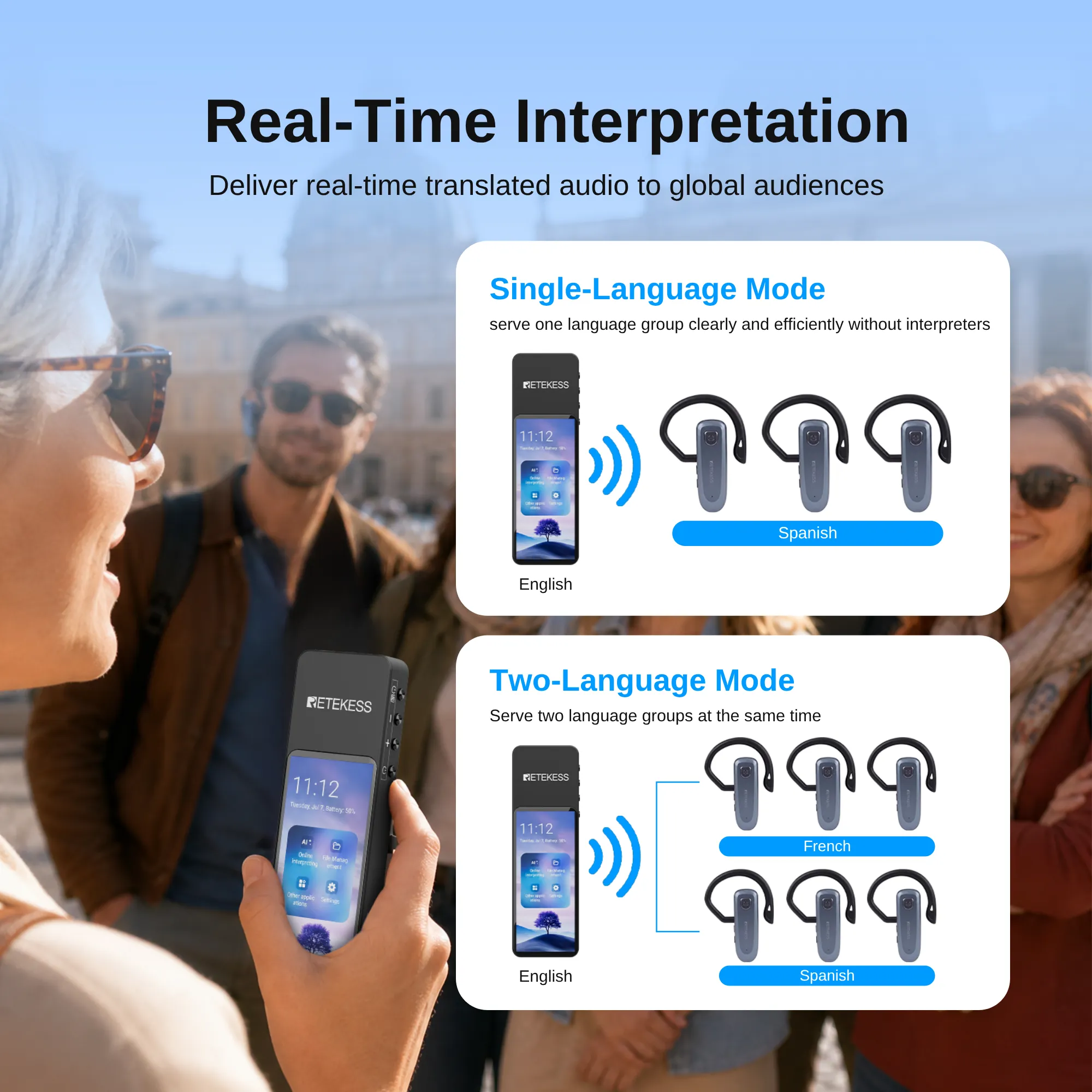
AI translation devices (like the Retekess TT136) skip the human interpreter entirely:
- 120 languages supported
- 1–3 second latency
- Dedicated receivers (no smartphone needed)
- Best for tour groups, factory visits, churches piloting a bilingual service for the first time
Neither is technically "FM" or "infrared" — they're a third category that has emerged to address FM's interference and IR's inflexibility.
The Bottom Line
For most buyers in 2026, the choice is FM (with AI translation as a strong new alternative) — not infrared. Infrared remains the right answer for confidential single-room events with big budgets, but for the 95% of churches, tour operators, and small conferences reading this guide, FM wins on cost, flexibility, and simplicity.
If you're unsure which is right for your use case, the next step is our Translation Equipment Buying Checklist — a free PDF that walks you through the four questions that decide which system fits.
FAQ
Q: Can FM and infrared receivers work together?
A: No — they use fundamentally different signals. A venue running both would need parallel systems (rare and expensive).
Q: Is FM legal in my country?
A: FM interpretation systems typically use either license-free ISM bands (like 863–865 MHz in the EU) or specific licensed bands. In North America, 72–76 MHz requires coordination in some regions. Check local regulations — or buy a system designed for your market (Retekess offers US, EU, and global versions).
Q: Does infrared work outdoors?
A: Generally no — direct sunlight overwhelms the IR signal, and line-of-sight is harder to maintain across outdoor distances. For outdoor events, FM or 2.4 GHz is the answer.
Q: What about WiFi-based interpretation apps?
A: Apps like Interactio, KUDO, or Voiceboxer stream interpretation over the internet to attendees' smartphones. They're useful for hybrid/virtual events but require every attendee to have a phone, the right app, and a stable internet connection — which is why dedicated hardware remains dominant for in-person events.

![[18th Anniversary] 18 Years of Echoing Excellence: Making Communication Easier, Connecting Trust Beyond Borders](https://res.retekess.com/z_file/20260716/retekess-brand-story-making-communication-easier_20260716151044_7682.jpg)
![[18 Years in Wireless Communication] Silent Disco Systems Anniversary Celebration: Top-Selling Headphones & Event Mechanics Revealed!](https://res.retekess.com/z_file/20260713/18-years-in-wireless-communication-silent-disco-systems-anniversary-celebration_20260713175011_5749.webp)
![[Anniversary Carnival] Ding-dong! 18th Anniversary Mega Sale on Guest Paging & Calling Systems: Full Reveal of 12+ Products & Promo Rules!](https://res.retekess.com/z_file/20260713/18th-anniversary-mega-sale-on-guest-paging-calling-systems_20260713175257_0295.webp)
![[Retekess 18th Anniversary Teaser] Tour Guide System Exclusive Perks: Sneak Peek at Event Dates & Mechanics!](https://res.retekess.com/z_file/20260713/retekess-18th-anniversary-tour-guide-system-exclusive-perks--2-_20260713180135_6435.webp)
Follow Us
Pay With


 Google
 Amazon
Comments (0)