
Table of Contents
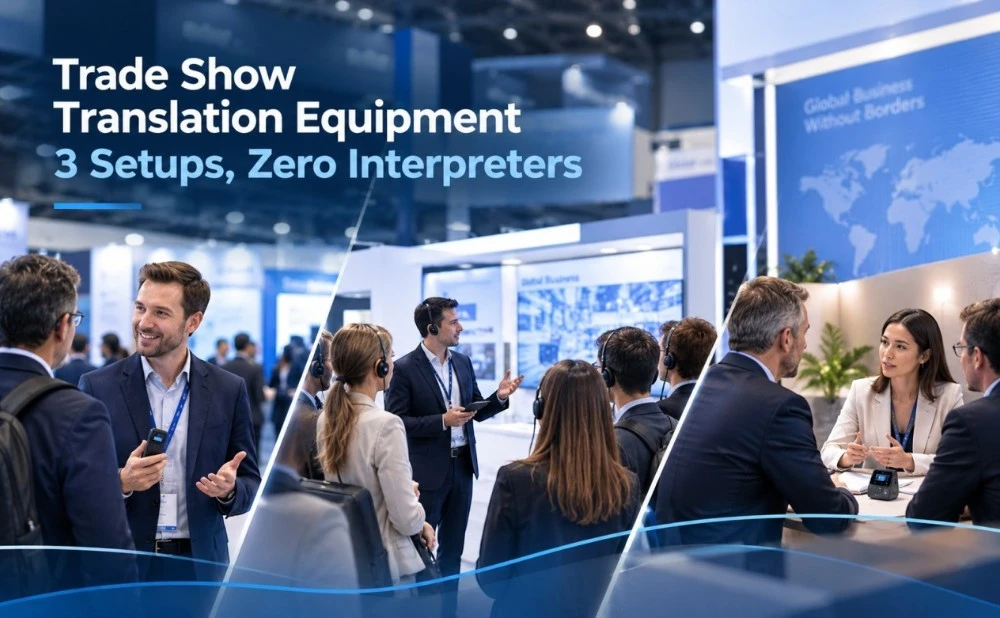
Trade Show Translation Equipment: 3 Setups, Zero Interpreters
- Retekess
- Sep 11, 2026
Language barriers cost exhibitors 32% of their trade show leads, according to the International Exhibition and Convention Association. POPcomms data puts 40–60% of attendees at major international shows in the non-English-primary category. These visitors carry budgets and purchasing authority. They hit a language wall at the booth and walk to the next exhibitor who removed it.
Most exhibitors respond with a single tool — one interpreter, one phone app, or one pair of translation earbuds. That approach fails because a booth does not run one communication scenario. It runs at least three simultaneously, each with different noise levels, group sizes, and accuracy requirements.
The fix is not a better single tool. It is three matched setups, one per scenario.
1. Walk-In Visitors → Handheld AI Translation Unit
Walk-ins are the highest-volume, lowest-predictability scenario. A visitor stops unannounced, stays 30–90 seconds, and may speak any of 100+ languages. The clock starts the moment they reach the booth.
Core requirements:
- Sub-second response time — no boot, no pairing, no app open
- 100+ language coverage — cannot predict visitor origin
- Portability under 200g — salesperson moves with the visitor
- DSP noise reduction — isolates voice from 70–80 dB hall noise
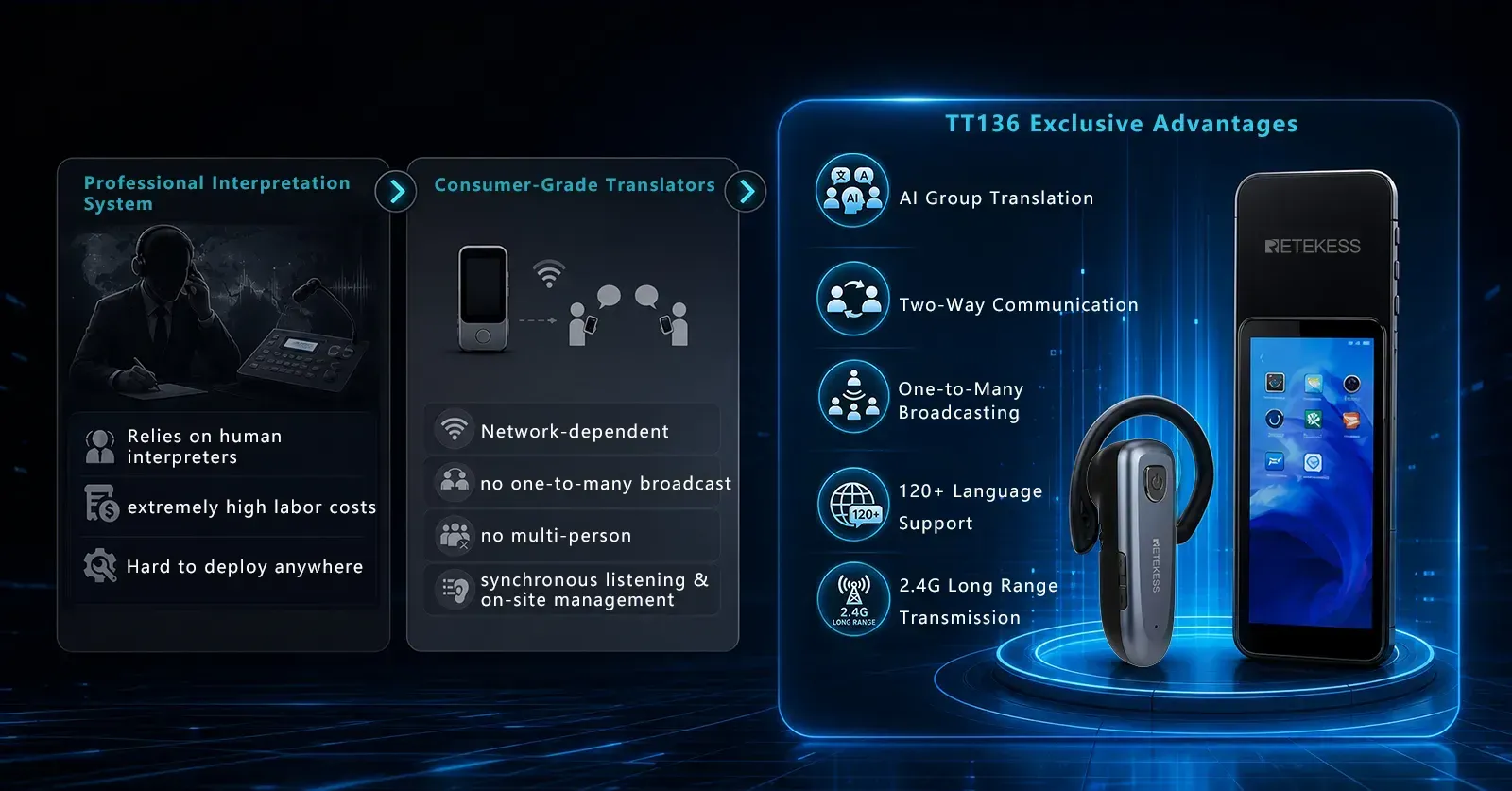
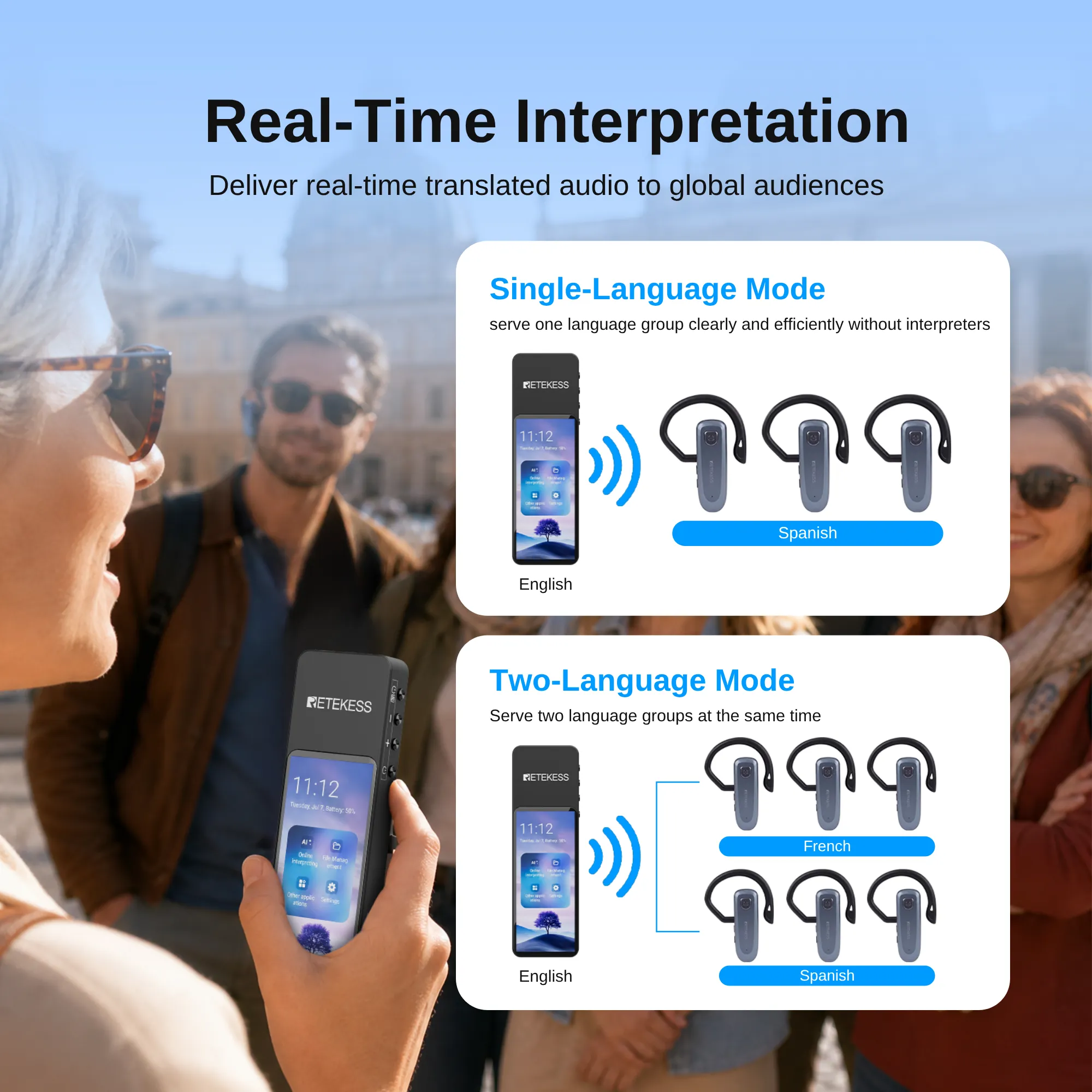
Equipment setup: A dedicated handheld AI translation device with built-in microphone array, 120+ language support, and dual-channel output (two target languages). The salesperson carries it at all times. AI conversation summarization auto-logs every interaction for post-show CRM entry.
A phone app fails here because its single omnidirectional mic picks up as much of the neighboring booth's demo as the visitor's question. Personal translation earbuds fail because they only support two-person dialogue and run out of battery by mid-afternoon on an 8–10 hour show day.
2. Buyer Delegations → AI Unit + Wireless Tour Guide System
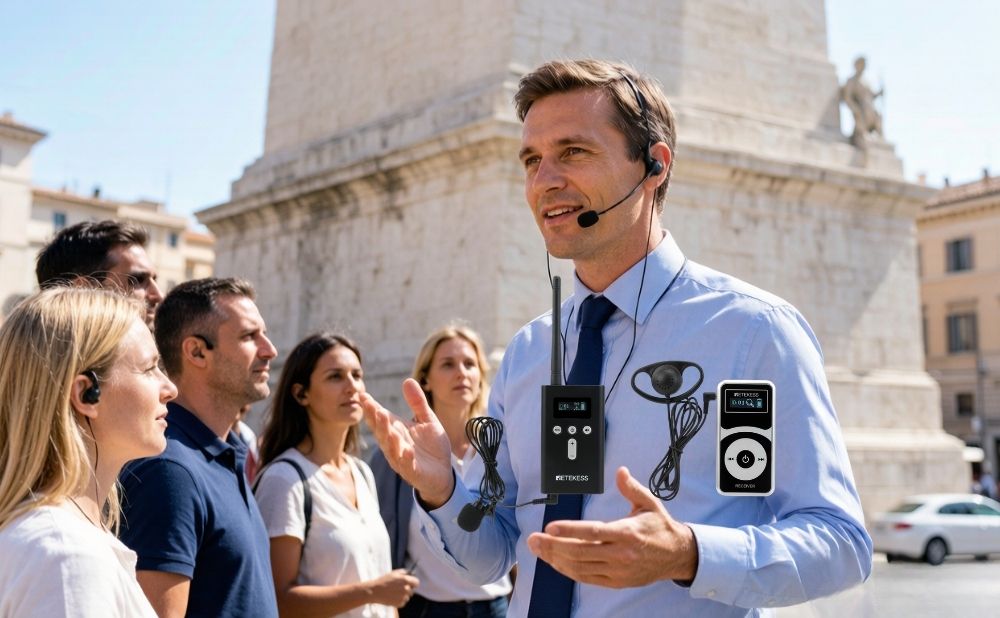
A pre-scheduled buyer delegation changes the equation entirely. Eight to twenty people arrive at a set time for a 30–60 minute structured presentation and booth tour. They flew in specifically to evaluate your products. They ask about MOQ, certification, and lead time — details that must land accurately in every listener's language.
Core requirements:
- One-to-many broadcast — one speaker, twenty listeners
- 150m+ stable range — group moves through booth and main hall
- 20+ hour transmitter battery / 30+ hour receiver battery — full show day
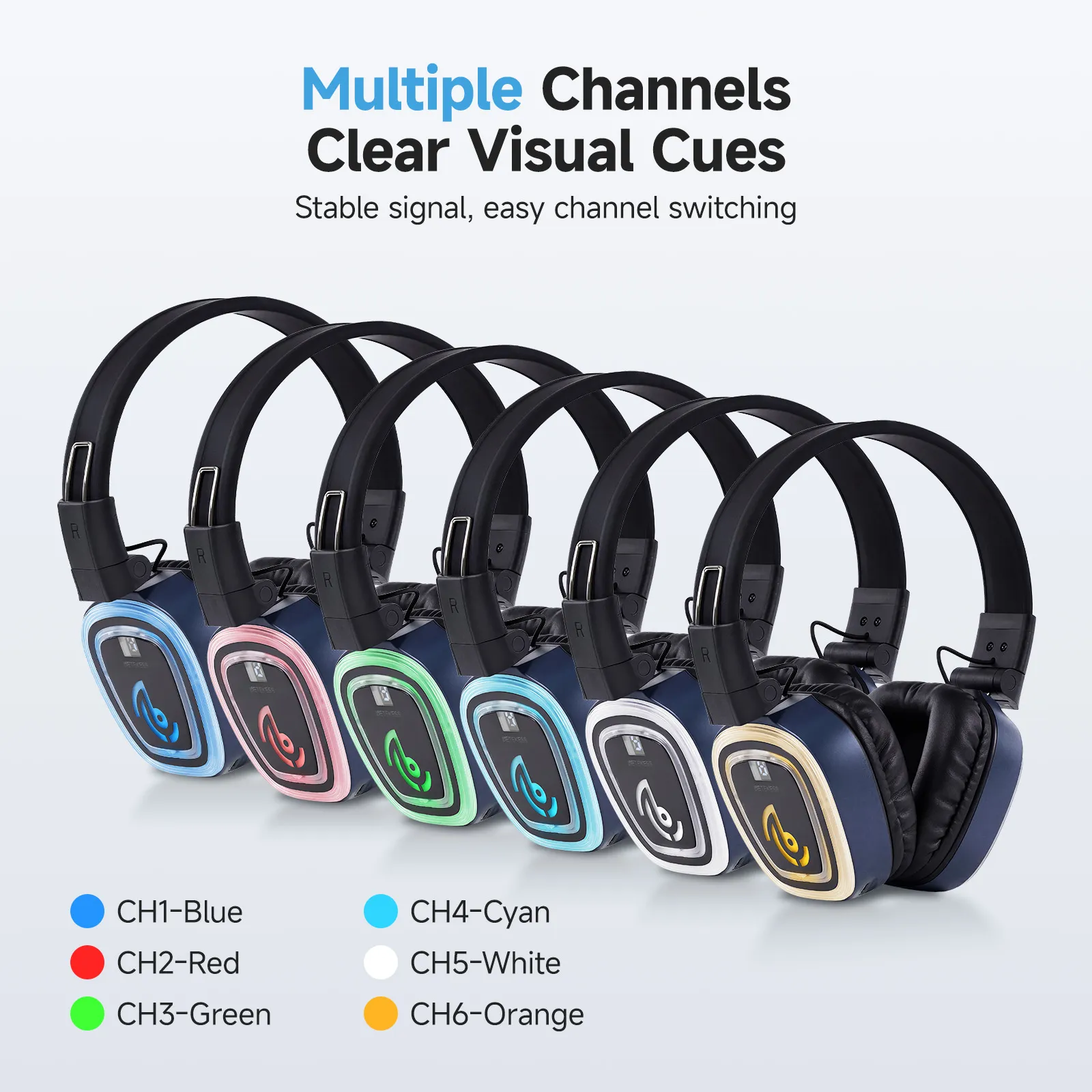
- Multi-channel support — overlapping delegations in different languages
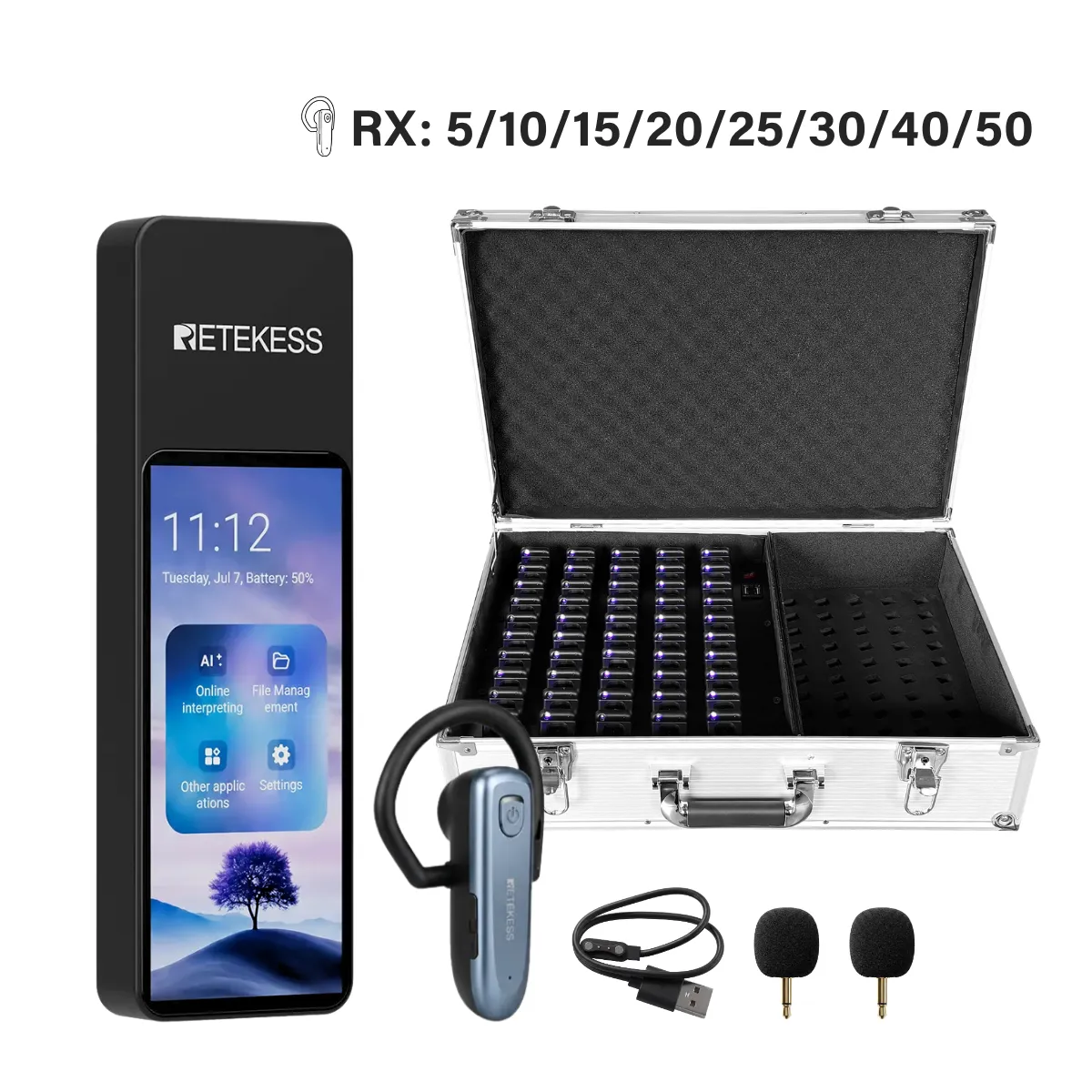
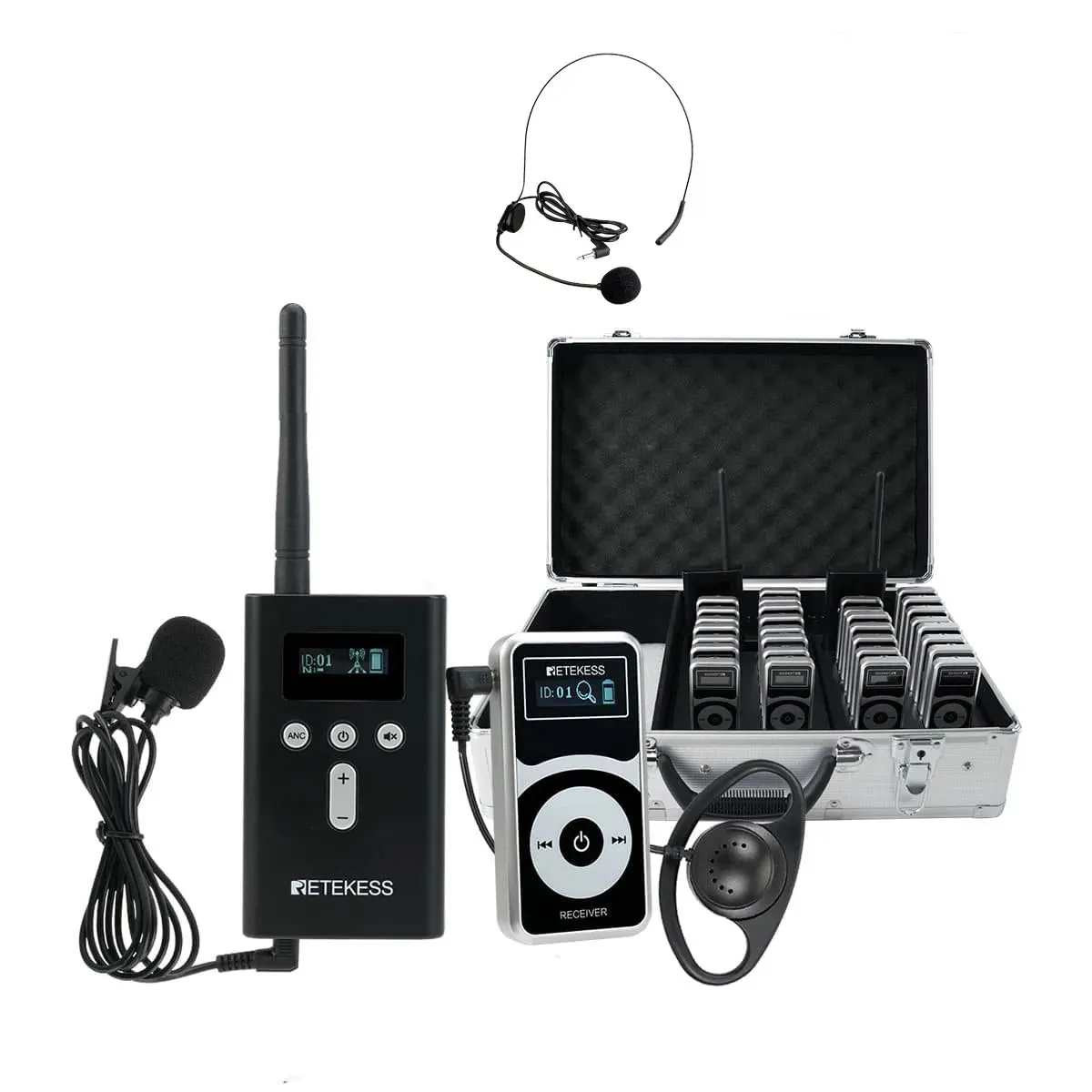
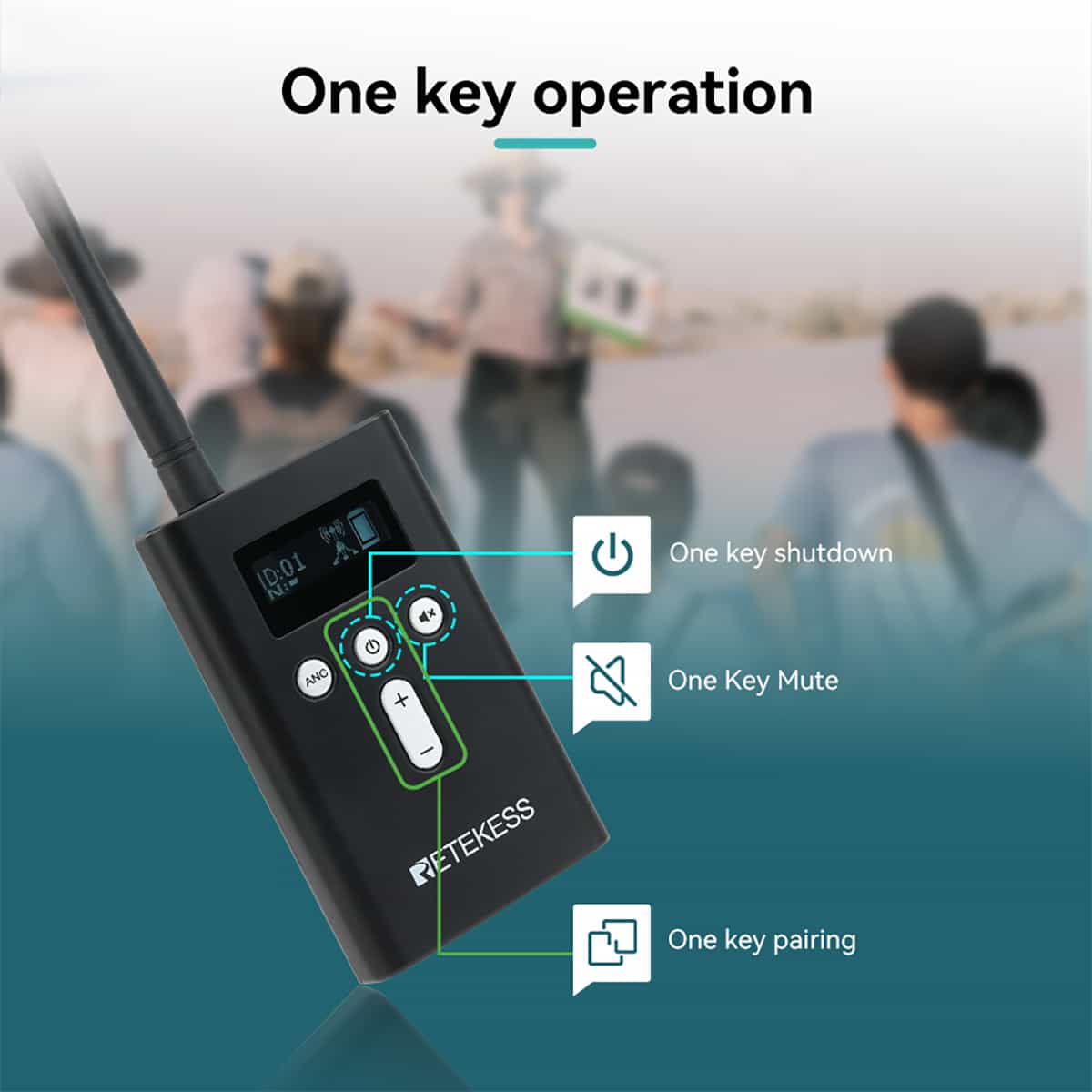
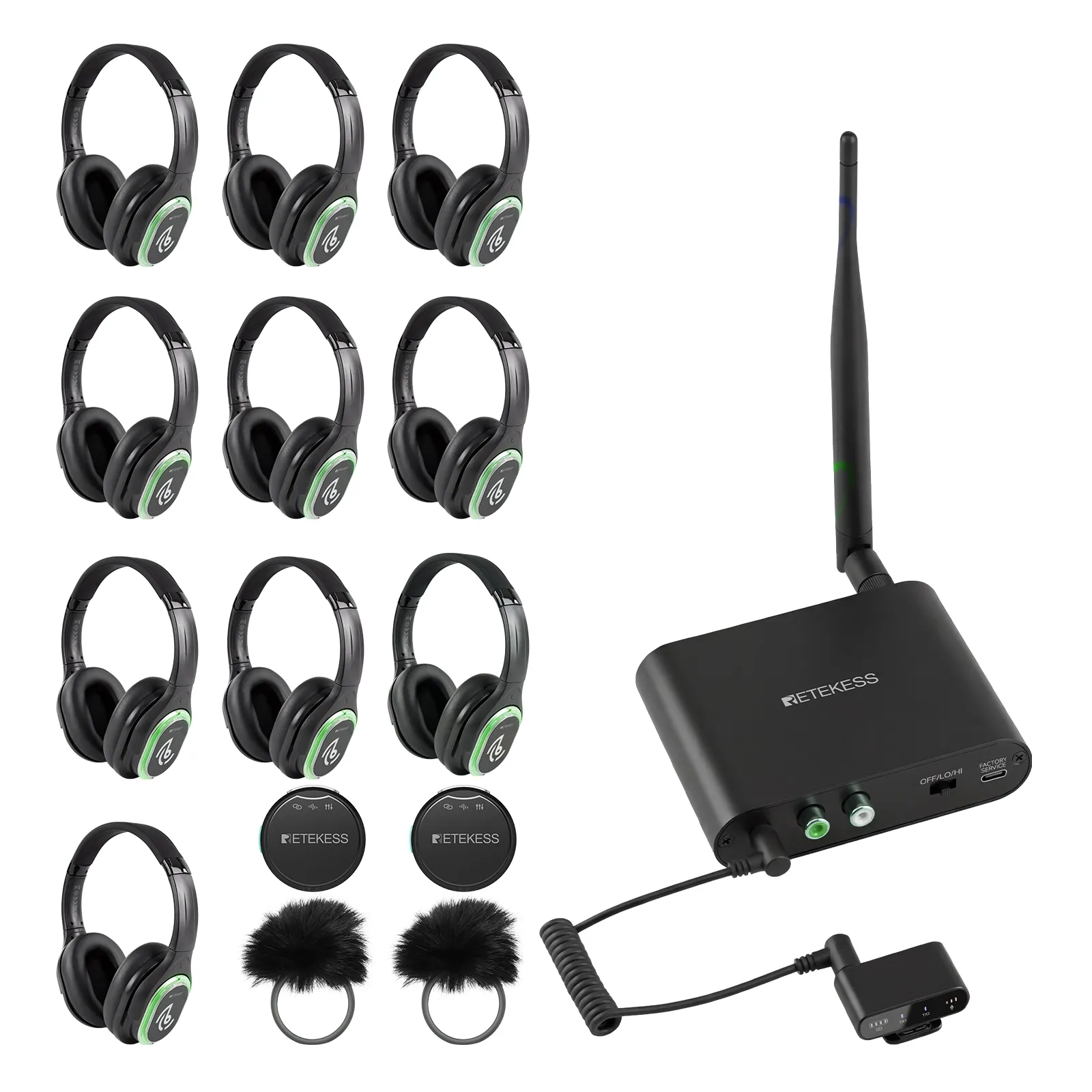
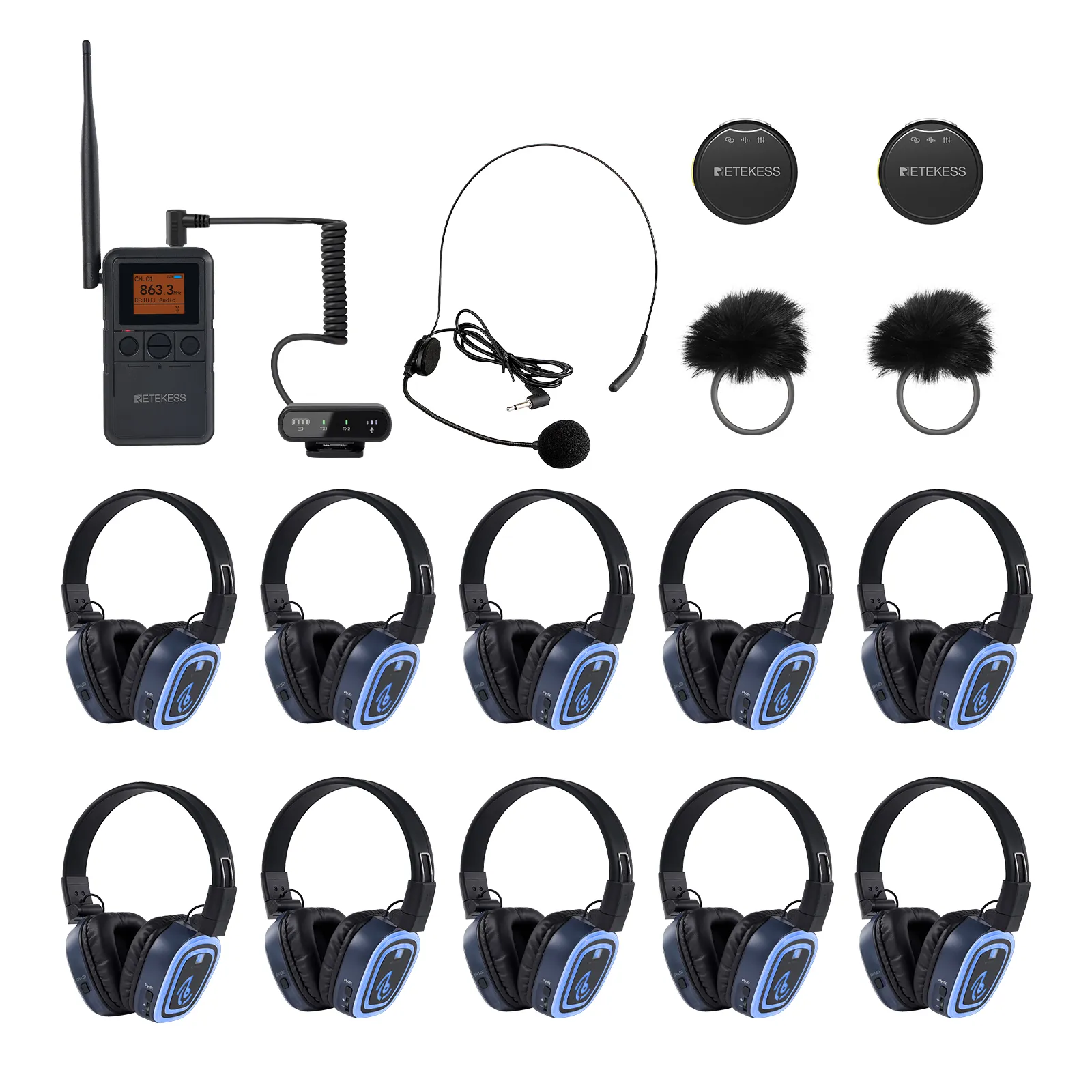
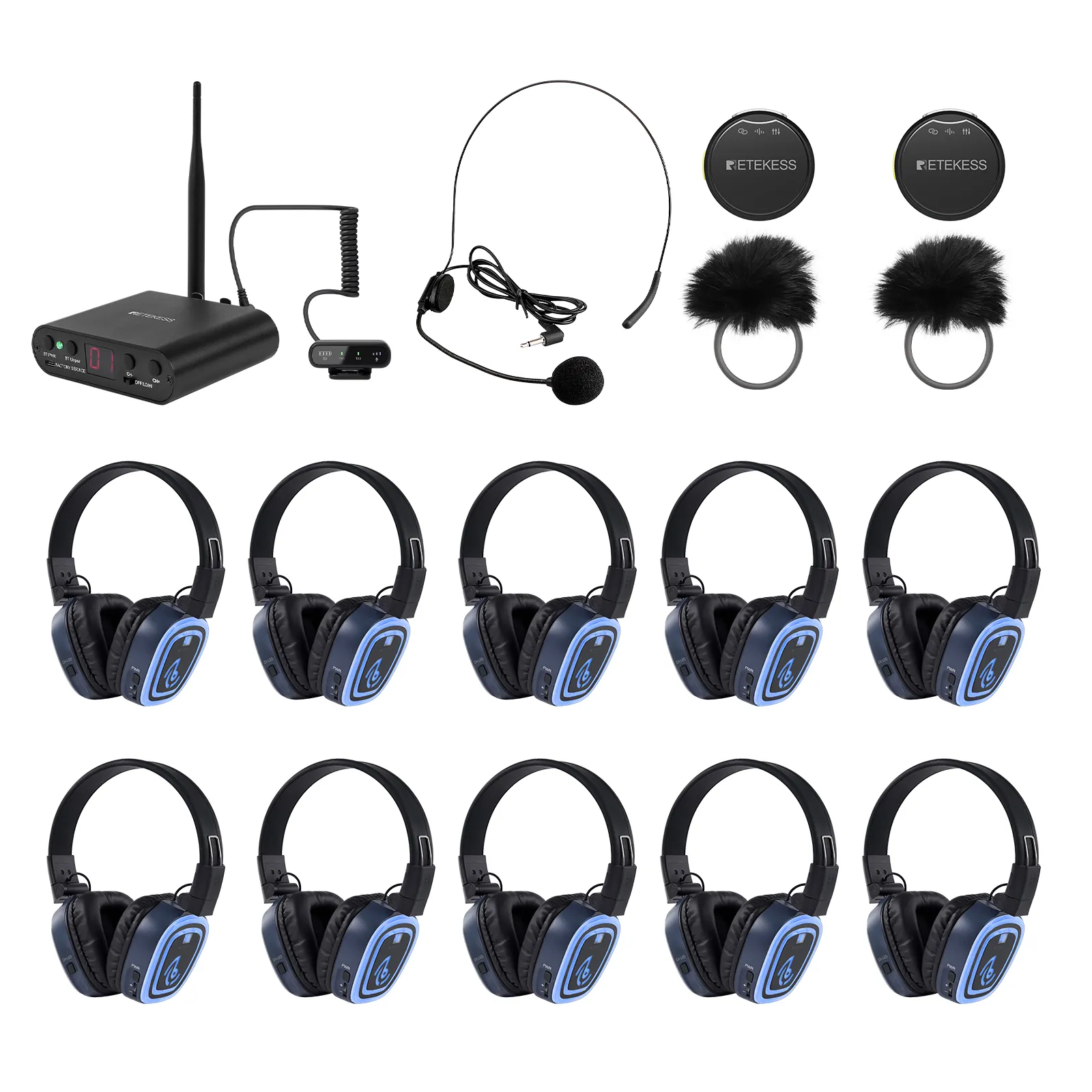
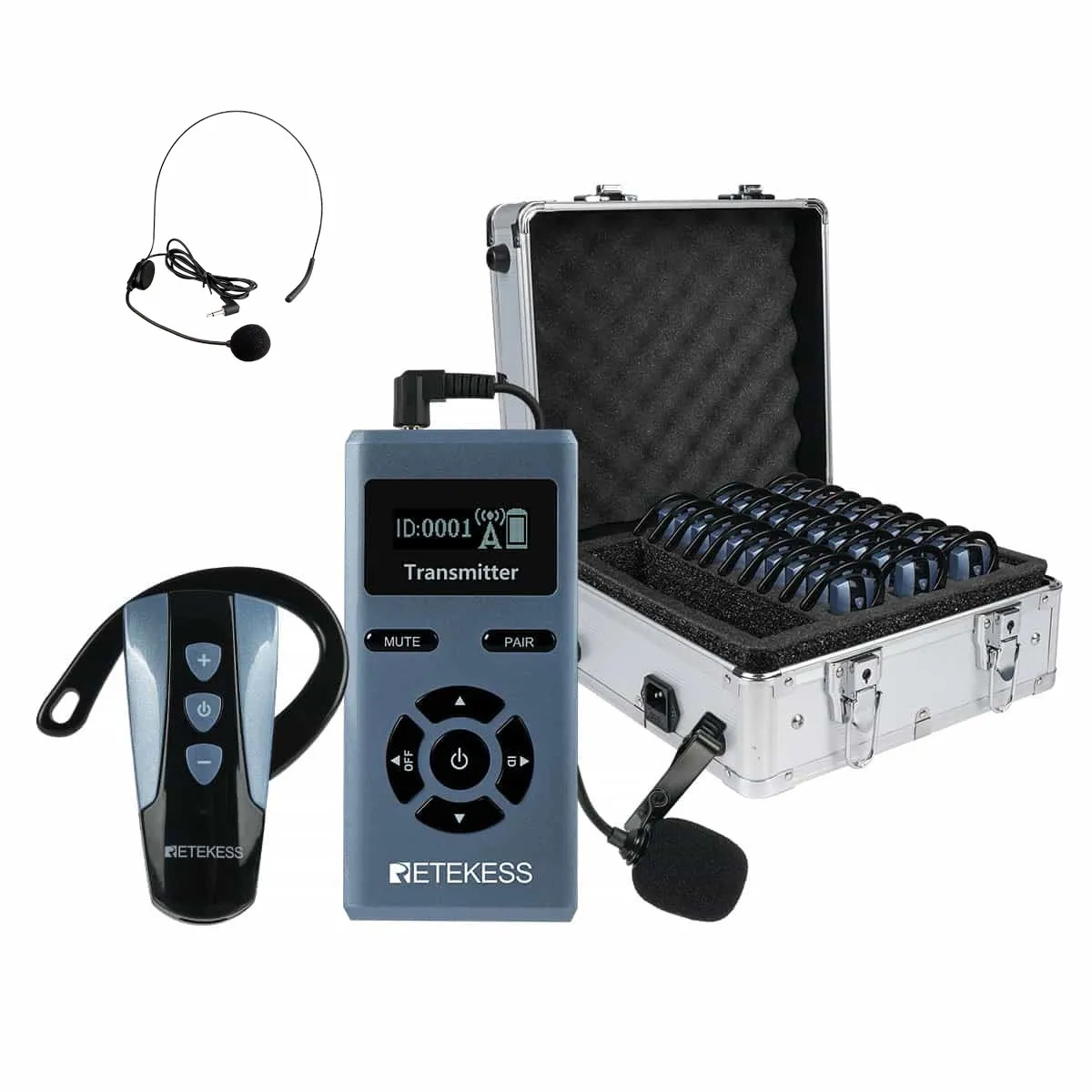
Equipment setup: The handheld AI translation unit serves as the language engine. Its translated audio output feeds into a professional wireless tour guide transmitter. Each delegation member wears a lightweight receiver (under 50g) with an earpiece, selects their language channel, and listens. The original language broadcasts on a separate channel for staff and bilingual visitors.
This is where the interpreter cost math breaks. Professional simultaneous interpreters run $1,200–$3,000 per day per language (Converve, 2026). Three days × two languages = $7,200–$18,000. The AI-plus-wireless hardware is a one-time purchase covering 120+ languages, reusable at every future show.
Two specs to verify before buying: range must hold at 150m+ when the group walks into the main hall, and channel count must support at least 6 simultaneous languages for overlapping delegations with no cross-talk.
3. VIP Negotiations → AI Unit (Configured for Accuracy + Privacy)
The highest-stakes conversations happen in the closed negotiation area. Two to six people discuss pricing, exclusive territories, payment terms, and annual frameworks. Every number matters. A mistranslated digit — "fifty thousand" becoming "fifteen thousand" — can kill a deal or create a contractual dispute six months later.
Core requirements:
- Number-specific accuracy — digits, decimals, large figures
- Local recording + on-device storage — no cloud leak of sensitive terms
- Dual-channel verification — both sides hear original + translation
- AI summarization — auto-extract agreed terms and action items
Equipment setup: The same handheld AI translation unit, reconfigured for VIP mode. Local recording keeps the conversation off third-party servers. AI summarization extracts agreed terms, open questions, and follow-up actions — more reliable than handwritten notes after a two-hour negotiation.
Number accuracy is the spec nobody tests until it is too late. The best devices use number-specific processing modules that preserve digit precision across language pairs. Run a pre-show test: speak one sentence containing five different numbers (including decimals and six- to seven-figure amounts), then verify every digit lands correctly in the target language.
Human interpreters remain the gold standard for truly high-stakes contractual negotiations. For most VIP booth discussions — pricing alignment, product reviews, partnership scoping — AI devices reach approximately 96% accuracy on major language pairs (2026 industry data), enough to keep deal momentum alive without waiting for an interpreter to become available.
The Three-Zone Booth Configuration
A practical booth that covers all three scenarios looks like this:
- Front zone:One salesperson with a handheld AI unit handling all walk-ins
- Presentation zone:Wireless tour guide system fed by the AI unit, 30 pre-charged receivers ready for delegations
- Back zone:Second AI unit on the negotiation table with local recording enabled, plus a human interpreter on call by phone for critical contractual moments
Total hardware cost runs less than hiring two interpreters for a single three-day show. Language coverage jumps from two planned languages to 120+ unplanned ones. Every conversation generates a digital record for follow-up. Nobody apologizes at the booth entrance because the interpreter is on lunch break.
The exhibitors who win at international shows are not the ones with the biggest booth or the loudest demo. They are the ones who removed the language barrier before any visitor noticed it was there.

![[18th Anniversary] 18 Years of Echoing Excellence: Making Communication Easier, Connecting Trust Beyond Borders](https://res.retekess.com/z_file/20260716/retekess-brand-story-making-communication-easier_20260716151044_7682.jpg)
![[18 Years in Wireless Communication] Silent Disco Systems Anniversary Celebration: Top-Selling Headphones & Event Mechanics Revealed!](https://res.retekess.com/z_file/20260713/18-years-in-wireless-communication-silent-disco-systems-anniversary-celebration_20260713175011_5749.webp)
![[Anniversary Carnival] Ding-dong! 18th Anniversary Mega Sale on Guest Paging & Calling Systems: Full Reveal of 12+ Products & Promo Rules!](https://res.retekess.com/z_file/20260713/18th-anniversary-mega-sale-on-guest-paging-calling-systems_20260713175257_0295.webp)
![[Retekess 18th Anniversary Teaser] Tour Guide System Exclusive Perks: Sneak Peek at Event Dates & Mechanics!](https://res.retekess.com/z_file/20260713/retekess-18th-anniversary-tour-guide-system-exclusive-perks--2-_20260713180135_6435.webp)
Follow Us
Pay With


 Google
 Amazon
Comments (0)