
Table of Contents
Why Multi-Channel Silent Disco Headphones Are Ideal for Large Festivals
- Retekess
- Aug 4, 2026
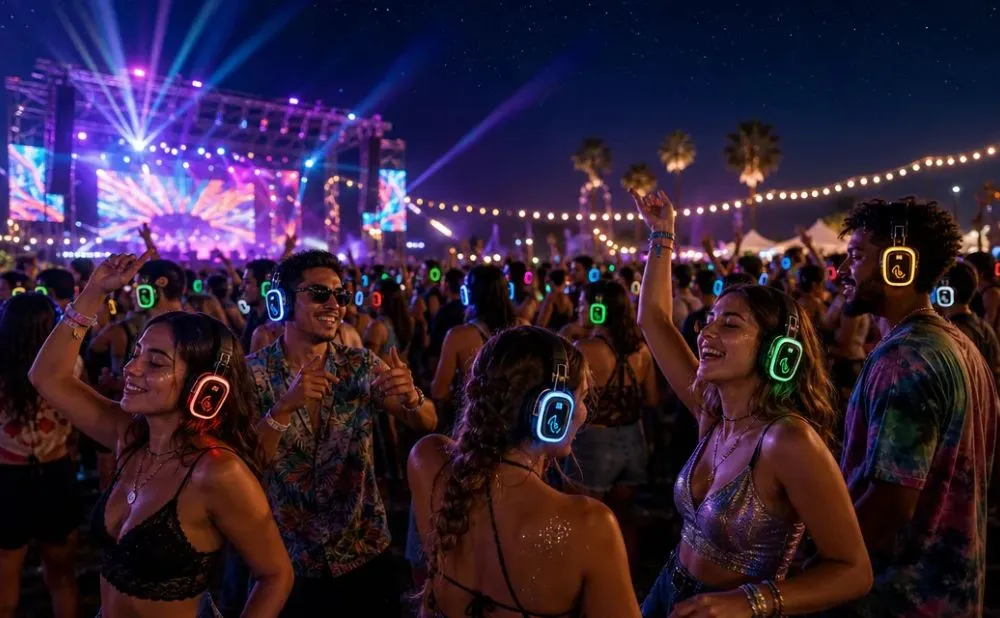
Ten thousand attendees dancing on a single grassy field at midnight is no longer a logistical fantasy. Some move to deep house, others to hip-hop, and a smaller cluster vibes to ambient electronica. Walk fifty meters beyond the crowd, and the only audible sounds are footsteps and laughter.
Outdoor festivals continue to grow in scale and creative scope, with audiences seeking more diverse, immersive and personalized experiences across full event grounds.
For festival producers, the appeal is not novelty. It is economics, logistics, and regulatory survival compressed into a single technology. In 2026, noise ordinances continue to tighten while festivalgoers demand more personalized audio experiences. Multi-channel silent disco headphones have moved from quirky sideshow to core production infrastructure. This article examines the structural reasons behind that shift.
Limitations of Traditional Speaker Systems for Large Festivals
Traditional speaker systems have long been the default audio solution, but they carry inherent constraints for large-scale events — from strict local noise regulations to inflexible single-genre programming that fails to serve mixed attendee groups.
1. Noise and curfew compliance restrictions
Local noise ordinances and residential complaint risks impose strict volume caps and end times for outdoor events. Many festivals face forced early shutdowns or lose permits entirely for sites near residential areas. Nighttime curfew rules cut main stage programming short, eliminating the potential for late-night attendance and additional ticket revenue.
2. Uniform, one-size-fits-all audio experience
A single stage can only broadcast one genre of music or one type of content at a time. Attendees with different music preferences must either settle for content that does not match their taste or travel long distances between stages. This limits overall satisfaction and reduces average dwell time across the event site.
3. Complex multi-stage coordination
Running multiple independent stages requires large amounts of dedicated space, heavy sound isolation barriers, and complex on-site traffic flow planning. Audio bleed between adjacent stages creates constant interference, muddying the listening experience for attendees near stage perimeters. Setup and teardown timelines also stretch longer with each additional stage added.
4. Limited coverage across peripheral areas
Campgrounds, food courts, rest zones, and brand activation zones sit outside the effective range of main stage audio. These high-traffic areas lack integrated event content, creating uneven attendee experiences and reducing engagement with secondary event programming.
How Multi-Channel Silent Disco Headphones Transform Audience Experience
The 3-Channel Standard: Red, Green, Blue
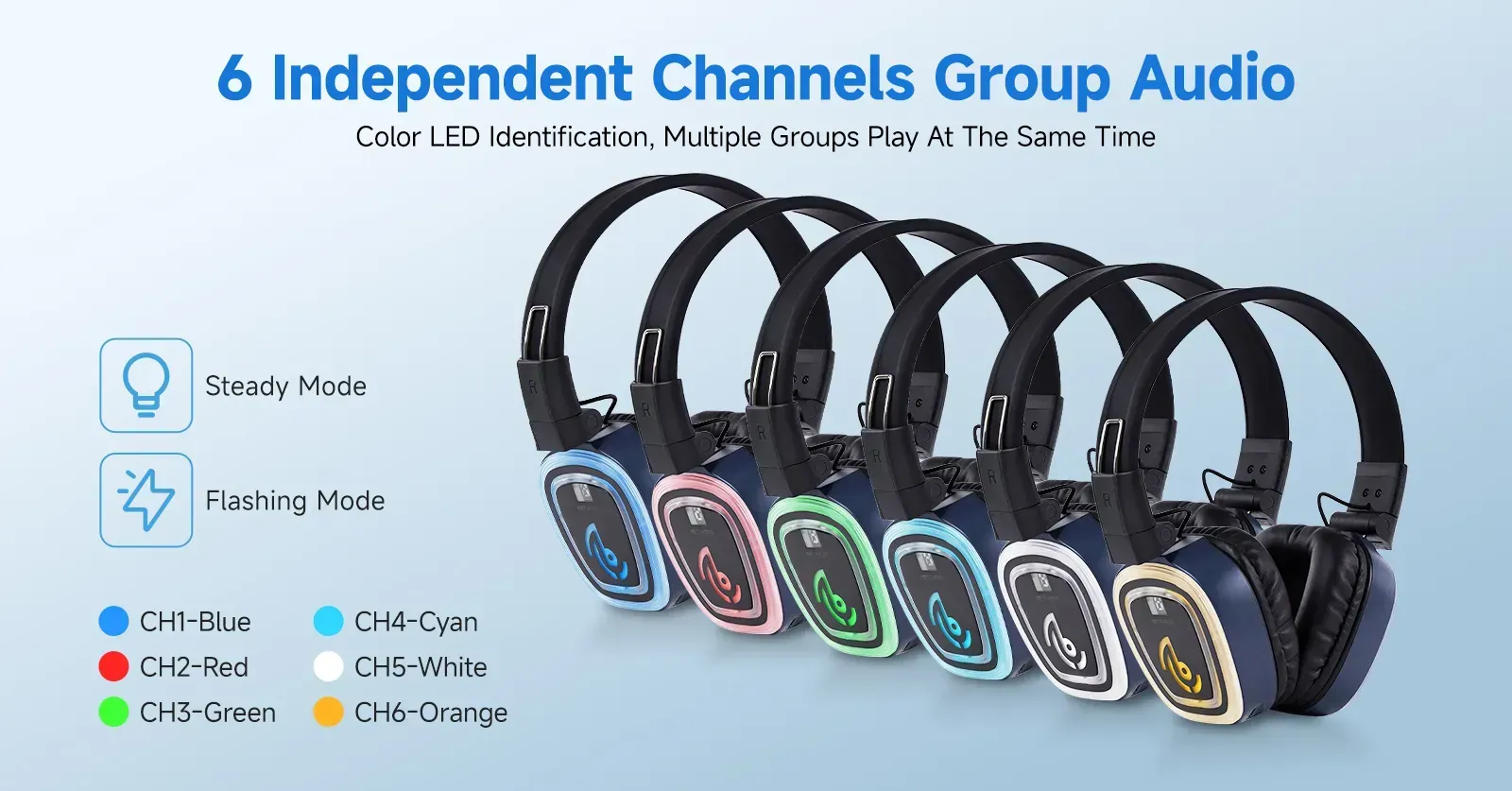
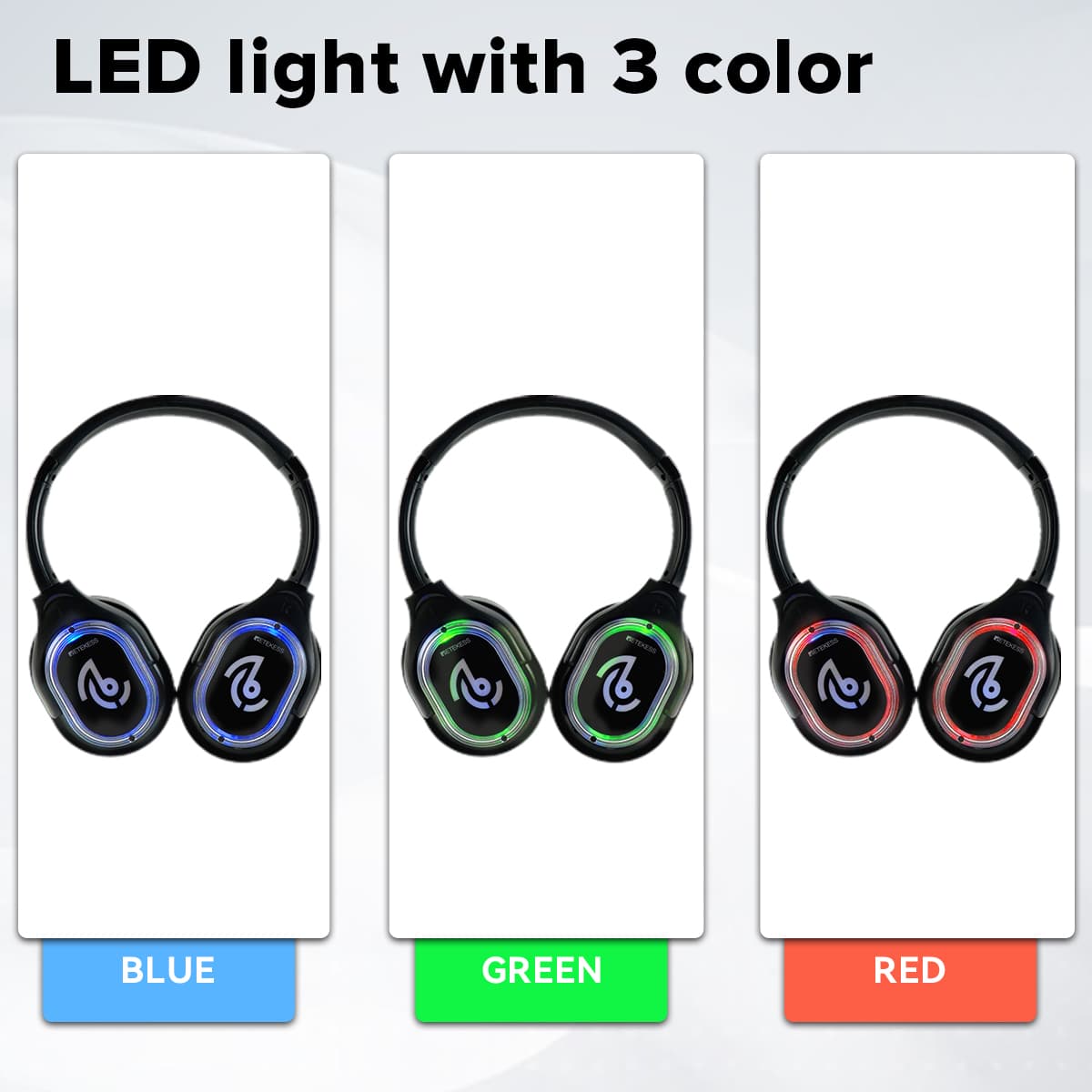
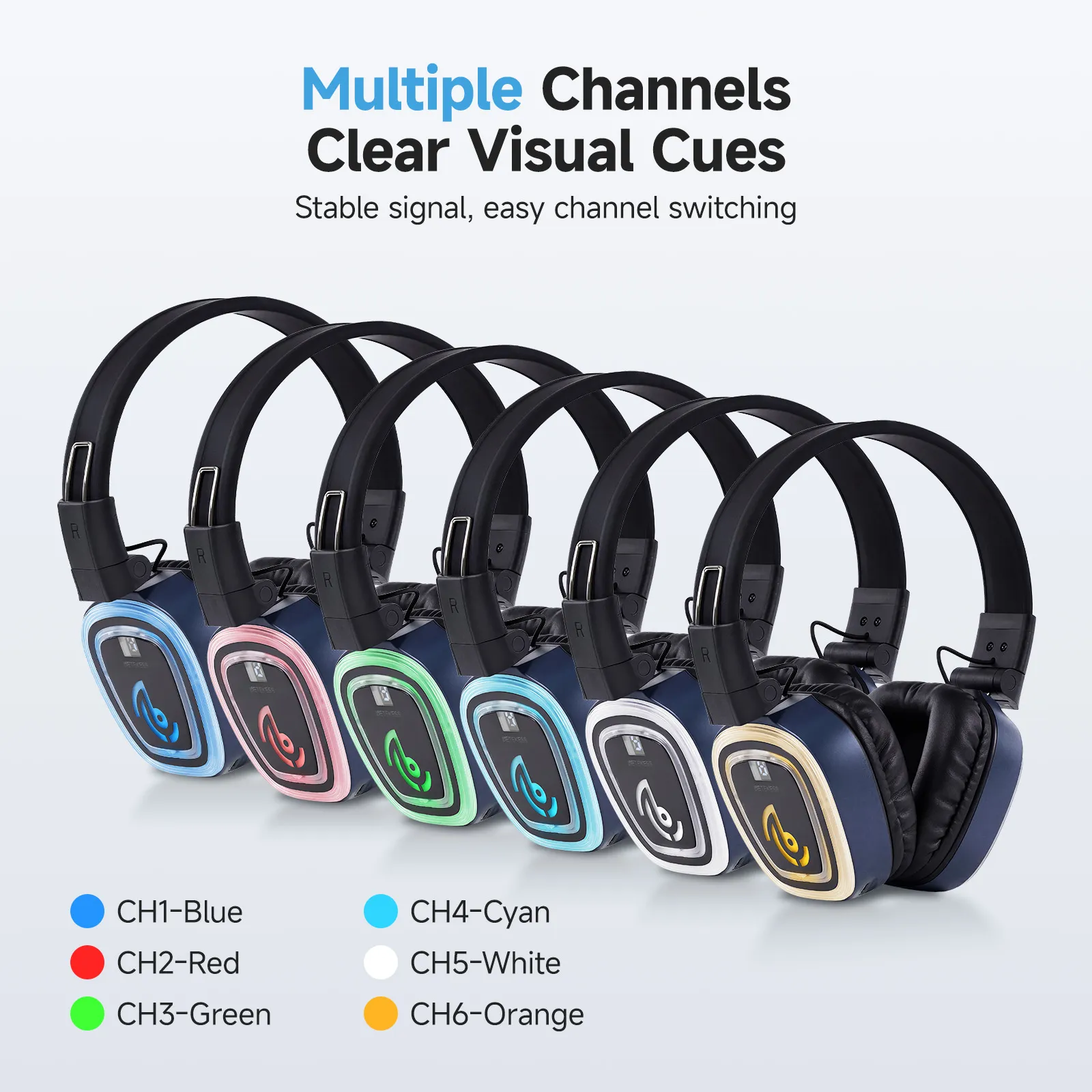
The industry default for silent disco headphones is a three-channel system. Each channel corresponds to a color—red, green, or blue—displayed on LED lights built into every pair of headphones. Attendees switch between channels with a single button. The color of their headphones instantly signals which genre they are hearing.
This creates a social dynamic that traditional stages cannot replicate. A DJ on the blue channel can look out over the crowd and see exactly how many listeners they have won versus the red and green competitors. If the blue lights start dimming, the DJ knows they are losing the crowd and can adjust their set in real time. The dance floor becomes a live popularity contest where the audience votes with their thumbs.
Beyond 3 Channels: The 6-Channel Frontier
As festivals grow more ambitious, three channels can feel limiting. A major electronic festival might want to separate deep house, techno, drum and bass, trap, ambient, and live PA into distinct streams. A multi-cultural festival might need channels for salsa, afrobeat, K-pop, and Bollywood on the same lawn.
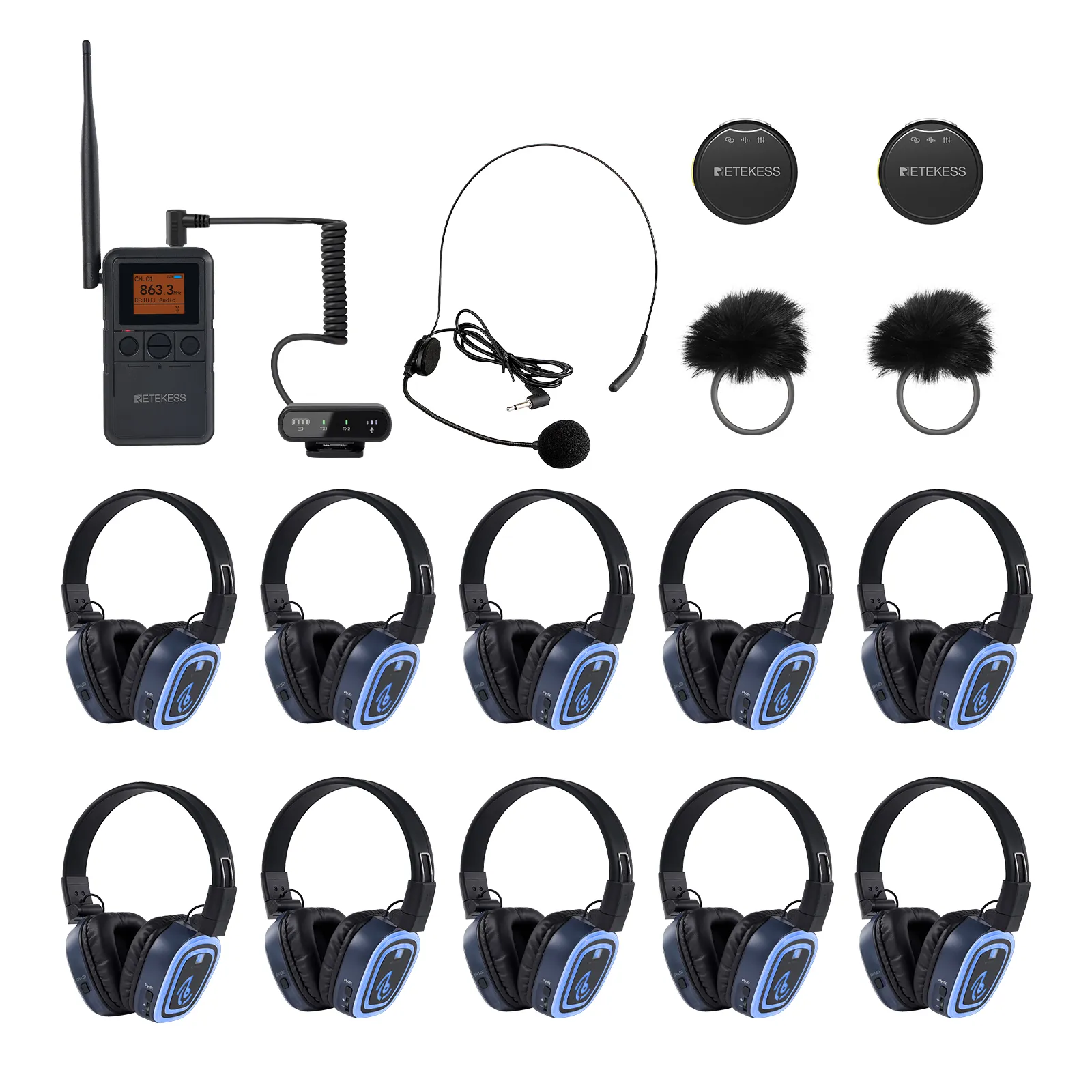
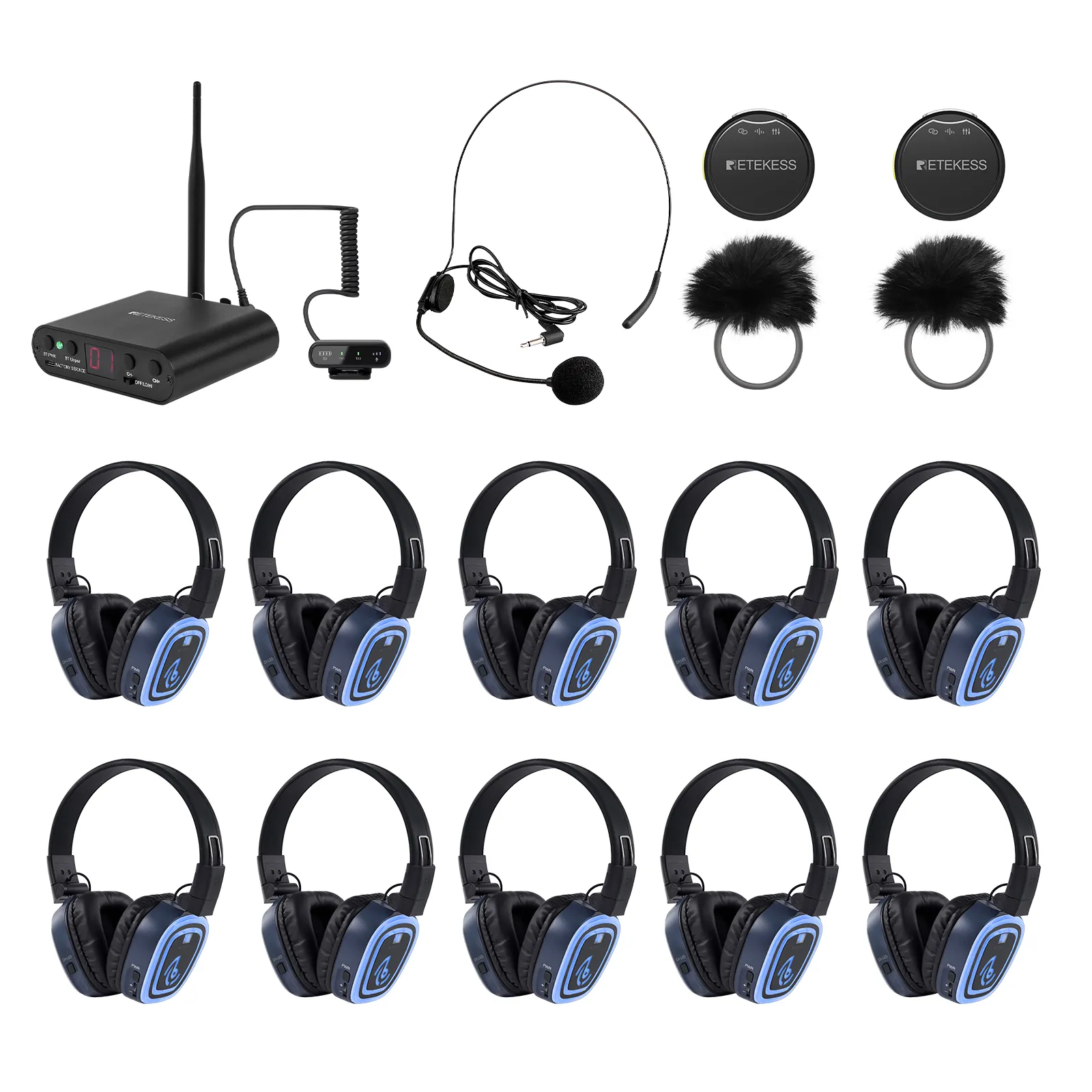
This is where newer hardware becomes relevant. While most rental houses still stock standard 3-channel kits, some transmitter models now support six independent channels, effectively doubling the content density of a single physical space. The Retekess TA003P Portable Silent Headphone, for example, offers six-channel operation with up to 400 meters of open-range transmission, making it viable for festival grounds where a single transmitter must cover a large dispersed crowd without signal dropout.
For producers, the math is compelling. One stage area with six channels replaces what would otherwise require six separate traditional stages—or at least six separate PA deployments with complex directional speaker arrays to minimize bleed. The infrastructure savings in power, crew, and real estate are substantial.
Core Advantages of Multi-Channel Silent Disco Systems
Multi-channel silent disco headphones have emerged as a standard upgrade for major festivals, removing long-standing operational barriers and delivering customizable, zone-free audio experiences that elevate overall event value.
1. Zero external noise for full compliance
Audio transmits exclusively through silent disco headsets with no ambient sound leakage. This eliminates noise complaint risks entirely, allowing events to operate in noise-sensitive locations near residential neighborhoods. Late-night silent party programming can run past standard curfew hours, extending event schedules and opening additional revenue streams.
2. Simultaneous multi-genre playback with zero interference
Multiple independent channels broadcast different genres, spoken word content or interactive audio at the same time. Attendees switch between channels with a single button press, accessing their preferred content without leaving their current location. This setup delivers the equivalent of multiple stages within a single shared space.
3. Consistent coverage across the entire event site
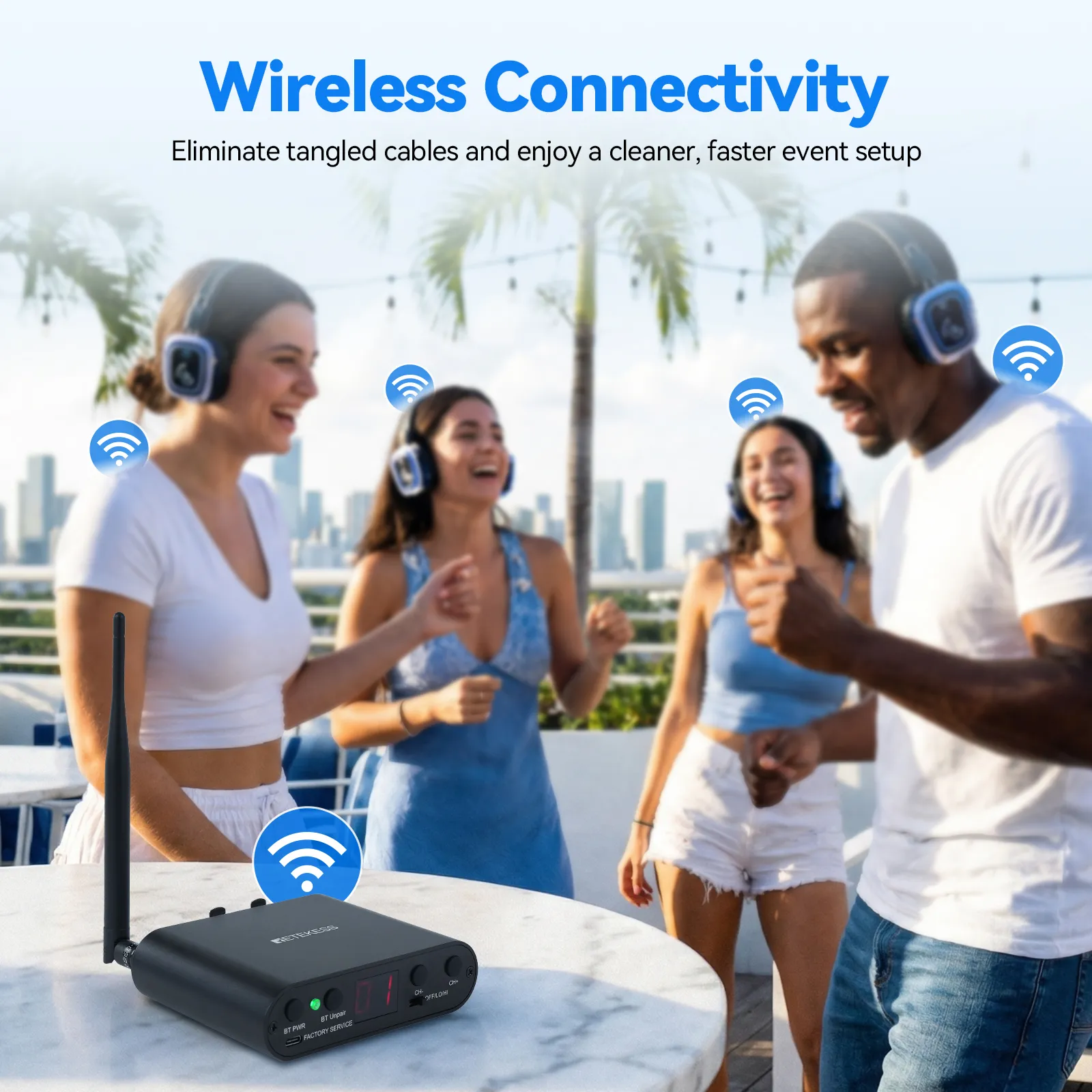
Properly placed transmitters deliver stable signal to every area of the festival grounds. Attendees receive identical audio quality as they move between the main stage, food vendors, rest areas and campgrounds, creating a seamless, uninterrupted experience across the full site.
4. Streamlined on-site operations
No heavy sound isolation structures or complex multi-stage traffic routing are required. Silent disco headphones require minimal on-site setup and teardown time. Attendees move freely across zones while maintaining access to audio content, simplifying overall event coordination and reducing on-site staffing needs.
5. Rapid Deployment and Teardown
A traditional stage with PA requires hours of load-in, line checks, and sound engineering. A silent disco headphone zone requires minutes: place the transmitter, connect the audio sources, and distribute headphones. Teardown is equally fast—collect the headphones, power down, and pack. For festivals with tight changeover schedules or multi-use venues, this agility is a production lifesaver.
Full-Scenario Applications Across Festival Grounds
One multi-channel silent disco system supports use cases across every zone of a large festival.
1. Main stage overflow support
High-attendance headline sets often create dangerous overcrowding in front-of-stage areas. Silent disco headphones spread crowds across wider viewing zones, reducing front-stage density while maintaining clear, synchronized audio for all attendees. This improves on-site safety without compromising the live experience.
2. Multi-genre side programming
Separate channels carry electronic, rock, acoustic, comedy and other content styles. Attendees explore different genres without traveling between separate stages, reducing foot traffic congestion across the site. This variety caters to mixed audience groups and keeps attendees engaged for longer periods.
3. Campground and relaxation zones
Event content extends to rest and camping areas with dedicated low-volume channels for morning yoga, afternoon podcasts and evening ambient music. This keeps attendees connected to event programming during downtime, extends overall dwell time and improves the full-day attendee experience.
4. Late-night afterparties
Silent party programming continues after standard curfew with no external noise disruption. Late-night sets add exclusive after-hours value to the event schedule, and can be sold as a separate ticket upgrade to boost per-attendee revenue.
5. Brand activation zones
Dedicated channels carry branded content, interactive game audio and sponsored playlists. This creates immersive brand experiences that feel integrated with the event, rather than disruptive standalone advertisements, and avoids sound bleed that would bother nearby attendees.
On-Site Implementation Tips
1. Transmitter placement
Position primary transmitters in a fan-shaped pattern across open event grounds, with supplementary fill transmitters for areas blocked by buildings, stages or large metal structures. This ensures uniform signal coverage with no dead zones across the entire site.
2. Channel organization
Assign channels by broad content category and keep assignments fixed throughout the event. Post clear, visible channel guides at entry points, food stations and rest zones to reduce attendee confusion and minimize staff support requests.
3. On-site contingency planning
Keep spare silent disco headphones and fast-charging equipment on hand at dedicated support stations across the event grounds. Faulty units are swapped out immediately for attendees, with no wait time required for repairs. Pre-charged spare batteries cover unexpected extended session times.
Conclusion
Multi-channel silent disco headphones resolve the core constraints of traditional festival audio systems, from local noise compliance limits to uniform, inflexible programming. They extend event schedules past standard curfews, bring integrated audio to every corner of the event grounds, and give attendees control over their own experience to boost overall satisfaction. Engineered for large-scale outdoor silent party use,
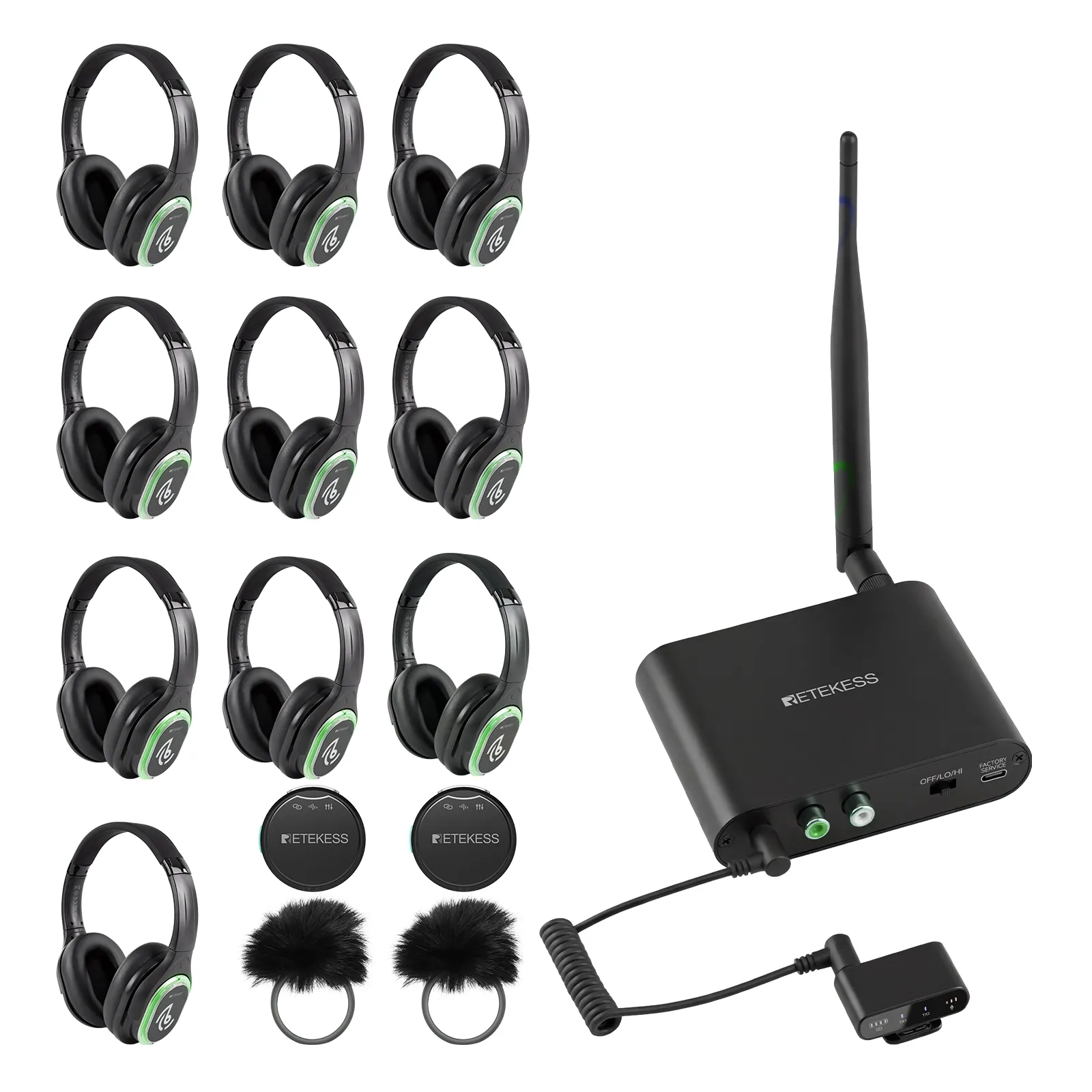
Retekess TA004S delivers immersive bass-forward audio, all-day battery life and efficient bulk management, supporting smooth, memorable silent disco headset experiences for festivals of any size.
Exclusive bulk purchase offers are available during the Retekess 18th anniversary period. More event audio solution guides will be released in upcoming updates.
Frequently Asked Questions
Q: What is the maximum number of simultaneous users per system?
A: There is no fixed limit on connected headphones. The system supports groups of any size within the transmission coverage area.
Q: Will signal dropouts or cross-channel interference occur on large outdoor festival grounds?
A: Proper transmitter placement delivers consistent, stable signal across the coverage area. The system operates with independent channel encoding to prevent cross-interference, even with high user volumes.
Q: How is hygiene handled for shared headphones?
A: Ear cushions are designed for quick removal and replacement. Cleaning and replacement are fast to complete between uses, supporting safe, hygienic shared operation.
Leave a Reply
![[18th Anniversary] 18 Years of Echoing Excellence: Making Communication Easier, Connecting Trust Beyond Borders](https://res.retekess.com/z_file/20260716/retekess-brand-story-making-communication-easier_20260716151044_7682.jpg)
![[18 Years in Wireless Communication] Silent Disco Systems Anniversary Celebration: Top-Selling Headphones & Event Mechanics Revealed!](https://res.retekess.com/z_file/20260713/18-years-in-wireless-communication-silent-disco-systems-anniversary-celebration_20260713175011_5749.webp)
![[Anniversary Carnival] Ding-dong! 18th Anniversary Mega Sale on Guest Paging & Calling Systems: Full Reveal of 12+ Products & Promo Rules!](https://res.retekess.com/z_file/20260713/18th-anniversary-mega-sale-on-guest-paging-calling-systems_20260713175257_0295.webp)
![[Retekess 18th Anniversary Teaser] Tour Guide System Exclusive Perks: Sneak Peek at Event Dates & Mechanics!](https://res.retekess.com/z_file/20260713/retekess-18th-anniversary-tour-guide-system-exclusive-perks--2-_20260713180135_6435.webp)
Follow Us
Pay With


 Google
 Amazon
Comments (0)