
Anyone who has ever guided a group of 25 to 30 teenagers or university students through a bustling city center knows the challenge. Students naturally spread out—some stop to take photos of historic architecture, others chat near the back of the line, and street traffic, trams, and passing crowds constantly compete with your voice.Without the right audio setup, tour guides end up shouting at every intersection, repeating the same historical facts three times, and losing half their vocal energy before lunchtime. Meanwhile, students standing more than ten feet away miss key context and quickly lose interest.Recently, a tour guide sent us real photos and video from an educational city walking tour using the Retekess T130U wireless tour guide system. From gathering outside historic university buildings to navigating lively pedestrian streets, here is a closer look at how the system performed on the ground—and why travel agencies and educational tour operators are making it standard gear for youth and student itineraries.

In the field photos shared by our customer, a guide leads a large group of high school and college students across multiple urban stops—including historic university campuses, brick-and-timber landmarks, and narrow city sidewalks.
What stands out immediately in these real-world snapshots is how relaxed and well-paced the group looks:
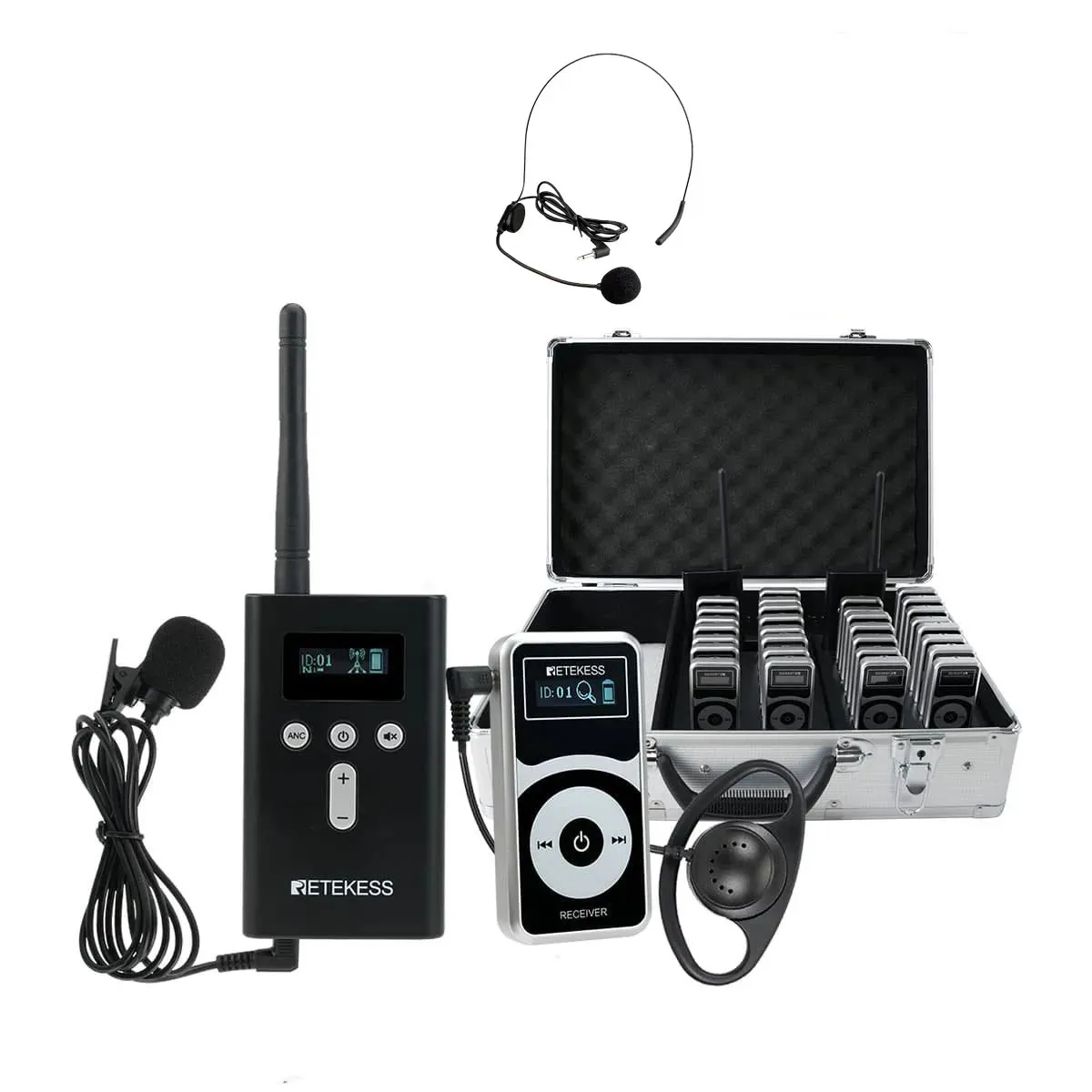
● Hands-Free Storytelling for the Guide: The guide wears a lightweight headset microphone plugged into a compact Retekess T130U transmitter hanging comfortably on a lanyard. Because the mic stays positioned right next to her mouth, she speaks in a calm, conversational tone while keeping both hands free to hold printed visual handouts, point out architectural details, and maintain eye contact with the group.
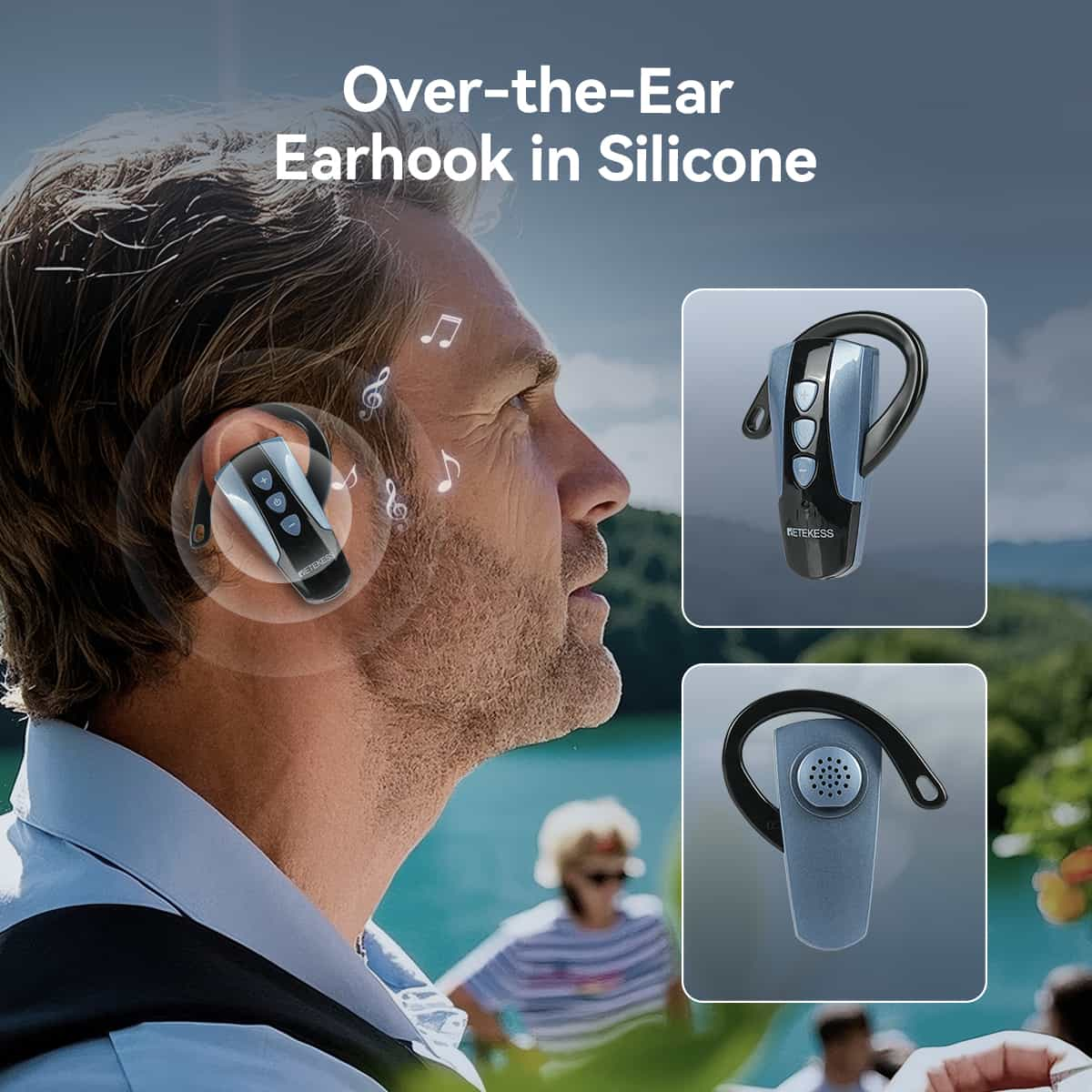
● Consistent Audio Across the Entire Line: Whether the group is posing together for a photo outside a landmark or walking single-file down a busy avenue, every student wears a slim, single-earhook receiver. Students standing 20 feet behind the guide hear the exact same crisp narration as those standing directly in front.
● Safer, More Organized Street Movement: On crowded sidewalks, forcing 30 students to huddle tightly around a speaker creates bottlenecks and safety hazards. With wireless receivers, students stay naturally spaced out along the walkway while remaining fully connected to the guide's instructions—especially helpful when crossing busy streets or gathering at transit stops.
When selecting audio equipment for student tours, travel agencies need more than just clear sound—they need hardware that survives daily handling by teenagers, sets up in seconds, and works reliably across different venues. The Retekess T130U is engineered around those exact operational demands:
1. UHF Signal Stability in Dense Urban Environments
Downtown districts, museums, and university campuses are saturated with Wi-Fi networks, Bluetooth devices, and cellular signals. Unlike basic consumer frequencies that crackle or drop out near buildings, the T130U operates on the UHF (Ultra High Frequency) band, cutting cleanly through urban interference with a reliable 100-meter (328-foot) open-field working range.
2. 49 Independent Channels for Multi-Bus & Split-Group Itineraries
Educational tour operators frequently run multiple motorcoaches or split a 90-student delegation into three smaller walking groups at the same museum or historic square. With 49 selectable channels, up to 49 separate tour groups can operate side by side in the exact same location with zero crosstalk or channel overlap.
3. One-Touch Channel Sync & Smart Auto-Shutdown
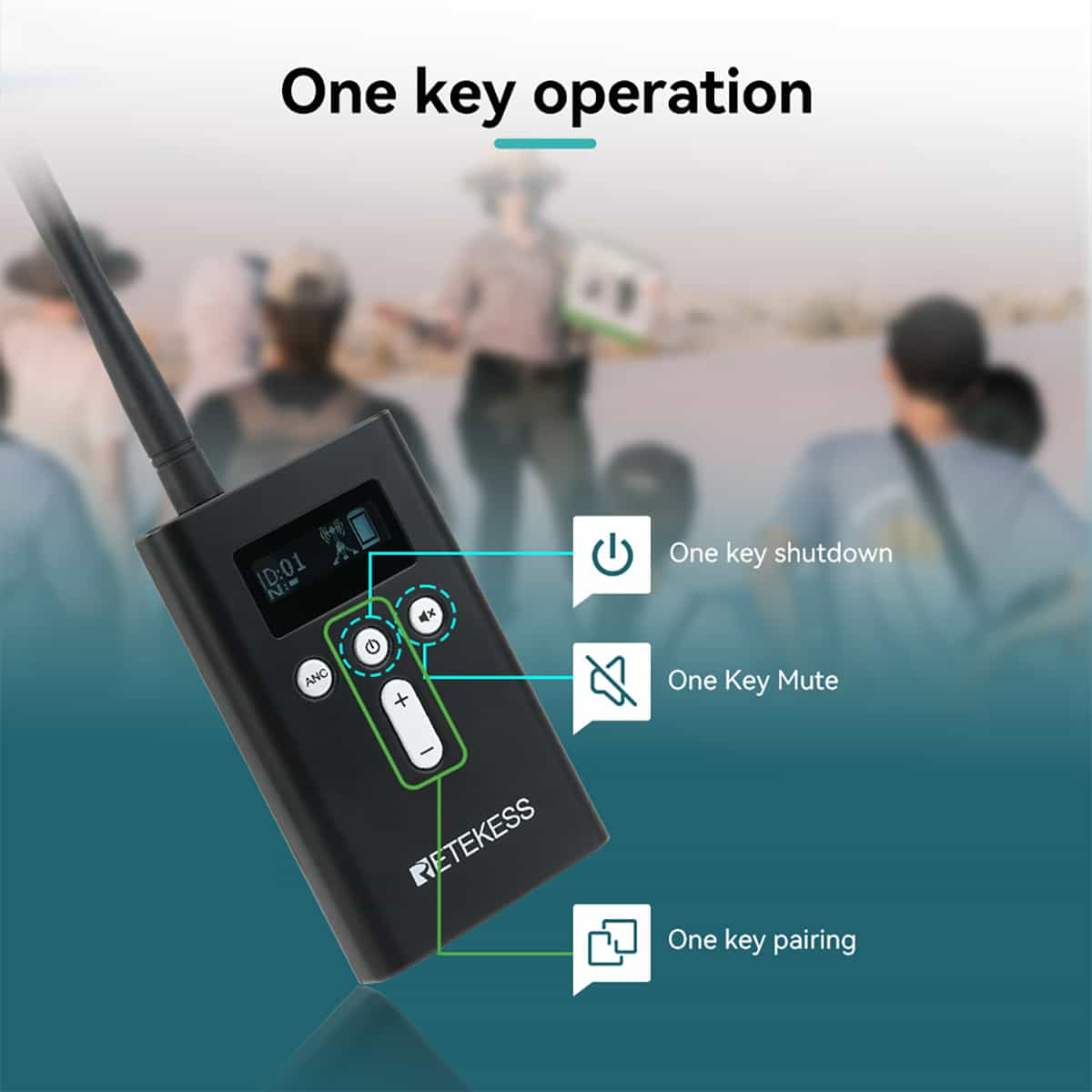
Tour itineraries run on tight schedules. Spending 15 minutes manually tuning 30 receivers at every stop isn't an option. The T130U features one-key automatic pairing—press one button on the transmitter, and all nearby receivers synchronize to the exact channel within seconds. Additionally, if a student forgets to switch off their unit after the tour, the auto-power-off function automatically shuts down receivers after 20 minutes of no signal, preserving battery for the next day.
4. All-Day Battery Life for Full-Day Itineraries
Student study tours rarely stop at one site; a typical day includes morning walking tours, afternoon museum visits, and evening cultural briefings. A single charge powers the T130U transmitter for over 10 hours and the receivers for up to 18–20 hours, easily lasting through full-day schedules without midday recharging panic.
5. Ultra-Lightweight, Hygienic Earhook Design
Each receiver weighs just 38 grams (1.3 oz)—lighter than a set of keys—so students can wear it comfortably on a lanyard all day without neck or ear fatigue. The universal D-shaped earhook fits either the left or right ear without entering the ear canal, making it far more hygienic than in-ear buds and quick to sanitize with alcohol wipes between groups.
|
Feature |
Specification |
Why It Matters for Student & Agency Tours |
|
Frequency Band |
UHF (Stable Anti-Interference) |
Prevents static and dropouts near city buildings and crowds |
|
Working Range |
Up to 100m (328 ft) |
Keeps lagging students connected on wide plazas and streets |
|
Channels |
49 Independent Channels |
Run multiple student groups simultaneously without crosstalk |
|
Receiver Weight |
38g (1.3 oz) |
Lightweight enough for all-day walking without discomfort |
|
Battery Life |
Transmitter: 10+ hrs / Receiver: 18–20 hrs |
Covers back-to-back morning and afternoon excursions |
|
Pairing & Power |
One-Touch Sync + Auto-Off |
Saves setup time and prevents dead batteries from forgotten units |
|
Auxiliary Input |
3.5mm AUX Jack on Transmitter |
Play pre-recorded audio clips, music, or language tracks from a phone |
Drawing from experienced educational tour leaders using the T130U system, these simple habits keep every tour running smoothly:
1. Hand Out Receivers Before Leaving the Coach: Distribute numbered receivers and lanyards while students are still seated on the bus. By the time the doors open at a busy historic square, everyone is already plugged in and ready to move.
2. Use the AUX Jack for Multimedia Storytelling: The T130U transmitter includes an audio input jack. Connect your smartphone to play local music, historical speech clips, or pronunciation examples directly into every student's ear during walking transitions.
3. Assign Numbered Units to Student Buddies: Match each receiver's number to your attendance sheet. Students take better care of equipment assigned to their name, and end-of-day collection takes less than two minutes.
4. Carry 2–3 Pre-Synced Backup Receivers: Keep a few extra charged receivers in your daypack so you can swap out a unit immediately if a chaperone joins late or a student misplaces theirs.
Can one Retekess T130U transmitter connect to 30 or more student receivers?
Yes. The T130U is a one-to-many broadcast system with no strict upper limit on receivers—as long as all receivers are within the 100-meter range and synced to the same channel, you can connect 20, 30, 50, or even 100+ listeners to a single guide.
What if two guides from our agency are leading groups in the same museum?
Simply set Guide A's transmitter to Channel 01 and Guide B's transmitter to Channel 02 (out of 49 available channels). Their signals will never interfere with each other, even when both groups stand in the same room.
Does the system come with a charging case for tour operators?
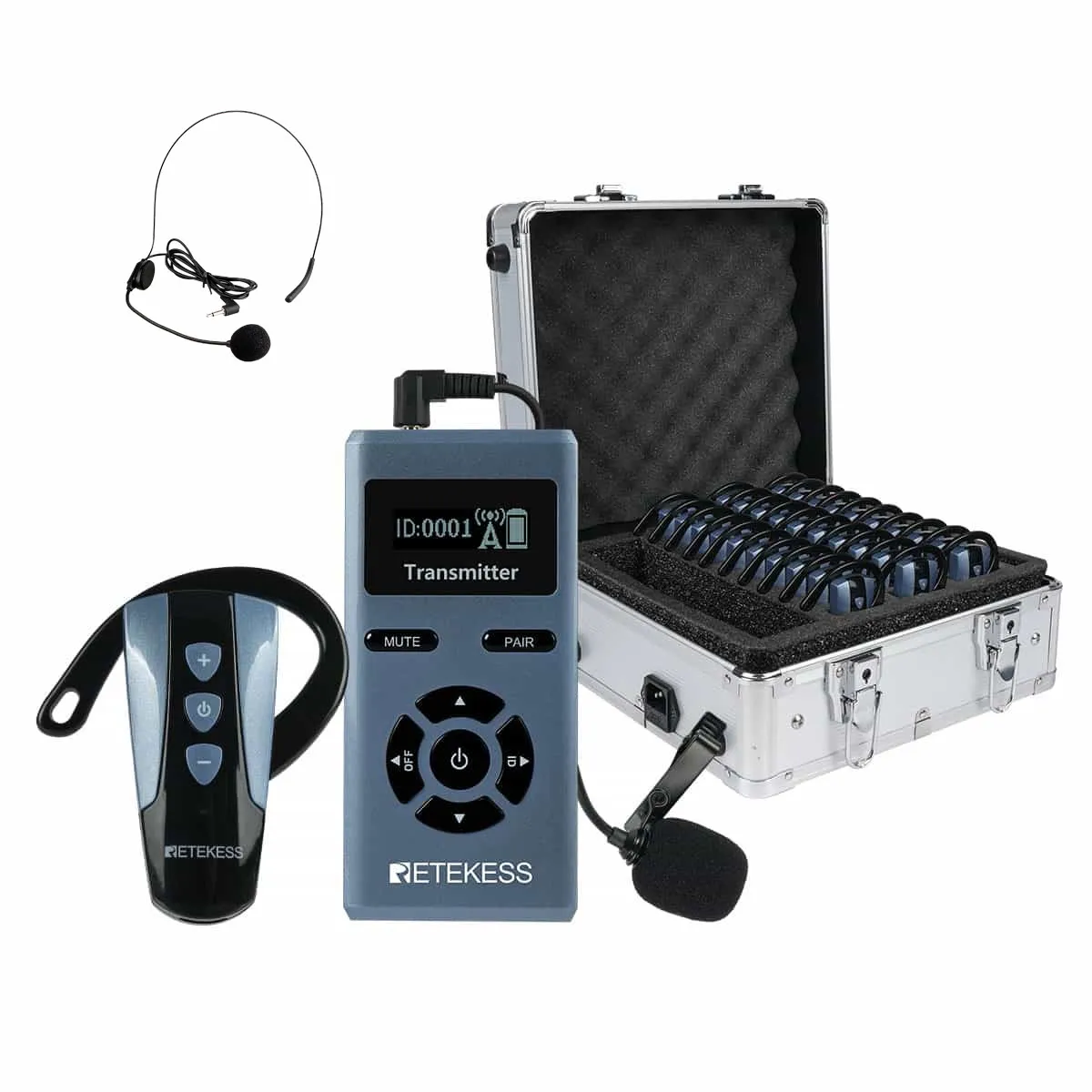
Yes. Retekess offers multi-slot portable charging cases (such as 32-slot and 40-slot aluminum cases) designed specifically for travel agencies, allowing you to charge, store, and transport an entire group's transmitters and receivers in one rugged case.
Clear audio turns a noisy, stressful walk into an engaging, memorable educational experience—while protecting your guides from vocal fatigue day after day.
[Shop Retekess T130U Tour Guide System Kits & Agency Bulk Bundles →












 Google
 Amazon