
Table of Contents
Tour Guide Technology Trends 2026: AI Moves Into the Device
- Retekess
- Oct 27, 2026
On September 14, 2026, Vox Group held a launch in Rome. The company has supplied guiding technology across more than 150 countries for 25 years. Its new Aura transmitter runs live AI translation in up to four languages at once and now draws on 200 languages. The guest experience did not change: no smartphone, no download, no roaming fee, no separate interpreter. Sound still travels over the dedicated radio link operators have used for decades.
Two details matter for every buyer. First, the industry leader put AI inside the transmitter rather than a phone app. Second, Aura runs several channels on the same tour: standard commentary, a deep-history version, a children's version and translated feeds. One departure now serves a family, a specialist and a first-time visitor together.
Those moves sit at the heart of the tour guide technology trends of 2026. Buyers are not choosing one universal gadget. They are deciding which layer of the on-site tour stays on dedicated hardware.
Audiences Drew the AI Line: Translate, Do Not Interpret
The strongest check on AI in guiding came from visitors, not engineers.
In January 2026, the American Alliance of Museums surveyed 2,045 U.S. adults. More than 70 percent wanted no AI in exhibition content at all. Forty-three percent expected human authors for everything, including emails and websites. Forty-five percent wanted to be told every time AI was used (American Alliance of Museums, 2026).
The reasons were consistent. Visitors feared hallucinations and inaccurate labels. They saw the professional staff as the source of museum credibility. They wanted clear labels when AI was involved.
The industry has already adapted inside that line. The National Gallery Singapore built G(ai)le, an AI docent in four languages, and staff use it to draft different audience versions that writers then refine (Blits.ai, 2026). Vox built Aura on operator-approved content and verified sources, not the open internet. The operator decides what guests hear.
For tour guide technology in 2026, this settles the AI question. AI handles translation, subtitles, multilingual channels and draft narration. A human curator or guide owns the authoritative interpretation.
The Phone Did Not Win the Tour
No-app web guides had a strong 2026. Platforms such as Xsite and Musa let visitors scan a QR code, pick from 40 or more languages and open a tour in a phone browser. No download, no rental desk.
Bluetooth Auracast broadcast audio opened a second front. The Bluetooth SIG lists museum and attraction tour systems as a target public-location use case (Bluetooth SIG, 2026). The first major cultural institution deployed Auracast broadcasts in May 2025 (Bluetooth SIG, 2025). Visitors with Auracast earbuds or compatible hearing aids tune in directly. The assistive listening system and the tour system become one.
Yet the same installers still hand out hardware. Their own deployment notes concede that visitors without compatible devices borrow a small receiver (NEXUM, 2026). Dedicated tours face the same gaps every season: dead phone batteries, roaming costs, elderly visitors, hearing accessibility, and a guide who needs every guest on one controlled channel.
The 2026 trend is not phones replacing devices. It is a split. Web and Auracast serve light, self-paced visits. Dedicated wireless tour guide systems hold the mixed group, the multilingual departure, the full-day tour and the accessible visit. Operators buy certainty.
Three On-Site Models, Three Devices
Operators buying in 2026 match a device to how the tour is delivered.
1. The Mixed-Language Guided Tour: AI Translation Transmitter
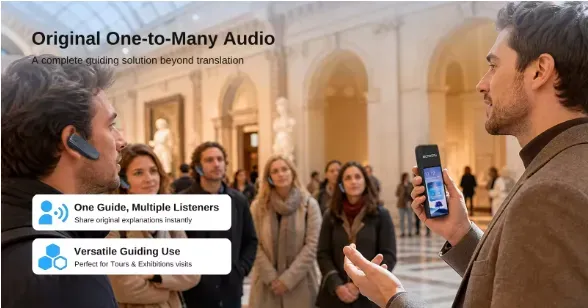
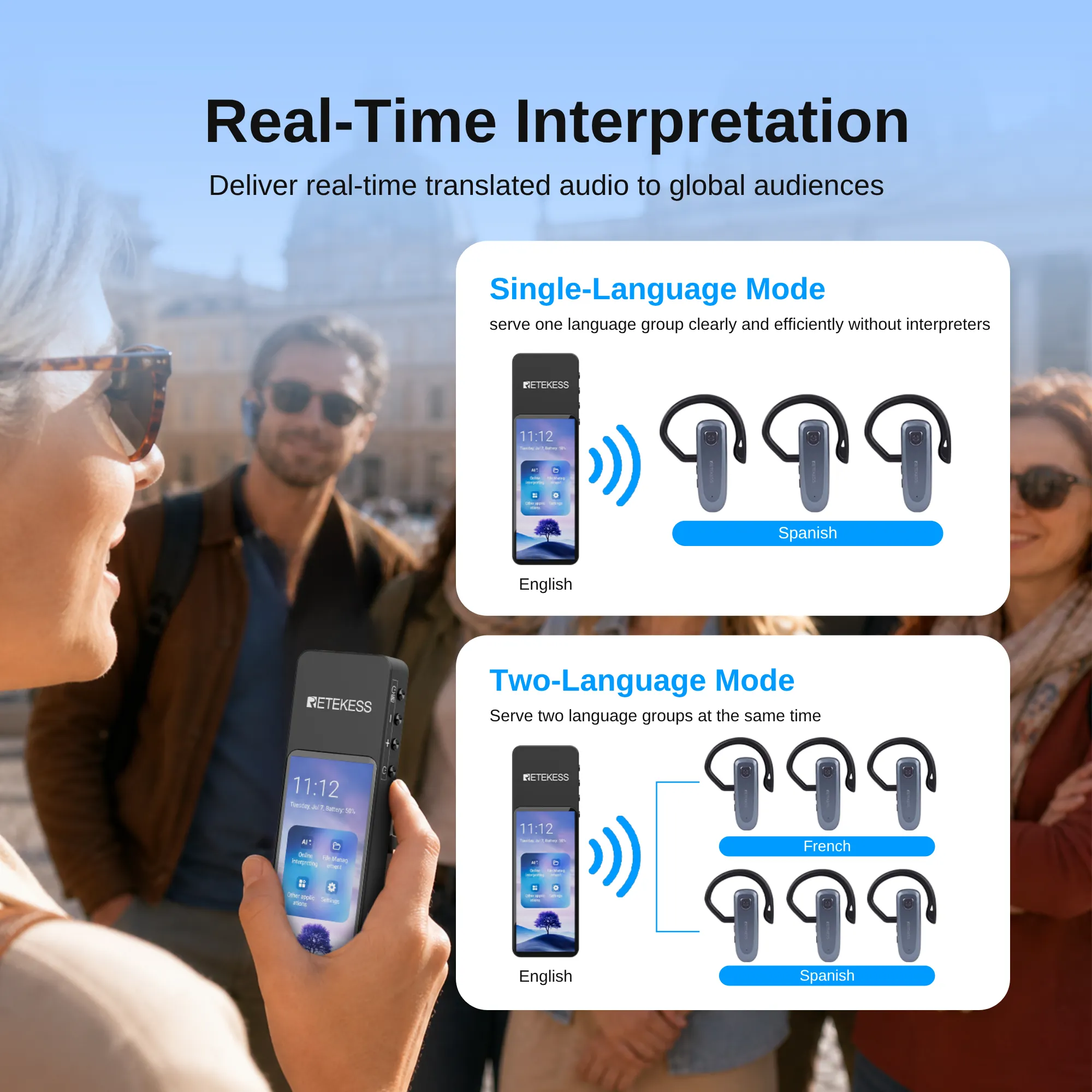
Many departures now carry guests from three or four language markets in one coach. Splitting the group needs more guides, more buses and more cost. The AI translation model keeps one guide and one departure.
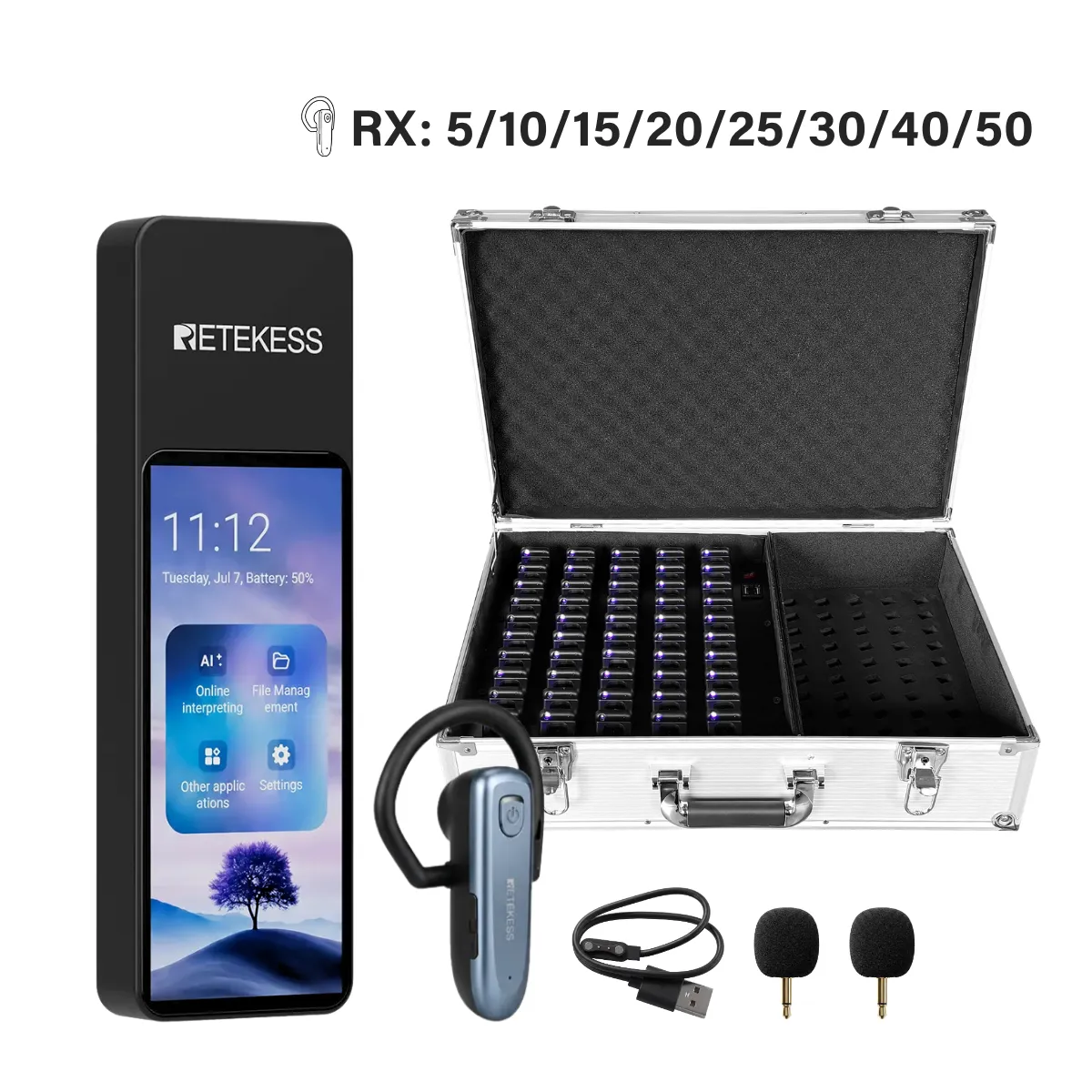
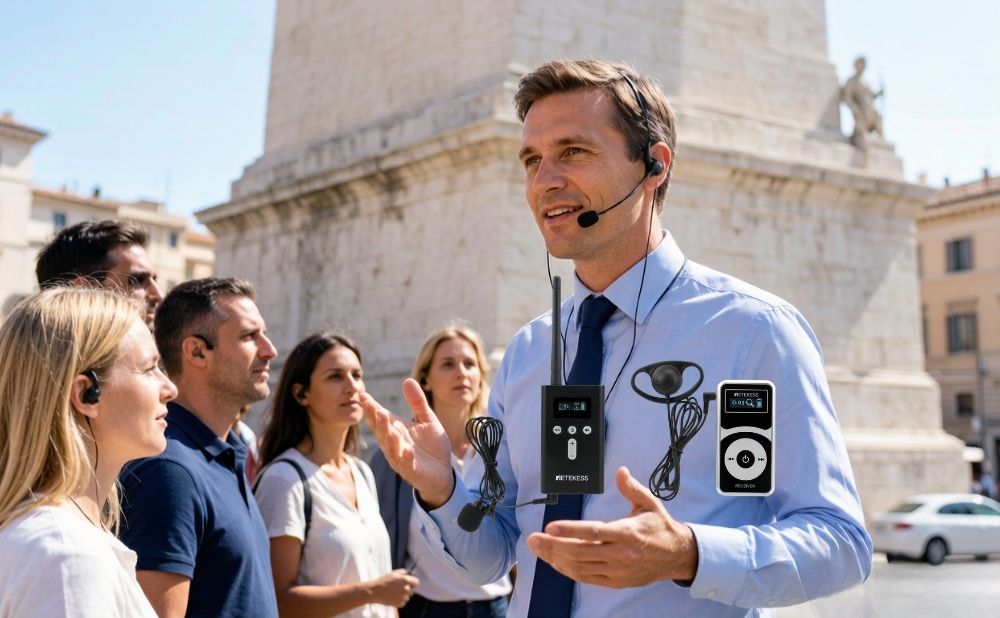
The guide speaks once in their own language. The device recognizes the speech, translates it, and transmits the translated audio to earpiece receivers. The TT136 builds this workflow around the guide:
- AI translation across 120+ languages
- Recognizes up to 10 spoken languages; broadcasts up to two target languages at once
- 99-inch touchscreen for live review and control
- 150 to 200 meter range on 2.4 GHz wireless
- About 6 hours with AI translation and transmission both active; about 20 hours of standard transmitter use
The guide stays in charge of corrections and tone. Sensitive talk about contracts or disputes stays human. This follows the line visitors and operators already drew: AI translates, the human guides.
2. The Self-Guided Visit: Unattended Audio Tour Device
Museums, heritage sites and factories with steady walk-in traffic face a staffing problem. They cannot place a multilingual guide beside every exhibit every open hour.
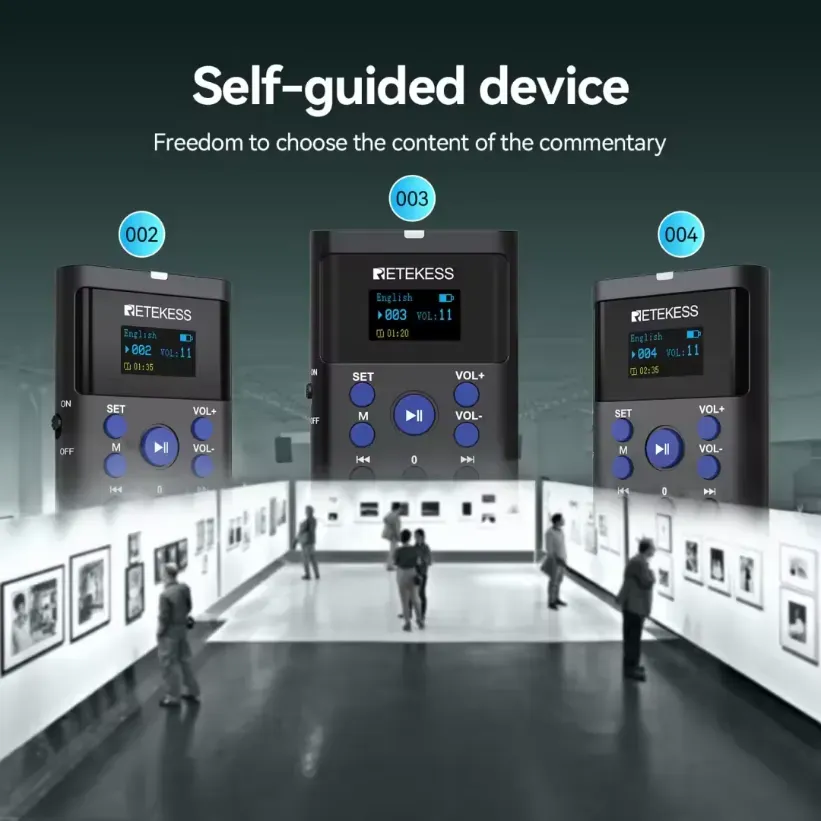
The self-guided audio tour device answers that with no staff at the point of use. Visitors pick up the unit, choose a language, and move at their own pace. The TT128 is built for this rental-desk operation:
- 60 g handset, 52 by 102 by 14.5 mm
- 41 languages stored on the device
- 16 GB storage holds roughly 455 hours of audio at low bit rates
- About 40 hours of runtime; full charge in four hours
- 16 volume levels; Bluetooth 5.0 and 3.5 mm headphone output
- Type-C or contact charging; 28- and 45-port charging cases for fleets
The unit works offline. It does not depend on venue Wi-Fi or the visitor's data plan. Charging cases turn the fleet into an unattended, rapid-turnover rental operation.
3. The Human-Led Tour: Touchscreen Dual-Screen System
Most guided tours still belong to a human guide. The smart move in 2026 is upgrading the tools that guide carries.
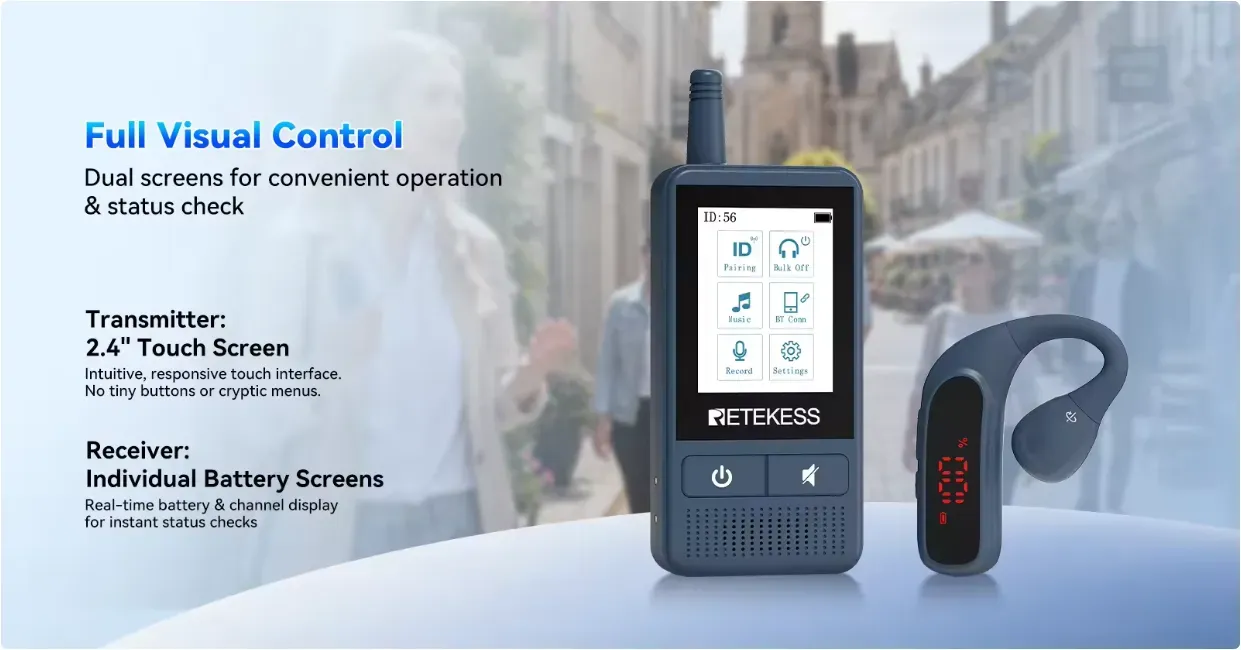
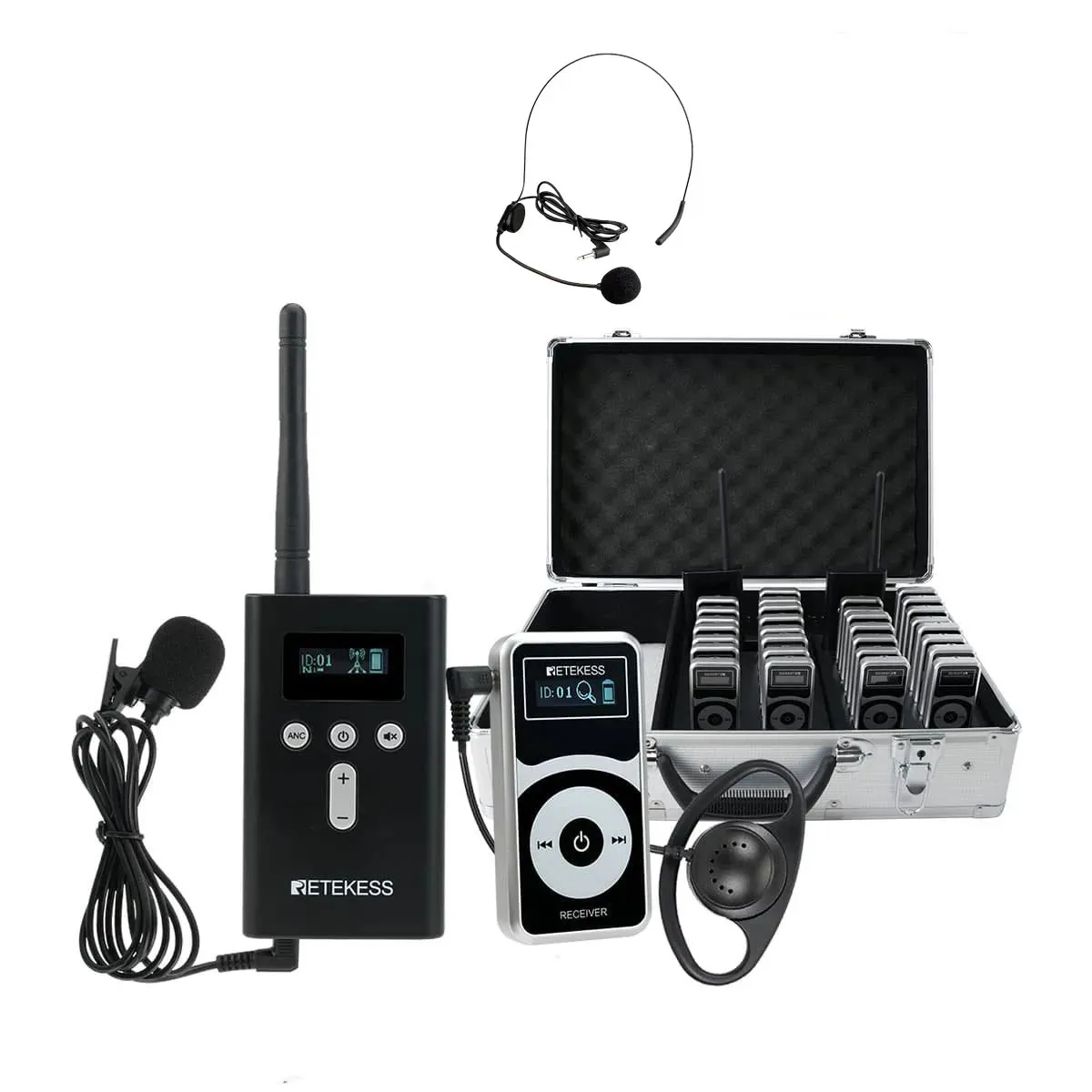
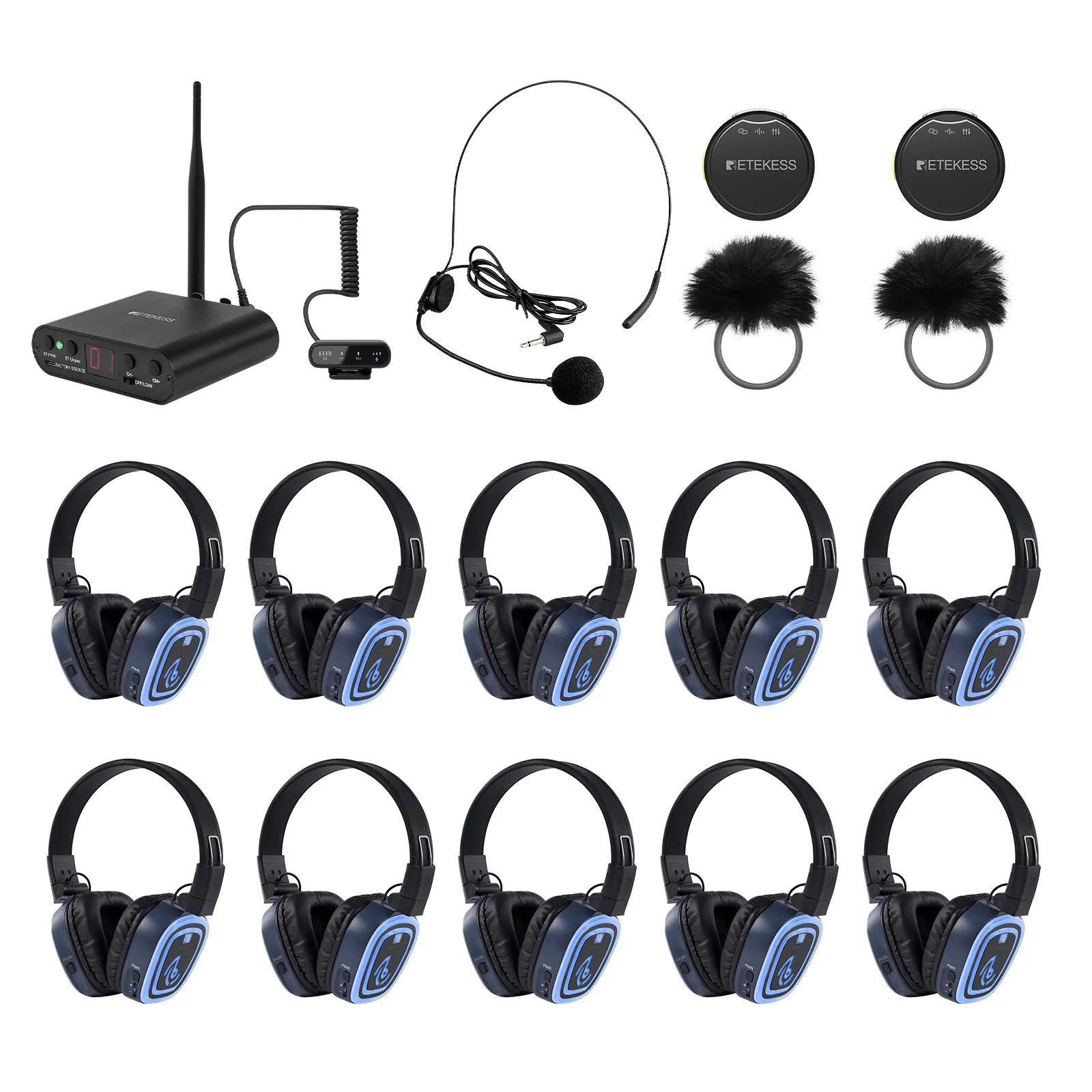
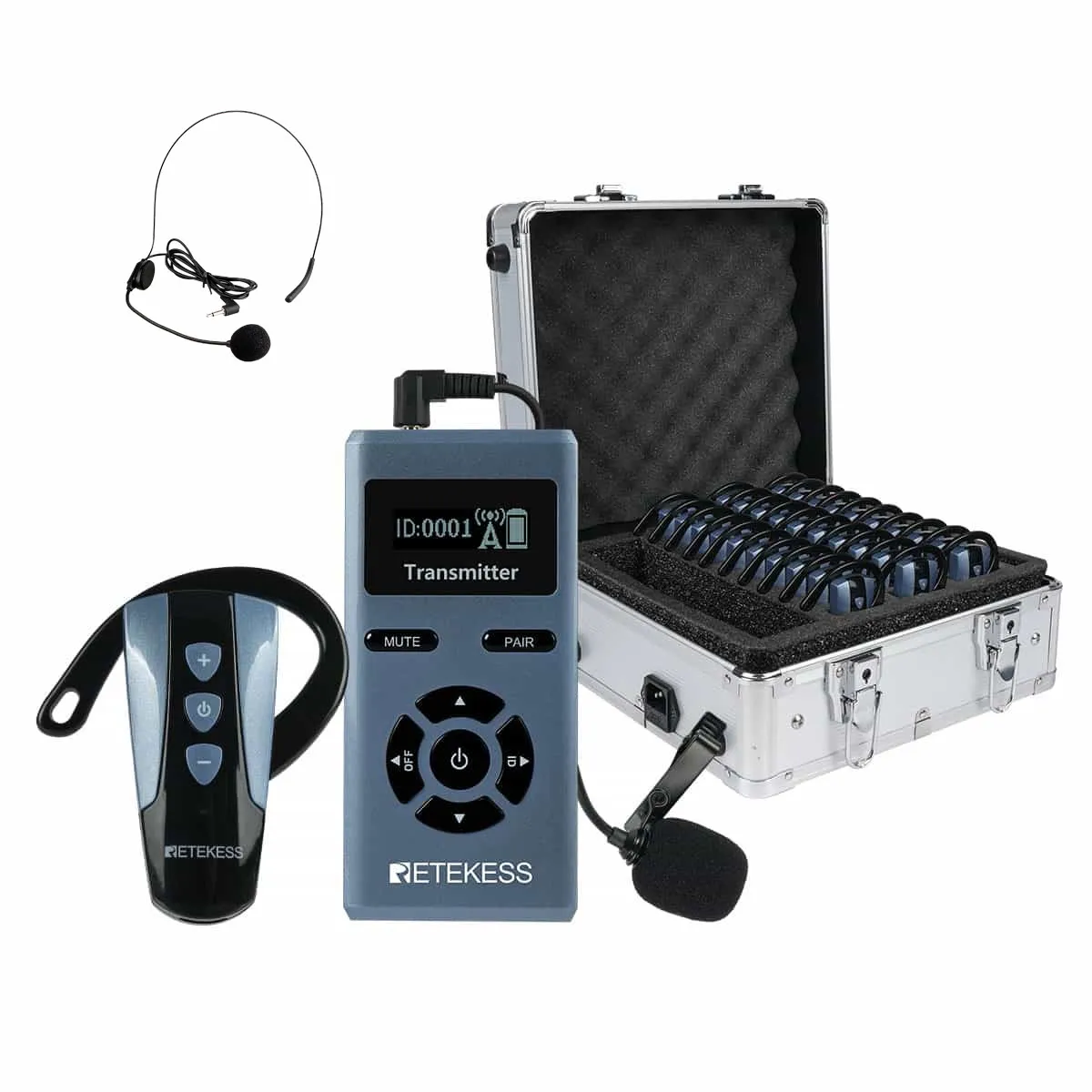
The TT133 gives the transmitter a 2.4-inch touchscreen and each receiver its own small screen with battery and channel status. The dual-screen design removes the guesswork of button-based systems:
- 4 GHz band, 99 channels, 150 m range; multiple groups on one site without cross-talk
- DSP noise reduction for noisy streets and exhibition halls
- 20 hours with screen off, 12 hours with screen on; 2-hour fast charge
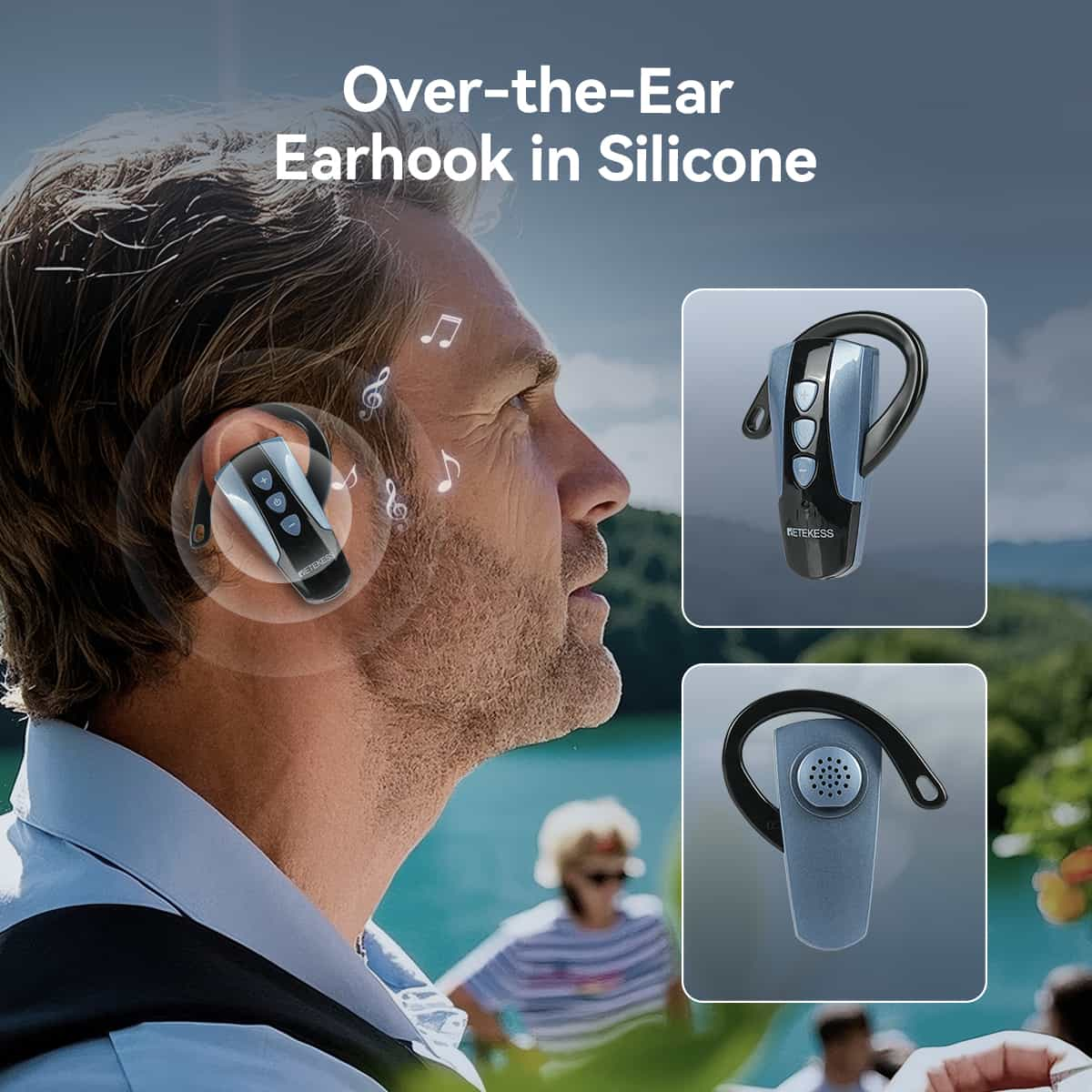
- 18 g earhook receiver, about 12 hours of battery
- TF card recording and playback, Bluetooth audio, AUX input
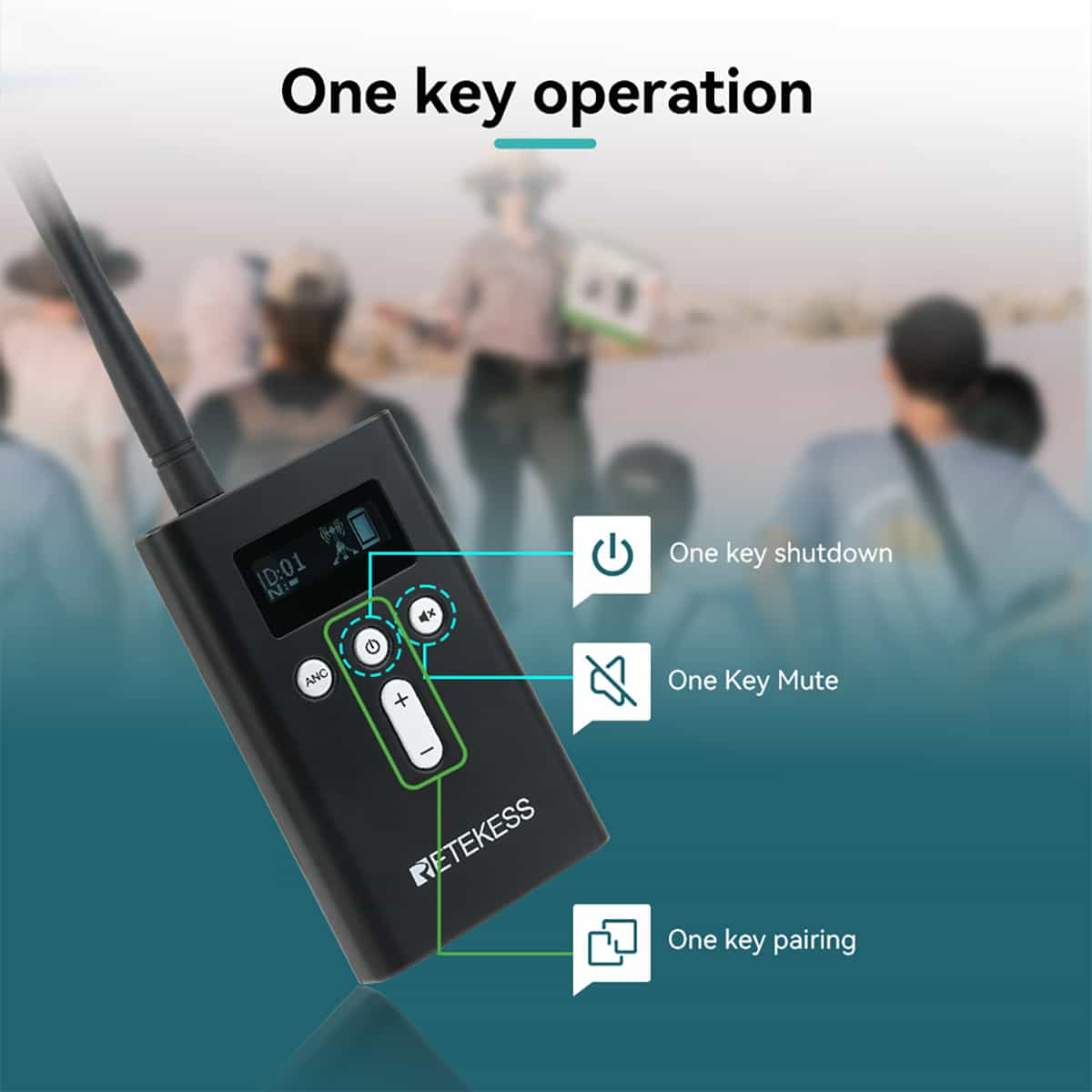
- One-key pairing, mute and power-off
Recording and playback matter in practice. A guide pre-records the standard stop, frees the live channel for questions, and reuses the same content across seasonal staff. Live commentary, prepared introductions and mixer audio all enter the same system.
Two Pressures Make the Shift Permanent
Regulation set one deadline. The European Accessibility Act, Directive 2019/882, has applied since June 28, 2025. It changed procurement across a market of about 100 million people with disabilities in the EU. Subtitles, hearing-aid compatibility and multi-modal access now appear in venue tenders (European Commission, 2025).
Supply set the other limit. Italy's first national licensing exam under the 2023 guide law drew more than 29,000 registrations, but only 12,191 candidates sat the written test (AgenziaCult, 2026). Southern European markets license guides tightly, so multilingual capacity grows slowly. Devices do not replace licensed guides. They absorb the routine and multilingual load that guides cannot cover.
The Device Now Reports Back
Modern guiding platforms also turn the handset into a measurement tool. Dashboards show scans, listen rate, average listening time and the language mix at each stop (Wexplo, 2026).
The language mix tells an operator which translation to commission next. Listen rate shows which stops lose the audience. A wireless tour guide system is no longer a single audio cost. It feeds content planning, scheduling and staffing.
FAQ
Will AI replace tour guides?
The 2026 evidence points to augmentation. Visitors reject AI-authored interpretation, while operators use AI for translation, subtitles and draft narration. The guide's authority and judgment remain human.
Can visitors' phones replace dedicated tour guide devices?
Not for the whole operation. Web guides and Auracast fit light, self-paced visits. Mixed-language groups, accessibility, full-day battery and controlled channels still require dedicated tour guide equipment.
Which tour guide technology trends matter most for 2026 buying?
AI translation inside the transmitter, self-guided handsets for walk-in traffic, touchscreen dual-screen systems for live guides, accessibility compliance, and usage analytics.
How do operators choose between the three device types?
Use an AI translation transmitter for mixed-language departures, a self-guided handset for unattended walk-in visits, and a dual-screen smart system for human-led group tours.
Final Thoughts
Tour guide technology trends in 2026 do not reward the buyer who chases the most AI. They reward the buyer who assigns each layer correctly.
AI moves into the device for translation and multilingual channels. Content and trust stay with people. Dedicated hardware keeps the group intact, the access compliant and the operation measurable.
One guide, one departure, many languages. Self-guided handsets for the walk-in flow. A touchscreen rig for the human-led tour. That is the 2026 stack: AI inside, humans in front.







Follow Us
Pay With


 Google
 Amazon

Comments (0)