
Table of Contents
Two Way Translator Device: How Real Two-Way Translation Works (and When One-Way Is Enough)
- Retekess
- Oct 10, 2026
Almost every product in this category claims two-way translation. Read the fine print and most of them mean something narrower: two people taking turns pressing a button. That is not the same thing, and buying the wrong version is why so many multilingual meetings feel stilted.
This guide defines what two-way actually means, shows which situations genuinely require it — and, just as importantly, which situations do not — then compares the four practical ways to build it.
1. What "Two Way" Actually Means: Four Levels
Use these definitions when you read a spec sheet. They will save you money.
|
Level |
What happens |
Typical product |
Feels like |
|
Level 0: One-way |
Speaker A talks, listener B hears translation. B replies in their own language with no translation back |
Tour guide transmitters, museum audio guides, sermon interpretation |
A lecture |
|
Level 1: Alternating one-way |
A speaks, B hears; then you switch direction and B speaks, A hears. Manual or automatic turn detection |
Phone conversation mode, most handheld translators |
A walkie-talkie |
|
Level 2: Dual-channel group two-way |
Two language groups each receive on their own channel; either side can speak and the other hears translation without reconfiguration |
Retekess TT136 two-way dialogue mode |
A meeting |
|
Level 3: Interpreter relay |
A human interpreter listens on a monitor, renders into the target language, and manages turn-taking, tone and nuance |
TT117, TT118, TT119, T130T interpreter systems |
A conversation |
Most marketing copy uses "two-way" for Level 1. If you are running a business negotiation, a supplier audit or a parent-teacher conference, Level 2 is the minimum that feels natural, and Level 3 is what you want when the stakes justify it.
2. Why Two-Way Is Structurally Harder Than One-Way
Four problems appear the moment translation has to flow in both directions.
- Turn detection. The system has to know when someone stopped speaking and the other side began. Get it wrong and you clip sentences or talk over each other.
- Echo and crosstalk. If a microphone can hear the translated output, the system starts translating its own translation.
- Latency compounds. A one-second delay is invisible in one-way narration and obvious in conversation, because both sides wait for it twice per exchange.
- Audience routing. In a group setting, the question is not only can both sides speak, but who hears which output. This is where one-listener devices such as earbuds run out of architecture.
3. When One-Way Is Enough (Do Not Overbuy)
A surprising number of buyers pay for two-way capability they never use. If nobody needs to talk back in a different language, one-way is simpler, faster and more reliable.
|
Scenario |
Direction needed |
Why |
|
Sermon or worship service |
One-way |
Congregation listens; responses are usually in the shared liturgy |
|
City tour, museum, heritage site |
One-way |
Guide narrates; questions are rare and can be handled by the guide directly |
|
Factory walkthrough presentation |
One-way |
Host narrates; structured Q&A happens seated afterwards |
|
Conference keynote |
One-way |
Audience listening; Q&A is a separate session with different equipment |
|
Audio guide or recorded commentary |
One-way |
No return path exists by design |
Buying a one-way broadcast system for these cases gives you better audio, longer range and lower cost than a two-way product doing a one-way job.
4. When You Genuinely Need Two-Way
|
Scenario |
What breaks with one-way |
Minimum level needed |
|
Business negotiation or supplier audit |
The visiting party cannot push back, clarify or confirm terms |
Level 2, ideally Level 3 for contract language |
|
Factory floor troubleshooting |
Technicians need to ask and answer across languages in real time |
Level 2 |
|
Parent-teacher conference |
Parents cannot ask about grades, behaviour or support plans |
Level 2 |
|
Clinic intake or community health |
Symptoms and consent cannot be gathered one-way |
Level 3 for anything clinical |
|
Church counselling or altar response |
Pastoral conversation is inherently reciprocal |
Level 2, or a bilingual volunteer |
|
Training workshop with questions |
Learners disengage if they cannot ask |
Level 2 |
|
Nonprofit or legal-aid intake |
Case details require back-and-forth |
Level 2 to Level 3 |
5. Four Ways to Build Two-Way Translation
|
Approach |
Capacity |
Latency |
Cost |
Limits |
|
Phone conversation mode |
2 people |
1 - 3 s |
Free |
Pass-the-phone awkwardness, fails in noise, no groups |
|
AI translation earbuds, one bud each |
2 people |
1 - 3 s |
$100 - $350 per person |
Two listeners maximum; both need phones and app accounts |
|
Dual-channel group system (Retekess TT136) |
Two language groups, any size |
1 - 3 s |
One kit, scales with receiver count |
Requires network for online translation; two languages at a time |
|
Interpreter relay (TT117 / TT118 / TT119) |
Any size, multiple channels |
Near-simultaneous |
Kit plus interpreter fees |
Requires a qualified interpreter; scheduling lead time |
6. How the Retekess TT136 Does Two-Way for Groups
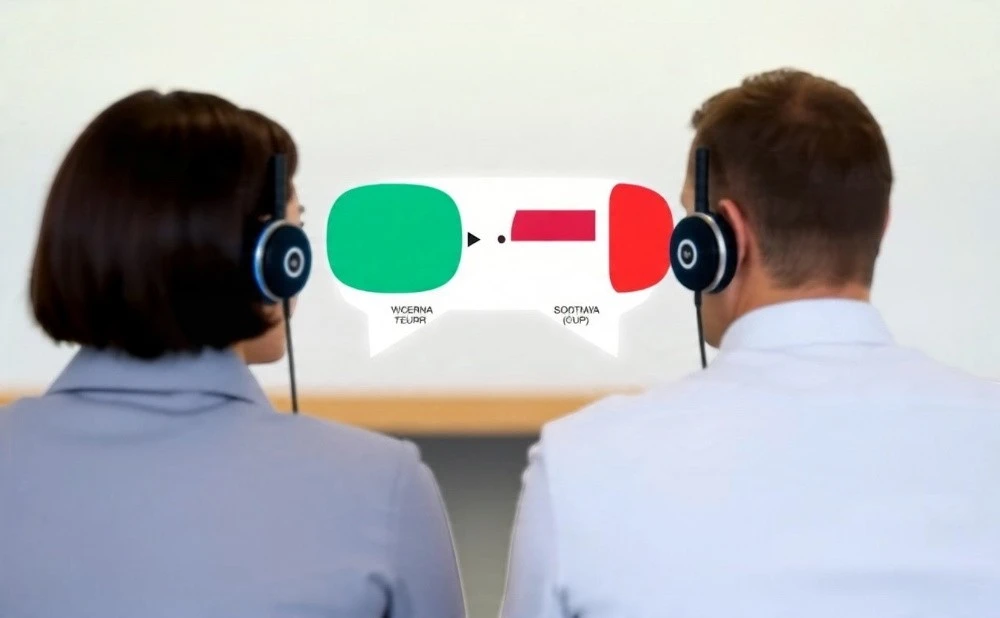
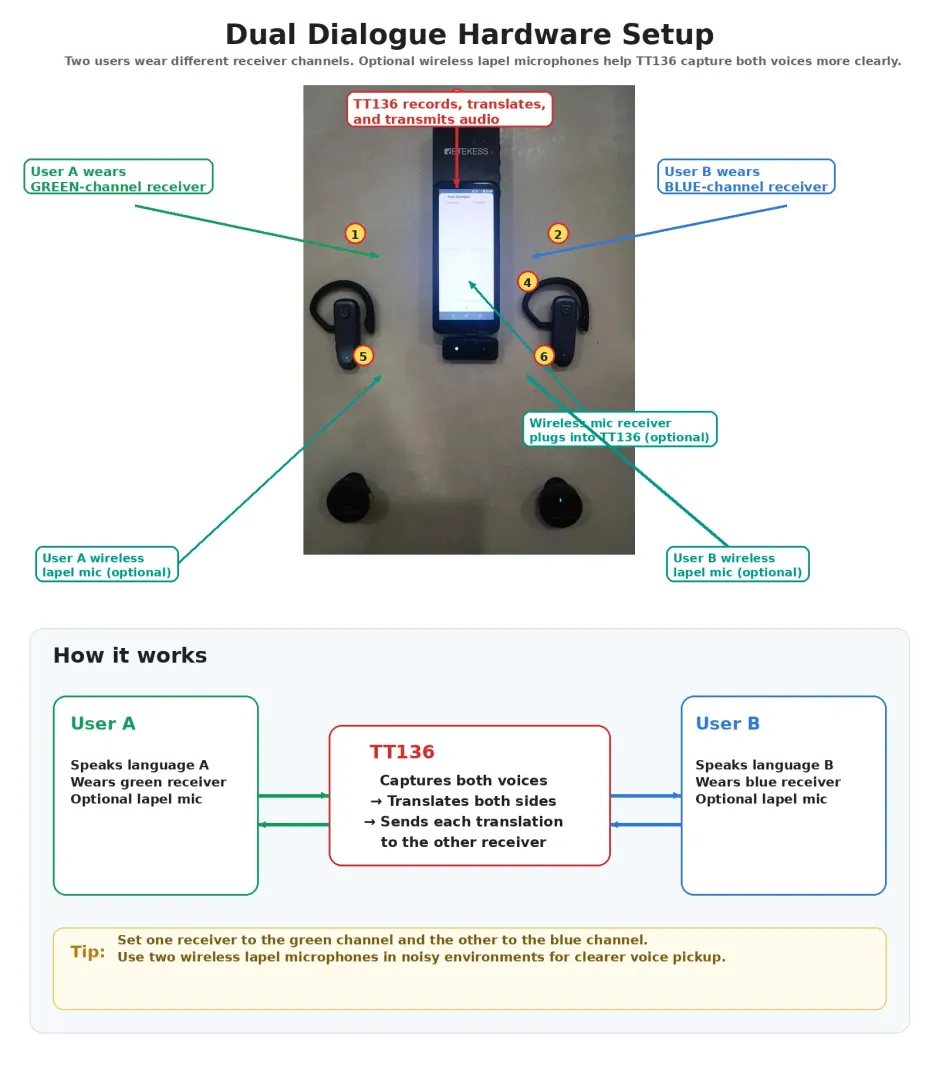
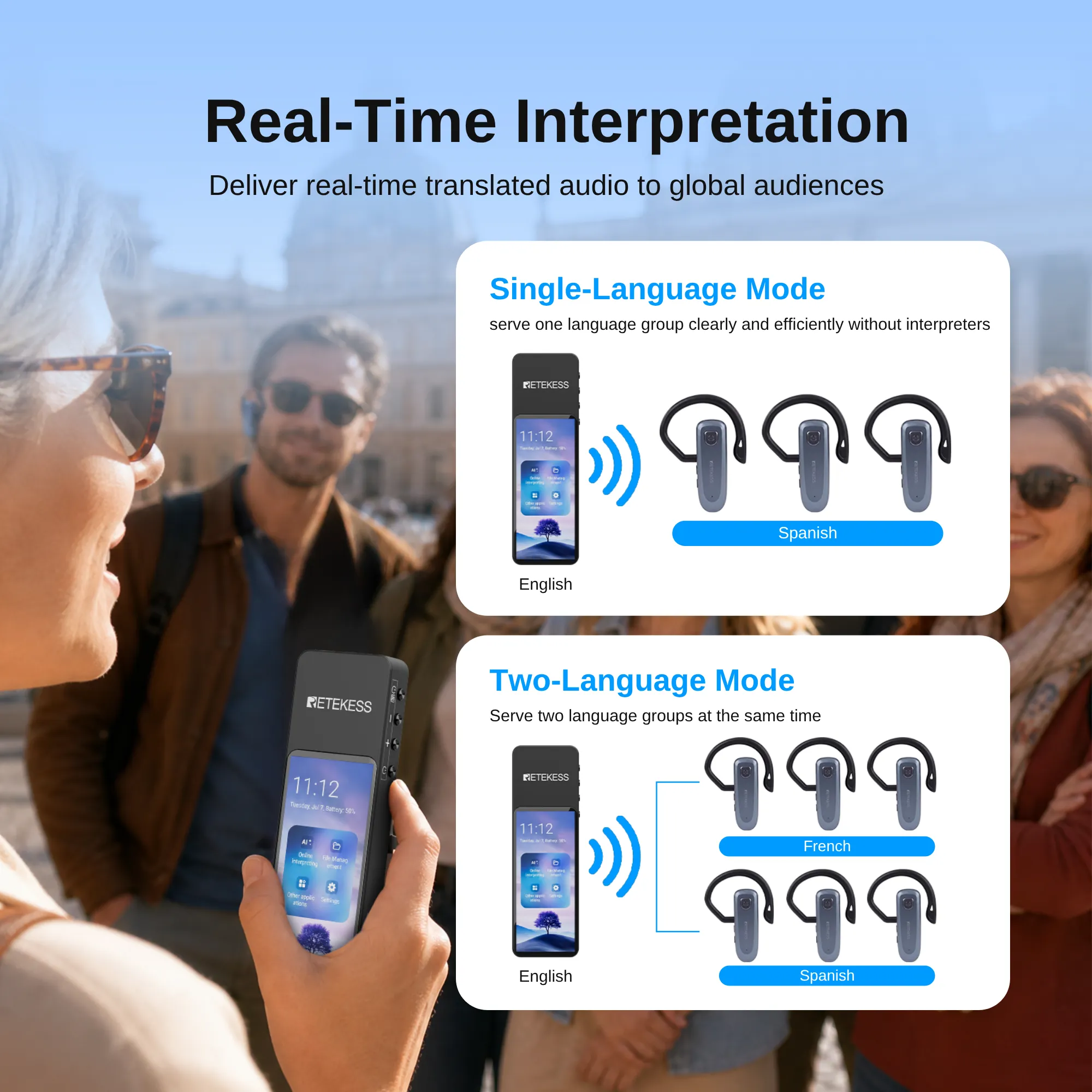
You set two output languages. Group A wears receivers on one channel, group B on the other — the blue and green channel separation. When someone in group A speaks, group B hears the translation on their channel, and the reverse works identically without any reconfiguration. Both sides can interrupt, ask and answer in the way a meeting actually flows.
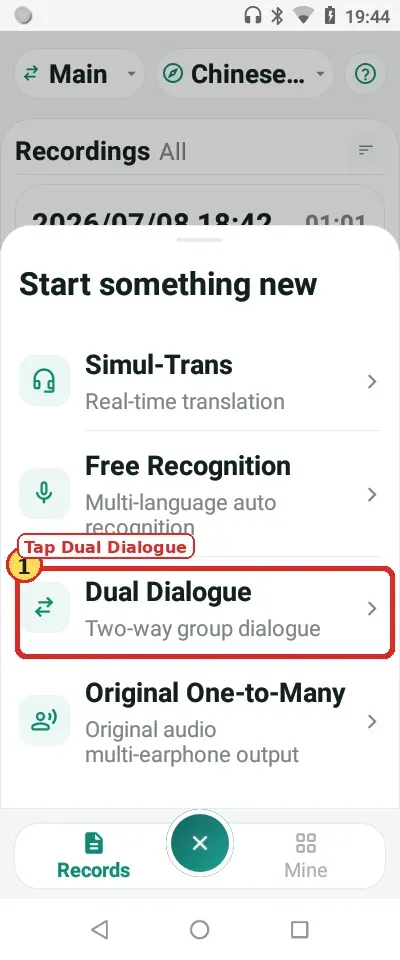
Step 1: Open Dual Dialogue
Tap + on the APP home page, then tap Dual Dialogue.
Step 2: Set up receivers and optional microphones
User A wears the green-channel receiver and User B wears the blue-channel receiver. Optional wireless lapel microphones can improve pickup clarity in noisy environments.
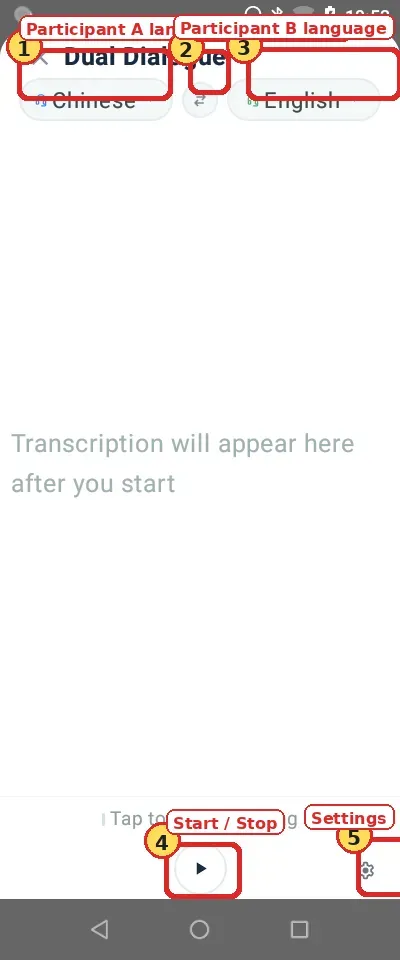
Step 3: Set both languages and start
Set the left language for User A and the right language for User B. Use the center button to swap languages. Tap Start / Stop to run or end the session.
Tip: If using only the TT136 built-in pickup, both users should speak close to the device. For clearer two-way translation, use the optional wireless lapel microphones.
7. A Field Example: Machine Builder Meets a Buyer Delegation
An Italian packaging machinery manufacturer hosts a six-person buyer delegation from China for a two-day audit. The agenda mixes a narrated plant walkthrough with a seated technical Q&A, an area where phone apps and earbuds consistently fail because of machine noise and the number of participants.
- Walkthrough: TT136 in bilingual broadcast, host speaks Italian, delegation hears Chinese, plus a second channel if a third nationality joins.
- Technical Q&A: switch to two-way dialogue mode, two language groups, questions flow both directions on separate channels.
- Outcome: no interpreter day rate, no eight-week booking lead time, no smartphones handed to visitors on a factory floor, and a recording plus AI summary of the session on the 3.99-inch touchscreen for the follow-up quote.
For the contract-signing session at the end, the sensible move is different: bring in a qualified human interpreter. AI handles the walkthrough and the technical exchange; a human handles the clause that matters.
Alt Text: A plant host and a visiting delegation holding a two-way translated conversation on a factory floor using a portable two way translator device
8. When an Interpreter Does Two-Way Better
Two-way AI translation is now good enough for commercial, operational and pastoral conversation. It is not good enough for these:
- Contract negotiation, M&A and anything with liability language.
- Medical consent, diagnosis and dosage.
- Court, deposition, asylum and immigration proceedings.
- Rare language pairs with thin training data.
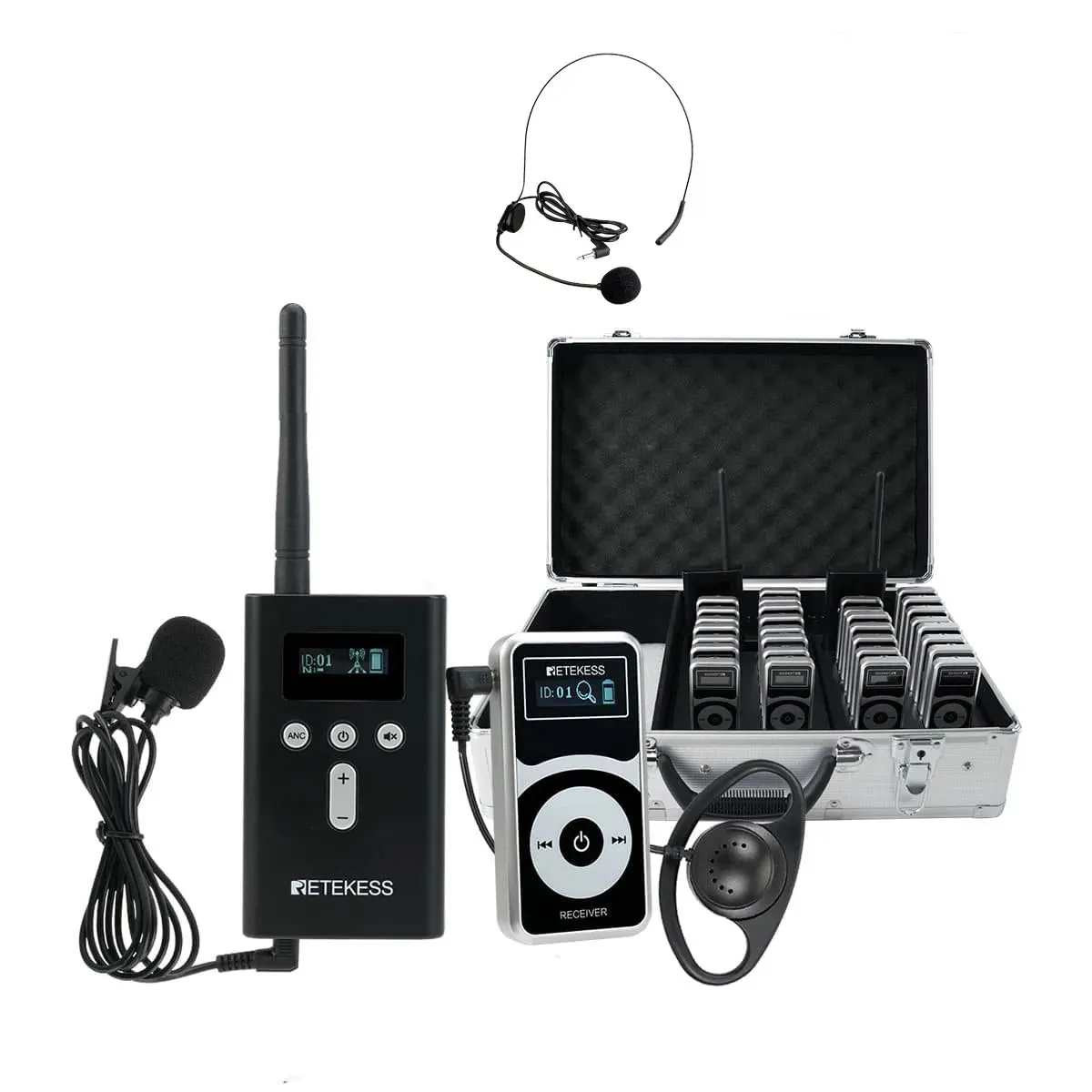
For those, the equipment question is which interpreter system to buy. TT117 is the value multi-channel workhorse for churches and small organisations that run a volunteer interpreter. TT118 and TT119 add desktop console ergonomics with an interpreter monitor, so the translator hears the source language cleanly through a headset and has a mute key for coughs and pauses — the professional detail that separates a usable booth from a frustrating one.
Note the operational standard: under ISO 23155:2022 and AIIC practice, sessions longer than about 45 minutes call for two interpreters per language pair, rotating every 20 - 30 minutes. Budget accordingly, and let the AI device cover the parallel sessions.
9. Two-Way Setup Checklist
- Confirm the two languages and the direction of each before the session starts.
- Assign channels to groups and physically label receivers if both groups are in the same room.
- Test on the venue network. A phone hotspot is the standard fallback for online translation.
- Keep the transmitter microphone close to the speaker mouth, especially in noise.
- Run a thirty-second live test with a real sentence, not a stock phrase — jargon is where engines fail first.
- Agree a hand signal for "repeat that", because it will happen.
- Record the session where policy allows; the TT136 supports recording and AI summarisation on-device.
- Decide in advance which questions escalate to a human interpreter.
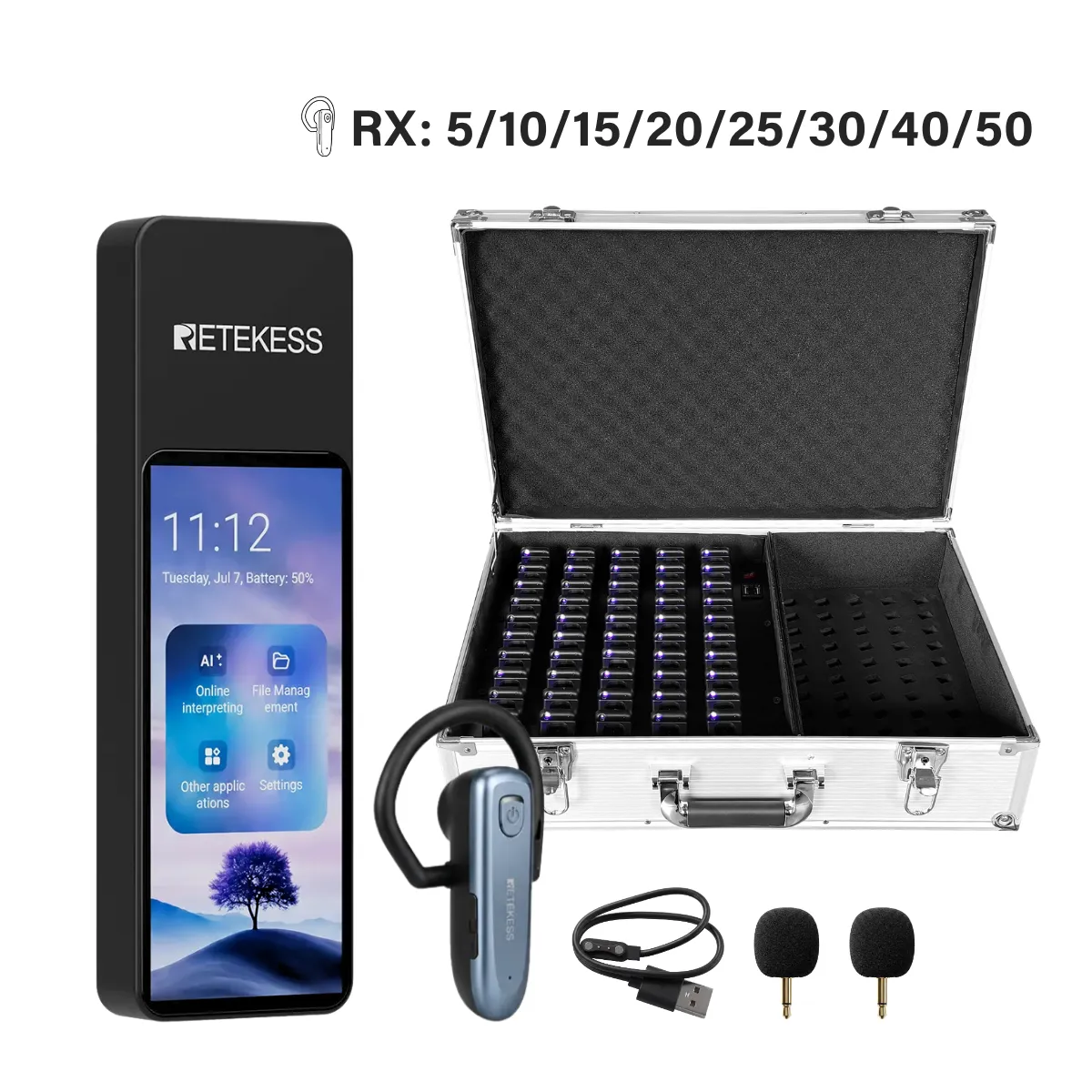
- Charge and sanitise receivers in the 30-slot or 50-slot UV case between groups.
FAQ
What is a two way translator device?
Strictly, a device that translates in both directions without manual reconfiguration. In practice most products sold as two-way are alternating one-way, where you switch direction between speakers. True group two-way means each language group receives on its own channel and either side can speak at any time.
Do translation earbuds do two-way?
They do alternating one-way for two people, usually by passing one earbud to the other person or by touching a mode button. They cannot do two-way for a group, because there is only one listener per pair.
Can twenty people have a two-way translated conversation?
Yes, with a dual-channel group system such as the TT136: two language groups of any size, each on its own receiver channel, both able to speak and both hearing translation.
Does two-way translation work without internet?
Online engines are materially more accurate, so plan on connectivity via Wi-Fi or a phone hotspot. Offline modes exist on some handheld devices but degrade noticeably, and they are usually single-listener anyway.
Should I just hire an interpreter instead?
For high-stakes, rare or regulated content, yes. For recurring operational conversation — audits, trainings, tours, parent nights — an AI two-way device removes the scheduling lead time and the day rate. Many organisations run both: interpreter for the signing, AI for everything around it.
Conclusion
Two-way translation is not a feature you tick; it is an architecture you choose. Match the level to the conversation: one-way for narration, dual-channel for meetings and audits, interpreter relay for anything that ends in a signature or a diagnosis.
The Retekess TT136 is the only device in its class that covers single-language broadcast, bilingual broadcast and true two-way group dialogue in one unit — which is why it is the practical default for organisations whose multilingual reality changes shape several times in a single day.
Leave a Reply

![[18th Anniversary] 18 Years of Echoing Excellence: Making Communication Easier, Connecting Trust Beyond Borders](https://res.retekess.com/z_file/20260716/retekess-brand-story-making-communication-easier_20260716151044_7682.jpg)
![[18 Years in Wireless Communication] Silent Disco Systems Anniversary Celebration: Top-Selling Headphones & Event Mechanics Revealed!](https://res.retekess.com/z_file/20260713/18-years-in-wireless-communication-silent-disco-systems-anniversary-celebration_20260713175011_5749.webp)
![[Anniversary Carnival] Ding-dong! 18th Anniversary Mega Sale on Guest Paging & Calling Systems: Full Reveal of 12+ Products & Promo Rules!](https://res.retekess.com/z_file/20260713/18th-anniversary-mega-sale-on-guest-paging-calling-systems_20260713175257_0295.webp)
![[Retekess 18th Anniversary Teaser] Tour Guide System Exclusive Perks: Sneak Peek at Event Dates & Mechanics!](https://res.retekess.com/z_file/20260713/retekess-18th-anniversary-tour-guide-system-exclusive-perks--2-_20260713180135_6435.webp)
Follow Us
Pay With


 Google
 Amazon
Comments (0)