
Table of Contents
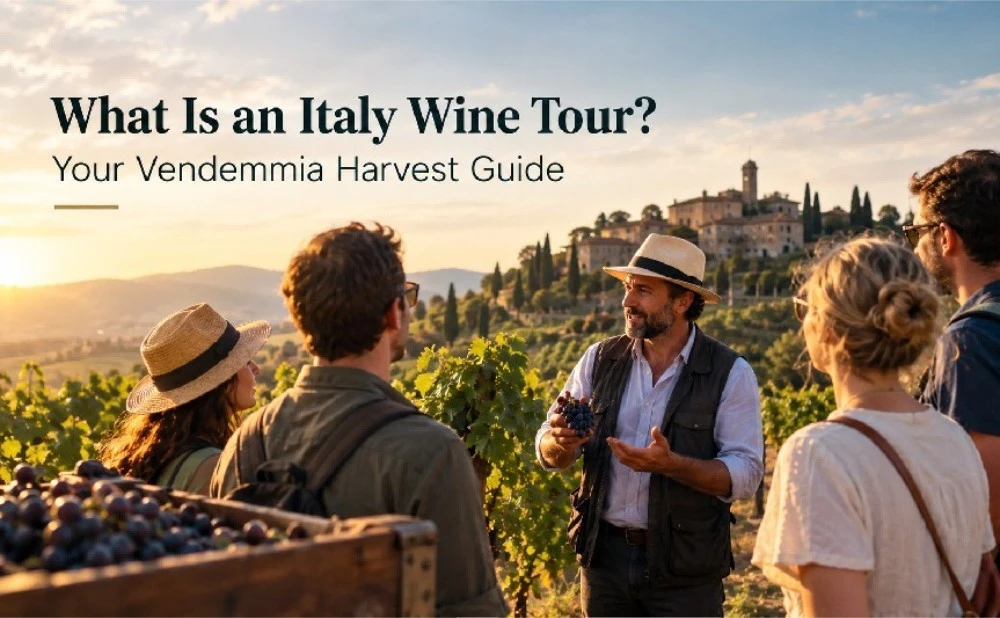
What Is an Italy Wine Tour? Your Vendemmia Harvest Guide
- Retekess
- Oct 12, 2026
Vendemmia is the Italian word for the annual grape harvest. It runs from late July through October, moving north and uphill as fruit ripens. Coastal Tuscany starts in late August. Chianti Classico and Piedmont peak in the second and third weeks of September. Montalcino's late-ripening Sangiovese often finishes in October.
That leaves a four-to-six-week window when wineries open their vineyards and working cellars to visitors. An Italy wine tour booked in this window does not look like a standard tasting. Guests cut fruit with shears, walk production floors, and take part in grape stomping.
The bookings hide a paradox. Guests pay premium prices for hands-on immersion, yet immersion itself makes the guide's hardest job—delivering specialist knowledge—much harder. Spread-out, moving, hands-busy, noisy groups hear less, not more, at the exact moments that justify the price.
The Economics of a Harvest Tour
Wine tourism is a profit center for Italian wineries, not a side activity. Mordor Intelligence puts 2025 winery-tourism turnover at €3.1 billion. It supplies 21 percent of an average winery's revenue and up to 35 percent for small estates.
The vendemmia experience sits at the top of the price ladder. A four-hour harvest session at a Buttrio winery in Friuli runs about €50 per person. Tenuta Torciano in Tuscany charges €250, with a winemaker-led harvest lesson, cellar visit, grape stomping, and vineyard lunch. A standard tasting often costs €15 to €30.
What creates that tenfold gap? Not the physical labor. Anyone can snip a bunch of grapes. Guests pay for the winemaker beside them explaining why one Sangiovese row is picked today and the next row next week. They pay for fermentation logic, tannin structure, and the story linking a vineyard slope to the glass.
That knowledge converts into sales. Wineries forecast 16.8 percent annual visitor growth and 21.4 percent growth in direct sales. The numbers move together because guests buy wine after they understand it.
The model runs on small groups—typically 2 to 20 people—limited by vineyard capacity, tools, and safety. In a 15-person small group wine tour, one guest who misses the commentary is seven percent of the product delivered.
Demand keeps strengthening. Italy's ministry of tourism recorded 30,000 U.S. travelers on food-and-wine holidays in 2025, double the year before. Great Wine Capitals puts the core wine-tourist age at 45 to 65: high spenders who pay for depth and tolerate sloppy delivery poorly. Top Chianti harvest tours on Viator carry "likely to sell out" warnings four to six weeks ahead. Grapes ripen on a fixed clock. Operators cannot add last-minute tours to fix a weak winery tour product.
The Delivery Paradox, Stage by Stage
A standard tasting keeps guests seated, still, and quiet in one room. Commentary reaches everyone. A wine harvest tour does the opposite. It spreads guests out, keeps them moving, puts tools in their hands, and surrounds them with noise. Every stage leaks information.
The vineyard: competing for the same attention. Guests scatter down vine rows that can stretch 200 meters. They hold shears and crates. Wind runs constantly. The guide faces a hidden trade-off: immersion means hands-on picking, while teaching means stopping and clustering people. Each call of "gather around" breaks the labor rhythm. Without those calls, the terroir and ripeness explanations reach only the three people nearest the winemaker. A Tuscany wine tour that keeps interrupting picking for lectures turns harvest into a photo stop.
The working cellar: densest content, worst acoustics. The cellar holds the most technical content of the day—crushing, fermentation temperature, maceration times, oak regimes. Pumps and presses run continuously. Stone, concrete, and stainless steel bounce sound around the room. Guests must also keep a safety distance from machinery. Raising the voice in a reverberant room only blurs consonants further. The highest-value segment of a vineyard tour is where speech intelligibility collapses.
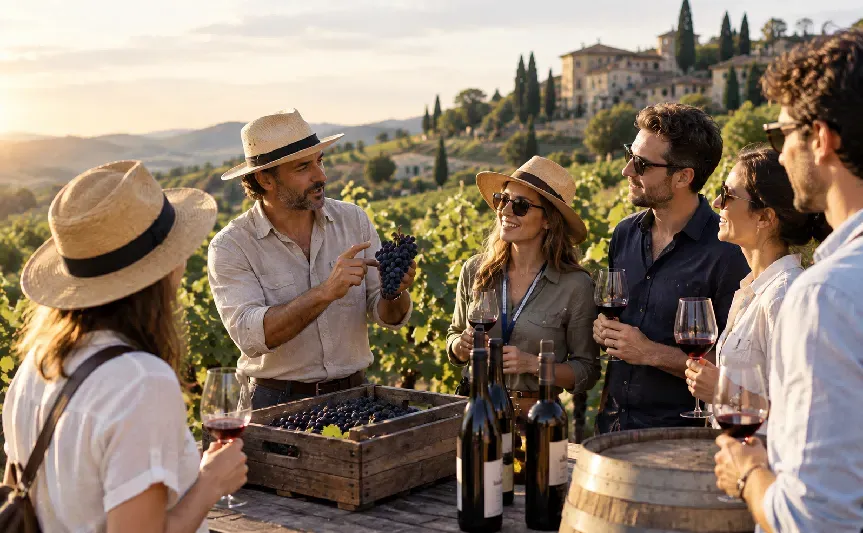
Grape stomping: peak emotion, drowned instructions. Grape stomping is the emotional peak. Laughter and splashing fill the space. This stage also carries the clearest safety instructions: rinse feet, hold the rail, follow the treading rhythm, exit on cue. Spoken cues reach their lowest delivery rate exactly when guests need firm direction. That is both an experience risk and a liability risk.
The tasting: a broken feedback loop. The wine tasting returns to a quiet room. Hearing is easy again, but three or four hours of lost information cannot be recovered. Guests who missed the vine-row talk on clones and the cellar talk on fermentation cannot connect the glass to anything they saw. The wine tastes "good" and stops there. The cognitive loop—seeing the site, grasping the process, recognizing it in the glass—is what makes guests carry bottles home. Break the loop and direct sales lose their anchor.
The language layer. Multilingual groups compound every stage. The problem is not generic translation. A city-tour bilingual guide cannot reliably render maceration, tannin, or terroir. Interpreters who understand winemaking are scarce, and every winery competes for the same people in September. Guests paying €250 from the U.S., Germany, Scandinavia, and Japan expect their own language. The market already shows the workaround. A Marriott-operated Val d'Orcia wine tour uses an English-speaking lead for logistics and an audio app for Japanese, Korean, and Chinese commentary. The model is human plus distributed audio, not a scramble for rare linguists.
How a Wireless Tour Guide System Rebuilds the Chain
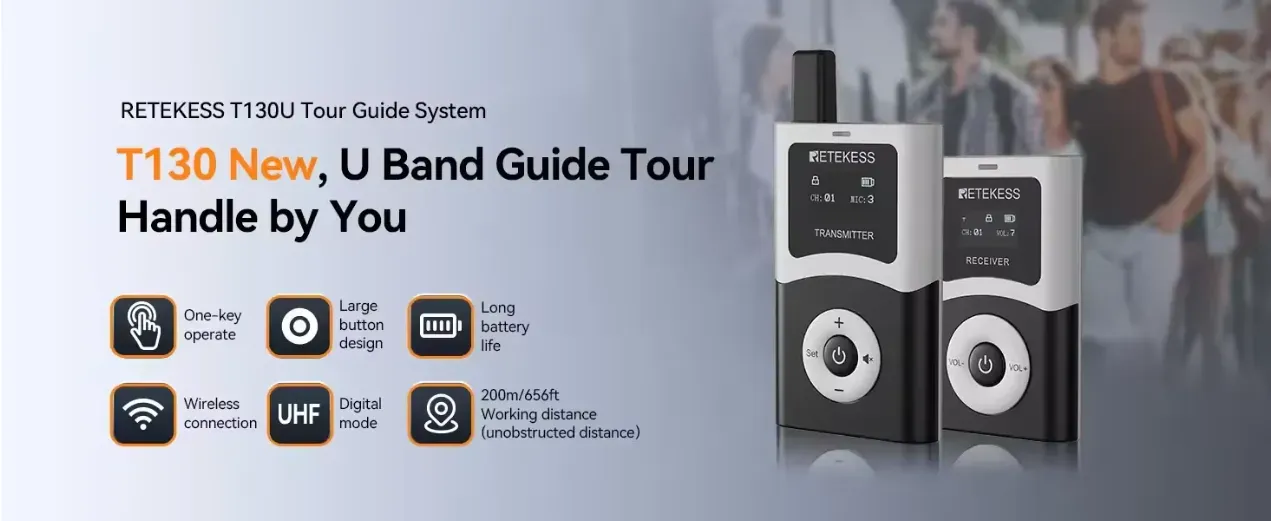
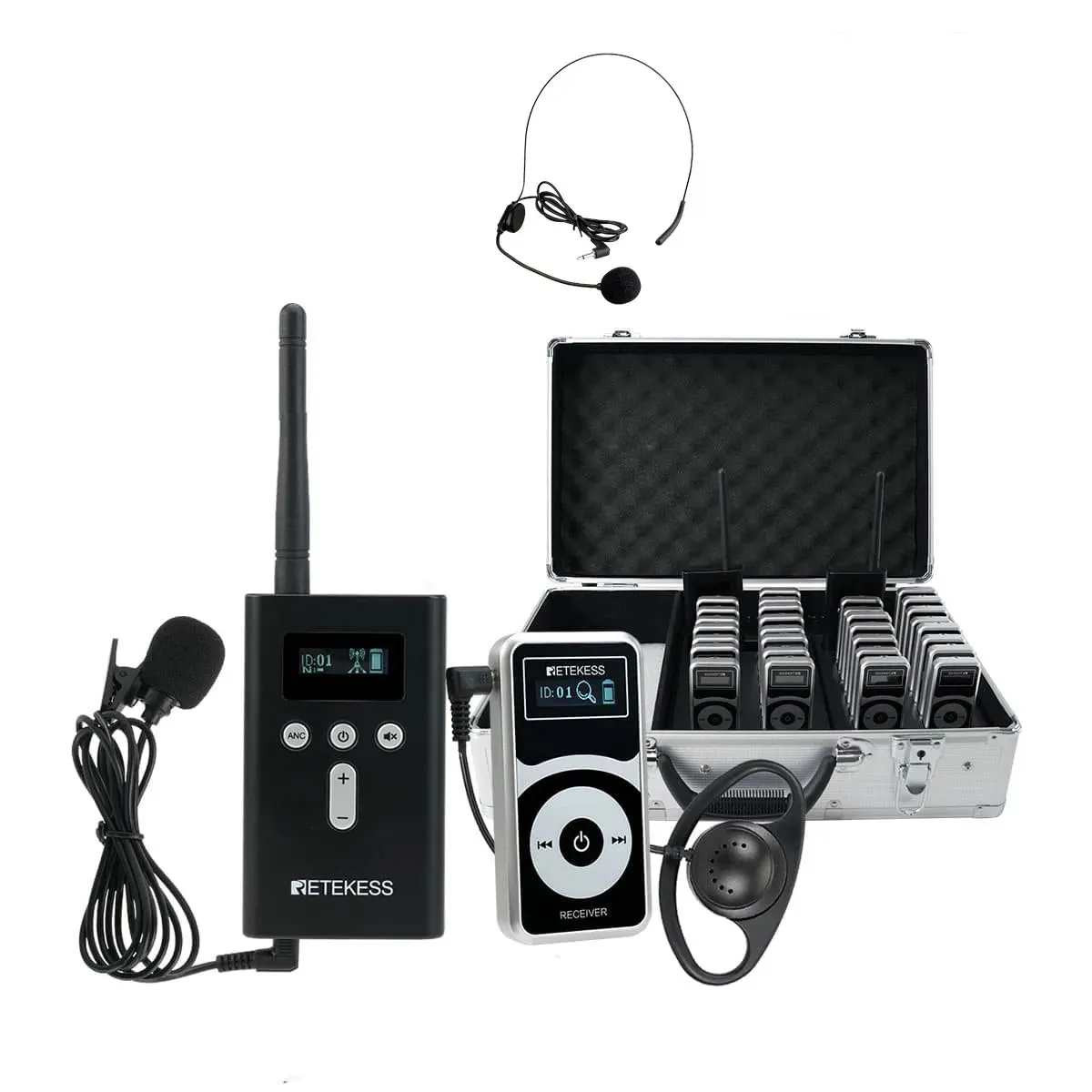
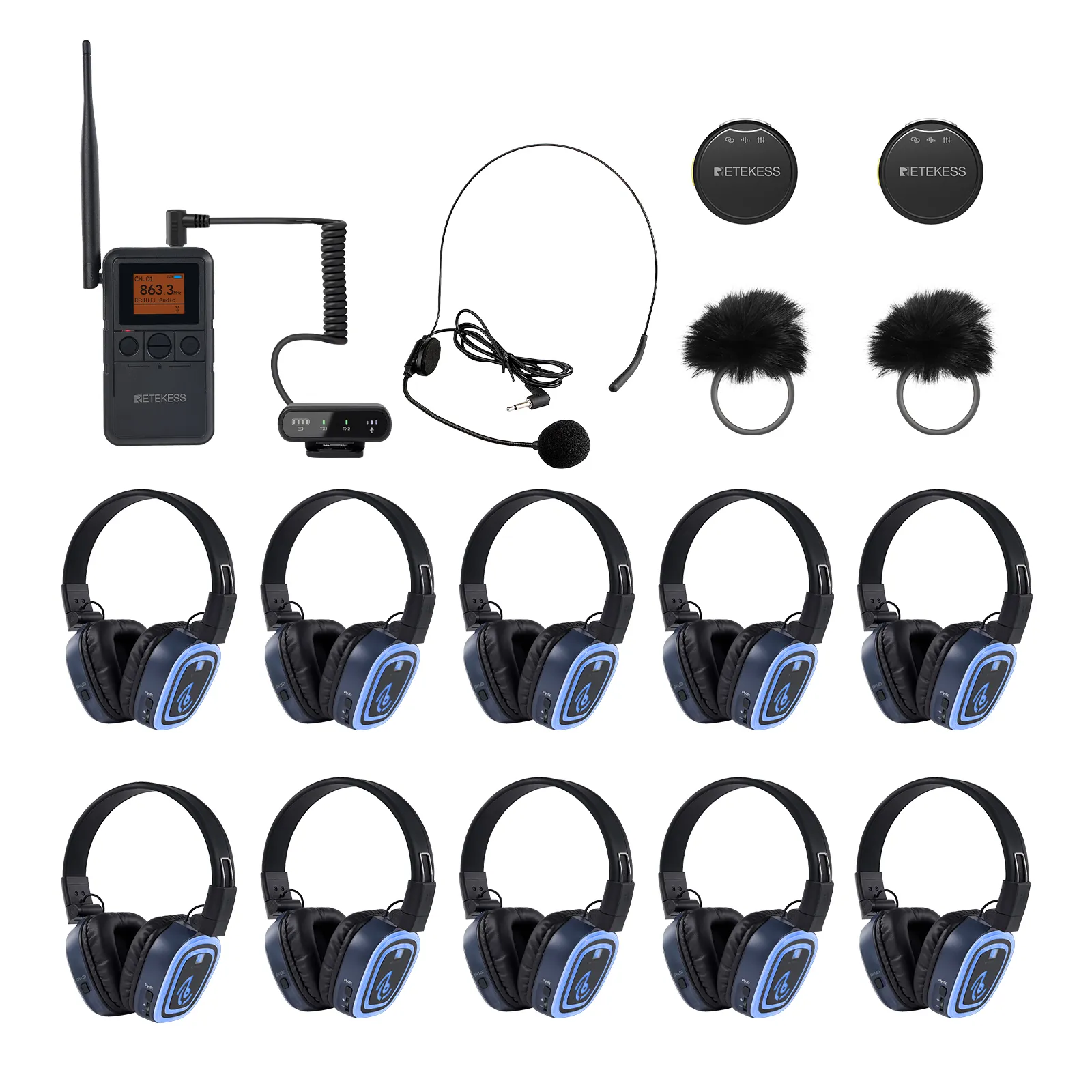
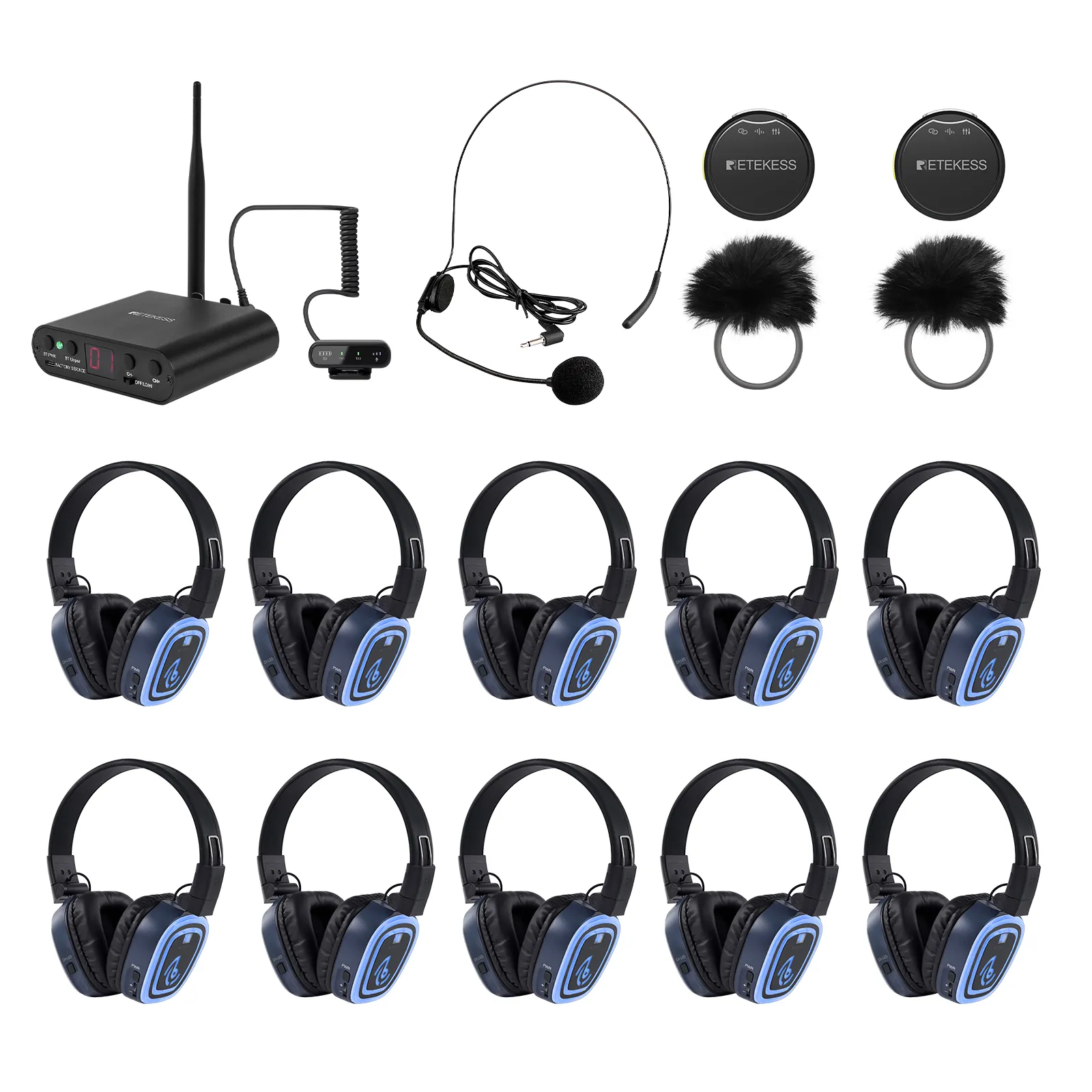
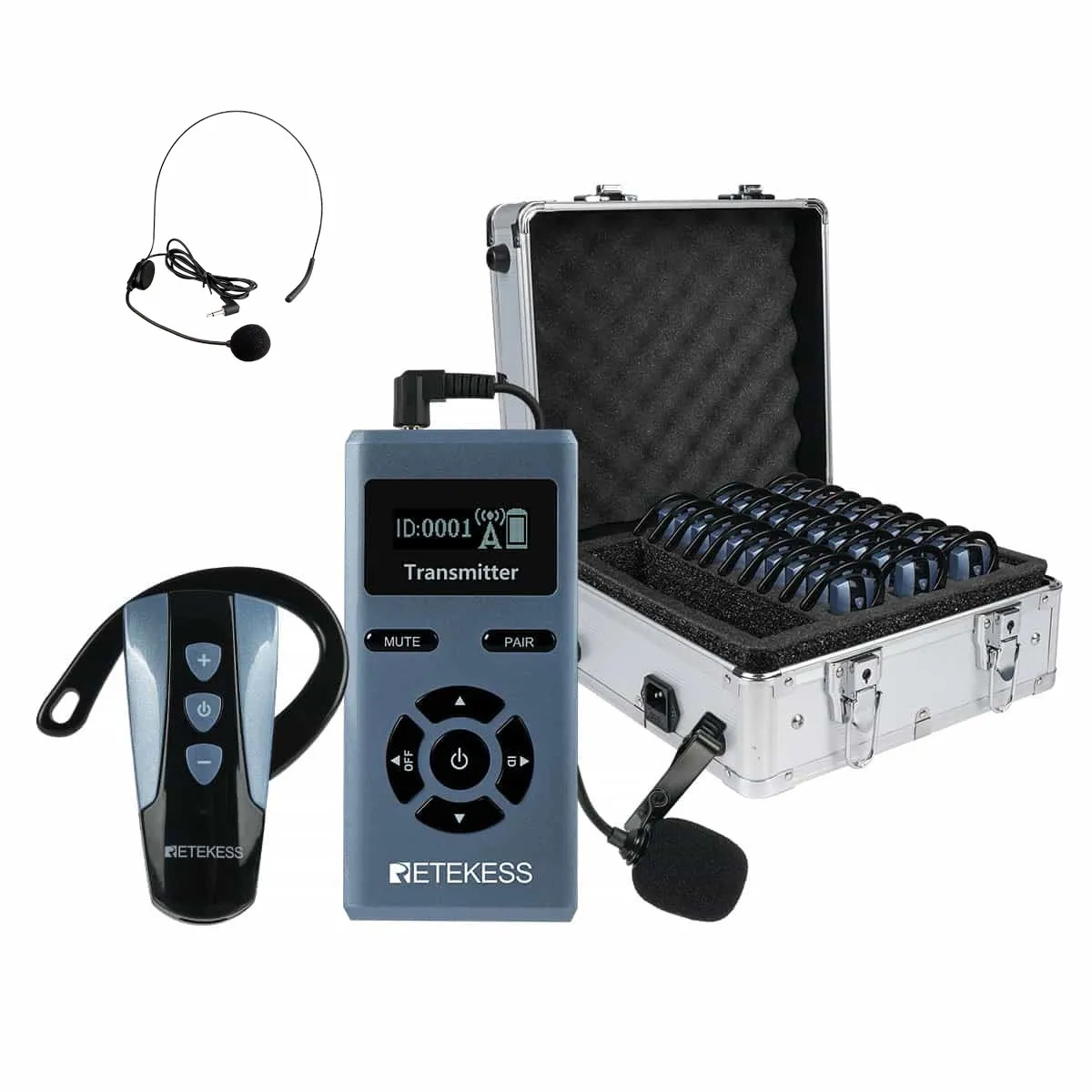
The answer is not louder shouting. It is a wireless tour guide system that moves commentary with the group. Two Retekess setups match harvest conditions: the T130U for vineyard-led days and the T130P for noise-heavy cellars.
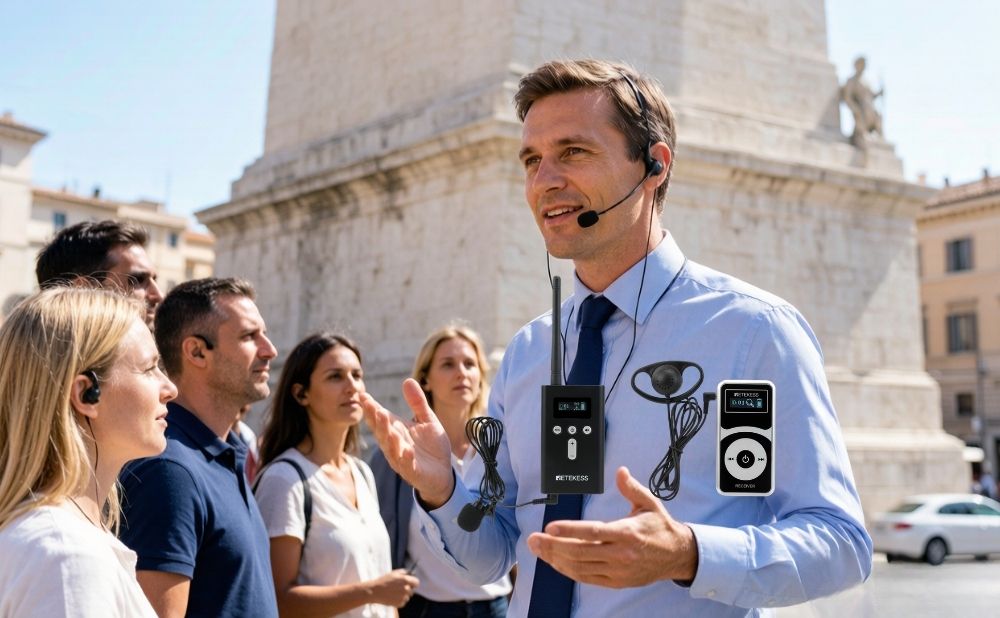
Accompanied listening in the rows. The T130U is a UHF digital tour guide audio system with a 200-meter range. Guests wear lightweight receivers with earpieces and keep hearing the winemaker while they pick. Hands stay busy, ears stay open, and the attention conflict in the vineyard disappears. Guests spread naturally down the rows without clustering on demand. UHF sits outside the crowded 2.4 GHz WiFi and Bluetooth bands, so busy vineyards with multiple connected devices stay stable.
Cellar-grade voice control. Digital modulation suppresses interference and echo. The T130U transmitter offers four microphone gain levels, so a guide adjusts pickup against pump and press noise; receivers offer ten volume levels. For cellars with sustained machinery, the T130P adds four levels of DSP noise reduction and an 80 dB signal-to-noise ratio.
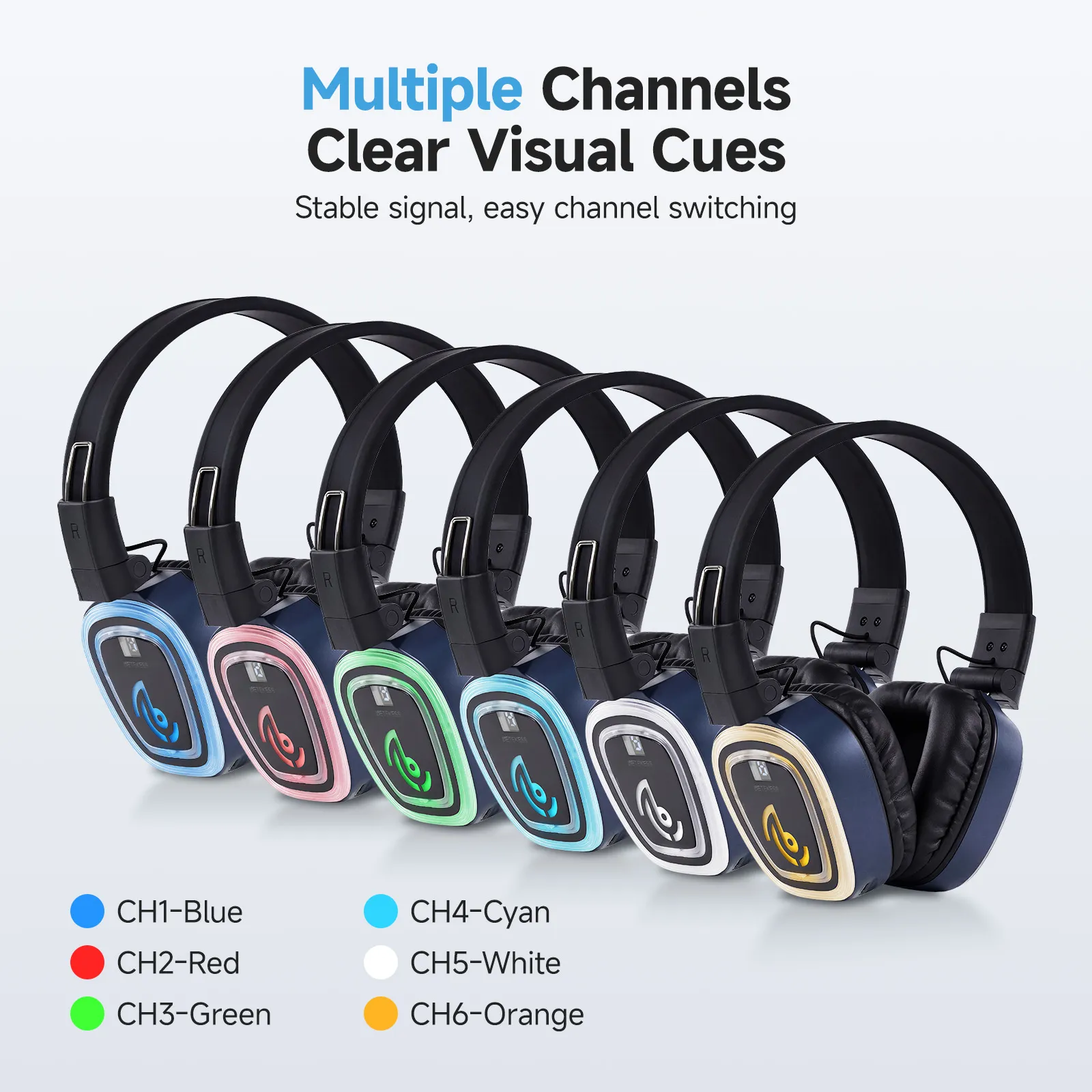
Parallel groups without cross-talk. Harvest weekends put several small groups on one estate at once. The T130U runs 19 channels in the EU version and 50 in the U.S. version; the T130P runs 49. Each group keeps a private channel.
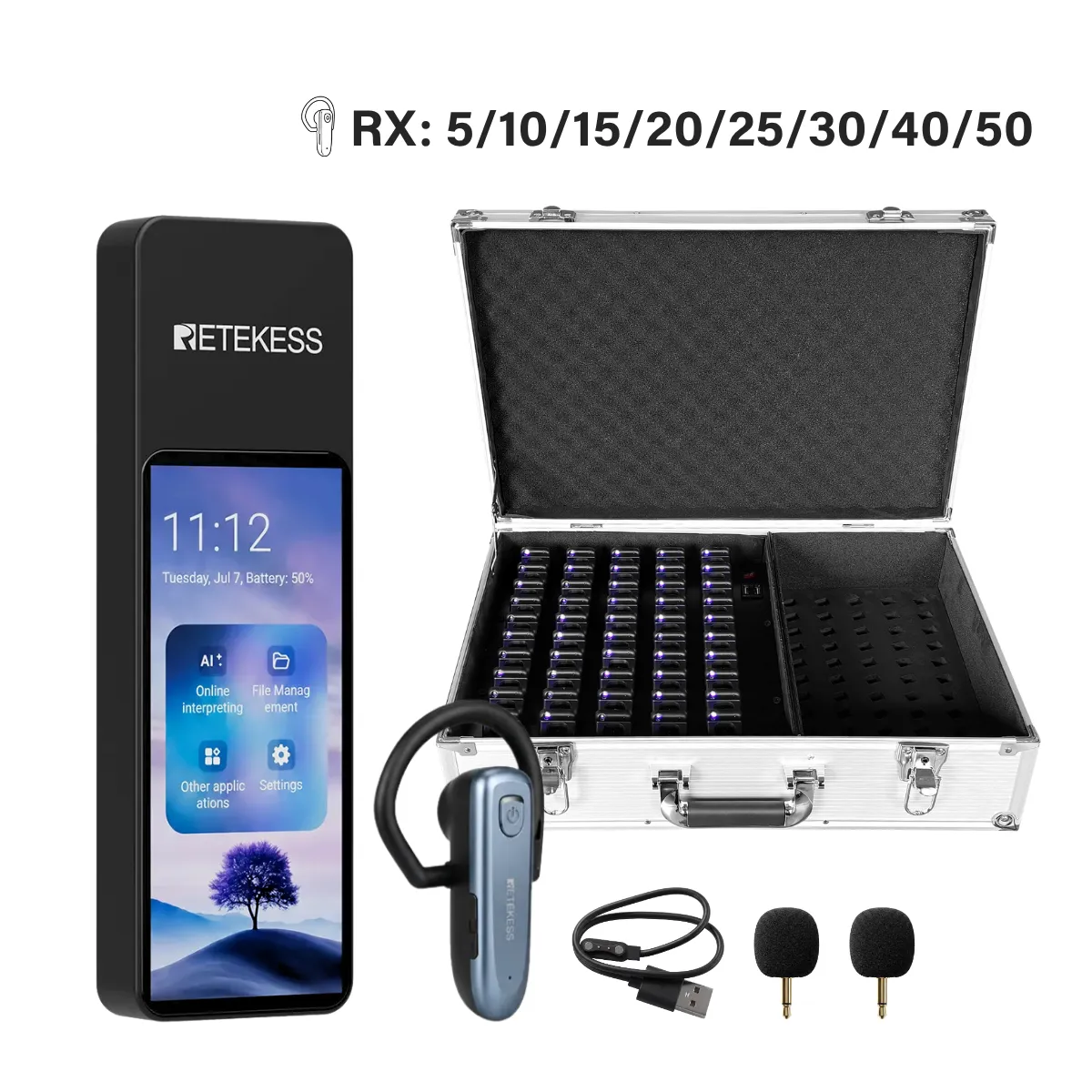
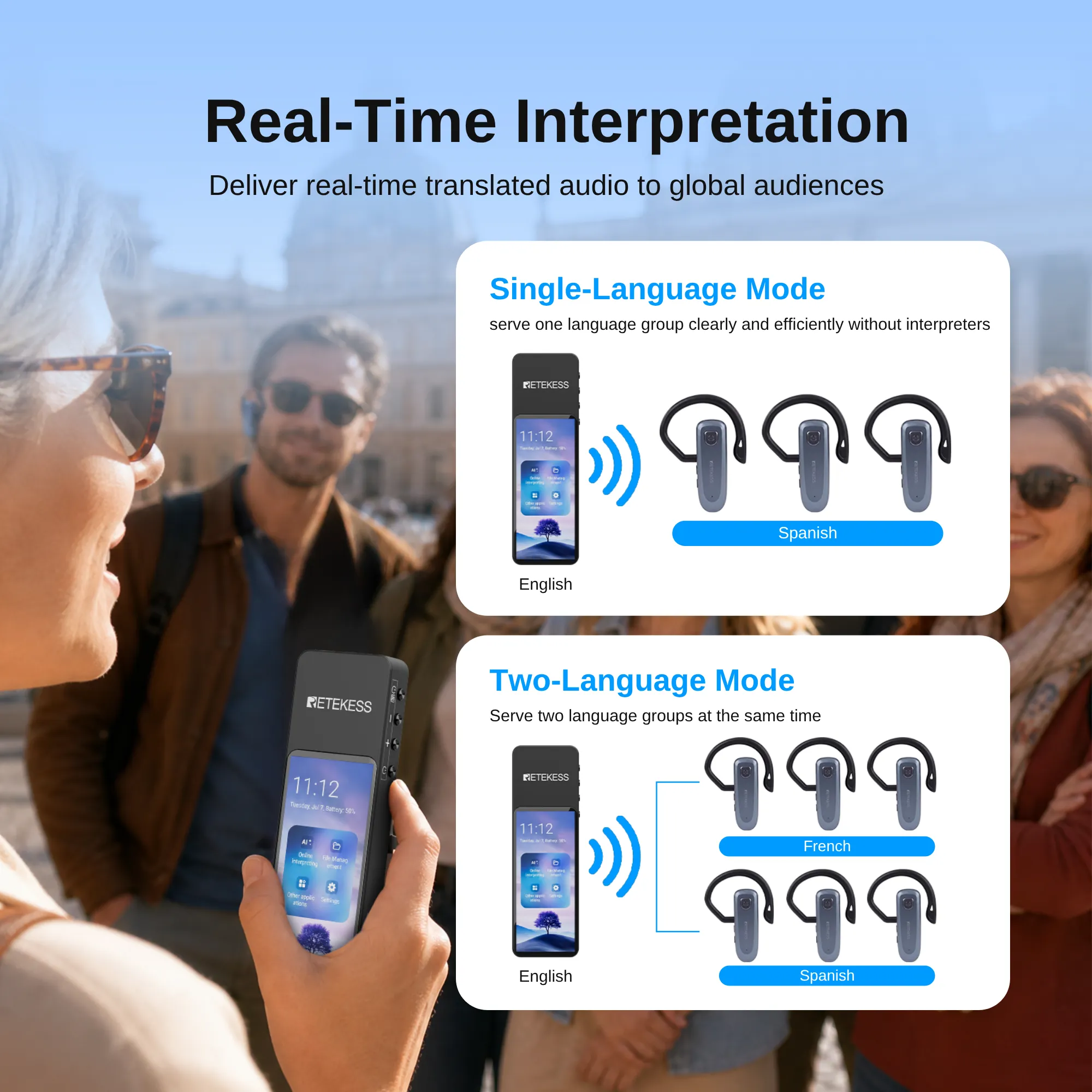
Multilingual content, distributed once. Both systems accept external audio. The T130U supports Bluetooth, microphone, and AUX input. Operators feed in pre-recorded native-language cellar talks or an AI translation device, and the hardware distributes the signal. This routes around the September shortage of winemaking-qualified interpreters. Record the specialist once per language, then run the tour all season.
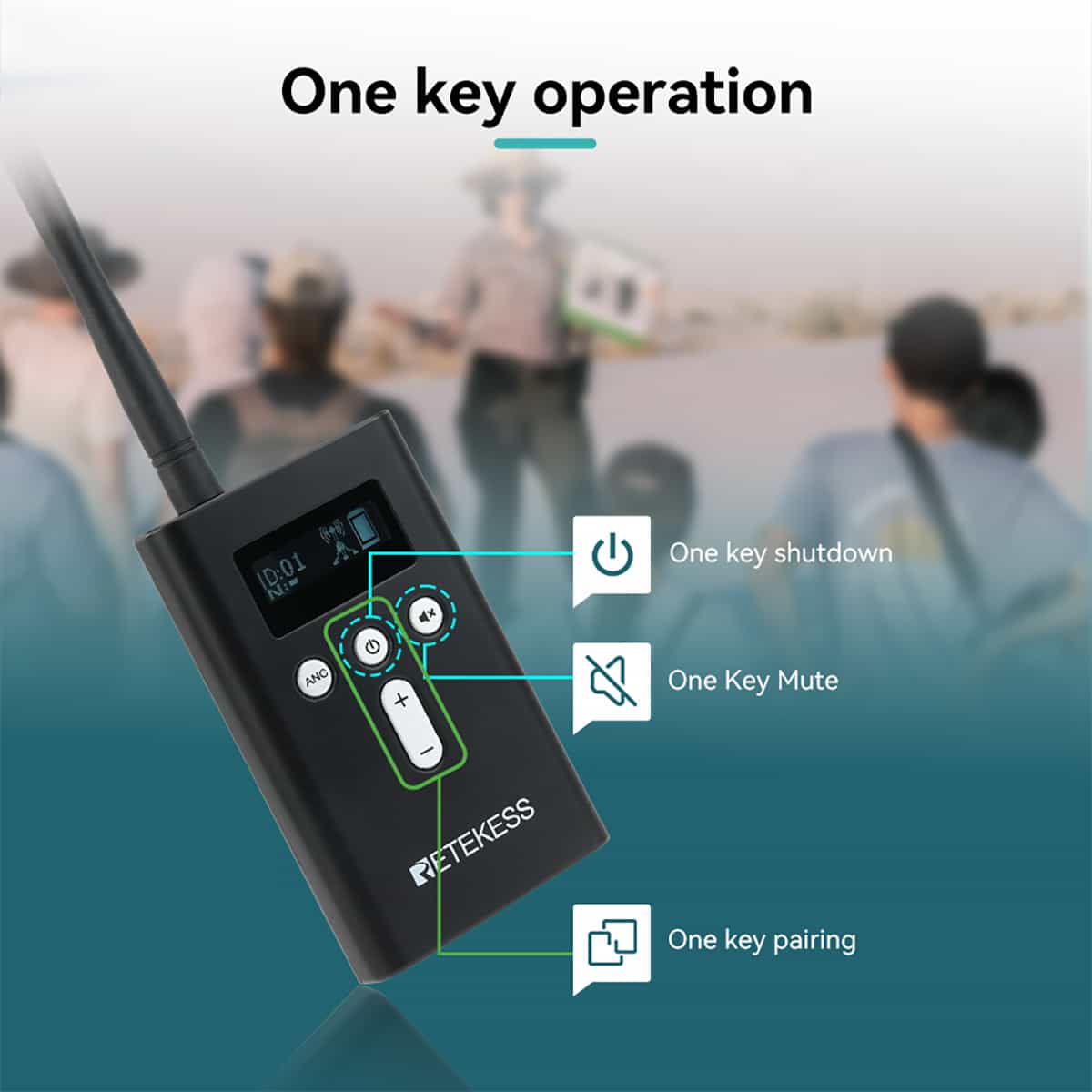
Safety at the stomping trough. A transmitter mute button and one-touch broadcast let the guide cut chatter and send a direct instruction to every receiver. Cue timing and safety direction reach the whole group instantly.
Fast daily turnaround. Harvest operators run one or two tours a day with dozens of devices changing hands. The T130U receiver lasts 40 hours and shuts down after 20 minutes without signal. The transmitter runs 10 hours, weighs 71 grams, and charges while in use. A 32- or 60-slot contact charging case refills the fleet overnight, and replaceable foam covers handle hygiene between guests. One-touch pairing and one-touch shutdown of all receivers cut handout and collection to minutes.
Final Thoughts
An Italy wine tour during vendemmia sells a product no tasting room can replicate: a winemaker's knowledge delivered in the exact place where the work happens. Vineyards belong to the estate, and lunches are easy to copy. The one variable operators fully control is whether that knowledge reaches every guest across a moving, noisy, multilingual day.
Across a four-to-six-week harvest window, commentary reach is experience completion. Experience completion supports premium pricing, bottle sales at the cellar door, and rebookings for the next vintage. The best wine harvest tour is not the one with the loudest voice. It is the one where every guest, in every row and every corner of the cellar, hears the full story. Popular vendemmia experience slots sell out four to six weeks early. The equipment, like the tours, needs to be in place before the grapes ripen.
Leave a Reply


![[18th Anniversary] 18 Years of Echoing Excellence: Making Communication Easier, Connecting Trust Beyond Borders](https://res.retekess.com/z_file/20260716/retekess-brand-story-making-communication-easier_20260716151044_7682.jpg)
![[18 Years in Wireless Communication] Silent Disco Systems Anniversary Celebration: Top-Selling Headphones & Event Mechanics Revealed!](https://res.retekess.com/z_file/20260713/18-years-in-wireless-communication-silent-disco-systems-anniversary-celebration_20260713175011_5749.webp)
![[Anniversary Carnival] Ding-dong! 18th Anniversary Mega Sale on Guest Paging & Calling Systems: Full Reveal of 12+ Products & Promo Rules!](https://res.retekess.com/z_file/20260713/18th-anniversary-mega-sale-on-guest-paging-calling-systems_20260713175257_0295.webp)
![[Retekess 18th Anniversary Teaser] Tour Guide System Exclusive Perks: Sneak Peek at Event Dates & Mechanics!](https://res.retekess.com/z_file/20260713/retekess-18th-anniversary-tour-guide-system-exclusive-perks--2-_20260713180135_6435.webp)
Follow Us
Pay With


 Google
 Amazon
Comments (0)