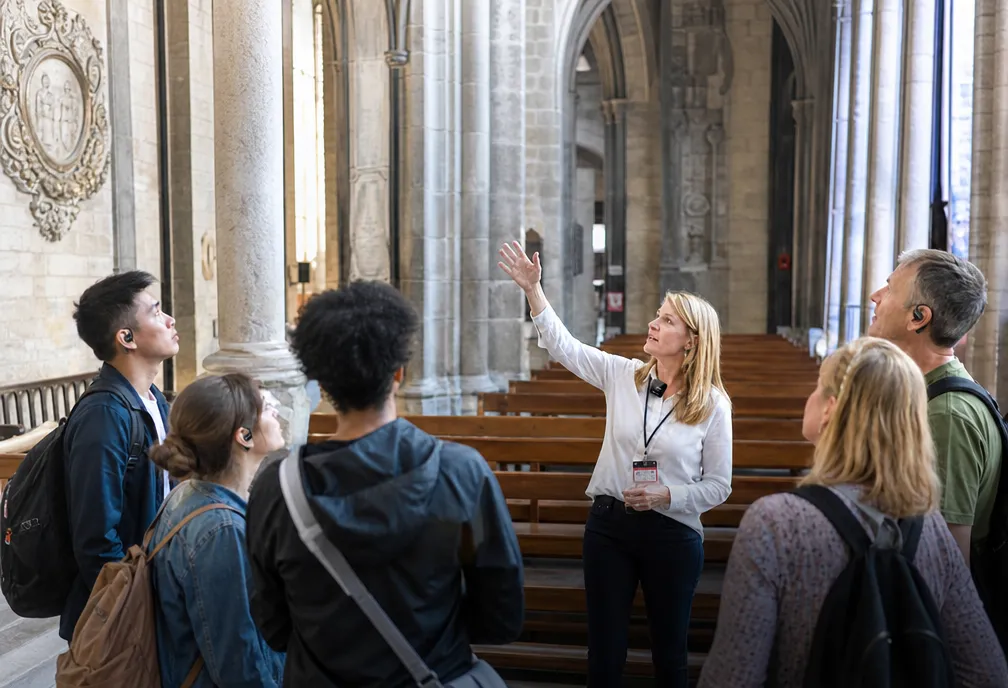
Indoor exhibitions are meant to showcase ideas, products, and brand stories in the best possible light. But in a busy exhibition hall, it is not always easy for every visitor to hear the full message. Background noise, moving groups, and multi-language audiences can quickly make a presentation feel rushed or unclear. That is where an exhibition audio guide system becomes especially useful.
This guide looks at how indoor exhibitions can use wireless tour guide systems to improve clarity, support multilingual communication, and deliver a more polished guided experience.
Exhibition spaces often look clean and controlled, but the listening environment is not always ideal. Even indoors, there can be a surprising amount of noise from other booths, nearby conversations, air conditioning, presentation screens, and foot traffic.
At the same time, exhibition guides are usually leading people who are walking, stopping, looking around, and asking questions. That means the presentation is not static. It needs to work in motion. If visitors cannot hear clearly while moving through the space, they may miss important details or lose track of the story being told.
This is especially important for business events, where first impressions matter. A quiet, clear, and well-organized presentation signals professionalism. A noisy or unclear one can make even a strong brand feel less prepared.
A professional exhibition presentation is not just about having good content. It is also about how that content is delivered. When visitors can hear clearly and follow along without effort, the entire experience feels more refined.
A good guided exhibition should feel:
This is why many organizers now use a wireless guide system instead of relying on voice projection alone. With the right system, the guide does not need to speak loudly over the crowd. Instead, the message is delivered directly to the audience in a way that feels consistent and controlled.
For brand teams and exhibition staff, that creates a much more polished impression. The presentation feels intentional rather than improvised.
One of the biggest advantages of a wireless audio system for indoor exhibitions is that it keeps the presentation flowing naturally. The guide can move from one display to the next without needing to stop and repeat information for people in the back of the group.
This matters because exhibition visitors do not always stand still. They may step closer to a product, turn to look at a display, or pause to take photos. In a normal room setting, that movement can break the audio connection. A wireless setup helps reduce that problem and keeps the group aligned.

It also helps the guide manage the pace of the tour. Instead of constantly adjusting volume or waiting for people to catch up, the guide can focus on explaining the story behind the exhibit. That makes the whole presentation feel smoother and more professional.
For events with multiple visitors at once, this kind of coordination is especially valuable. Everyone hears the same message at the same time, which reduces confusion and keeps the tour on schedule.
Many indoor exhibitions now serve international guests, business partners, and overseas visitors. In those cases, language support becomes just as important as audio clarity. A multilingual audio system for guided exhibitions can help make the presentation more inclusive and easier to follow.
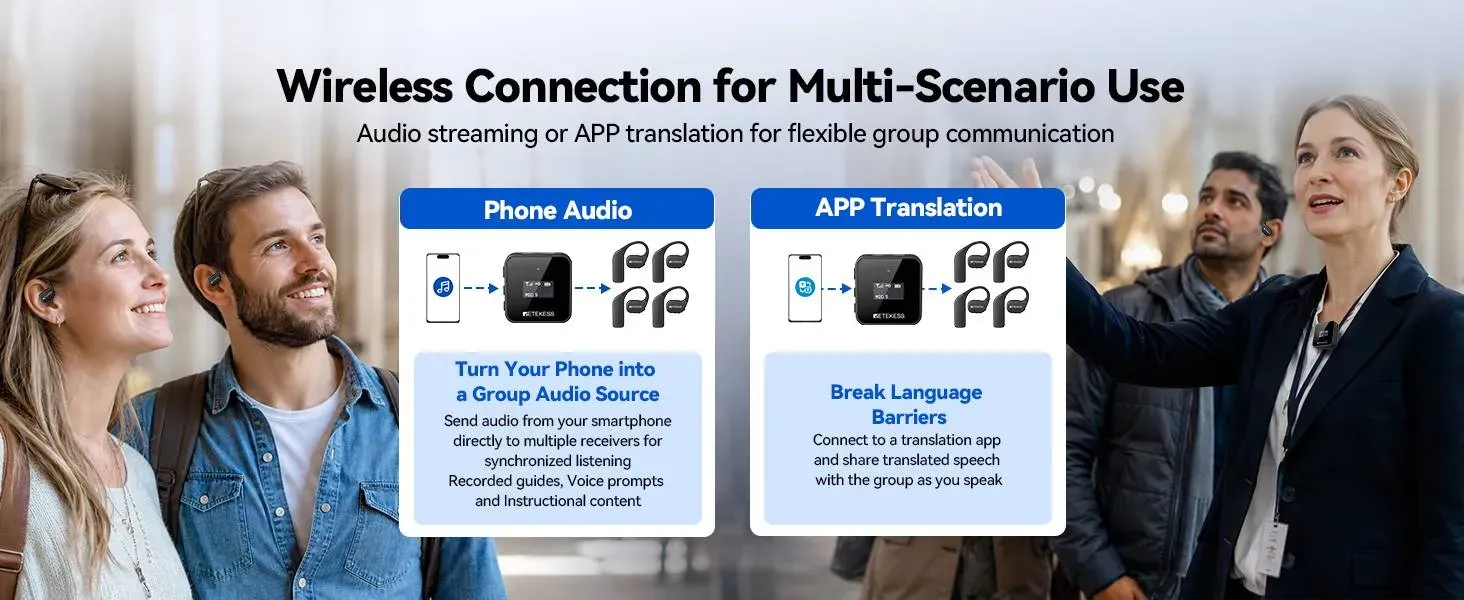
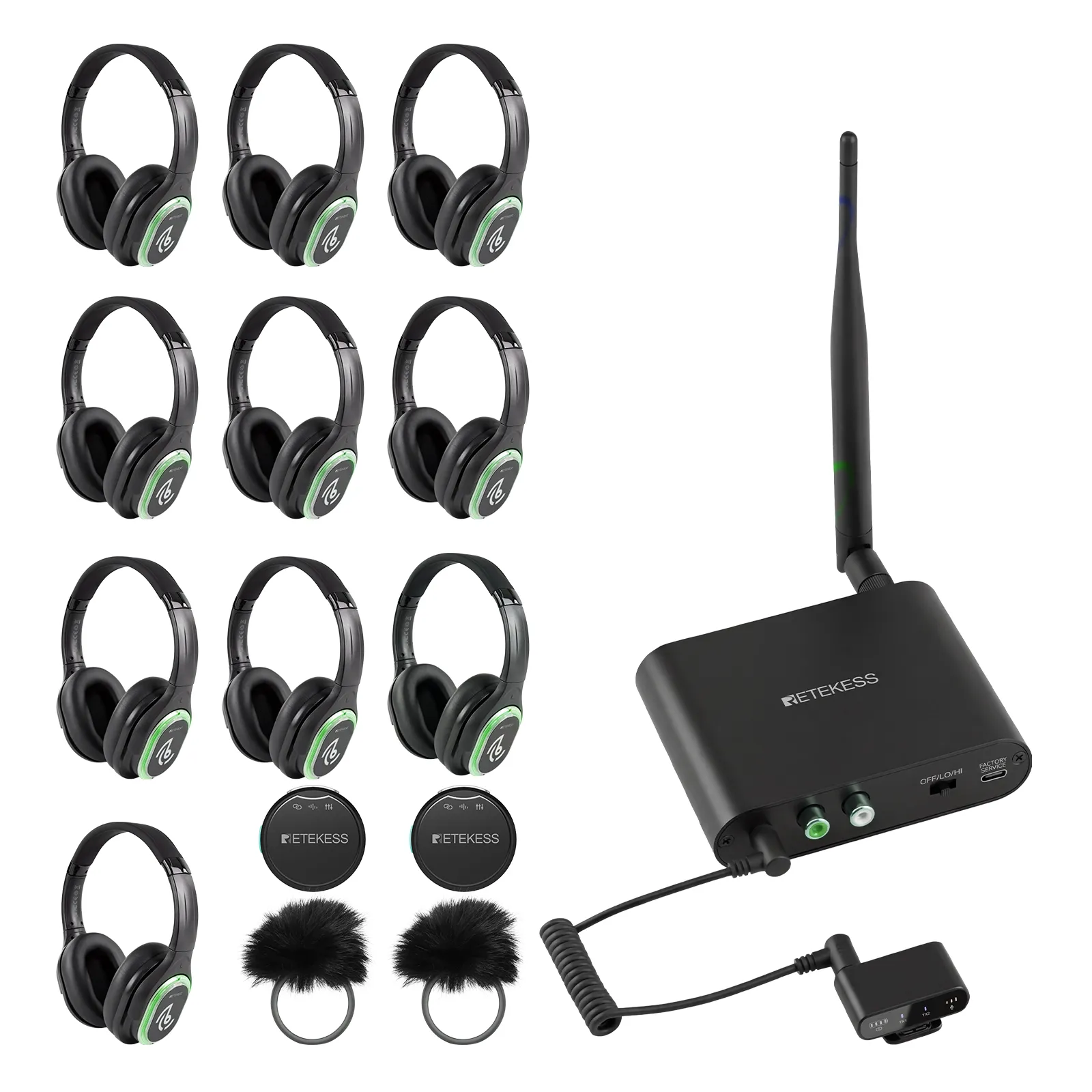
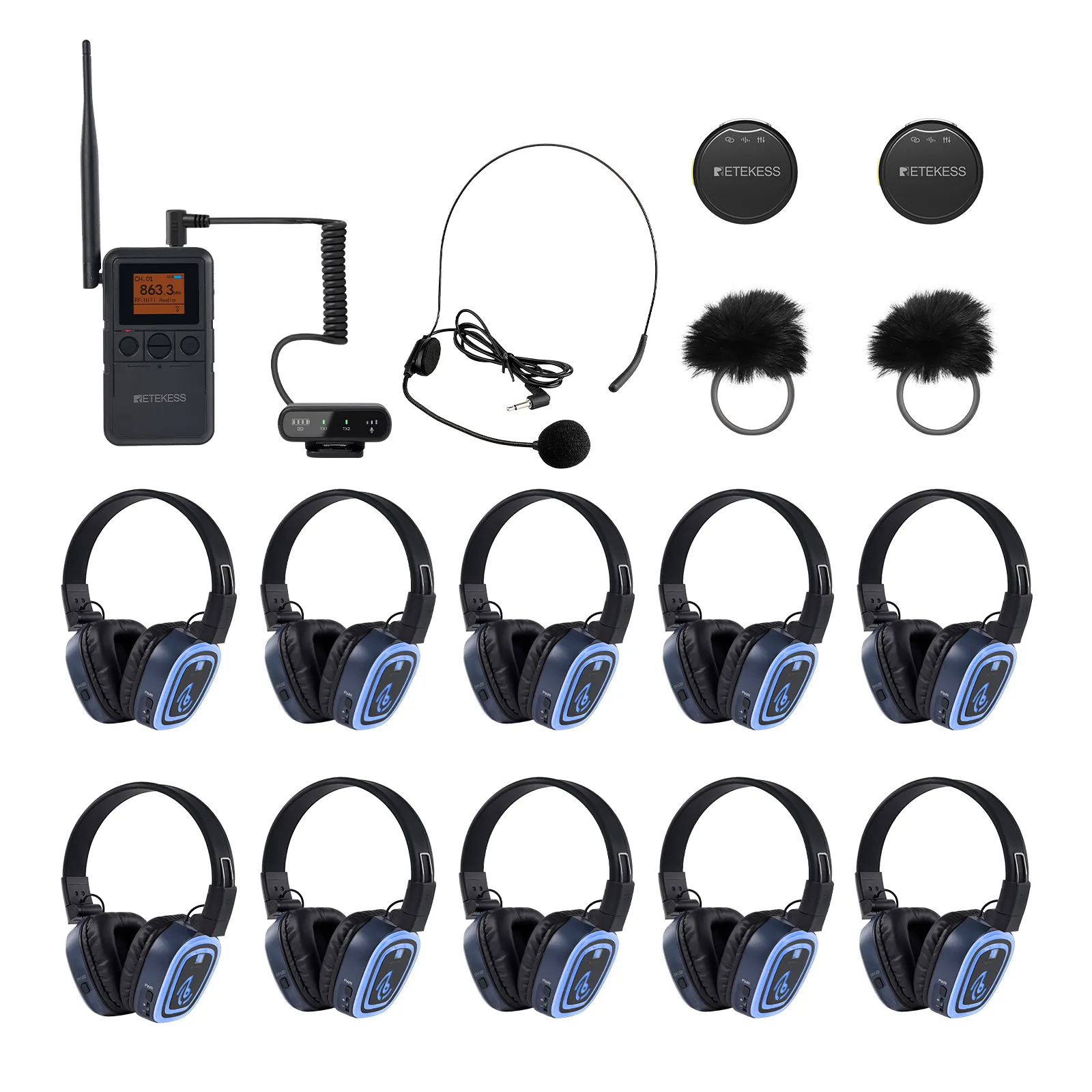
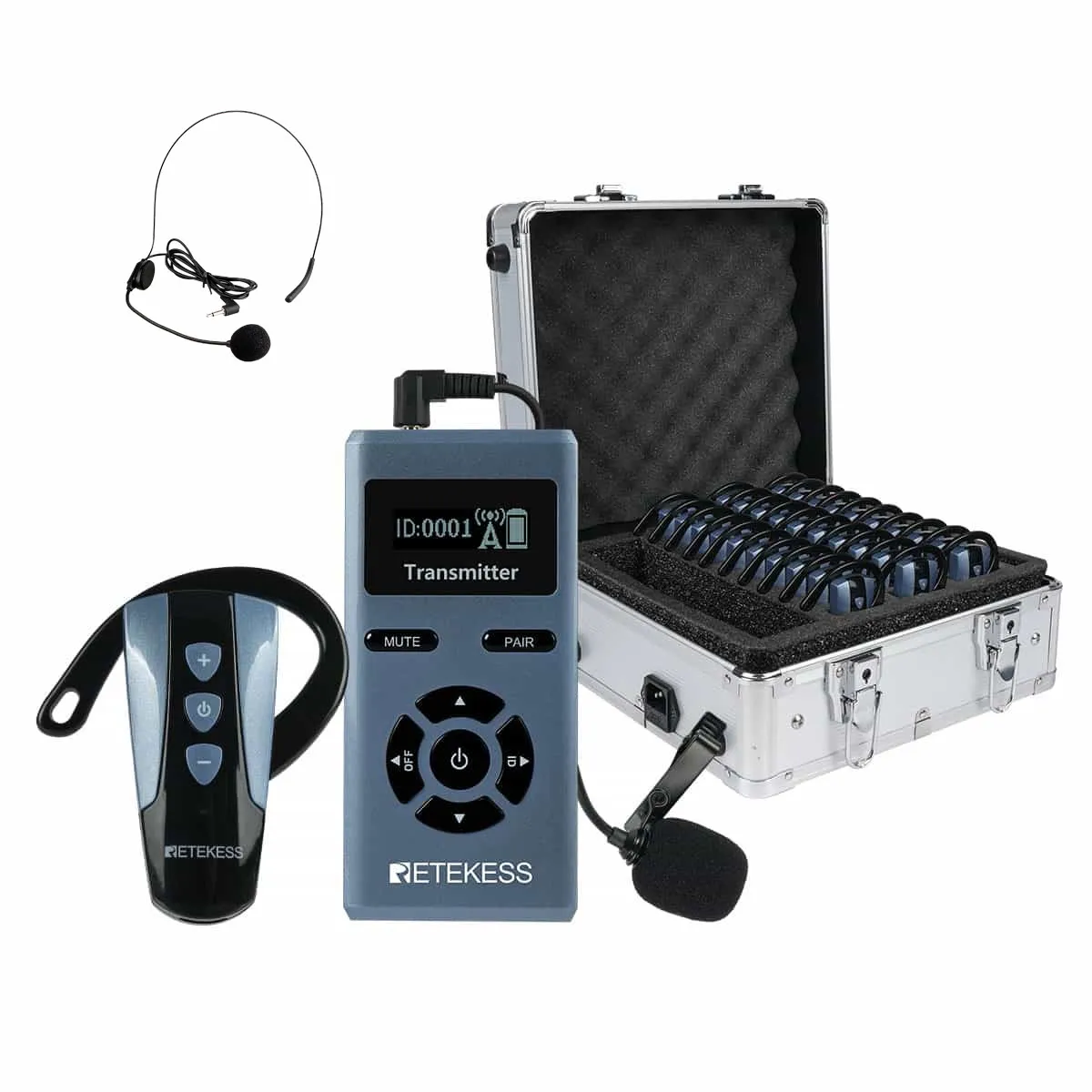
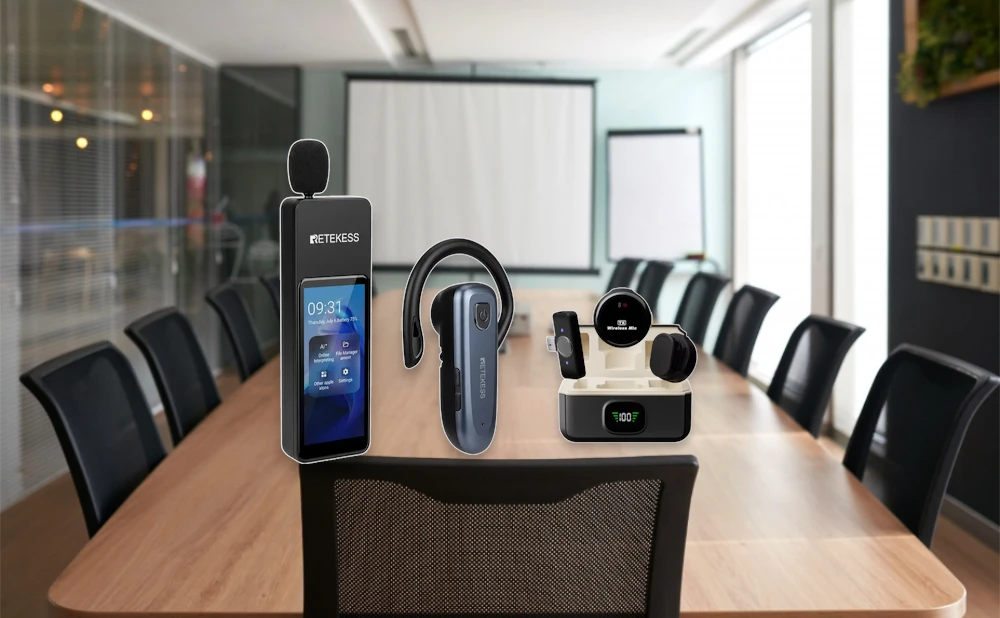
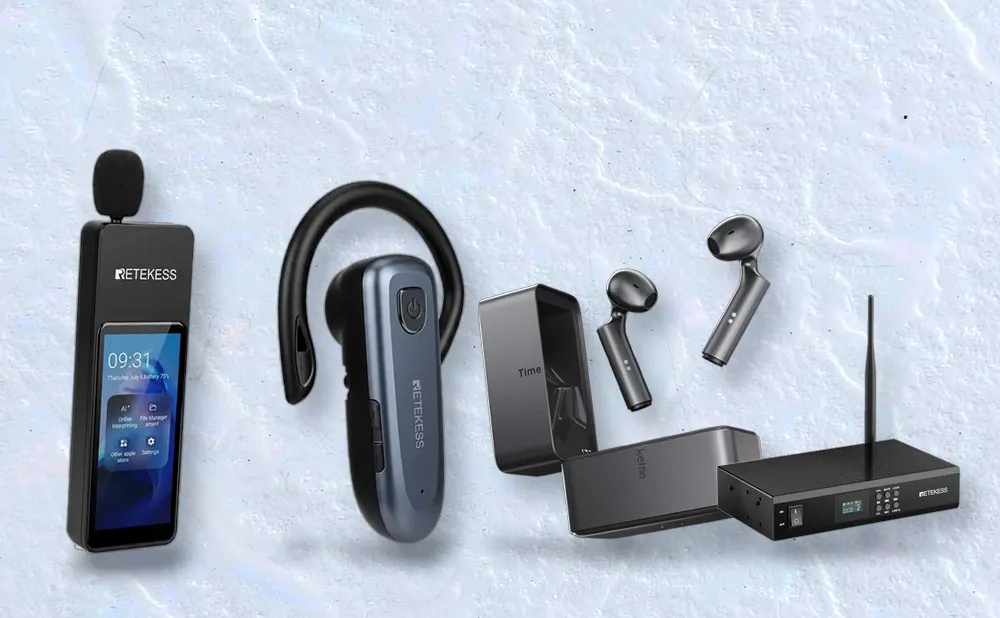
One practical approach is to connect a translation app to the wireless system. For example, a device like Retekess TT135 supports Bluetooth connection to a mobile phone, which makes it possible to route translated speech through the audio setup. That can be very useful when the host team needs to deliver the same guided experience in more than one language.
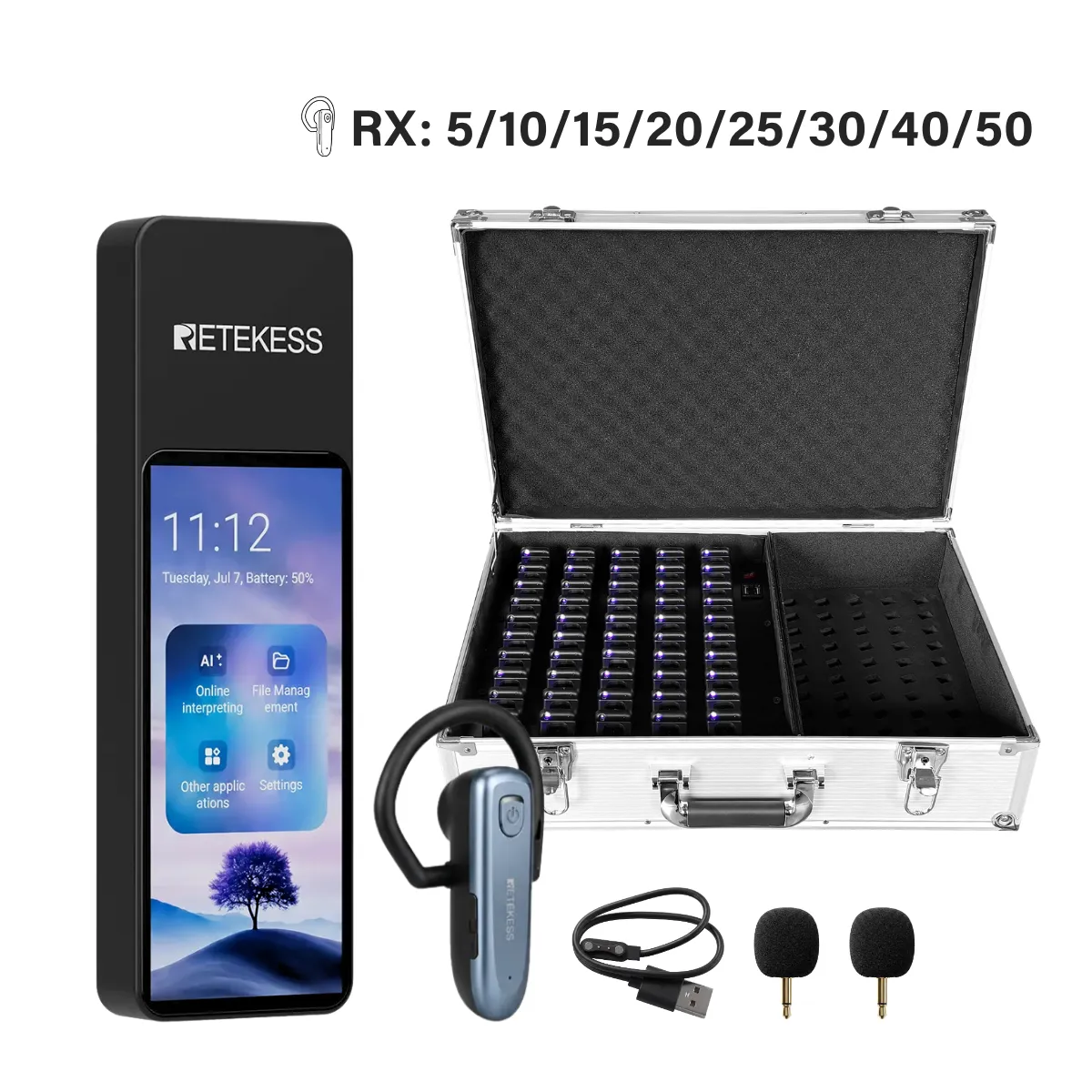
Another practical option is to use an AI translation tour guide system. It offers a more integrated translation experience, but because AI translation requires an internet connection, reliable indoor network coverage is essential for smooth operation.
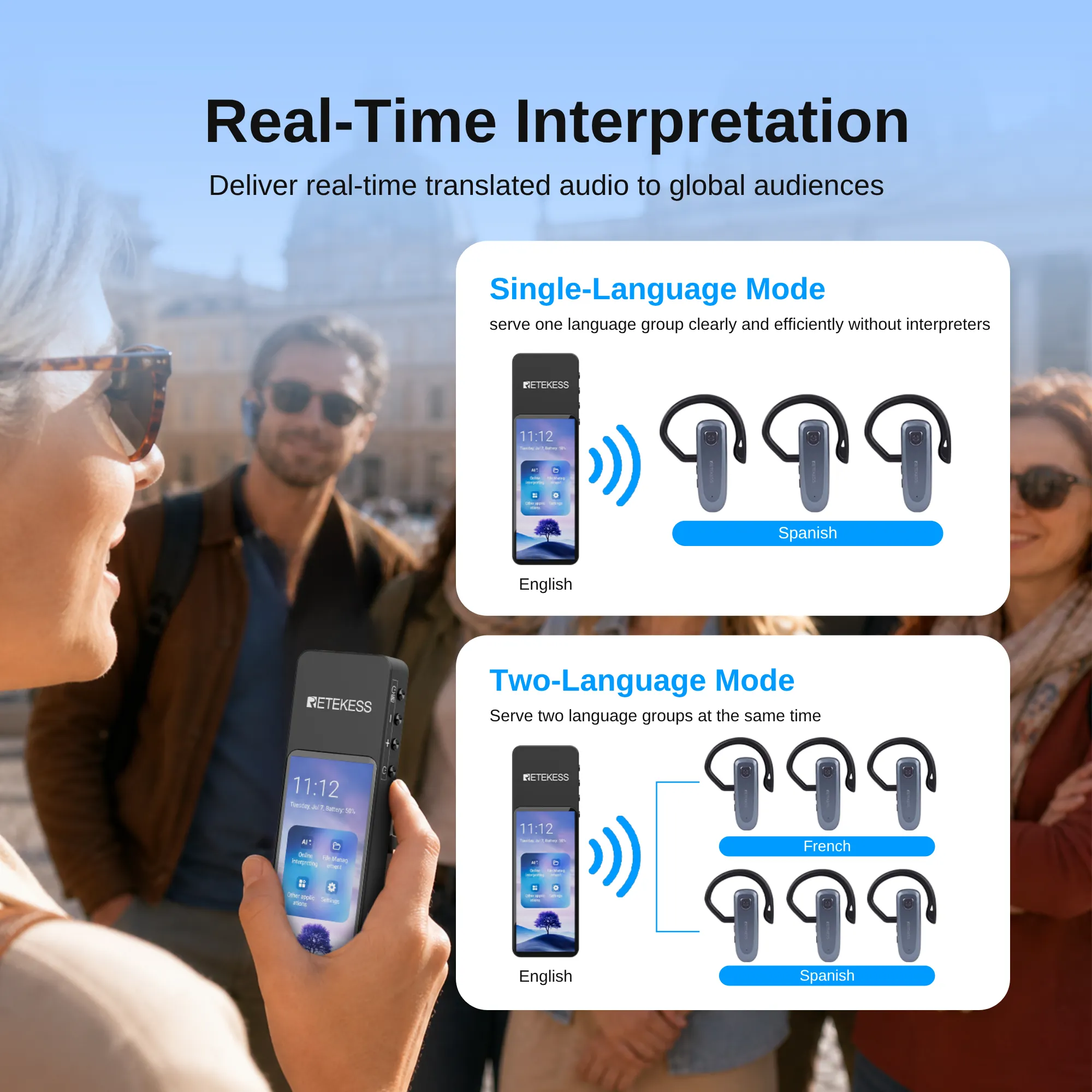
These kinds of setups can reduce the pressure on the guide as well. Instead of trying to switch between languages manually or repeat every point several times, the system helps keep the flow moving. Visitors still get the information they need, and the presentation stays organized.
For international trade shows, product showcases, and corporate exhibition tours, that flexibility can be a major advantage.
There is no single "best" exhibition audio guide system. The right choice depends on four questions.
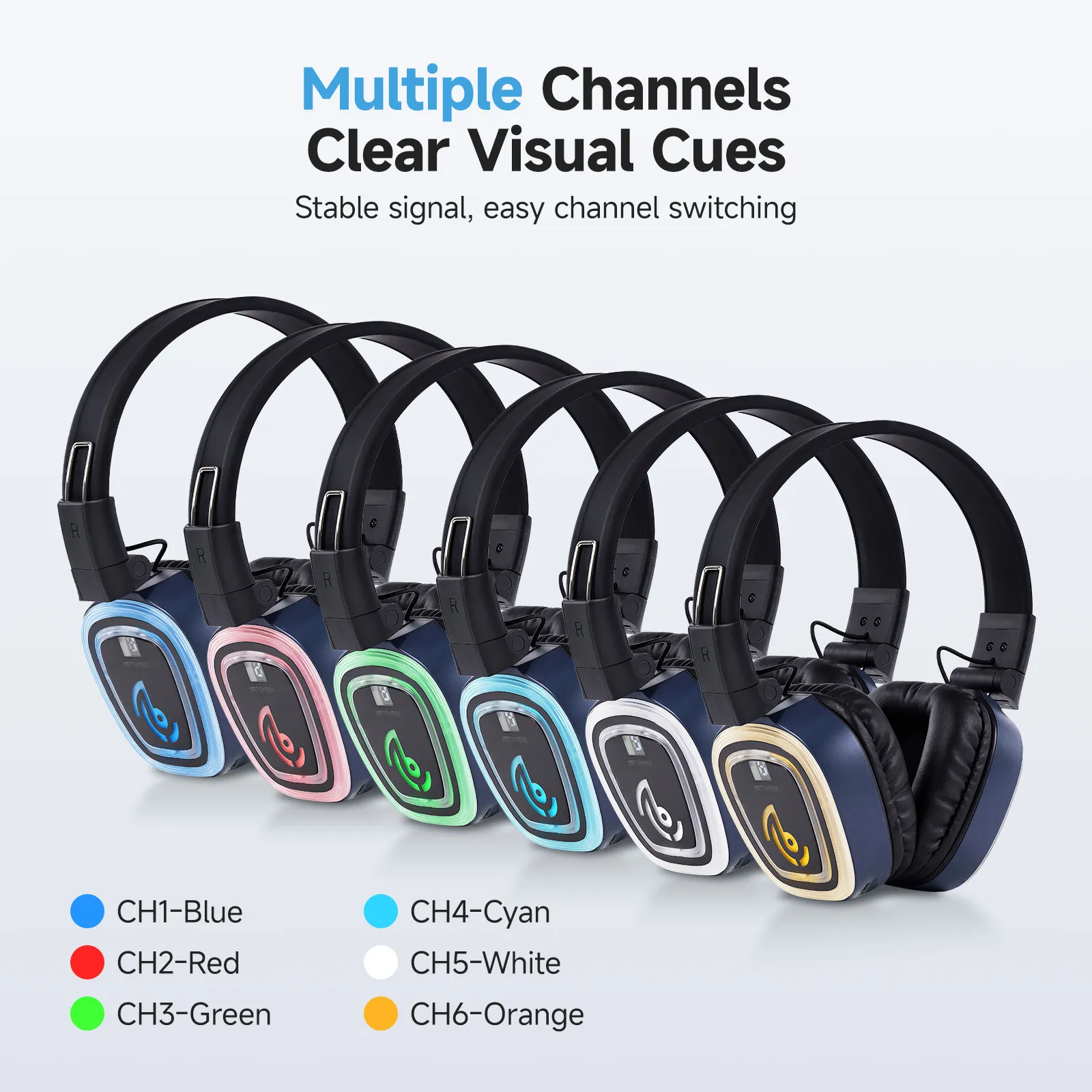
How many simultaneous groups share the space? If two or more tours run at once in the same hall, you need enough channels to keep them separate. A system with 20+ channels gives you room to grow.
How many languages do your visitors need? If you host international groups, look for direct audio input from phones or interpretation devices. Separate channels per language beat trying to mix everything into one feed.
How far do guides walk? A compact showroom might need only 10 to 15 meters of range. A factory floor or large gallery might need 50 meters or more. Add a margin for walls and obstacles.
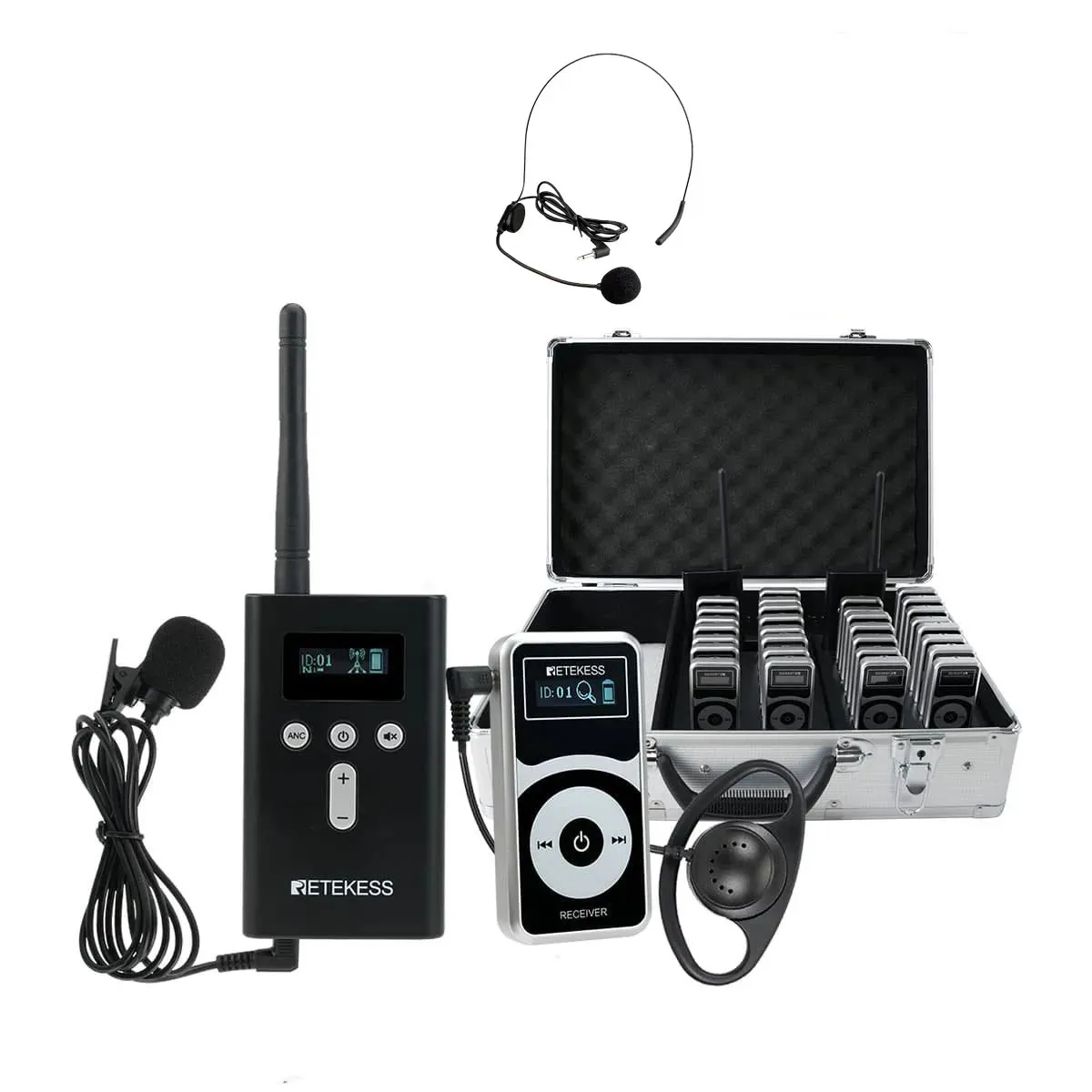
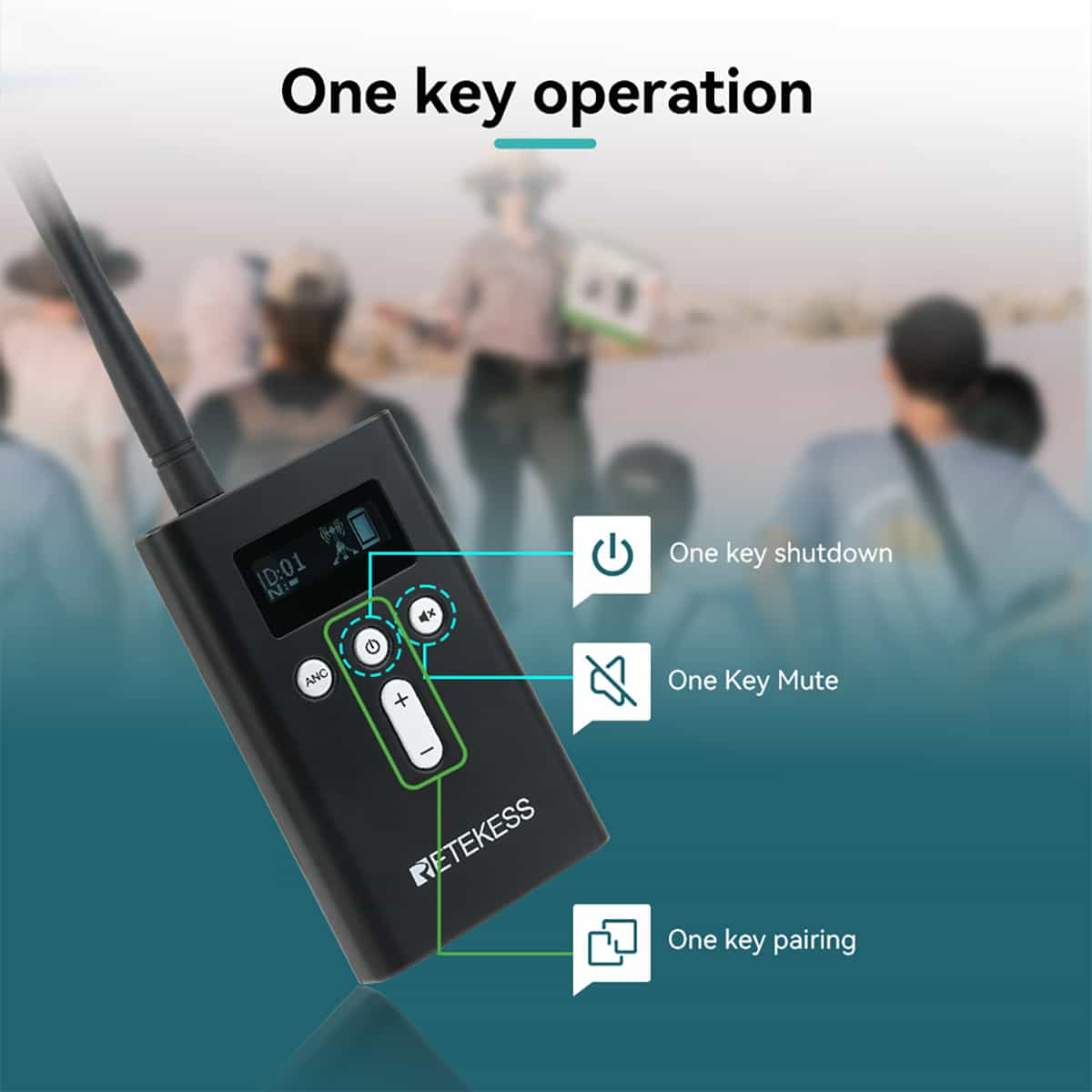
How many receivers per day? If you manage 50+ units across multiple tours, look for a charging case that holds the whole set. One-button bulk pairing and shutdown save real time.
An exhibition audio guide system turns a noisy, chaotic exhibition space into a controlled, professional experience. It separates groups, supports multilingual reception, lets guides move freely, and cuts the operational overhead of managing dozens of receivers. Whether you run a brand showroom, a museum, a factory tour or a trade show booth, a wireless audio system for indoor exhibitions is not a luxury. It is the difference between visitors who hear your message and visitors who leave unsure what they just saw.






 Google
 Amazon