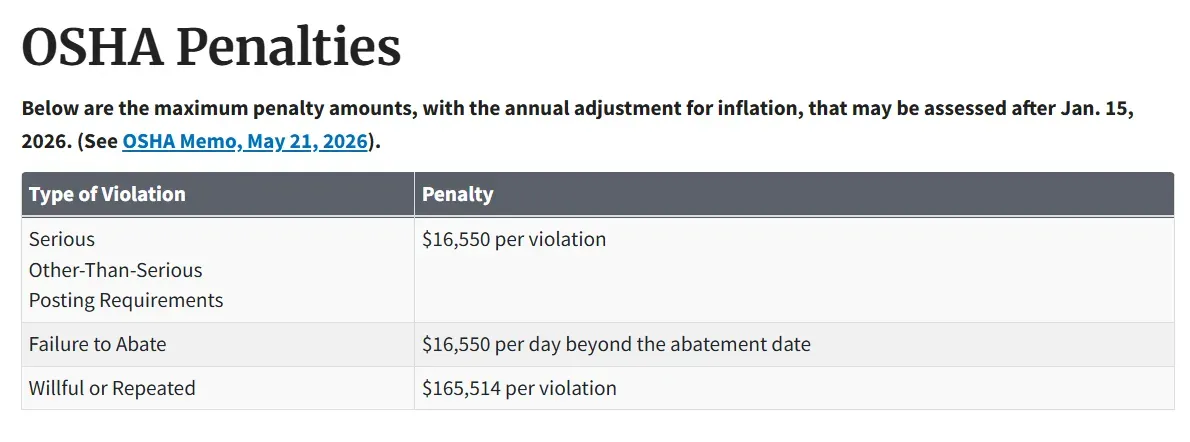
A single serious OSHA citation tops $16,550 in 2025. A willful or repeated violation reaches $165,514 per item. Most of these fines do not come from missing hard hats or unguarded saws. They come from a gap that is cheap to close: the employer cannot prove that workers actually received the safety instruction they say they did.
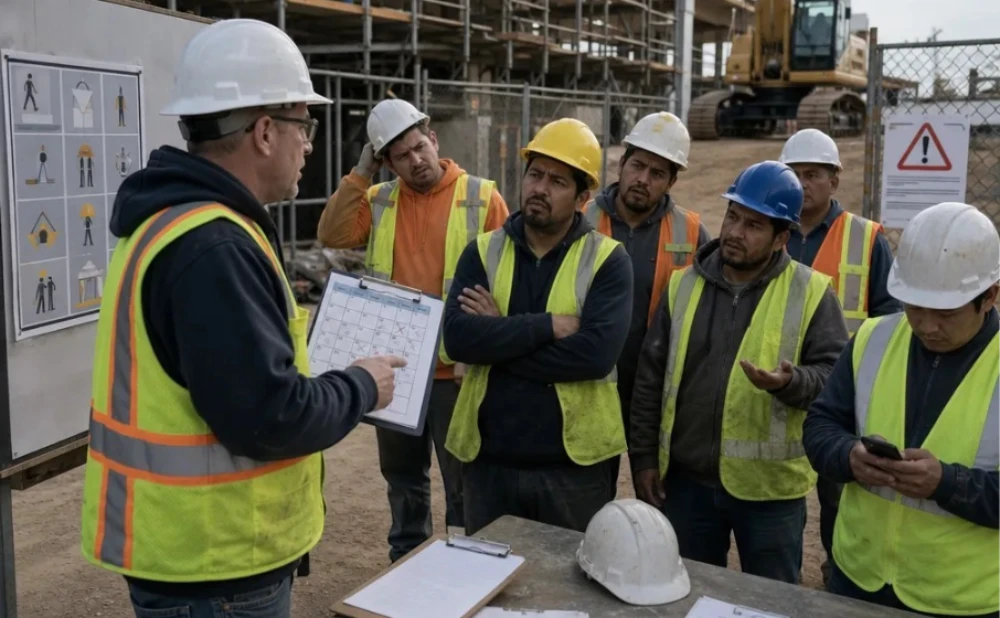
Toolbox talks are where this gap shows up first. A foreman gathers the crew for five minutes, reads a brief note, passes a sign-in sheet, and sends everyone back to work. If an inspector then asks a laborer to describe the day's fall protection rule, and the laborer cannot, the employer has a problem. The sign-in sheet proves attendance. It does not prove training landed.
The seven mistakes below are drawn from 29 CFR 1926.21(b)(2), OSHA's April 28, 2010 Training Standards Policy Statement, and OSHRC review practice. They are the toolbox talk mistakes OSHA citations most often point to, and they map directly onto OSHA toolbox talk requirements construction sites face every day.
OSHA does not write a rule called "toolbox talks." The duty comes from 1926.21(b)(2): the employer must instruct each employee in the recognition and avoidance of unsafe conditions. How that instruction is delivered is the employer's choice, but it has to happen on a routine basis.
A site that holds one toolbox talk after a near miss, then goes six weeks without another, is not running a safety program. It is reacting. Inspectors read the gap as evidence that safety training is not part of the daily workflow. Weekly or daily pre-shift briefings are the industry standard for a reason.
A toolbox talk about ladder safety does not count much when the crew is rigging a suspended scaffold. OSHA expects training to address the hazards workers face that day, on that project. Reading a generic safety script from a binder does not satisfy 1926.21(b)(2) if the message does not match the actual work.
Good foremen start with the daily tasks. What is being built? At what height? What equipment is moving? What are the weather conditions? The toolbox talk should tie directly to those questions. A one-size-fits-all script is a weak record.
Construction sites are loud. Compressors, saws, generators and passing traffic make normal-volume speech hard to follow from ten feet away. A toolbox talk held in a laydown yard, with workers scattered around, does not reliably deliver the message to everyone present.
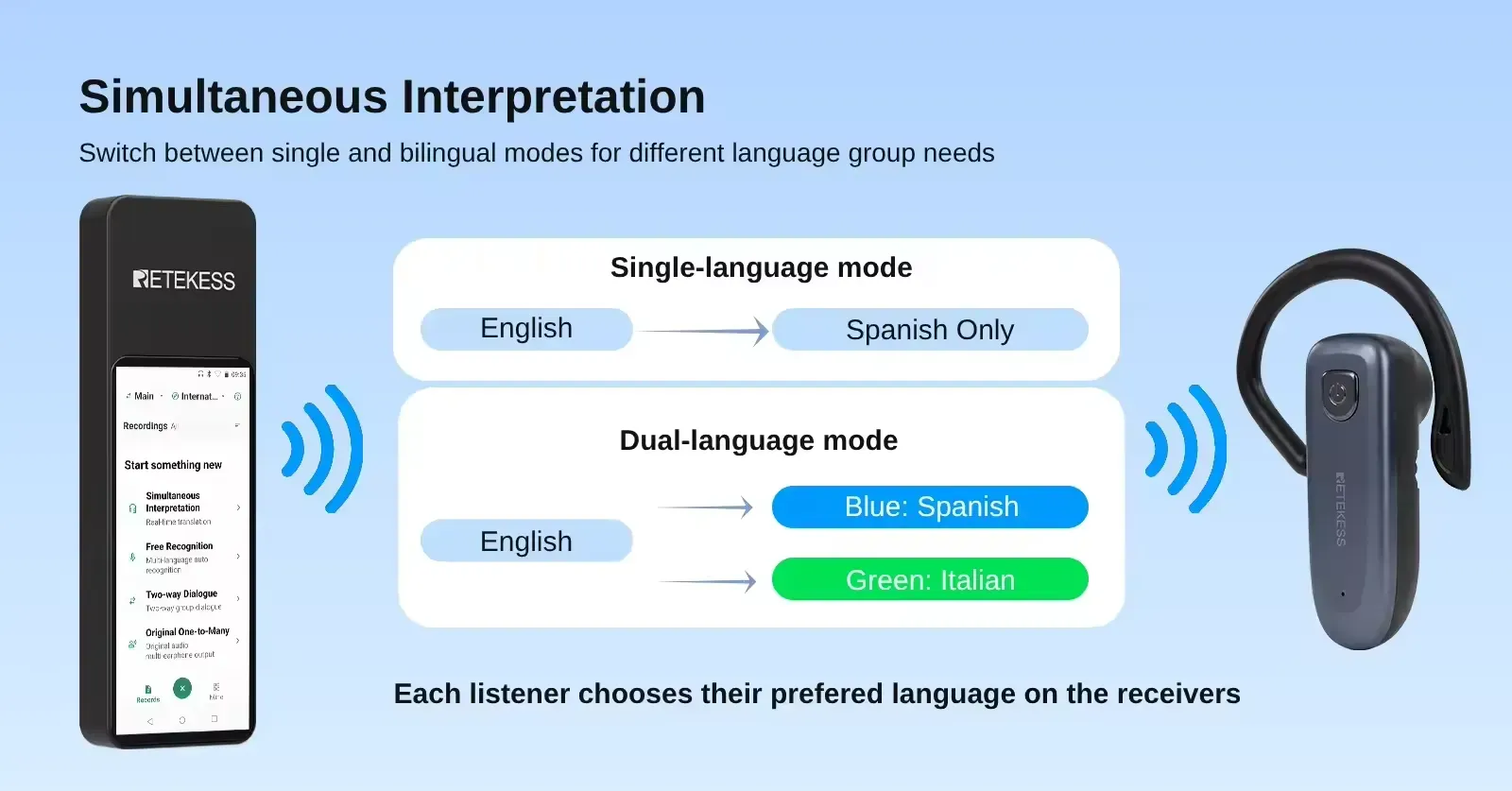
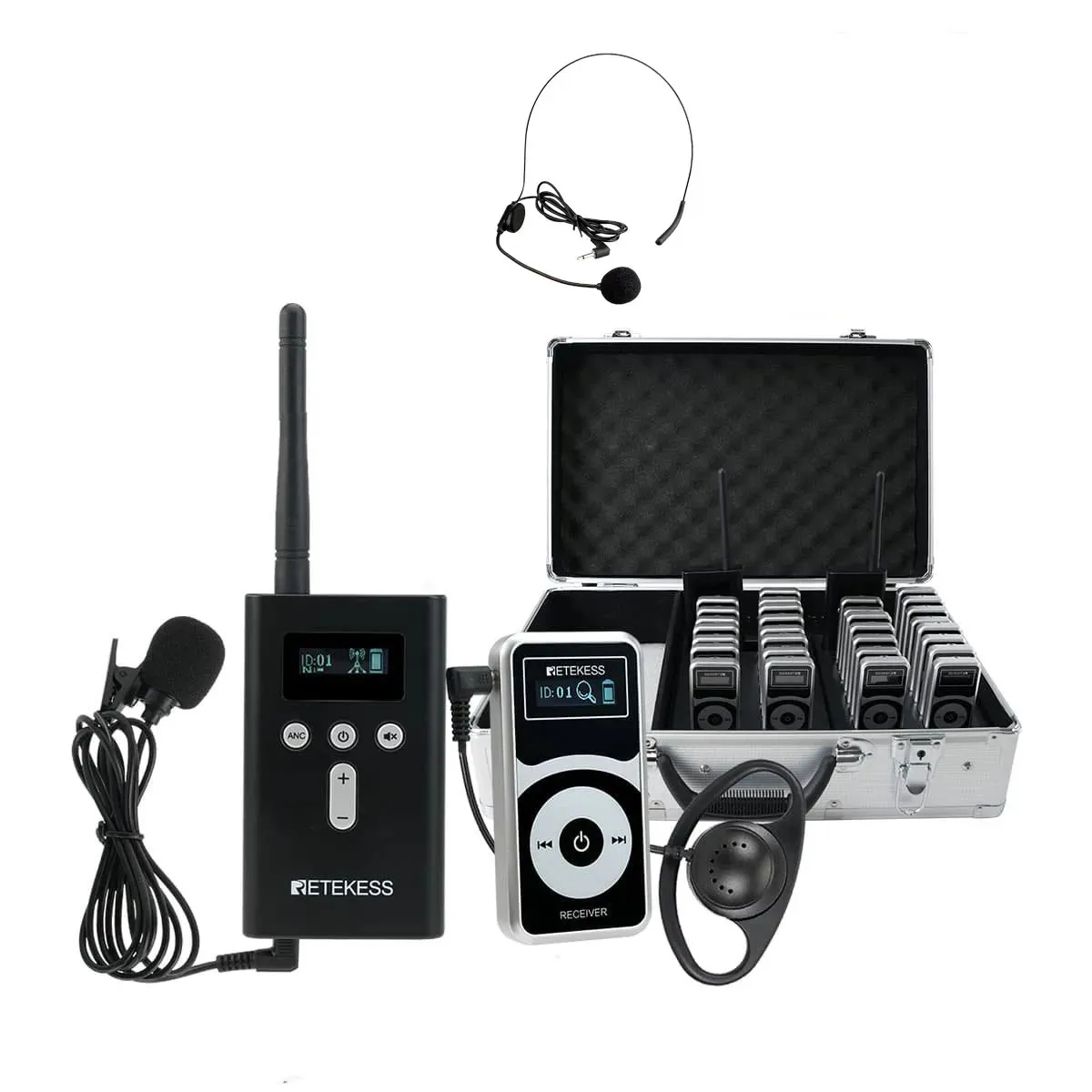
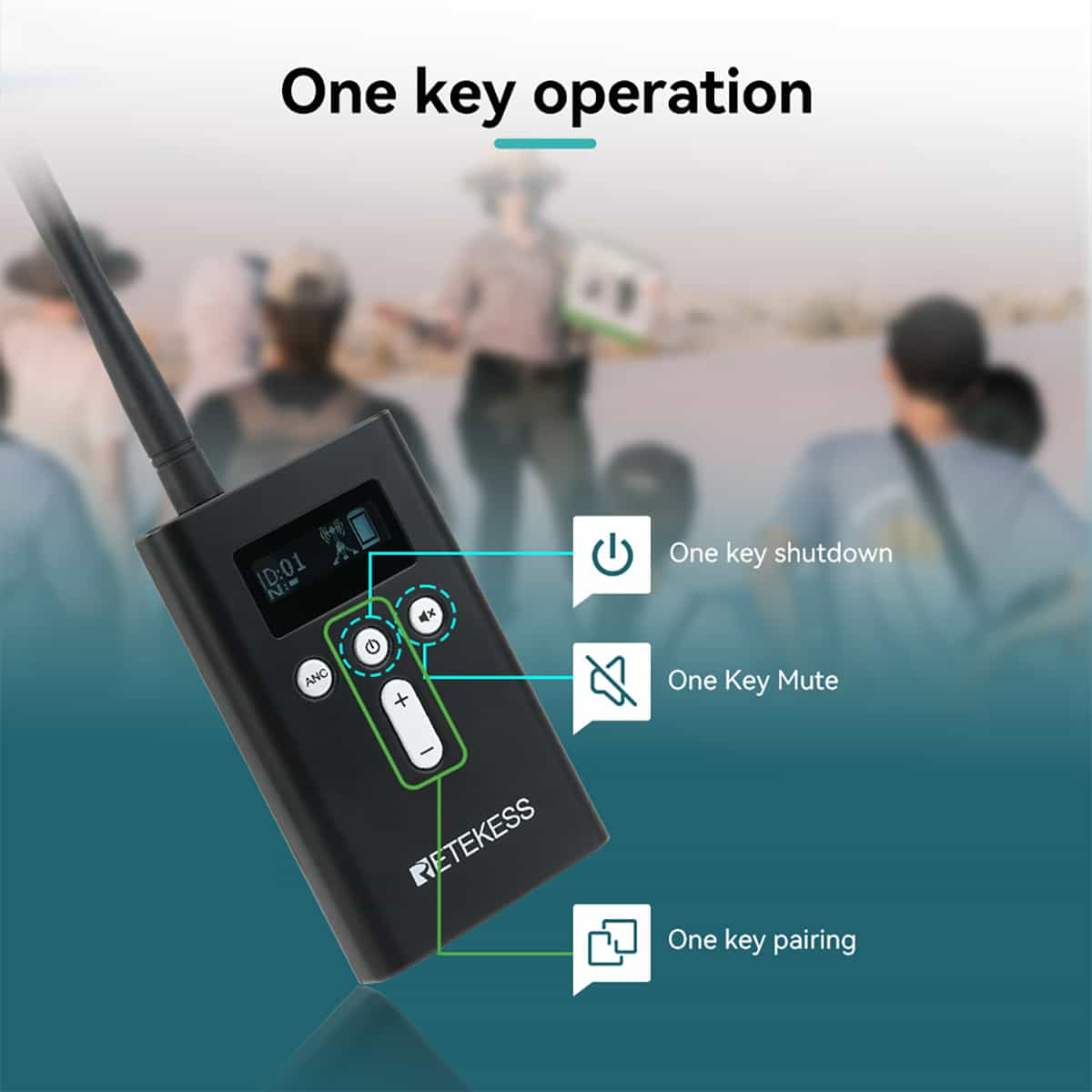
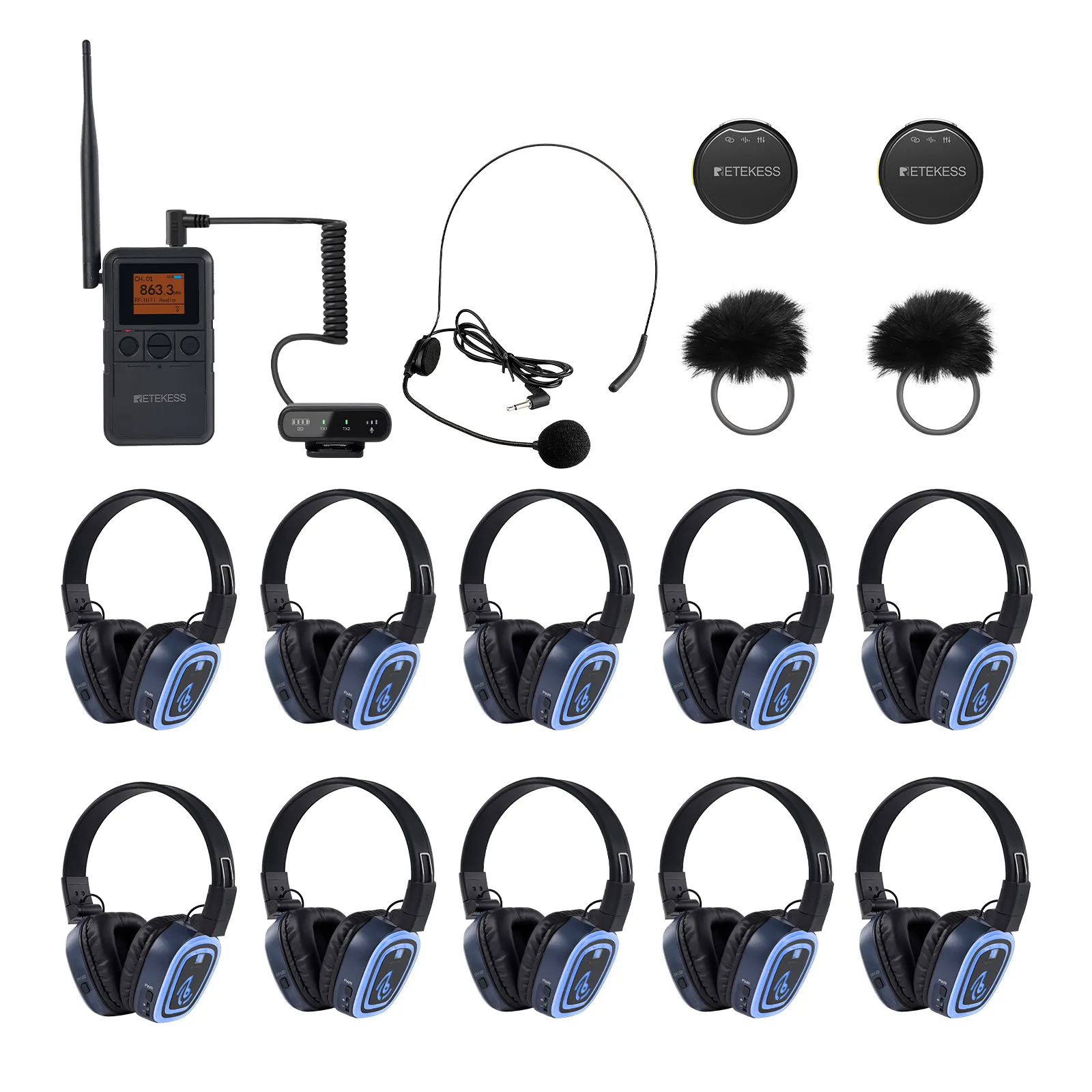
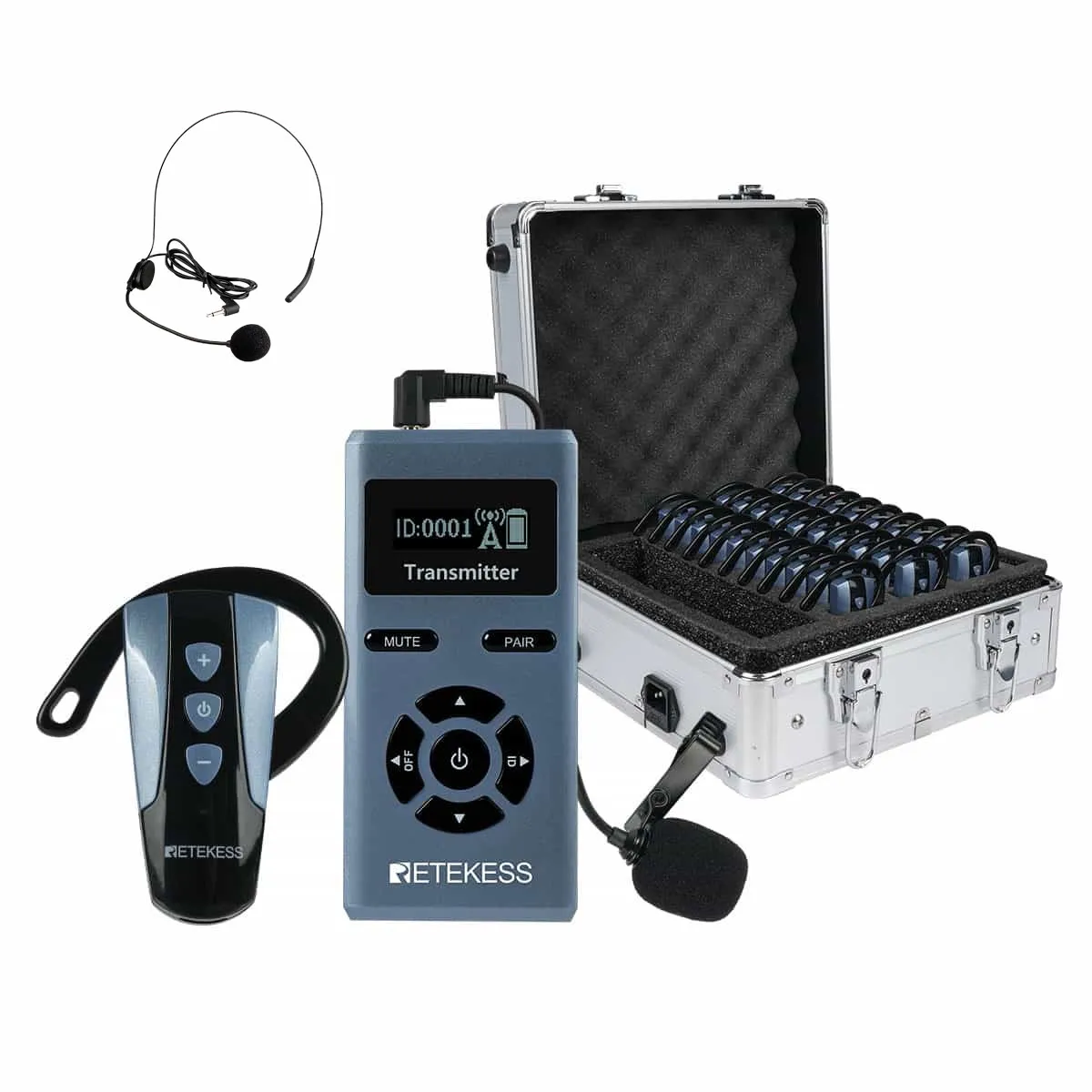
OSHA's standard is effective instruction, not physical proximity. If half the crew cannot make out the foreman's words over site noise, the training has not reached them. Wireless audio systems solve this: the foreman wears a transmitter, each worker uses a receiver at a consistent volume above the ambient noise. For mixed-language crews, the same system can carry English on one channel and Spanish on another.
A sign-in sheet proves workers showed up. It does not prove they understood. OSHA enforcement practice and safety guidance recommend a teach-back step. After the briefing, ask one or two workers to explain the key hazard back to you in their own words.
If a worker cannot describe the fall protection zone or the emergency egress route, the training has not landed. The foreman who assumes nodding means comprehension is building a weak defense. The inspector who asks on site is the one who finds the gap. This is where many toolbox talks fall apart, on every kind of site.
This is the mistake that turns a paperwork gap into a federal offense. When a foreman realizes three weeks of toolbox talks were not documented, the fix is not to sit down and write them in. Creating false or backdated safety records is illegal and makes any OSHA matter dramatically worse.
The correct response is to acknowledge the gap internally, restart consistent documentation immediately, and note in the safety program that documentation practices were updated on a specific date. Weekly records are far easier to maintain than the fallout from a discovered backfill.
OSHA's 2010 Training Standards Policy Statement is clear. "Train" and "instruct" mean presenting information in a manner the employee is capable of understanding. If the crew's primary language is Spanish, the briefing must be conducted in Spanish. English-only instruction, even with a Spanish handout stapled to it, does not meet the standard. This is the core of bilingual safety training construction sites with mixed crews cannot ignore.
Asking a bilingual coworker to translate on the spot is a gray area. OSHA has not banned it outright, but the employer bears responsibility for reliable communication. A crew member who renders "fall arrest anchorage point" as "be careful up there" creates a gap that is hard to defend if an incident follows. Retekess TT136, for example, provides real-time AI translation that sends the foreman's English briefing to Spanish-language receivers, without relying on a coworker to improvise.
A useful toolbox talk log shows more than names. It shows the date, the topic, the hazards covered, the language the training was delivered in, the trainer's name, and how comprehension was verified. A page with only signatures is thin evidence. Safety meeting recordkeeping is the part inspectors pull first after an incident.
If an incident occurs and OSHA asks how a specific worker was trained, a log that lists the trainer, the topic, the language and the comprehension check holds up far better than a page of names and dates. The record is the proof. Without it, the training itself is hard to establish.
OSHA uses a gravity-based penalty system. The listed amounts are ceilings, not automatic bills. For 2025, the maximum per serious violation is $16,550. For willful or repeated violations, the maximum is $165,514. Adjustments apply for employer size, prior history, good faith and the severity of the hazard. A small contractor with a clean record and an existing safety program can see the base penalty reduced.
But the citation, the required abatement and the follow-up inspection all cost time and money regardless of the final dollar amount. Fixing these seven mistakes before an inspection is cheaper than explaining them during one.
OSHA does not care whether you call it a toolbox talk, a tailgate meeting, or a pre-shift briefing. It cares that workers actually received instruction they could understand, on the hazards they actually face, delivered in a way that reached them, and documented well enough to prove it. The seven mistakes above are the places where that chain breaks. Fix them once, and the next inspection becomes a routine conversation instead of a citation.


















 Google
 Amazon