
Clear communication is essential in classrooms and training rooms, but distance, background noise, and uneven sound coverage can make it difficult for learners to hear every word. A wireless audio system for training helps deliver the instructor's voice more clearly without complicated installation.
An FM wireless audio system for classroom use can solve a common problem: how to let every learner hear the instructor clearly, even when they are seated far away or the room is noisy.
In this article, we’ll explain how FM audio works in teaching environments, what problems it solves, and how to choose the right system for your classroom or training room.
Many teaching spaces have sound challenges that are easy to overlook. A room may look suitable for instruction, but acoustically it may not support clear voice transmission.
In a long classroom, students sitting at the back often hear less clearly than those in front. The teacher’s voice loses strength over distance, especially if the room is large or open.
Training rooms and seminar spaces often use flexible seating. Learners may sit in different corners of the room, making it harder for one speaker system to reach everyone evenly.
Air conditioning, hallway noise, equipment, or other classroom activity can interfere with speech clarity. Even a well-trained instructor may struggle to be heard over ambient sound.
If learners have to strain to hear, they focus less on the material and more on trying to catch the words. That reduces engagement and retention.
This is where a wireless audio solution for small training rooms or larger learning spaces becomes valuable. Instead of depending only on room acoustics, an FM system brings the instructor’s voice directly to the listener.
Before choosing a system, it helps to understand the two main audio needs in educational spaces.
In this model, each learner receives the audio directly through a small receiver device. This is ideal when the room is noisy, the class is large, or the instructor’s voice needs to be heard clearly by everyone.
This approach is often called an FM listening system for group instruction because it helps multiple participants hear the teacher’s voice in a more personal and direct way.
In some rooms, the goal is simply to make the teacher louder so everyone can hear through the room’s speaker system. This works well when the acoustics are acceptable and the main issue is volume rather than clarity.
|
Dimension |
Personal receiver listening |
Room speaker amplification |
|
Signal path |
Transmitter sends one FM channel to each personal receiver |
One speaker chain projects shared audio across the room |
|
Volume control |
Each listener adjusts personal volume |
One shared level for the whole room |
|
Noise and reflection |
Direct feed to the ear, less affected by room noise and reflections |
Performance shifts with seat position and room acoustics |
|
Participant hardware |
Receiver, earphone and lanyard per participant |
No personal receiver required |
|
Best-fit conditions |
Noisy or dispersed rooms, personal volume needs, quiet focused sessions |
Small quiet rooms, shared group listening without headsets |
A few questions point toward the personal receiver route.
Is the room noisy?
Do participants sit in a dispersed layout?
Does the group need personal volume?
Does the session rely on quiet focus?
When most answers are yes, a personal receiver system usually fits better than a shared speaker.
An FM wireless audio system for classroom is simple in concept. The instructor speaks into a microphone, and that audio is sent wirelessly to one or more receivers.
Typically, the setup works like this:
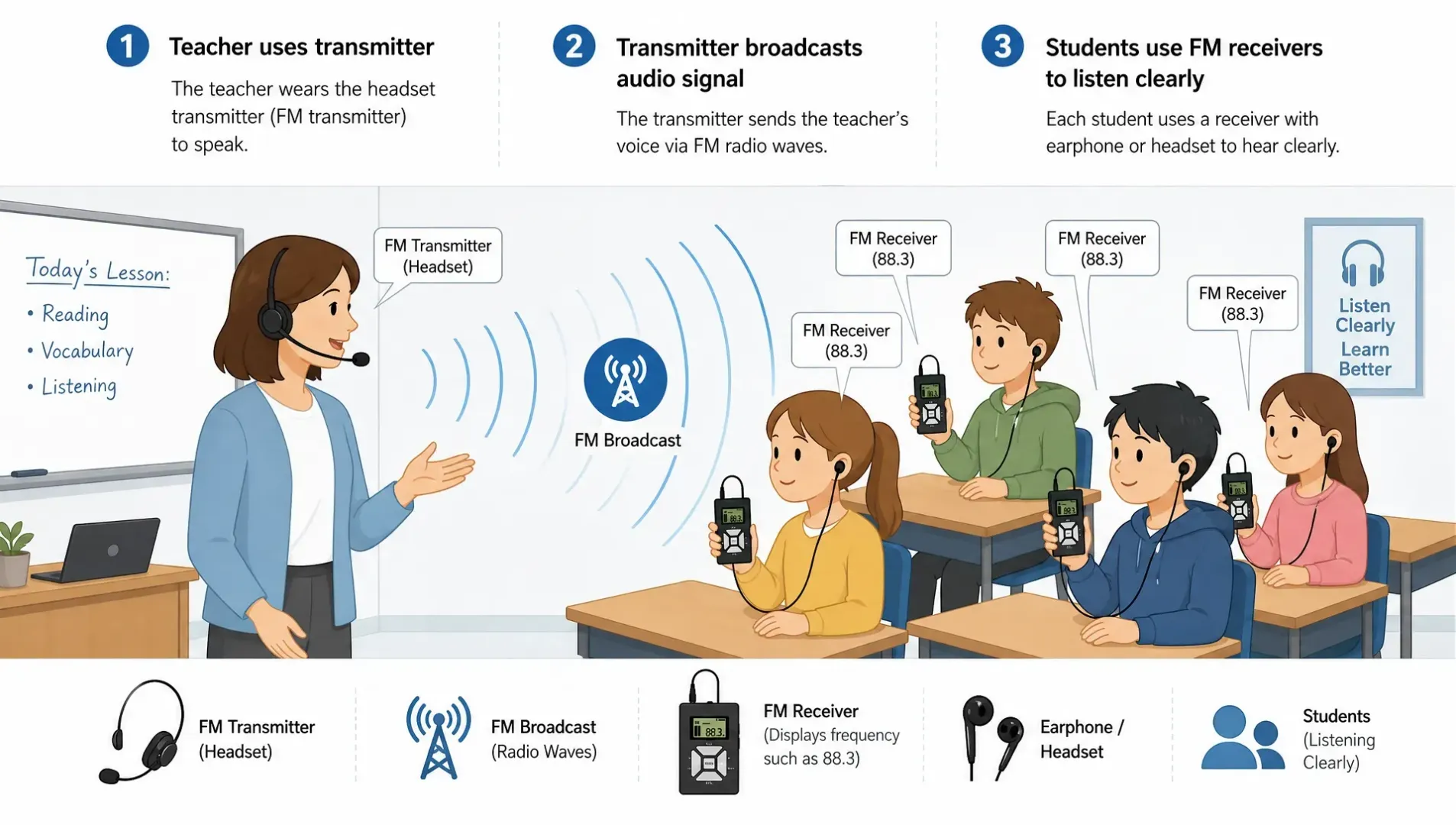
This setup is useful because it reduces the effect of room noise and distance. The teacher does not have to shout, and learners do not have to struggle to hear.
A classroom FM transmitter and receiver system is especially effective in situations where audio clarity matters more than room-wide amplification. It gives teachers more freedom to move and speak naturally while still reaching the whole class.
Different teaching environments require different audio setups. An FM transmitter and receiver for classroom teaching can support various instruction styles.
Large classes need consistent audio coverage across the room, especially for learners seated at the back. A stable FM signal and enough receivers help everyone follow the instructor without relying solely on room speakers.
When instructors move between tables or participants work in smaller groups, portable equipment and stable reception become more important. A portable FM audio system for teachers allows instructors to move freely while keeping instructions audible.

Workshops often involve multiple groups, changing activities, and rotating facilitators. An FM listening system for group instruction makes it easier to share audio equipment across teams without installing fixed hardware in every area.
For organizations using shared equipment across classrooms, departments, or training sites, quick setup, easy receiver distribution, and organized charging help keep the system ready for repeated use.
When selecting a FM transmitter and receiver for classroom teaching, there are several practical features to consider.
Adequate coverage: The buyer measures lectern-to-farthest-seat distance and the trainer's walking route. A wireless audio solution for small training rooms suits compact spaces.
Receiver quantity: Participant count sets the receiver baseline. The set should cover the peak class or session, plus a small spare pool for damaged or unreturned units.
Battery life: Back-to-back classes and workshops should run without a mid-day charge, a key requirement for any wireless audio system for training sessions.
Simple management: A repeatable handout and collection routine, organized charging storage and cleanable earpieces keep shared equipment usable over time.
Portability: A portable FM audio system for teachers is especially useful when instruction happens in different rooms or temporary training locations.
These features help ensure the system is not only effective, but also practical for daily use.
Before purchasing a system, it helps to review a simple checklist. This can make it easier to choose the right setup for your teaching space.
|
Check item |
What to measure or decide |
Buying note |
|
Room dimensions and farthest participant seat |
Distance from lectern to the last seat, side tables and corners |
Sets the coverage requirement |
|
Peak participants per session plus spare-unit ratio |
Largest expected class or workshop, plus spare receivers |
Prevents shortages on busy days |
|
Total speaking hours per training day or school day |
Combined class, workshop and practice hours |
Sets the battery runtime expectation |
|
Instructor movement path across the room |
Tables, demo stations and breakout zones the trainer visits |
Checks reception during movement |
|
Number of rooms and weekly reuse frequency |
Rooms served each week and how often the kit swaps spaces |
Sets portability and storage needs |
|
Storage and charging space available |
Shelf, drawer or charging case space between sessions |
Plans daily equipment management |
|
Shared earpiece cleaning and replacement plan |
Cleaning routine and replacement earpieces for shared use |
Protects hygiene across participants |
|
Setup time before each class or session |
Minutes available before the first participant arrives |
Favors simple, fast-pairing systems |
|
Budget scope and future receiver additions |
Current class size and expected future growth |
Allows later receiver expansion |
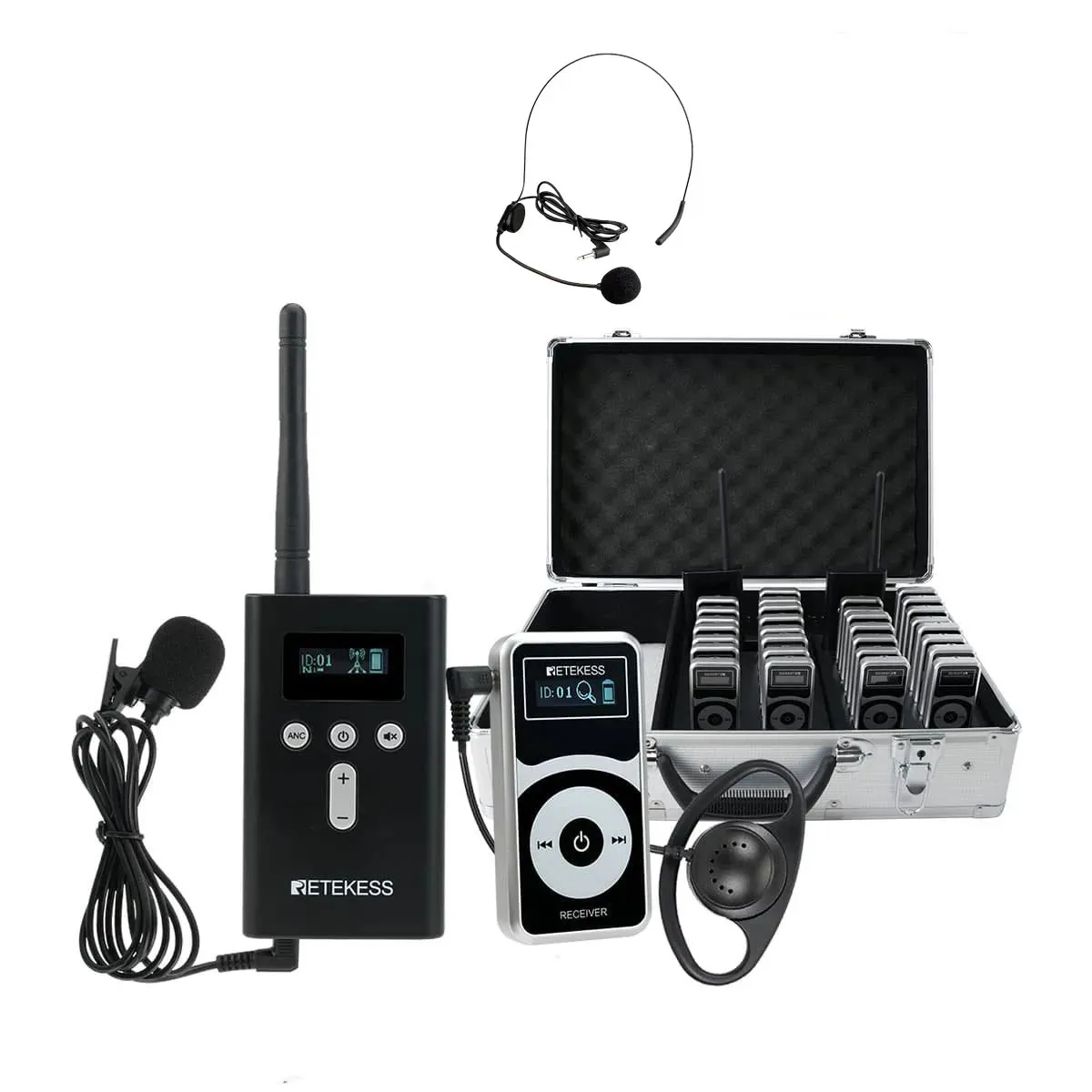
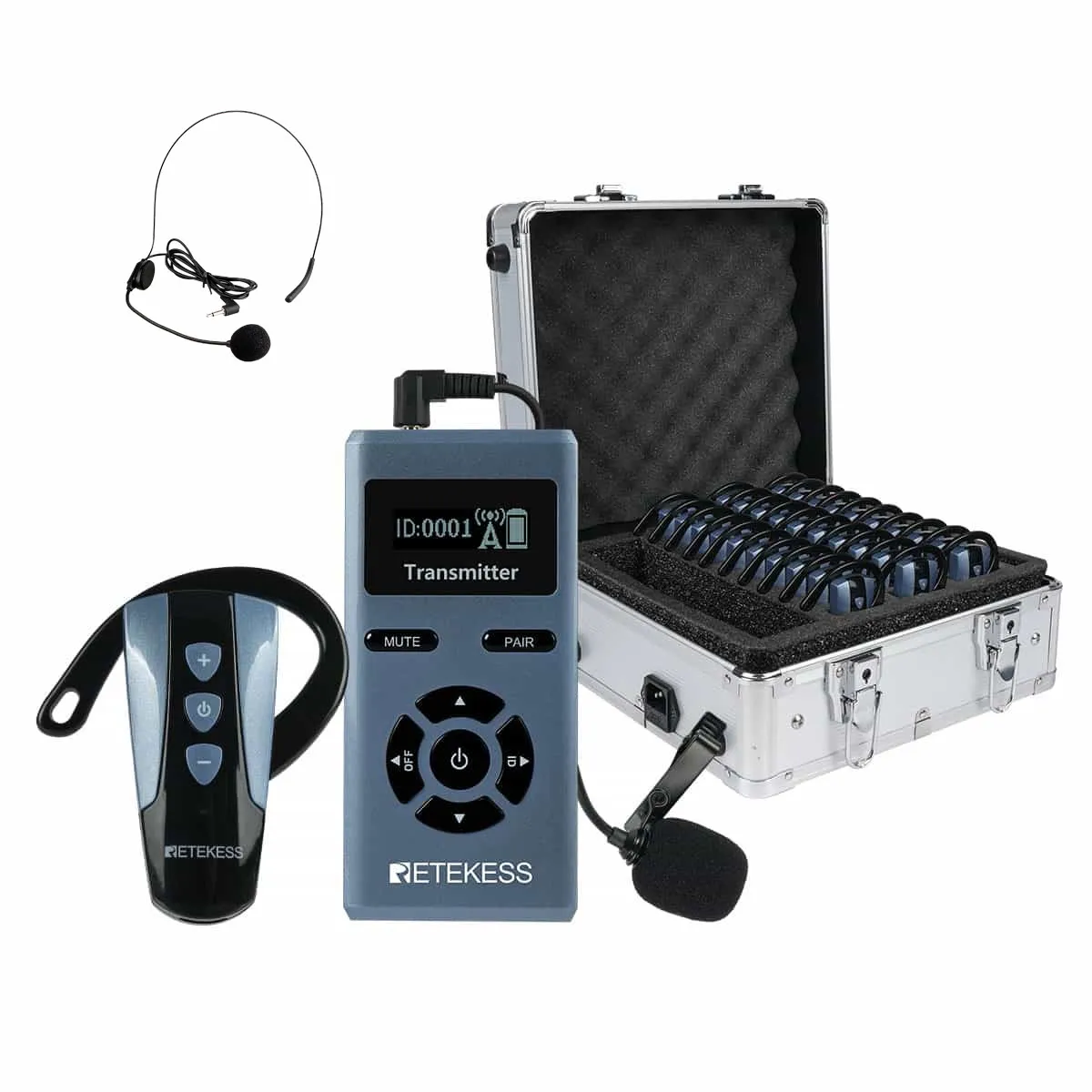
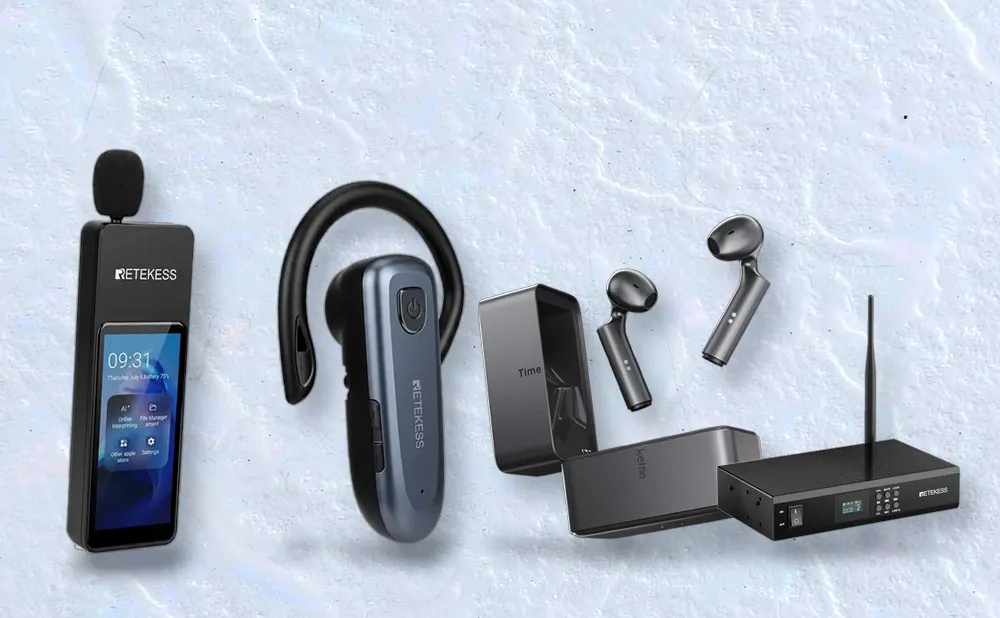
For classrooms and training environments that need a reliable and easy-to-use solution, the Retekess TR503S + PR13S combination is worth considering.
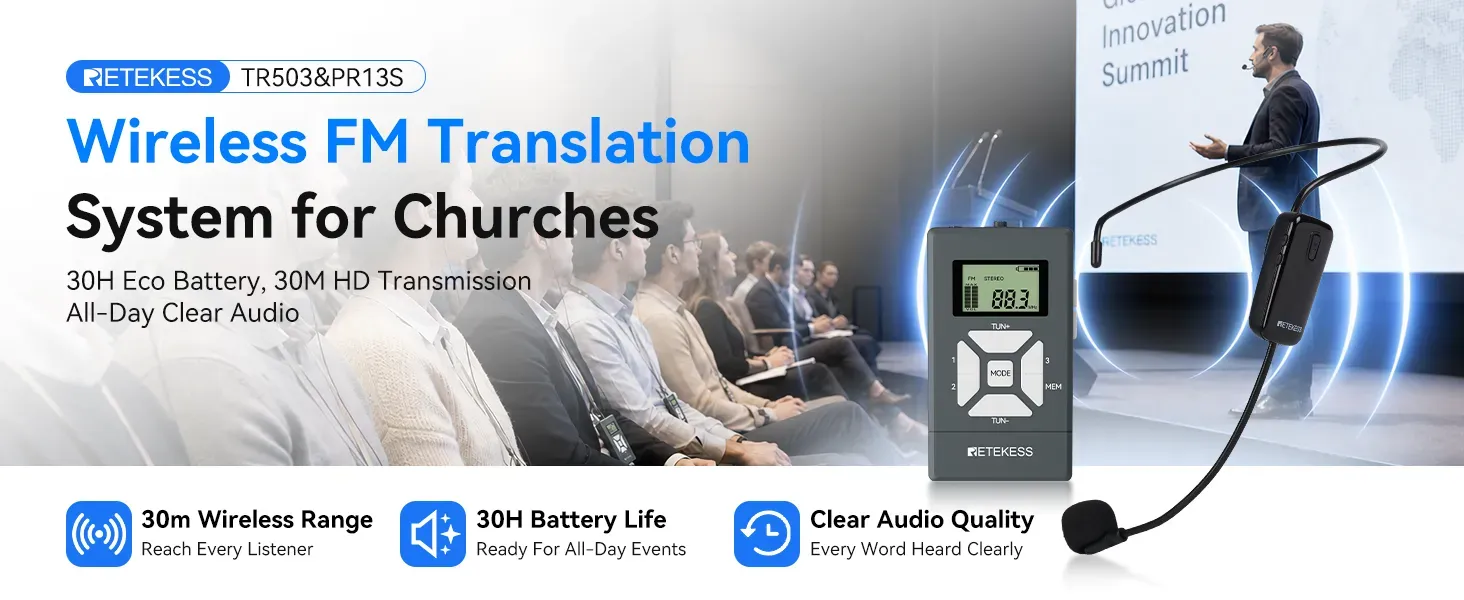
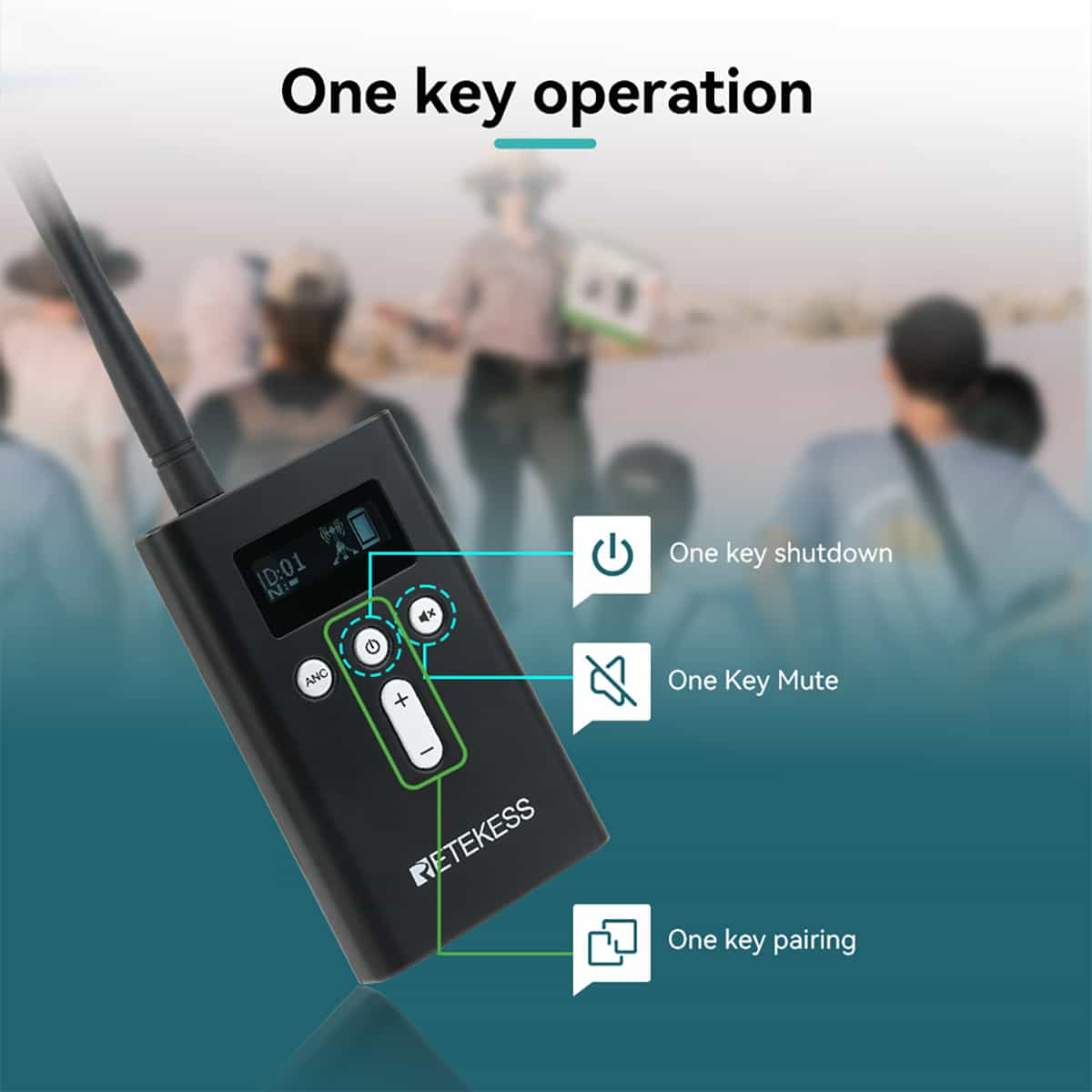
The TR503S works as the FM transmitter, sending the instructor’s voice wirelessly to the receivers. The PR13S receivers allow learners to hear the audio clearly and directly. This combination is especially useful for:
Distance, noise and instructor movement do not have to cost session time. A matched FM system carries the instructor voice to every participant in classrooms and small training rooms, across lectures, workshops and group instruction.
To find the right classroom FM transmitter and receiver configuration, contact Retekess with class size, room layout, instructor movement and weekly schedule. The team can recommend a receiver count and setup that fits the space and budget.











 Google
 Amazon