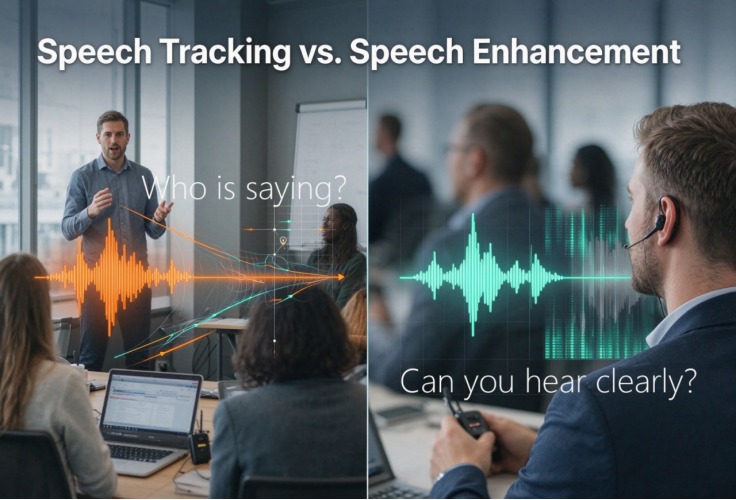
If you are shopping for hearing aids—or simply exploring the various features they offer—terms like "speech tracking" and "speech enhancement" might be confusing. While the two terms sound similar and are both designed to help users better understand speech, they are not exactly the same thing.
This guide explains what these features are, how they differ, and what you should look for if "speech clarity" is your top priority when choosing a hearing aid.
"Speech tracking" and "speech enhancement" are often discussed together because both aim to improve speech understanding.
However, they focus on different aspects of the listening experience.
One feature is more about following the main speaker as the conversation moves.
The other is more about making speech itself clearer and easier to understand.
"Speech tracking" is designed to help a hearing aid lock onto the primary speaker in a conversation. Instead of treating all sounds equally, the hearing aid focuses on the person who is speaking, ensuring their voice remains distinct and easy to follow.
Think of it as a mechanism that allows the hearing aid to "stay with" the flow of conversation. Whether the speaker moves around or the listening environment becomes complex and dynamic, "speech tracking" helps the user keep the primary speaker’s voice in focus.

This is especially useful in real-world situations like:
The goal is not just louder sound. The goal is a more natural, continuous listening experience.
Speech enhancement focuses on making speech clearer. Rather than simply following the voice, it improves how understandable the speech is by emphasizing the important parts of the signal and reducing distortion.
This matters because hearing difficulty is not always about volume. Sometimes a person can hear sound clearly enough, but the words still feel blurred or unclear. Speech enhancement helps make those words stand out more clearly.
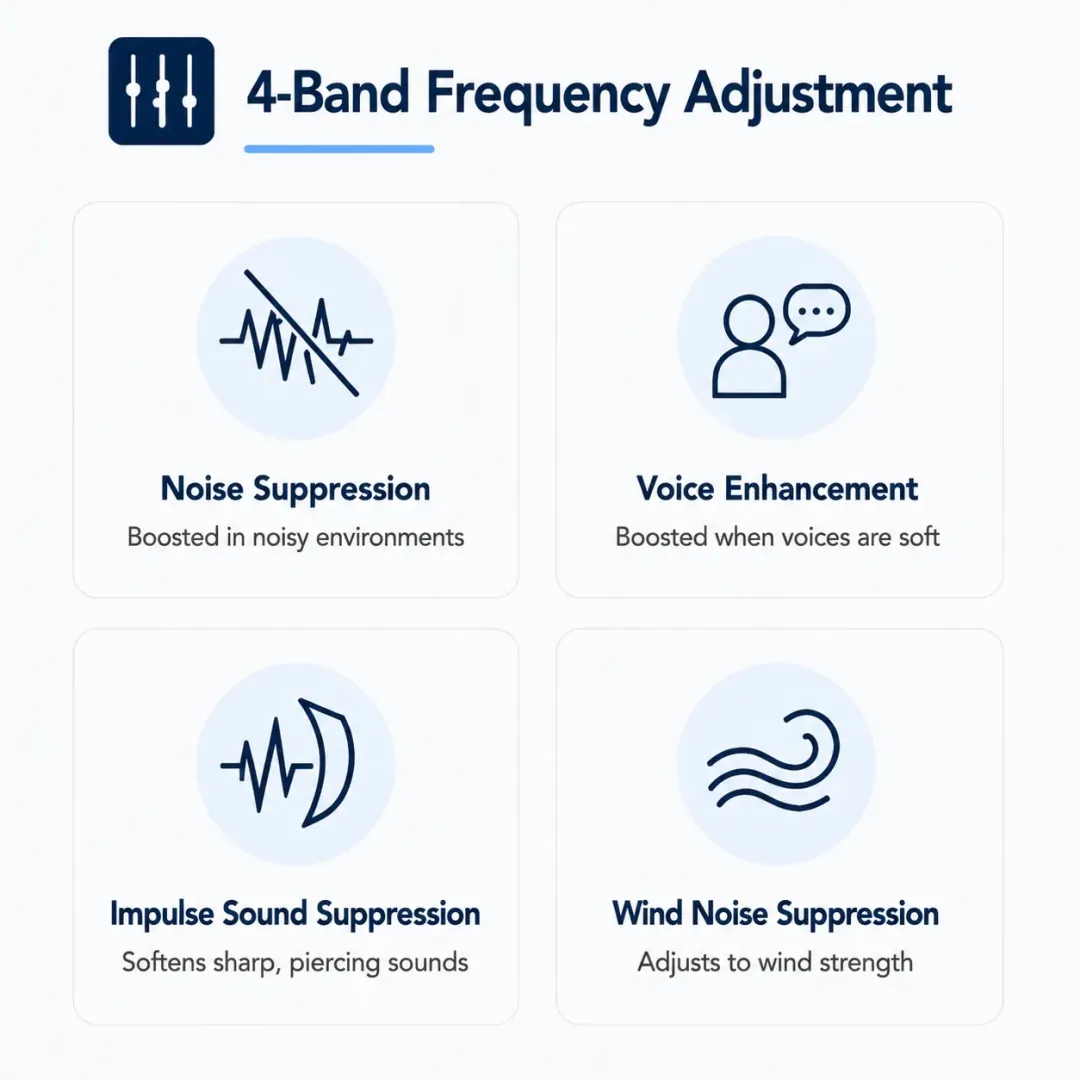
In practical terms, this can help with:
If speech tracking helps the hearing aid stay with the voice, speech enhancement helps make that voice easier to understand.
Here is a simple way to think about the difference:
|
Feature |
Main Focus |
What It Helps With |
|
Speech Tracking |
Following the main speaker more naturally |
Keeping up with conversations |
|
Speech Enhancement |
Making speech clearer and more intelligible |
Understanding words more easily |
They are related, but not identical.
A hearing aid with both approaches may offer a more complete listening experience because it can support both the flow of conversation and the quality of the speech signal.
If clearer conversations are your top priority, it helps to look beyond basic loudness. A hearing aid can sound loud and still not make speech easy to understand. That is why it is useful to pay attention to the features that affect real-world clarity.
A louder sound is not always a better sound. What matters more is whether speech remains natural, comfortable, and easy to follow.
If a hearing aid includes both speech tracking and speech enhancement, it may be better suited for everyday conversations. One helps maintain the speaker connection, while the other improves the speech signal itself.
Digital sound processing matters because it affects distortion and overall listening comfort. Better processing can help speech sound more natural and less harsh.
Many speech cues, especially consonants, live in the high-frequency range. If high-frequency hearing loss is not well compensated, speech may still seem unclear even if it is loud enough.
The best hearing aid is not only one that performs in theory, but one that helps in places where people actually talk: at home, in restaurants, in public spaces, and during group conversations.
A good example is the Retekess TE105 Smart RIC Hearing Aid. It combines speech tracking and speech enhancement in one device, which makes it relevant for users who want more than simple amplification
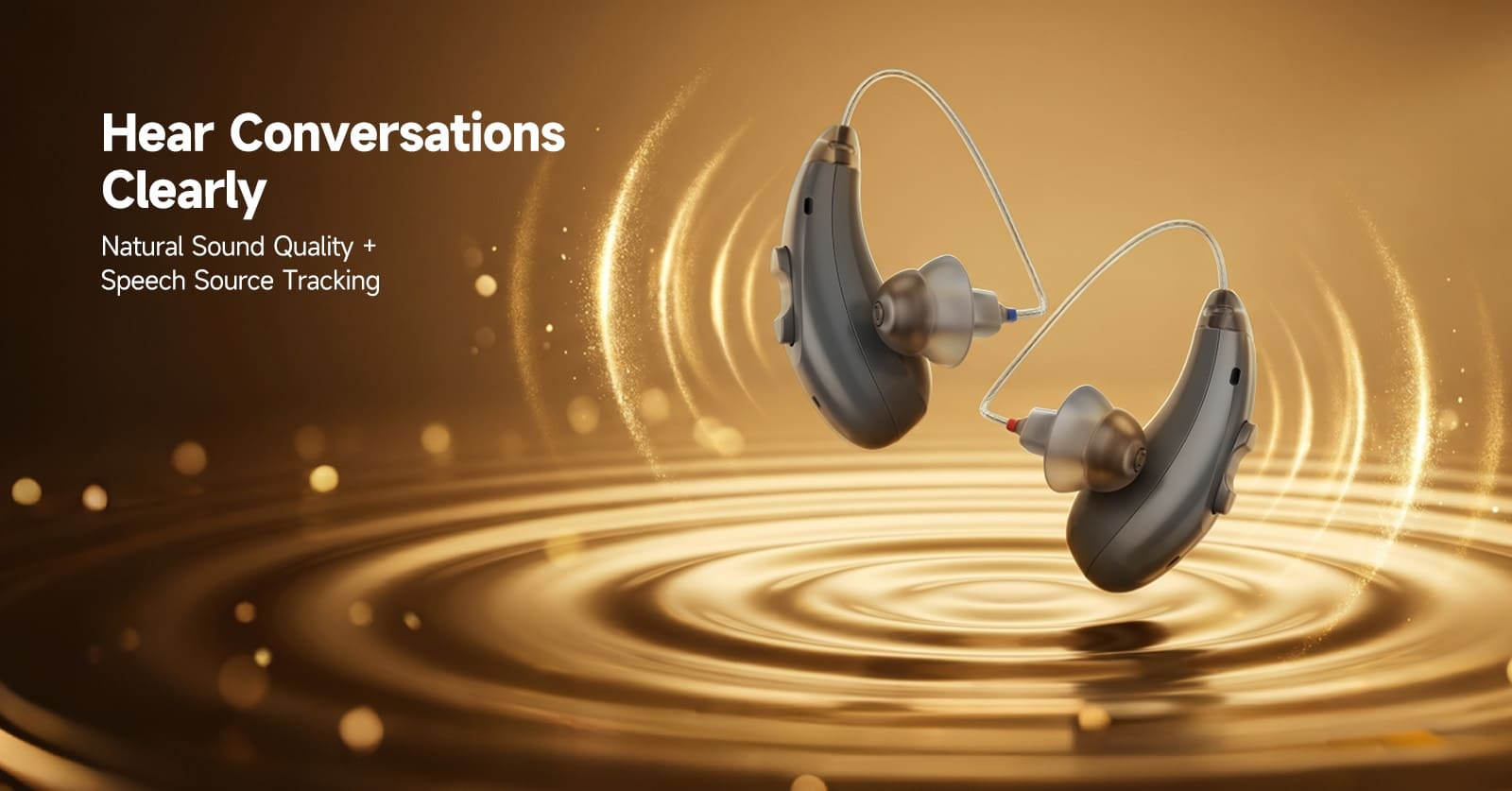 The TE105 uses 16-channel WDRC DSP digital signal processing, which helps reduce sound distortion and keep audio more natural. It also provides 45 dB of high-frequency gain, which is useful for compensating high-frequency hearing loss and supporting clearer speech. On top of that, its intelligent tracking and focusing system is designed to follow the main speaker during a conversation and keep that voice centered in the sound field.
That combination makes the TE105 a practical choice for users who want to improve speech clarity in everyday life without relying on just one type of hearing support.
Most people do not struggle with hearing in total silence. They struggle in real situations.
You may be able to hear voices, but still miss the words when:
That is why understanding speech tracking and speech enhancement is so useful. These features are not just technical labels. They describe how a hearing aid helps you stay connected to real conversations.
For many users, the goal is not simply to hear more sound. It is to understand speech with less effort. When listening feels easier, conversations feel less tiring and more natural.
The answer depends on the user and the environment.
If your biggest challenge is staying with the conversation as people move or as the scene changes, speech tracking may feel especially important. If your biggest challenge is that speech sounds unclear or muffled, speech enhancement may matter more.
For many people, though, the ideal solution is not choosing one or the other. It is having a hearing aid that supports both.
That is what makes the TE105 a compelling option. It gives users both the ability to follow speech more naturally and the ability to hear speech more clearly.
Speech tracking and speech enhancement are closely related, but they are not the same.
Speech tracking helps a hearing aid stay with the main voice in a conversation.
Speech enhancement helps make that voice clearer and easier to understand.
If you are choosing a hearing aid for clearer conversations, both features are worth understanding. And if you want a device that combines these approaches, the Retekess TE105 Smart RIC Hearing Aid is a strong example of how modern hearing technology can support better speech clarity in real-world use.
In the end, the best hearing aid is not just the one that makes sound louder. It is the one that helps you follow conversations more easily and feel more confident in daily life.
Speech tracking is a feature that helps the hearing aid follow the main speaker in a conversation, especially when the voice source moves or changes direction.
Speech enhancement is a feature that improves the clarity and intelligibility of speech so words are easier to understand.
No. Speech tracking focuses on following the speaker, while speech enhancement focuses on making speech clearer.
Both can help, but they work differently. Speech tracking helps keep the main voice centered, while speech enhancement helps speech stand out more clearly from the background.
Not always, but having both can provide a more complete listening experience, especially for everyday conversations.
Look for features that improve clarity, reduce distortion, and support speech understanding in real-world listening situations.
High-frequency sounds contain many important speech cues, such as consonants. Supporting that range can make speech easier to understand.
WDRC DSP helps manage sound across different volumes, reducing distortion and keeping listening more natural and comfortable.










 Google
 Amazon