
Clear audio is essential for productive meetings and workshops, especially when presenters move between tables, demonstrate activities, or lead multiple group discussions. However, rented conference rooms, hotel breakout spaces, and off-site venues often lack suitable audio equipment.
This guide explores how a portable FM audio system keeps presenters heard across the room, compares FM receivers with traditional speaker setups, and covers practical tips for setting up and managing mobile audio equipment.
Small events may seem simple, but audio issues can still create problems fast. A room does not need to be large to cause poor sound. In many cases, the challenge comes from the room layout, the speaker’s movement, or the temporary nature of the event.
In a small meeting, people often discuss detailed information, make decisions, or review instructions. If someone misses a sentence, it can affect the whole conversation. A portable FM audio system helps every participant hear more clearly.
In workshops and training sessions, the speaker may explain steps, demonstrate tools, or answer questions. If the audio is unclear, participants lose focus and need repetition. That slows the session down and reduces effectiveness.
When someone is hosting or leading an internal event, they need to keep the program moving. Good audio helps the audience stay engaged and makes the event feel more professional.
Conference rooms, rented rooms, and multipurpose spaces are not always built for speech clarity. A FM wireless audio system for meetings can reduce reliance on room acoustics and improve listening comfort.
A speaker who moves around the room has different needs than a speaker who stays behind a podium. Trainers, workshop leaders, and mobile presenters often walk between participants, point to materials, or demonstrate ideas from different positions.
Fixed microphones and complicated cables can make this harder than it needs to be. They limit movement and create setup time that is not always practical for short events. A wireless audio solution for presenters who move around removes that restriction.
When a presenter can move freely, the session feels more interactive and less rigid. The speaker can maintain eye contact, move closer to participants, and guide the room naturally.
If the event starts soon after the room becomes available, complex cabling is a burden. A wireless audio system for presentations is easier to deploy and easier to reuse in different locations.
Mobile presentations, demo sessions, and rotating workshops often happen in spaces that change frequently. A portable system supports that kind of workflow much better than a fixed installation.
For many organizers, portability is not just a convenience. It is a requirement.
One of the most important choices in small events is deciding whether to use FM personal listening or traditional speaker amplification. Both have their place, but they serve different needs.
An FM wireless audio system for meetings sends the speaker’s voice directly to receivers. This is ideal when:
This makes it a strong option for training sessions, guided workshops, and any event where listening accuracy matters.
A wireless microphone plus speaker setup is more suitable when the goal is to fill the whole room with sound. It works well for:
If the priority is “everyone hears the speaker clearly and directly,” FM listening is usually the better fit. If the priority is “project sound across the room,” speaker amplification may be enough.
This is why many users search for portable FM transmitter and receiver for small meetings when they want precision and flexibility rather than just louder sound.
A good portable audio solution should match the way the event actually works. Four factors matter most: number of participants, room size, how much the presenter moves, and how long the event lasts.
For a very small meeting, a few receivers may be enough. For larger workshops or training groups, receiver quantity becomes a major consideration. If participants cannot all receive audio clearly, the system will not solve the problem.
A compact room needs different coverage than a long seminar space or a multi-table workshop room. The transmitter should provide stable listening across the full area, not just at the front.
If the presenter stays in one spot, the system requirements are simpler. If the presenter moves between tables, demonstration stations, or audience sections, the setup should support a wider range of motion and reliable voice pickup.
A one-hour meeting has different power needs than a half-day workshop. Battery life, charging convenience, and device management become more important as the event gets longer.
For organizers comparing options, a portable group listening system for training events should be evaluated based on all four of these factors, not just price.
The examples below show how receiver numbers and setup choices match common event layouts. Final counts depend on the exact room, attendee list and movement path discussed with the sales team.
|
Event type |
Typical group size |
Room layout |
Setup focus |
|
Small closed-door meeting |
6–10 participants |
One meeting table |
Close-range coverage, quick receiver handout, simple volume control |
|
Table-based workshop |
10–18 participants |
Several tables and activity stations |
Stable reception across table groups, Bluetooth for exercise audio |
|
Seminar-style session |
15–25 participants |
Rows or open seating facing the presenter |
Room-wide coverage, spare receivers for late arrivals |
|
Off-site mobile presentation |
10–20 participants |
Rented room, hotel breakout space or roadshow venue |
Fast setup without wiring, compact carry between venues |
These figures are starting points rather than fixed packages. Event organizers can ask for a configuration matched to their own headcount, venue and schedule.
A wireless audio system for mobile presentations works best with a short repeatable event routine. Before attendees arrive, the staff member places the transmitter near the presenter's microphone and runs the auto channel search. Receivers tune to the same open channel, and earphones wait near the room entrance.
At arrival, participants collect a receiver and lanyard, with a spare pool standing by for any faulty unit during the session. During the event, the presenter keeps moving between tables and stations without losing the broadcast channel. After the session, the team collects receivers and earpieces, wipes the earpieces, and returns units to the carry case for charging. The packed kit then moves to the next meeting, workshop or off-site venue on the event schedule.
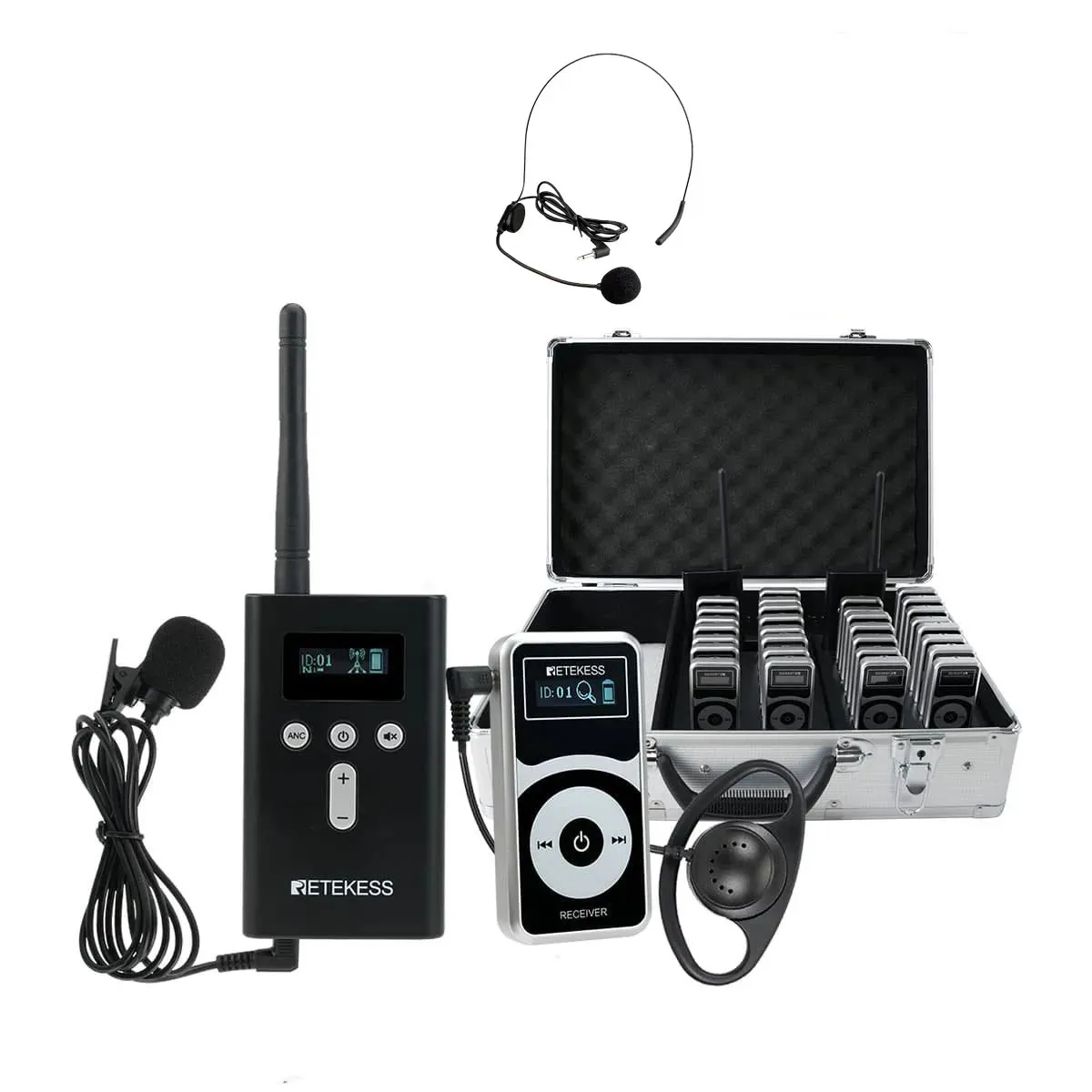
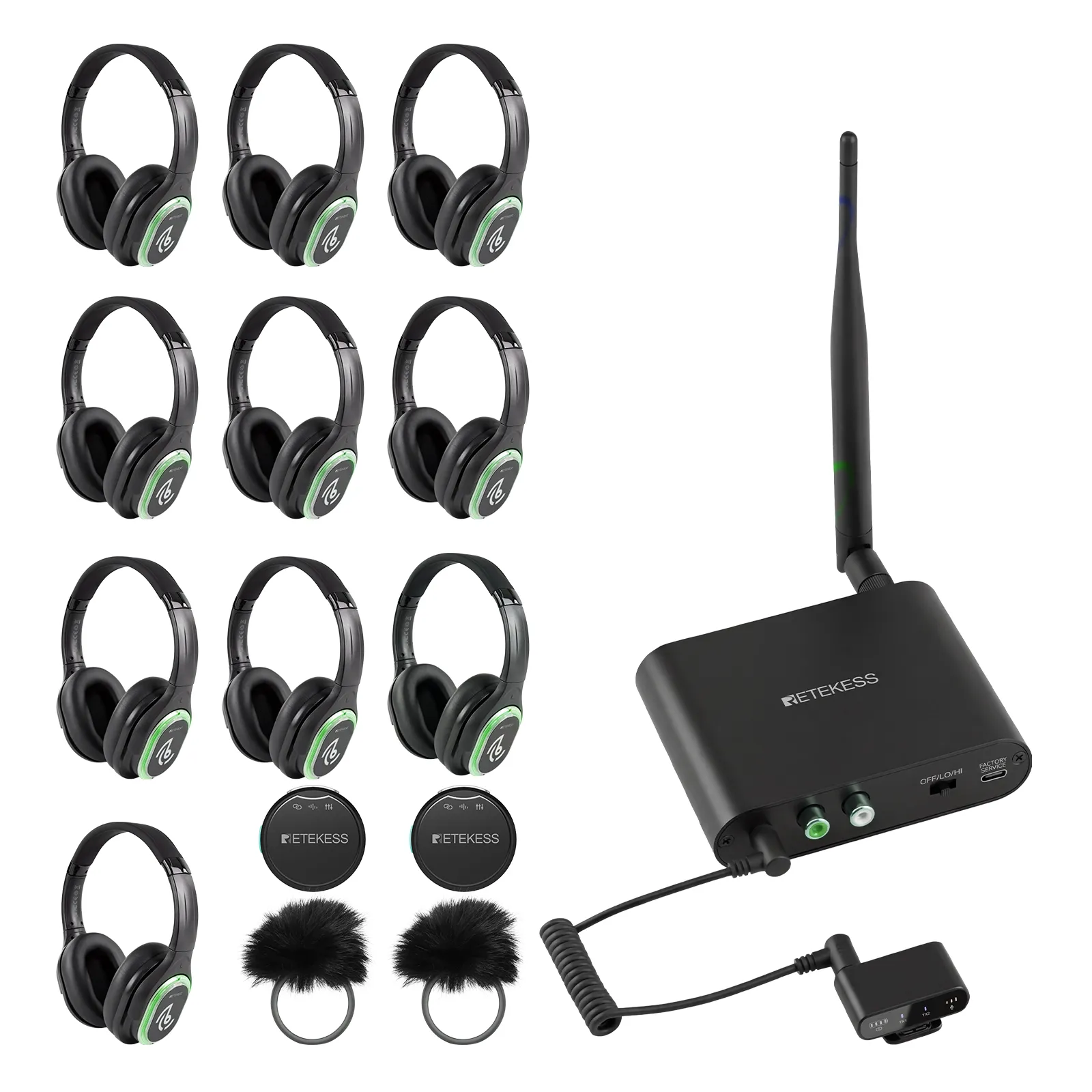
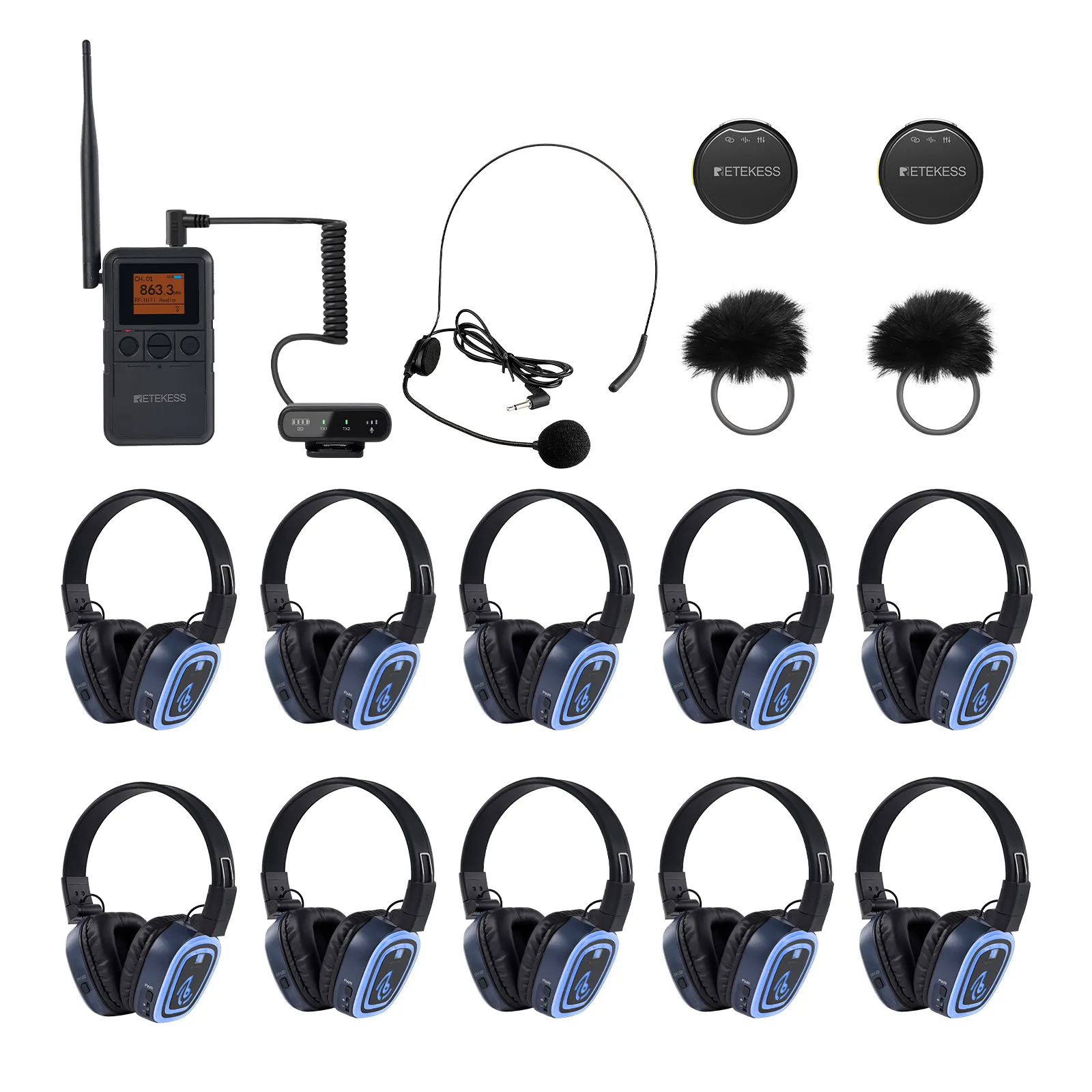
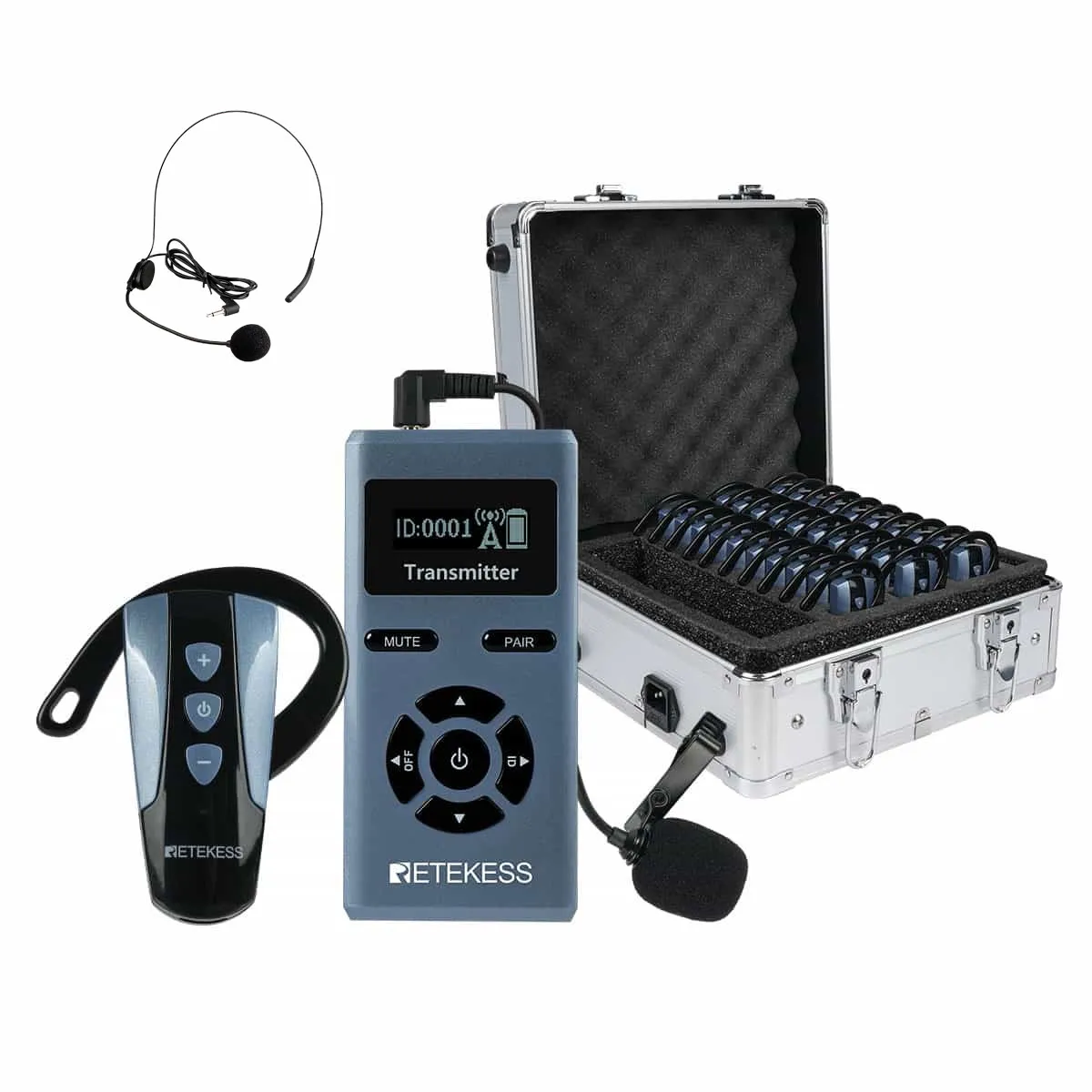
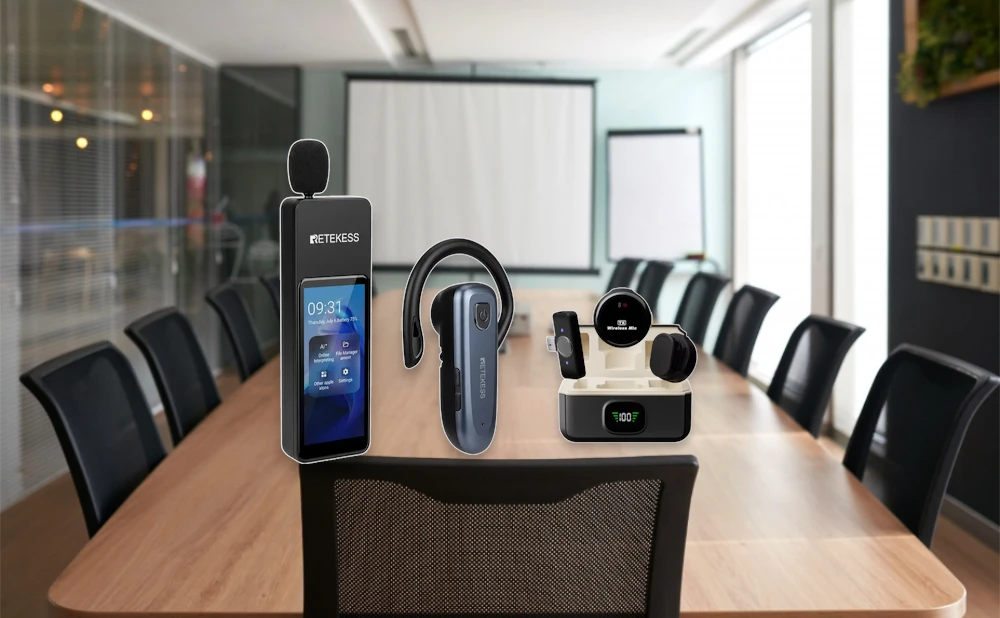
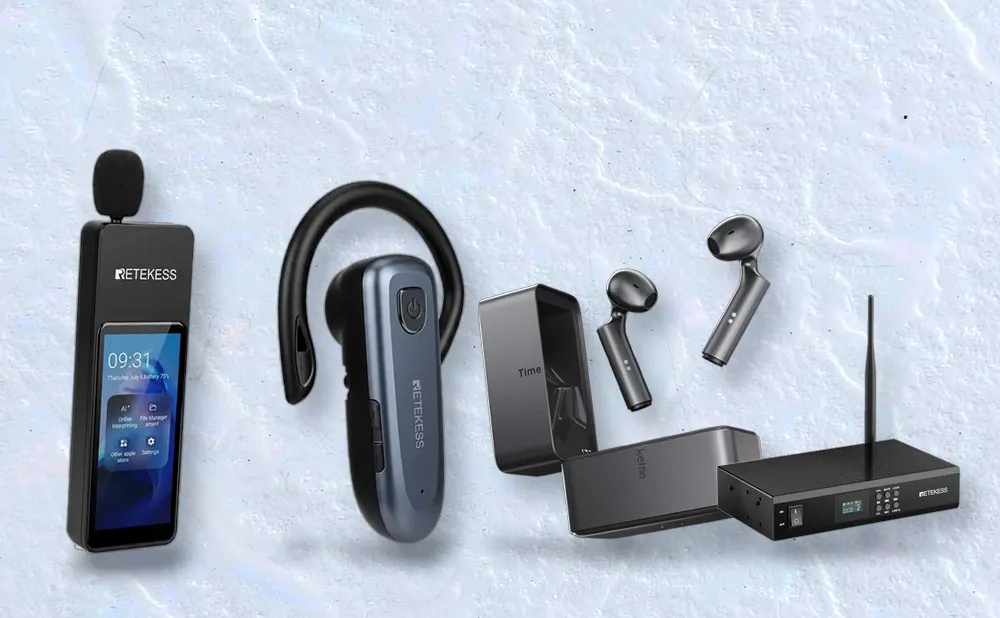
The Retekess portable FM audio system solves a specific problem: how to make speech clear in small, flexible, and mobile event settings without relying on fixed infrastructure.
It offers:
If your events often move between rooms or require a speaker to walk and teach at the same time, a FM wireless audio system for meetings may be a much better fit than traditional amplification.
Fixed microphones and wired setups tie a presenter to one spot, and rented venues rarely provide a ready-made audio route. A portable FM system keeps the speaker free to move. It carries a clear voice to every participant in meetings, workshops, seminars and mobile presentations.
To plan the right portable FM audio system for your event, contact Retekess with event details. Share expected attendee count, venue type, presenter movement range and session duration. The team can recommend a transmitter and receiver configuration and quote for the meeting, workshop or mobile presentation.






 Google
 Amazon