
Table of Contents
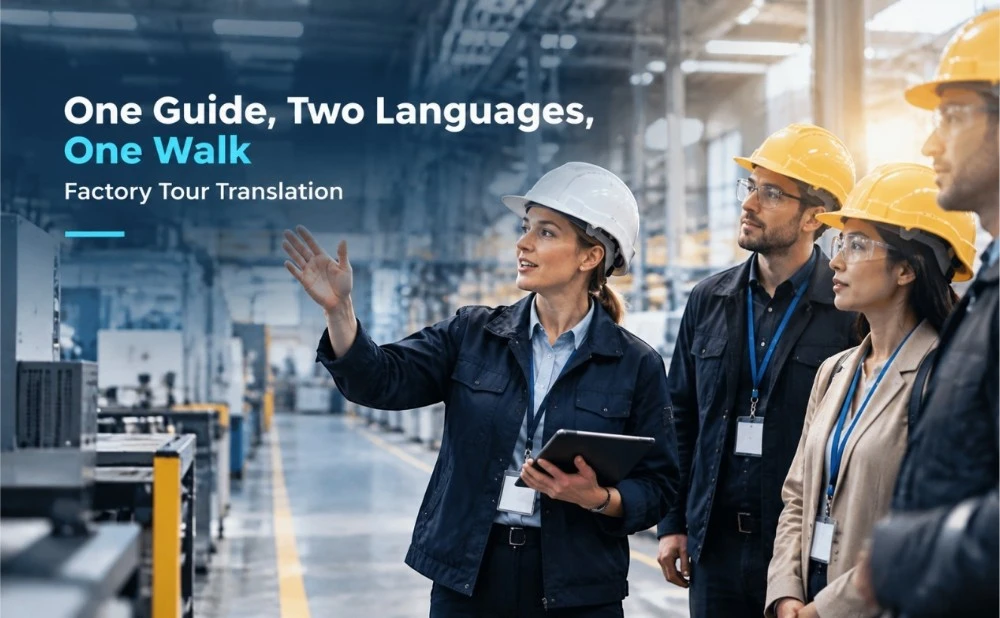
One Guide, Two Languages, One Walk: Factory Tour Translation
- Retekess
- Oct 20, 2026
ISO 23155 defines whispered interpreting for a very small number of listeners, ideally one or two. Past two, the interpreter has to raise their voice and the arrangement breaks. Professional practice sets a working window of roughly 20 to 30 minutes for simultaneous output before fatigue lowers accuracy and a swap is required.
A typical buyer visit brings 10 to 40 people, often from two or three countries, following a production line for 90 minutes or more in safety gear, through zones that run at 85 to 100 decibels.
The numbers do not fit. The role the standards describe cannot cover that group, duration, or noise. For decades, factories closed the gap with a specific person: the interpreter who walks behind the guide.
The Interpreter Who Walks Behind Your Guide
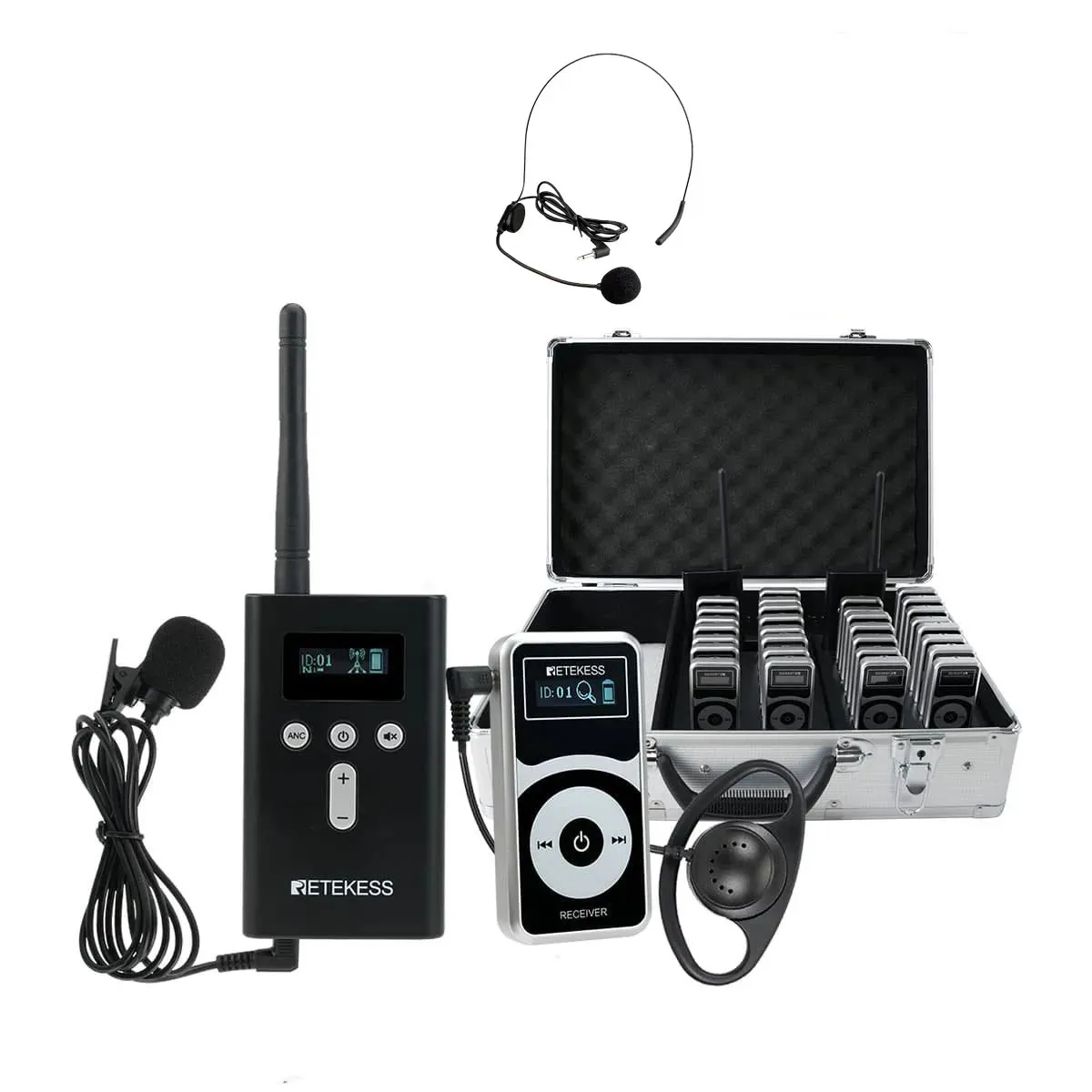
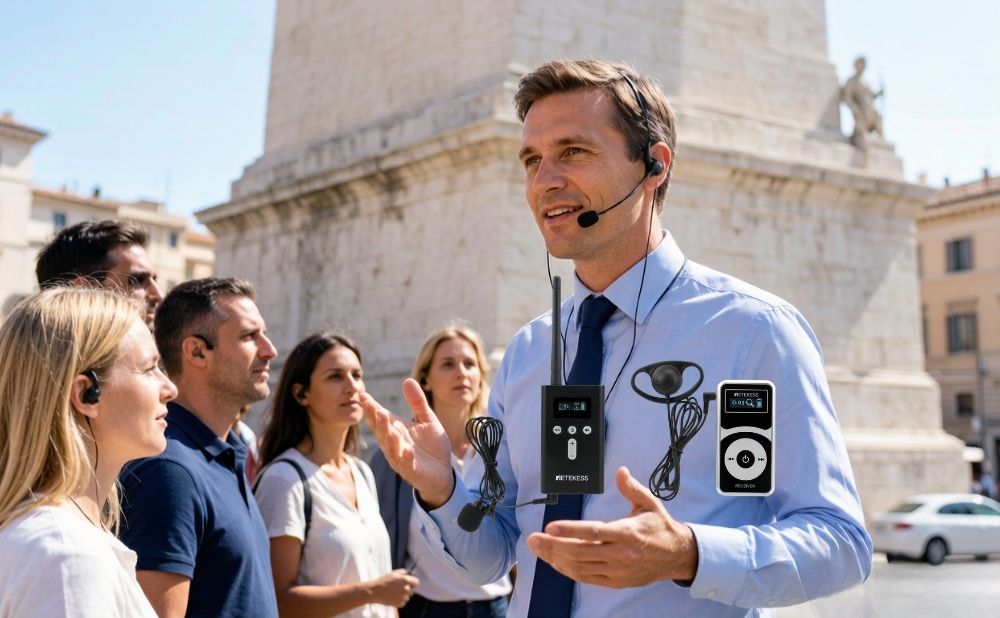
Factory visits are mobile and cannot use soundproof booths. The standard setup for a foreign buyer group therefore has three layers: a host who explains the line, an interpreter who follows the host and repeats every sentence in the buyer's language, and a portable transmitter feeding that voice to earpiece receivers.
The host owns the content. The interpreter owns the language. The interpreter never answers a technical question; they keep walking and translating, a step behind, for the full tour.
ISO 23155 sets the base rule: whispered interpreting without a microphone serves one or two listeners, ideally. The same standard defines a portable interpreting system as lightweight, battery-operated equipment that lets the interpreter and the participants move around. Professional practice fills in the rest of the scale. Three to five listeners need that portable system, a transmitter and receivers. Five to twenty push teams toward consecutive interpreting, which trades time for listeners. Twenty or more require booths, and booths cannot follow a moving line.
Most buyer delegations land between ten and forty people, walking. That is the most awkward zone in the rulebook.
Day rates make it expensive. A Canton Fair interpreter service price list runs from US$75 per eight-hour day for general business talk in English to US$150 for Italian or Spanish, with Japanese and Korean at US$90, German and French at US$110, and Russian at US$125. Overtime bills at 1.5 times. Independent interpreters in industrial cities publish full-day rates around US$100 to US$250, and fair-season bookings close weeks in advance.
What a Mixed-Language Delegation Costs Today
A group containing two languages leaves the factory with three traditional options, each carrying hidden costs.
Whisper to both breaks the two-listener rule, and the interpreter cannot hold accuracy for long.
Split the group: German buyers walk the line first, Spanish buyers second. The same engineer delivers the same 90-minute explanation twice, the line pauses twice, and the second group hears a tired host under a rearranged schedule.
Two interpreters, two transmitters: each language gets its own shadow, and rarer languages often relay through English, adding another point where technical terms can shift.
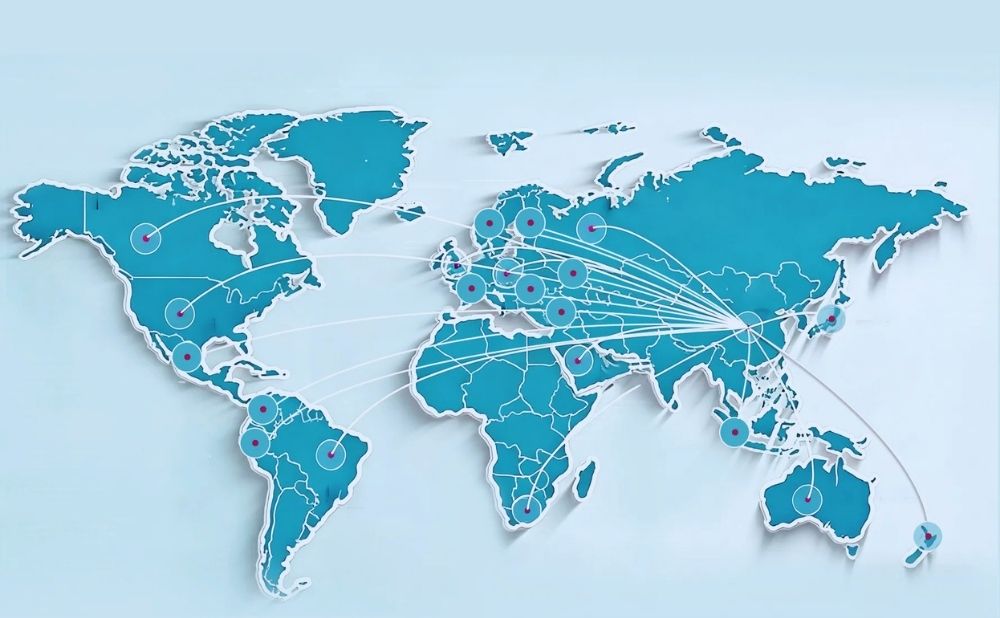
These costs concentrate after major trade shows. The 140th Canton Fair has drawn pre-registered buyers from 196 countries and regions, and post-fair factory visits are the standard next step. Sourcing firms treat these visits as the stage where a supplier's real capability is verified. Plants near the hubs schedule dozens of tours a week, and the interpreter pool cannot scale.
The Shop Floor Breaks the Human-Only Model
Noise and the hearing-protection paradox. OSHA and the UK HSE require hearing protection above 85 decibels over an eight-hour average, yet the HSE warns against protectors that reduce the level at the ear below 70 decibels: over-protected visitors cannot hear warning signals and become isolated from their environment. Communication must reach the ear while the ear stays protected, and the receiver must coexist with earplugs, earmuffs, and a hard hat.
A harder job for the interpreter. A moving interpreter stays close to the host, talks continuously, and fatigues faster than the quiet-room benchmark of 20 to 30 minutes. Material grades, tolerance bands, coating thickness, and certification codes are exactly where a tired interpreter slips.
Signal dead zones. Steel frames, concrete floors, and shielded cleanrooms behave like Faraday cages. Industrial procurement guides name lost connectivity as one of the three reasons consumer phones and cloud translators fail on the floor.
Confidentiality. Most plants ban photography on the floor. Drawings, pricing, and yield figures are sensitive, and a solution that routes every word through a phone app and a foreign cloud raises objections from both sides.
Translation on the Guide's Side, Not the Visitor's
Consumer translator earbuds assume one person talking to one person. A factory reception is one host talking to dozens of visitors. Asking every guest to download an app, pair a device, and hold up a phone is not a workable host protocol.
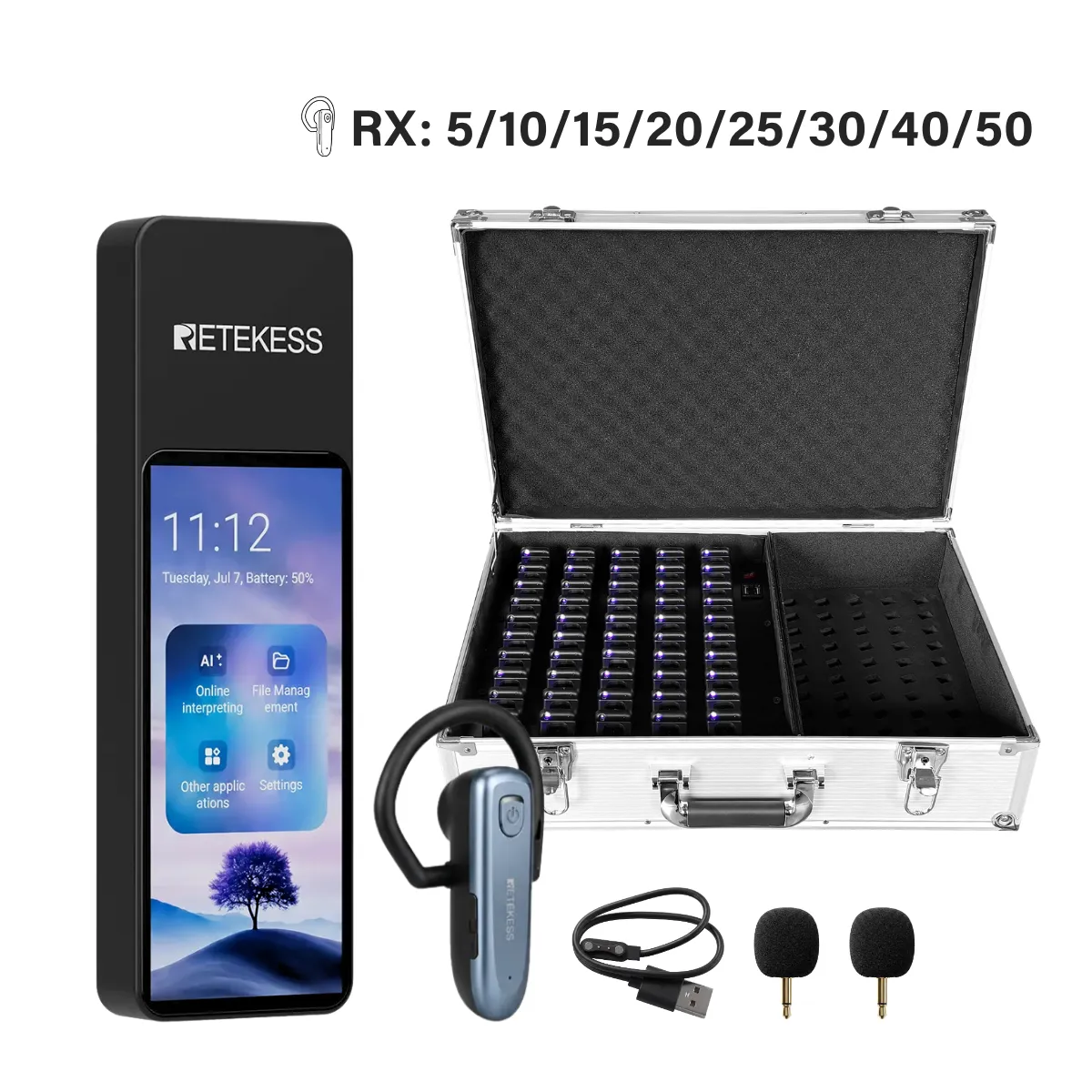
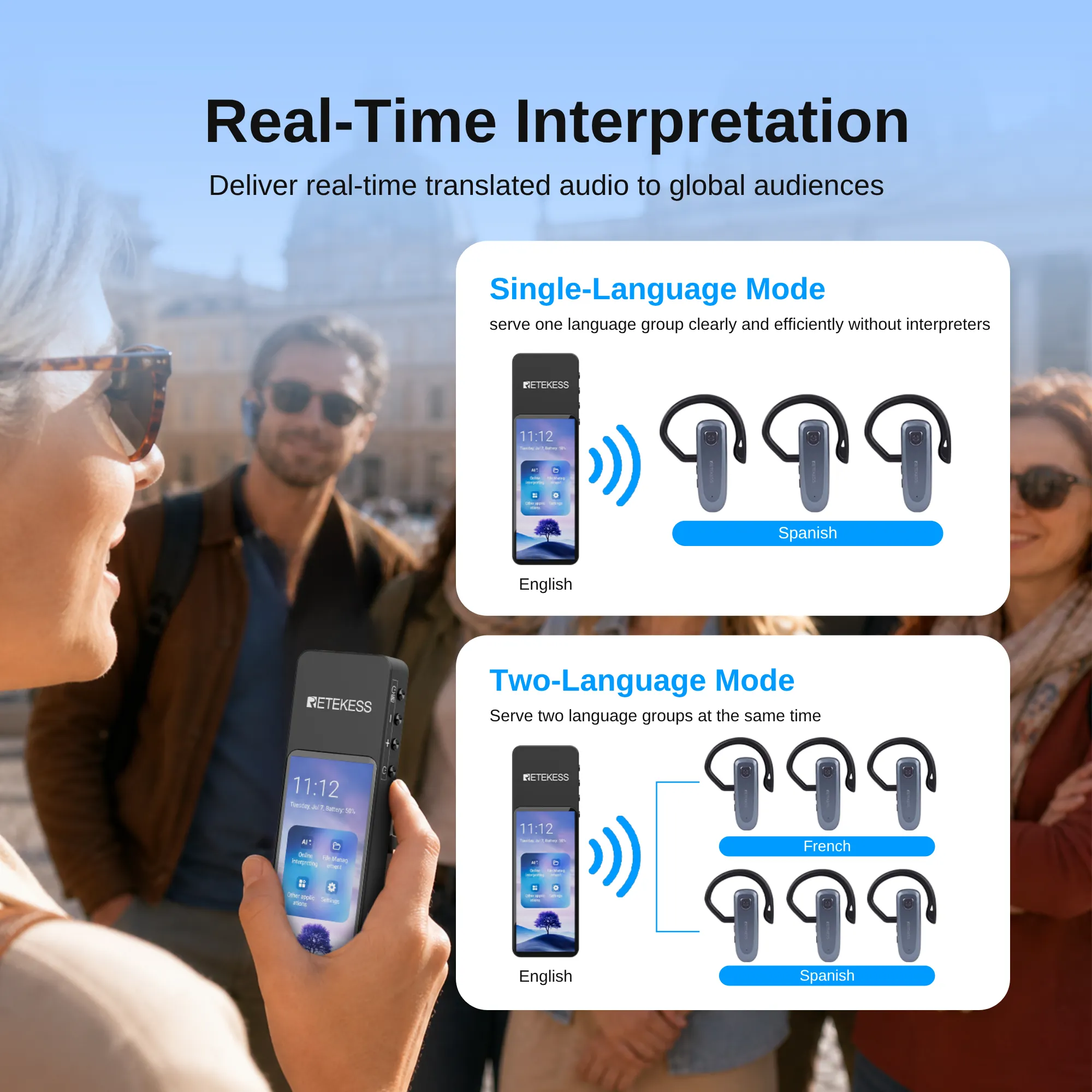
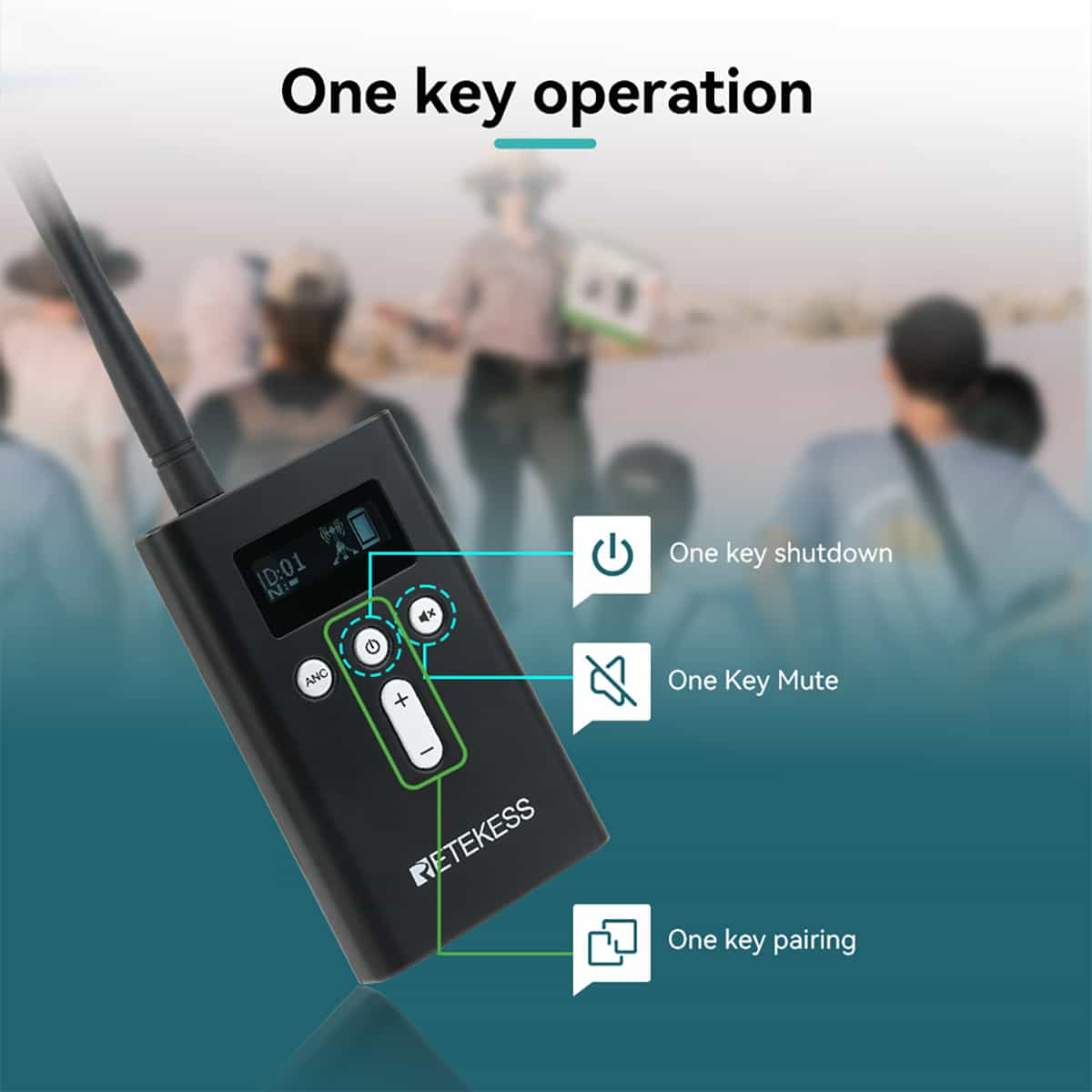
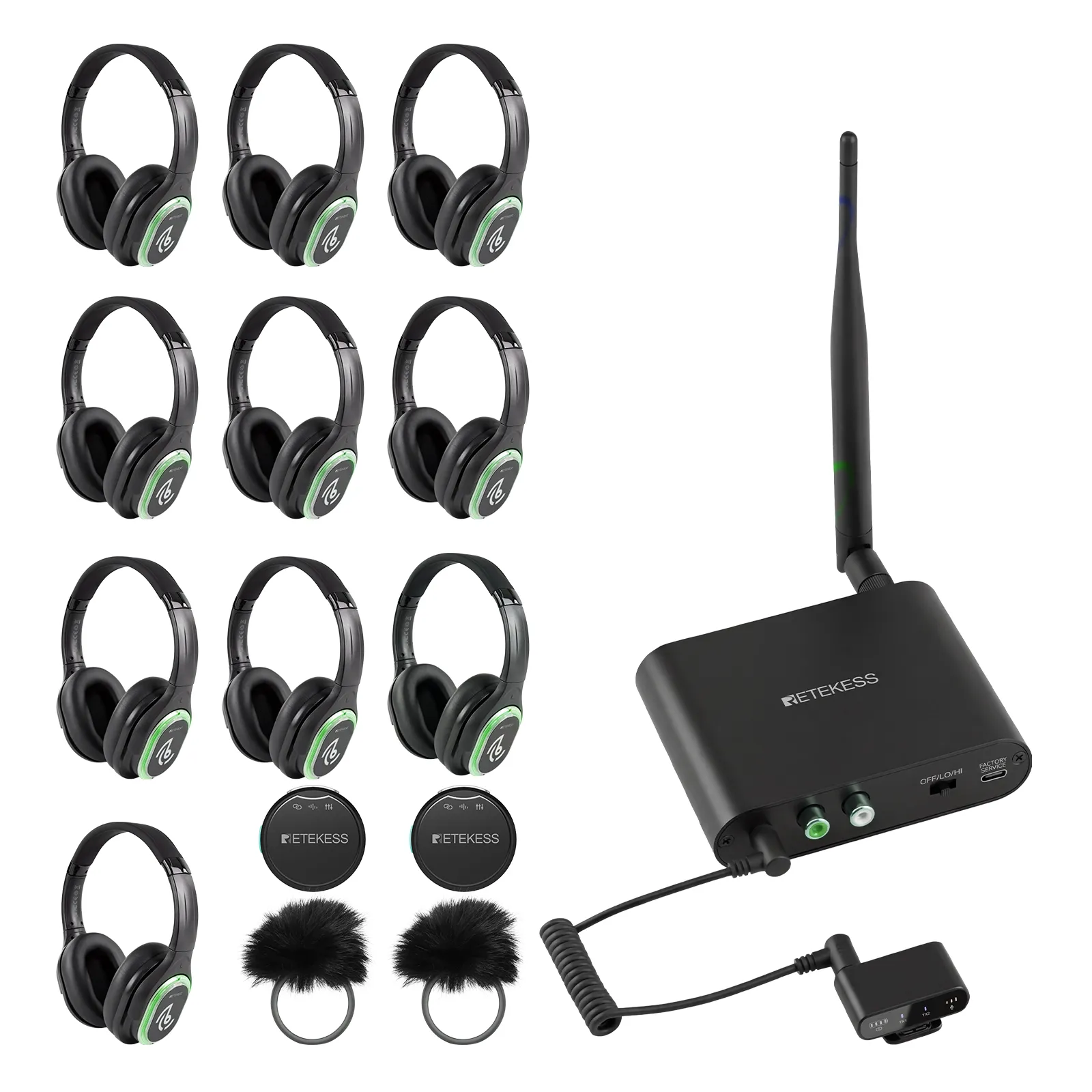
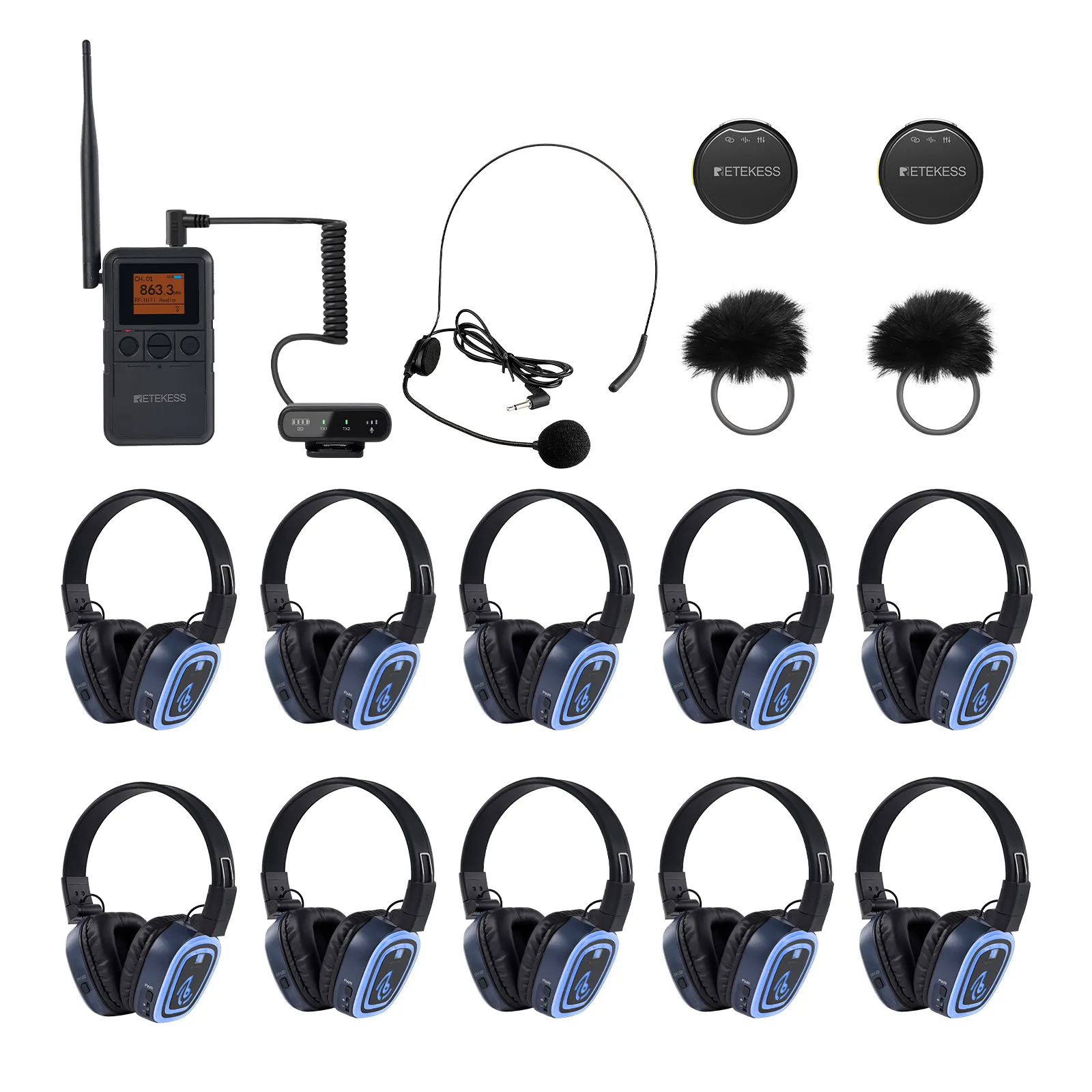
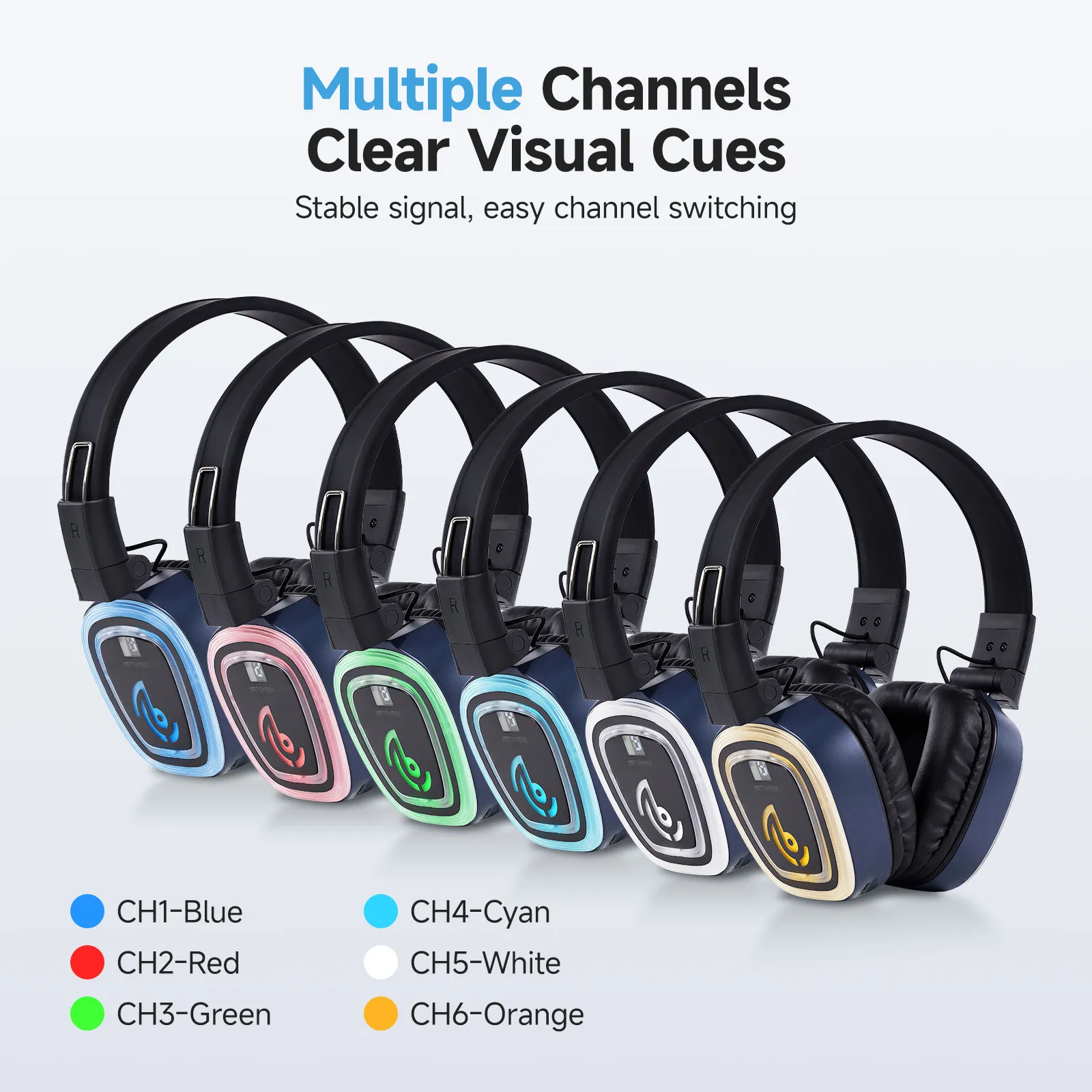
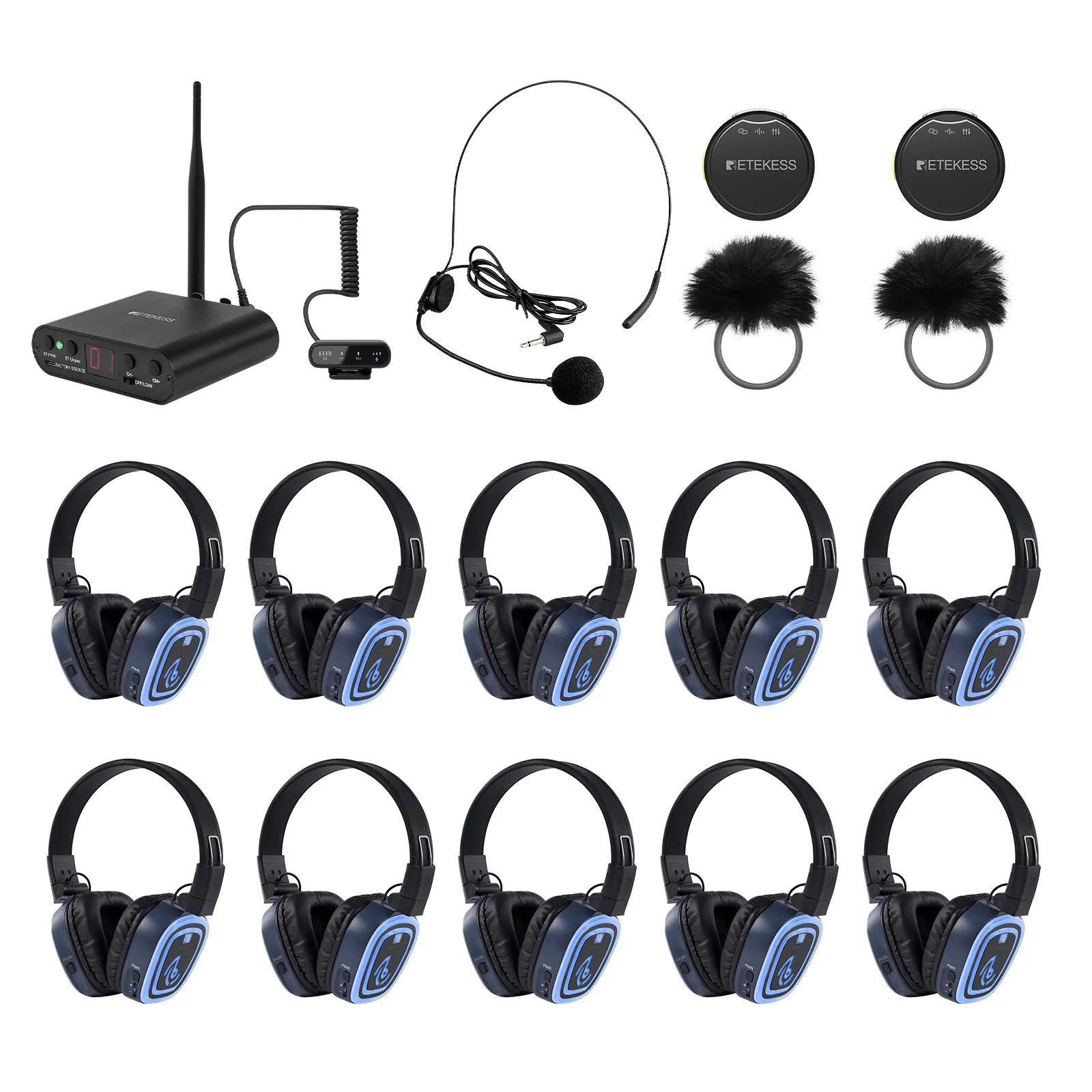
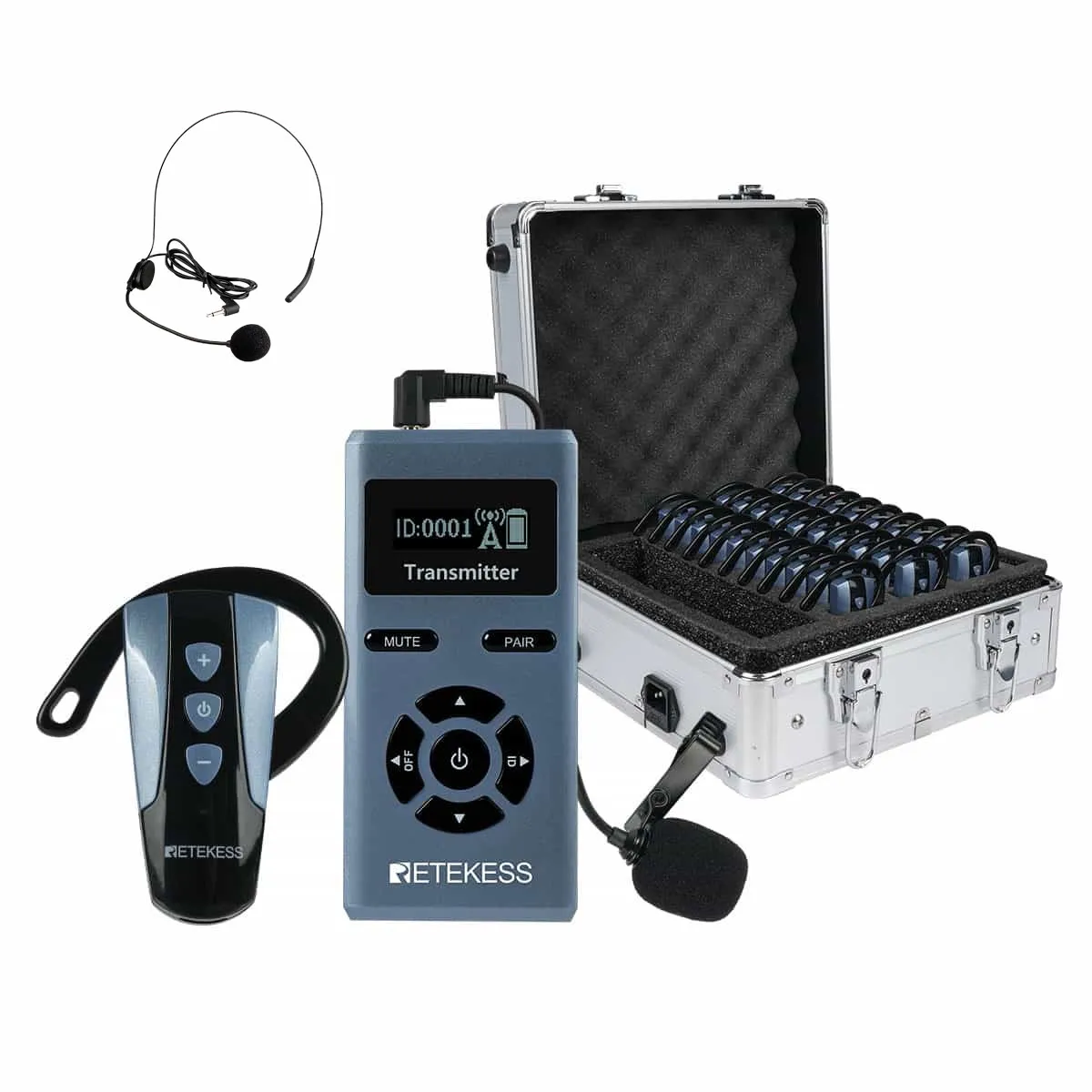
The TT136 places translation on the guide's side. The factory host holds the 48 by 154 mm transmitter and speaks into the boom microphone in their own language. The unit translates in real time and broadcasts up to two target languages at once over 2.4 GHz wireless at a 150 to 200 meter range. Visitors wear 13-gram open-ear hook receivers and switch channels themselves.
Four modes map onto the visit:
- Single-language broadcastfor one buyer nationality.
- Dual-language broadcastfor a mixed delegation: German and Spanish buyers walk the same route at the same time, each hearing their own channel.
- Two-way dialoguefor Q&A stops, translating a buyer's question back to the host.
- Free recognitionfor the closing meeting, where multiple speakers and up to ten spoken languages can be translated into two target languages.
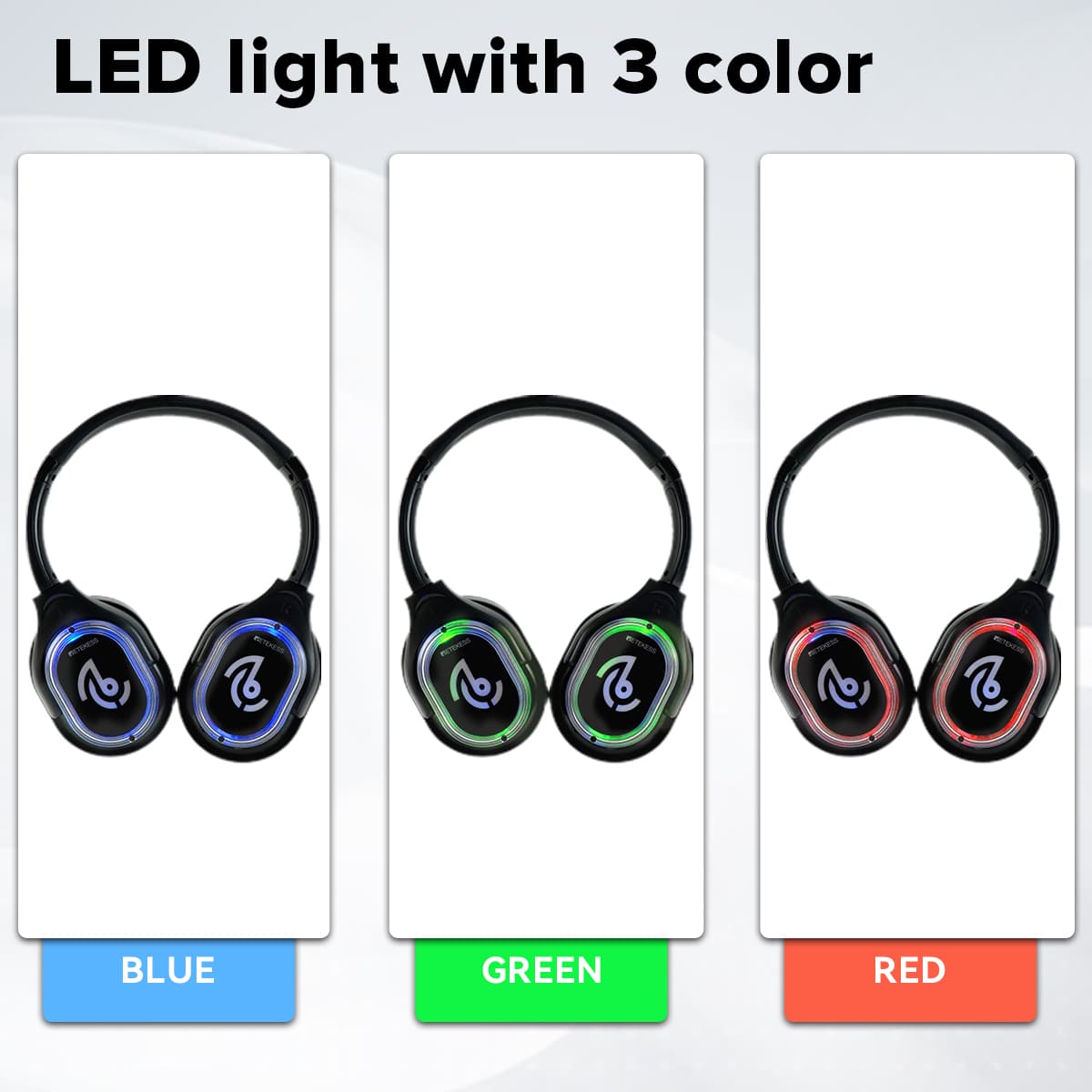
The open-ear hook hangs outside the ear canal, so it fits alongside hard hats, goggles, and hearing protection and keeps warning sounds audible. The plant deploys one held unit and a rack of receivers that need no app, account, or training. That is the precise gap the system fills: a moving route, real-time translation, one-to-many distribution, two languages at once, and zero visitors holding devices.
The Accuracy Question, Answered Honestly
Independent testing in 2026 measured real-world voice AI accuracy around 62 percent on business calls, with general tools reaching 80 to 88 percent — roughly one word in eight wrong or stripped of professional meaning. Documented hallucination rates run 10 to 18 percent, and the tools confidently mistranslate technical terms such as tolerance classes and steel grades.
Those tests model unmonitored calls between random speakers. A guided factory visit differs in one structural way: the speaker is the host, and the host holds the device. The host presents the same fixed route every week, and the 3.99-inch screen displays the recognized speech and its translation, so a wrong term is visible the moment it appears. The host can rephrase, point at the machine, and repeat. The AI runs under a factory expert who owns the content, not unattended. The vendor cites 85 percent-plus accuracy for standard languages and 97 percent through a dedicated backup engine for accents.
Two limitations need explicit planning.
Connectivity: AI translation requires Wi-Fi or a hotspot. Walk the route beforehand, carry a hotspot, and switch to original-audio guide mode in dead zones. The host's voice then transmits without internet and without consuming translation credits. The translation may pause; the explanation does not.
Runtime: translation plus transmission lasts about four to six hours per charge, versus 20 hours for transmission alone, which covers a half-day line walk and meeting. Full-day programs use the 30- or 50-slot charging cases, which also provide UV disinfection between delegations.
The human boundary stays clear. AI channels can carry the welcome, company introduction, line process, safety instructions, and standard Q&A. Price negotiation, contract terms, claims, and final sign-off on technical parameters still belong to a qualified interpreter or a bilingual commercial lead.
The One-Walk Reception Playbook
Before the visit: confirm nationalities, set the two target languages, walk the route to mark signal dead zones, prepare standard talking points, and charge the fleet.
On the floor: dual-language broadcast through connected sections, original-audio mode through dead zones, two-way mode for questions.
After the visit: the TT136 records the session and produces AI summaries for the bilingual recap email — a written read-back of agreed specifications, quantities, and open items, rather than memory.
One knowledgeable host carries the tour, one device carries the languages, and one commercial assistant manages the receiver rack and the harder questions.
Final Word
The shadow interpreter solved a real problem and carried a real cost: one person per language, repeating every word of every tour, fatiguing in the loudest room, and hard to secure for smaller languages on short notice.
The guide-held model does not remove the host. It removes the second voice behind the host. One engineer walks the line once, two languages leave the speaker at the same time, and the whole delegation hears the explanation in step with the machines in front of them.
For standard factory tour translation, the shadow no longer needs to be a person. For the contract table at the end of the day, a person still should be.




Follow Us
Pay With


 Google
 Amazon

Comments (0)